

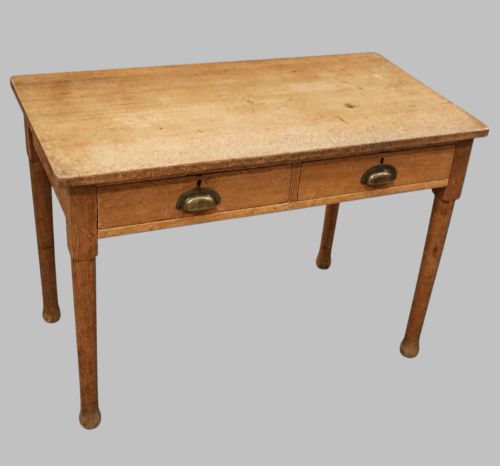
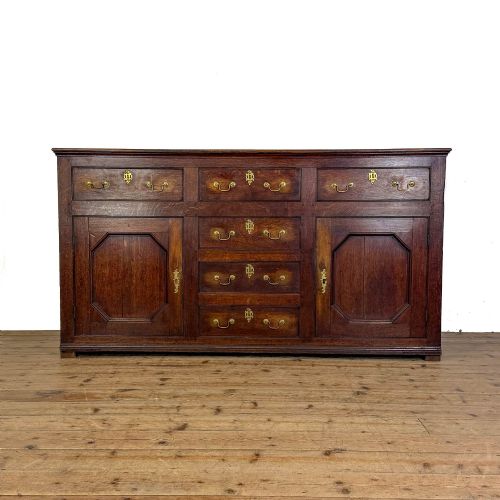
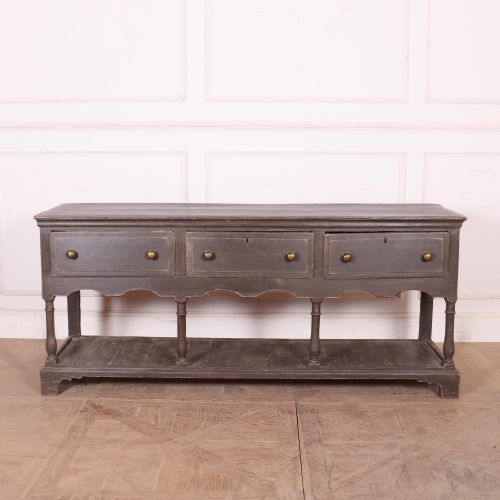
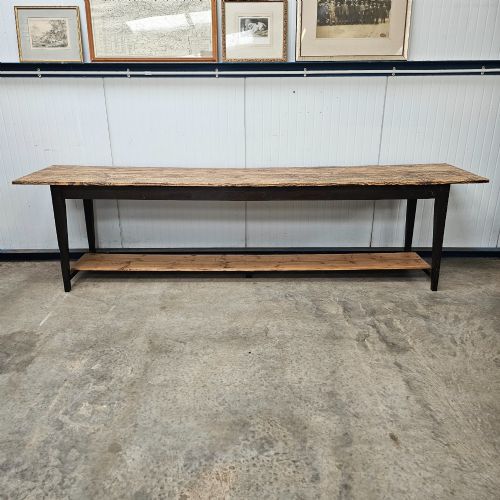

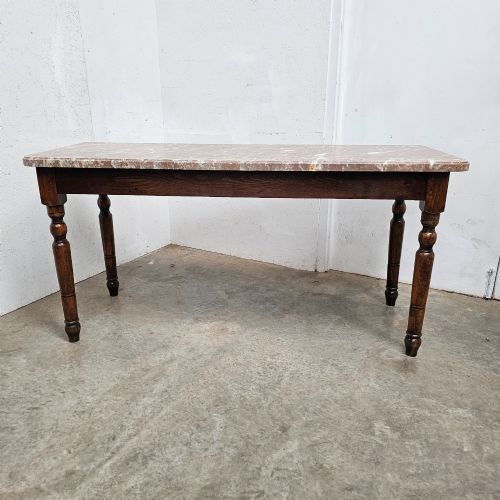

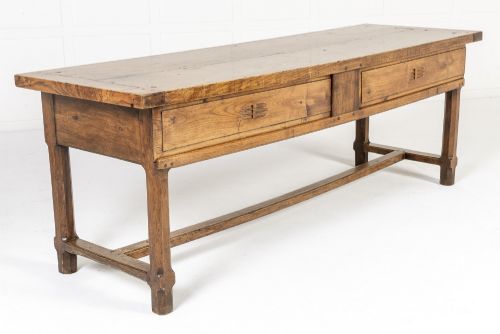


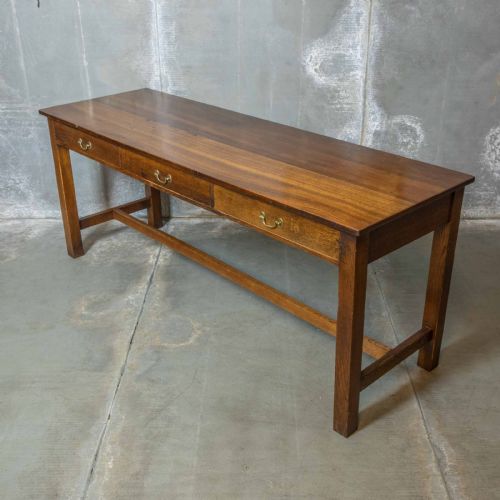


Oak Kitchen Server Table
An oak kitchen server table brings sturdy utility and centuries of character into a room, offering generous surface space for preparation and serving.
Oak Kitchen Server Table
An oak kitchen server table is fundamentally a practical surface designed for food preparation, storage, and serving within domestic spaces. When exploring this selection, buyers frequently encounter substantial forms ranging from Georgian dresser bases to extended drapers tables.
The pieces listed span multiple eras, including the eighteenth and nineteenth centuries, alongside early twentieth-century examples. Common stylistic traditions include English country, Georgian, French provincial, and rustic farmhouse aesthetics.
Object types vary widely across these listings, encompassing dresser bases, sideboards, harvest tables, refectory tables, and console tables. Oak remains the primary timber, occasionally complemented by pine, fruitwood, marble, and painted timber.
Materials and Construction Techniques
Construction relies heavily on solid oak timbers chosen for their durability and distinctive grain patterns. Carpenters utilised traditional joinery methods to build frames capable of withstanding heavy daily use.
Secondary materials such as fruitwood and pine appear in specific regional pieces, while certain console and display surfaces incorporate marble tops. Surface finishes range from natural bleached oak and historic painted timber to traditional wax polishes.
Oak Kitchen Server Table Retail Price Guide 2026
Typical asking prices for oak kitchen server table among the pieces listed under this phrase on Sellingantiques today, from the lower quarter to the upper quarter. They describe what is for sale here now, not the wider market.
Several tables arrive with flour dust still tucked deep into the corners of historic drawers, left behind from decades of industrious kitchen work.
Distinguishing Quality and Proportion
Quality in these tables rests upon the integrity of the timber, the retention of original structural elements, and the honesty of surface wear. Pieces featuring untouched patination and sound foundational framing stand apart from heavily altered examples.
Proportion and scale also dictate distinction, particularly in longer harvest and drapers tables where timber selection across wide boards shows careful planning by the original maker.
The Oak Kitchen Server Table Glossary
- Potboard
- An open lower shelf built into the base of a dresser or serving table, historically used for storing pots and pans. This feature provides both structural stability and practical lower storage.
- Draper table
- A long, narrow table traditionally used in textile trade for folding cloth, prized today for serving and kitchen preparation. Their elongated proportions make them distinct from standard dining tables.
- Dresser base
- The lower section of a Welsh or country dresser, functioning independently as a sideboard or serving table with drawers and cupboards. They offer enclosed storage alongside a wide top surface.
- Refectory table
- A long, narrow dining table historically utilised in communal dining halls and monastic refectories. These pieces are characterised by sturdy legs joined by substantial floor-level stretchers.
- Patination
- The surface sheen and colour acquired by timber through decades of handling, light exposure, and waxing. It serves as a visual indicator of age and authenticity.
Oak Kitchen Server Table: Frequently Asked Questions
What is the difference between a drapers table and a server table?
A drapers table is typically longer and narrower, originally designed for measuring and folding textiles in a shop environment. A server table focuses more on domestic food preparation and serving.
Both offer exceptional surface area, but drapers tables often provide a lighter visual footprint with multiple legs and lower shelf tiers.
How do I care for an antique oak surface?
Maintaining an antique oak surface involves regular dusting with a soft cloth and occasional application of traditional beeswax to nourish the timber. Avoid using modern silicone sprays or placing the table near direct heat sources.
Promptly wiping up moisture prevents water marks from penetrating the historic grain and finish.
Can I use an antique server table in a modern kitchen?
An antique server table functions exceptionally well in contemporary spaces, providing a practical workspace and a strong focal point. The natural warmth of aged oak complements both modern minimalist and traditional interior schemes.
Ensure the working height suits your daily needs for preparation or serving before placement.
How do I identify an 18th-century dresser base?
An eighteenth-century dresser base typically displays hand-cut joinery, pegged tenons, and timber boards with irregular widths showing manual conversion marks. Hardware such as brass pulls often reflects the Georgian period aesthetic.
Examining the interior drawer construction and underside reveals the tool marks characteristic of eighteenth-century craftsmanship.