
Oak Vanity Table
An oak vanity table brings solid craftsmanship and practical storage to a bedroom, offering a surface for daily routines alongside enduring wooden grain.

What an oak vanity table is
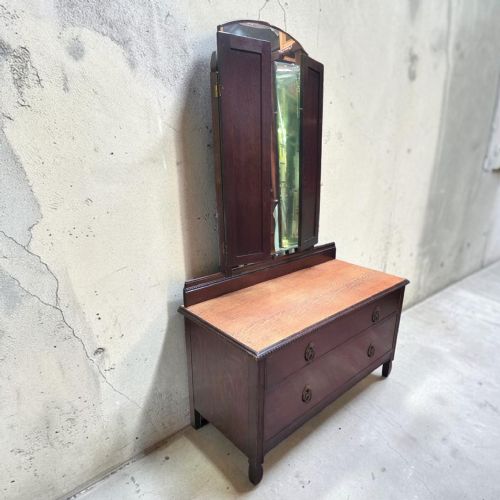
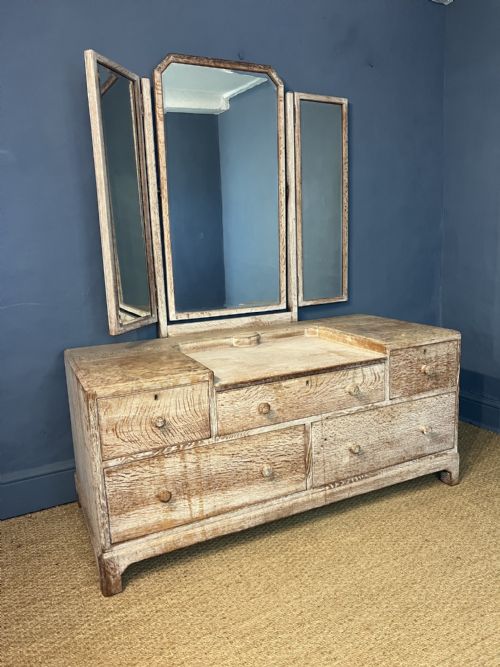
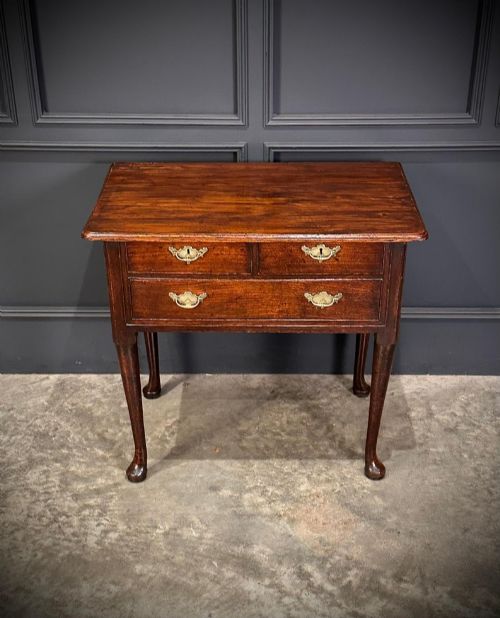
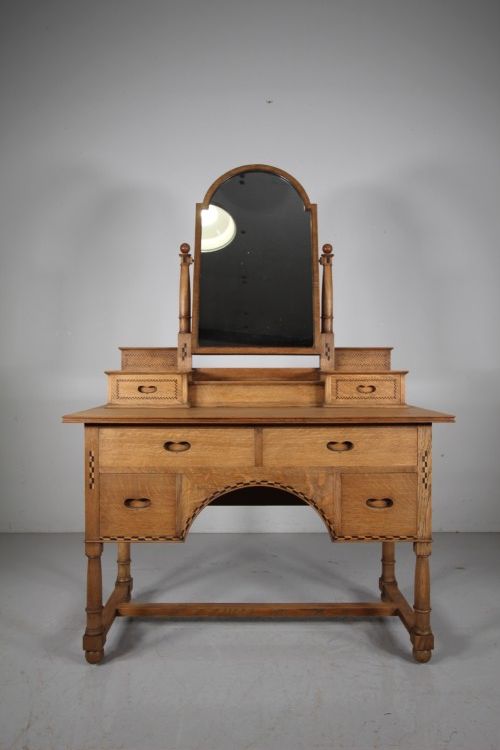
An oak vanity table serves as a functional dressing surface, often equipped with drawers and mirrors for personal grooming. These pieces range from early lowboys to fitted Edwardian furniture and geometric Art Deco designs.
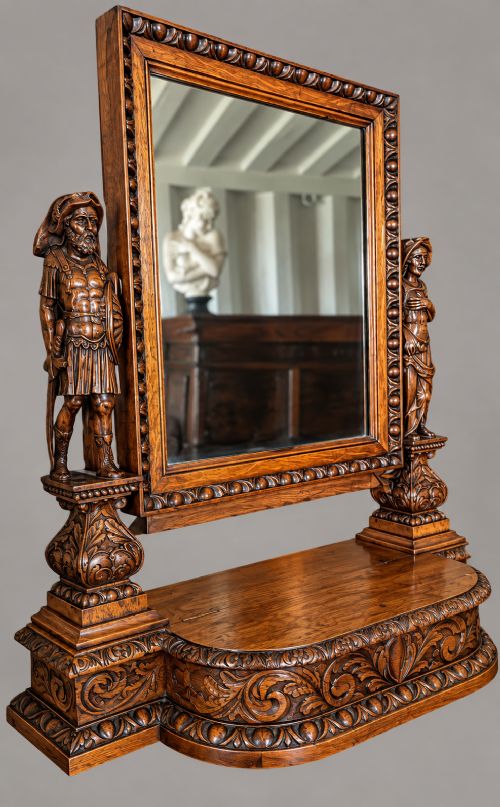
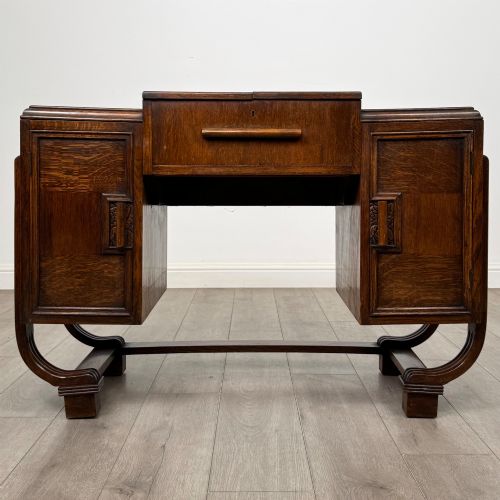
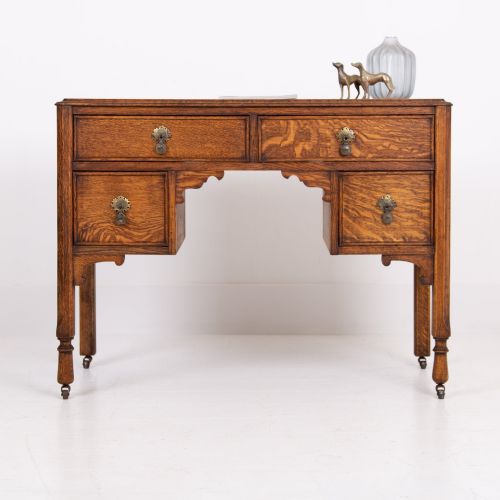
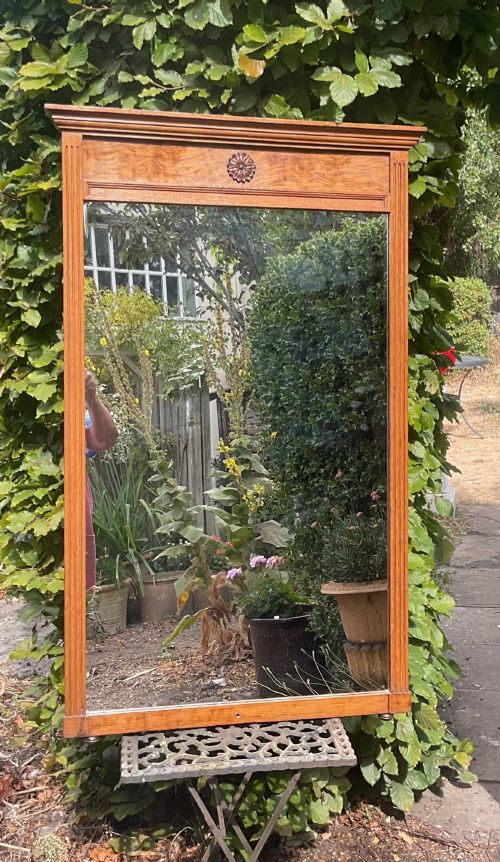
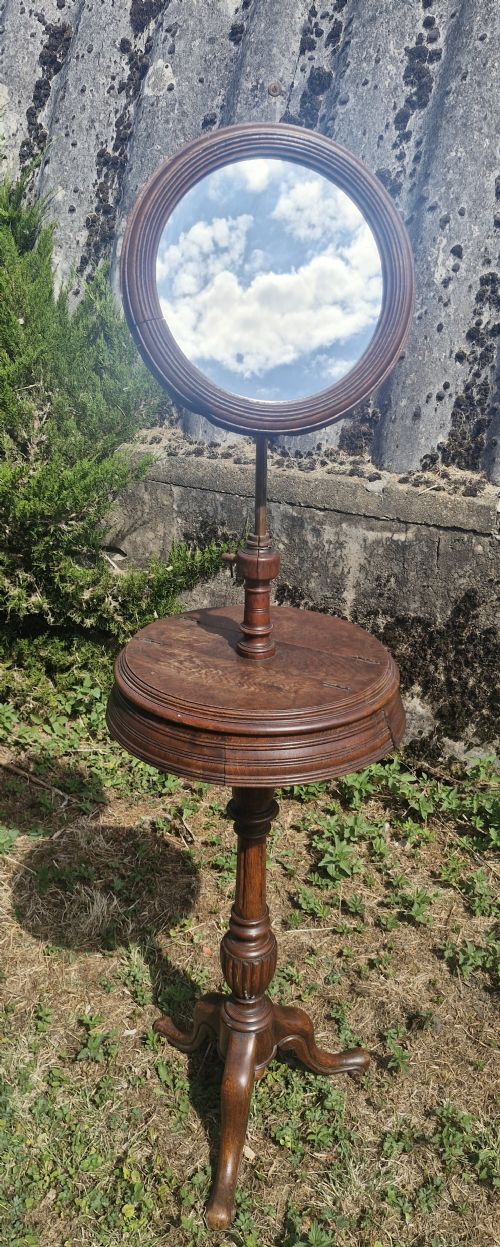
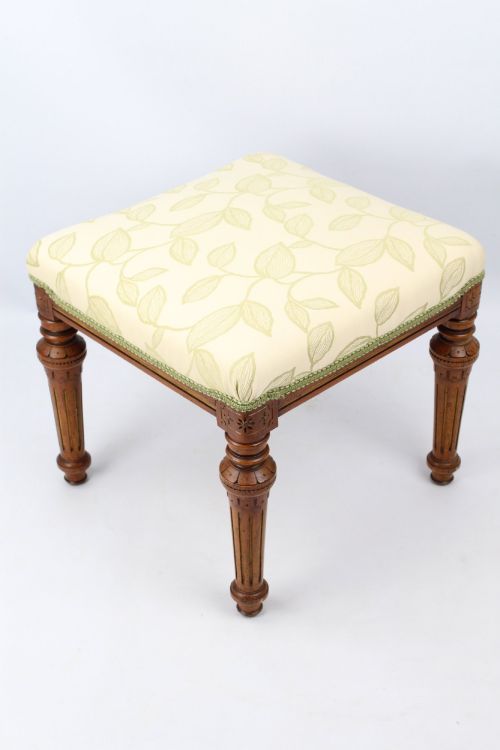
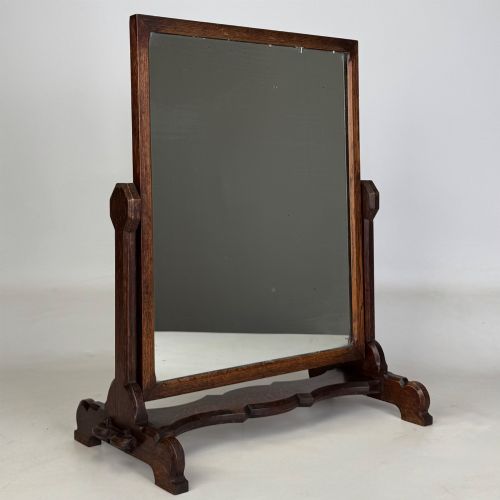
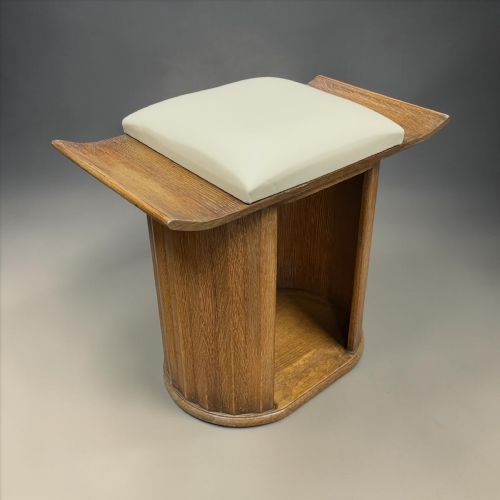
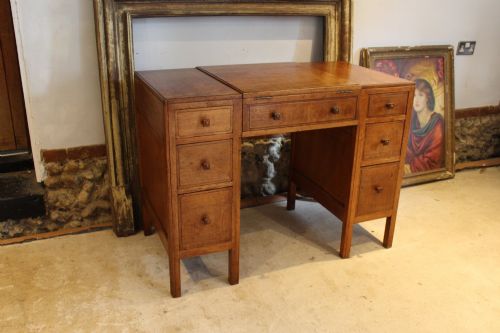
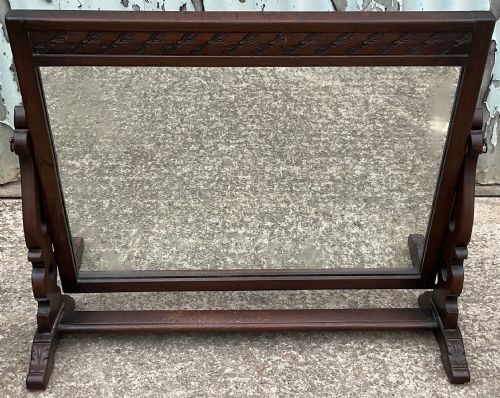
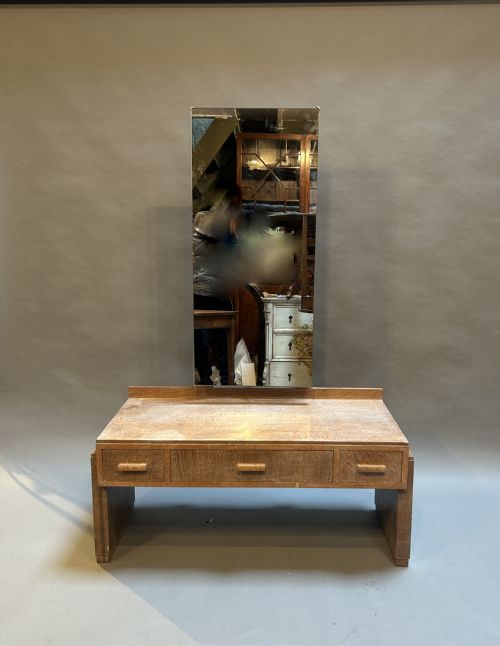
The pieces appearing on this page span several centuries and aesthetic movements. Buyers will encounter 18th-century lowboys alongside heavier Victorian Gothic examples, Edwardian mirrors, and streamlined 1920s or 1930s creations.
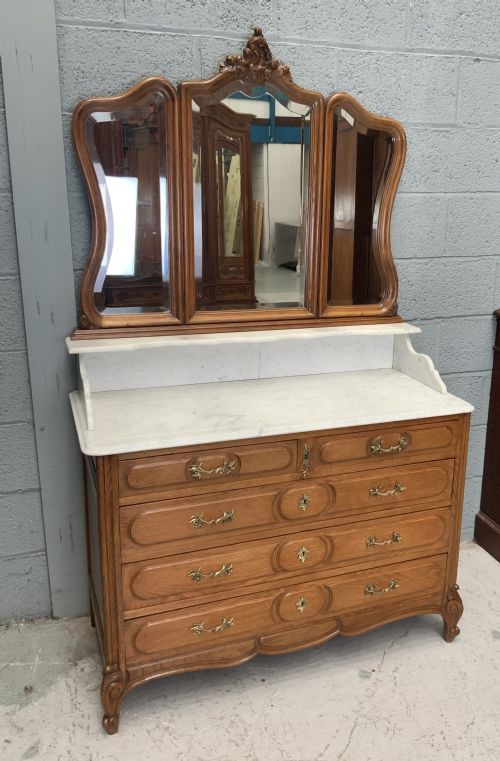
Makers and regional workshops adapted the form across Britain, Ireland, and continental Europe. French Provincial and Rococo Revival influences occasionally appear alongside straightforward English designs.
How they were made
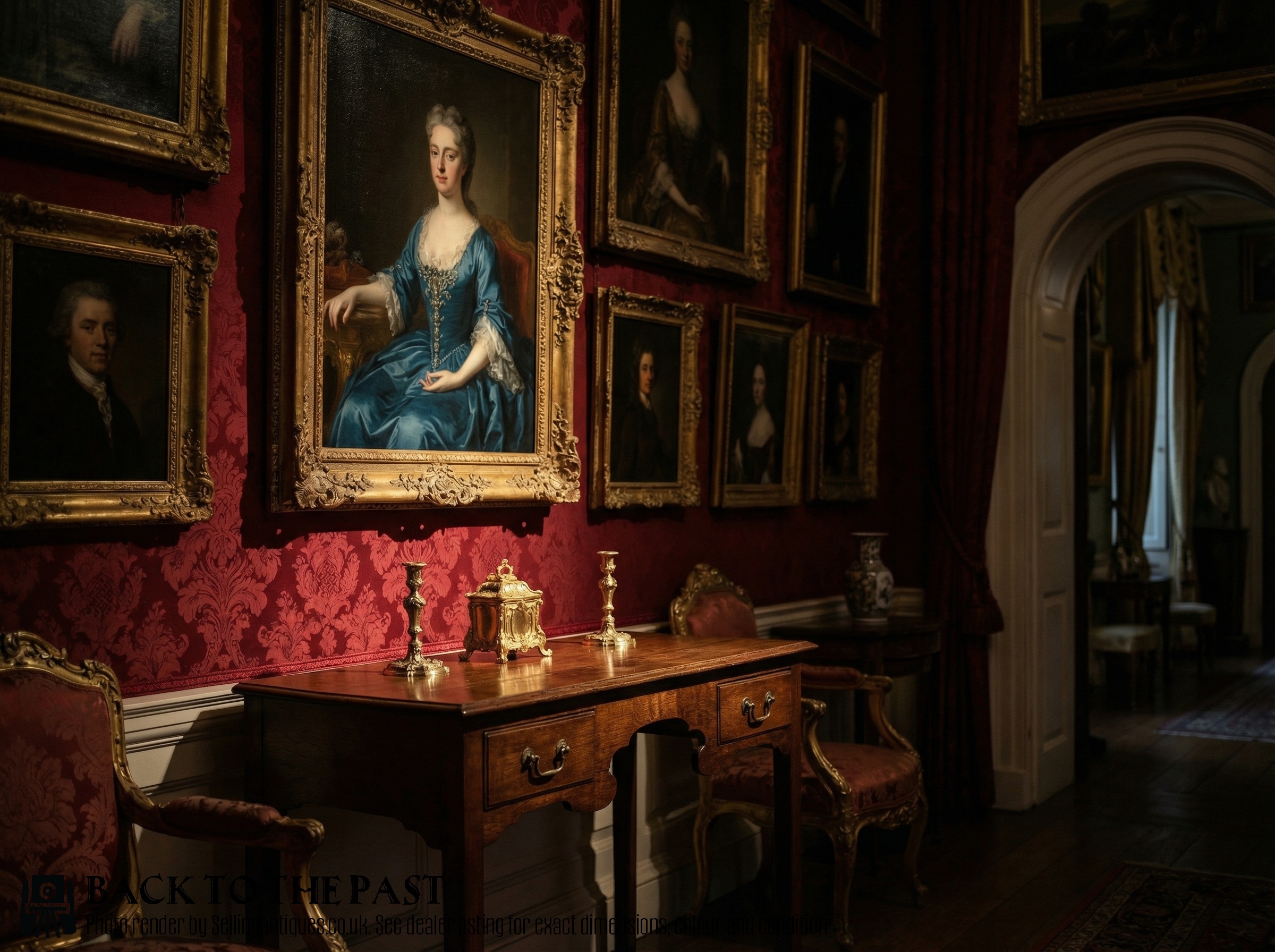
Makers utilised solid oak and burr oak veneers to construct these tables, often selecting timber for its visible grain and durability. Structural stability was achieved through traditional joinery methods suited to heavy wood.
Decorative elements included carved details, moulded panels, and fitted brass hardware. Mirrors were integrated using pivoting wooden frames, whilst supplementary materials such as glass and marble added functional surfaces.
Retail Price Guide 2026
Typical UK retail prices for oak vanity table, calculated from the Sellingantiques database of over a million retail prices indexed since 2003. This retail price guide relies exclusively on Sellingantiques data; no external sources or auction records are used, so the figures do not describe the wider market.
Listings feature oak vanity tables across Georgian, Victorian, Edwardian, and Art Deco styles, utilising materials such as brass, glass, and marble.
What varies in quality
Quality rests in the selection of timber and the precision of the cabinetwork. Pieces utilising burr oak or intricate carving show a higher level of artisanal skill than plain, utility-focused versions.
The integrity of the original hardware, mirrors, and internal drawer construction distinguishes superior examples. Altered mirror frames or replaced brasses shift a piece away from its original state.
The Oak Vanity Table Glossary
- Lowboy
- A small oak table with drawers, typically dating from the 18th century, used originally for writing or grooming before dedicated dressing tables became common.
- Burr oak
- A figured timber harvested from tree growths, highly prized for its swirling grain patterns on table surfaces and drawer fronts.
- Dressing table
- A bedroom furniture piece designed for personal preparation, frequently incorporating drawers and an attached mirror.
- Edwardian
- Pertaining to the period from 1901 to 1910, known in these listings for lighter proportions and classical revival details.
Frequently Asked Questions
What is an oak vanity table?
An oak vanity table is a wooden dressing piece designed for bedrooms, featuring drawers for storage and surfaces for grooming.
They appear in styles ranging from early lowboys to Edwardian and Art Deco designs.
How old are these tables?
The pieces span several centuries, with examples originating from the 18th century through to the 1930s.
Victorian, Edwardian, and Georgian periods represent the primary eras found in the listings.
What materials are used?
Oak is the primary wood, complemented by burr oak veneers in more decorative examples.
Fitted elements often include brass hardware, glass panels, and marble tops.
How do I identify the style?
Styles are recognised through architectural details, such as Gothic arches, Rococo curves, or Art Deco geometric lines.
Construction methods and mirror frames also point towards specific decades like the 1890s or 1920s.