

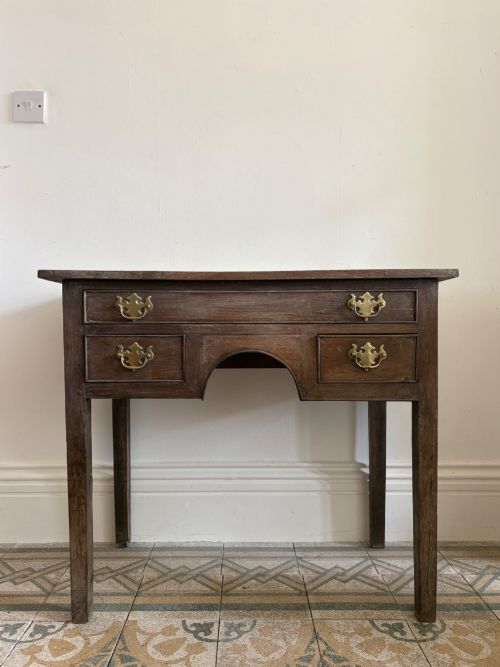

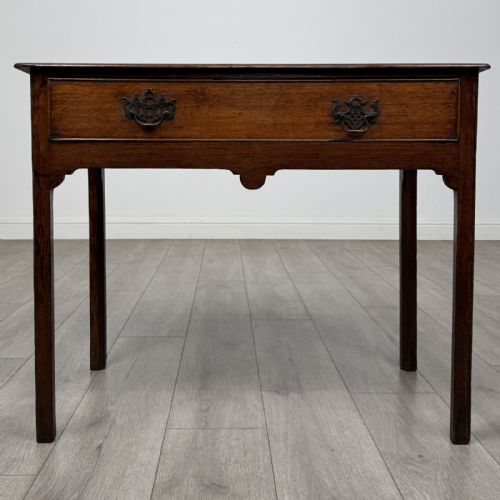
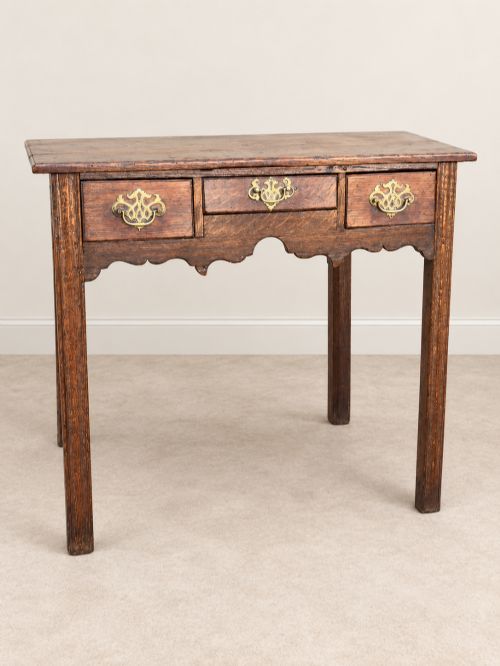
Dark Oak Dressing Table
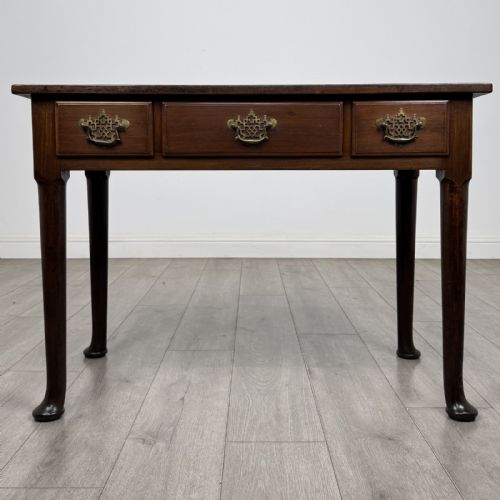
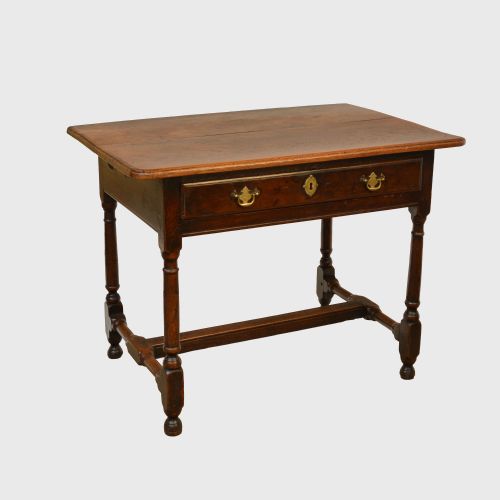
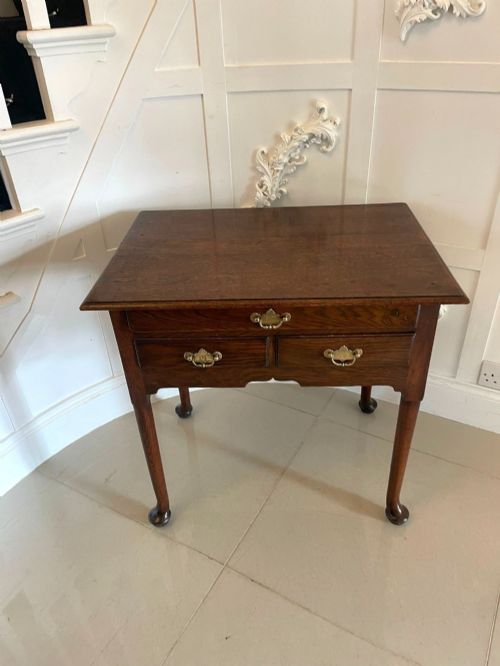
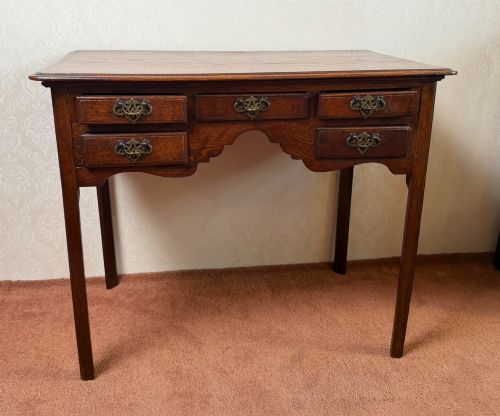
A dark oak dressing table brings warm timber grain and centuries of fitted surface utility into a bedroom.
Dark Oak Dressing Table
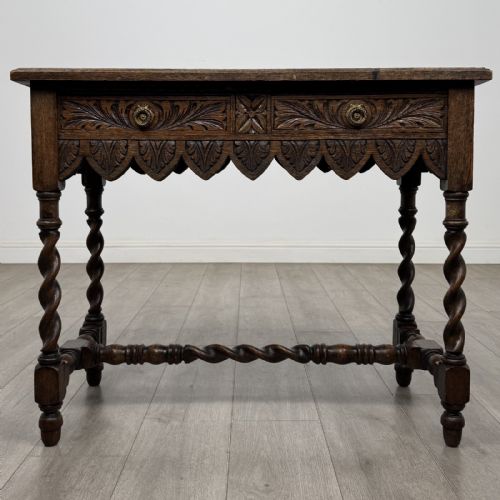
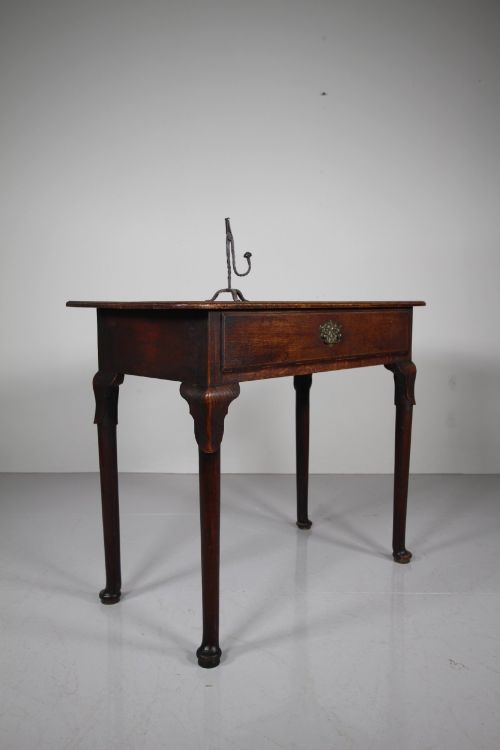
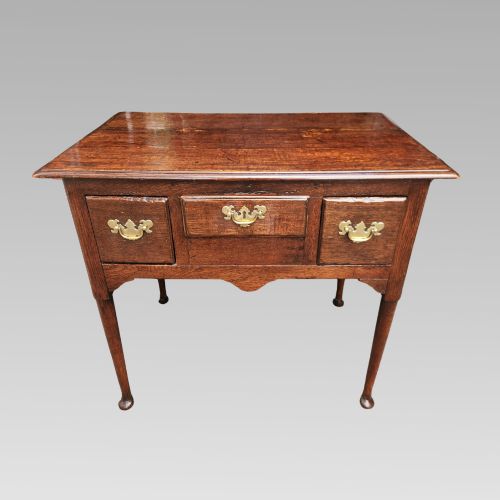
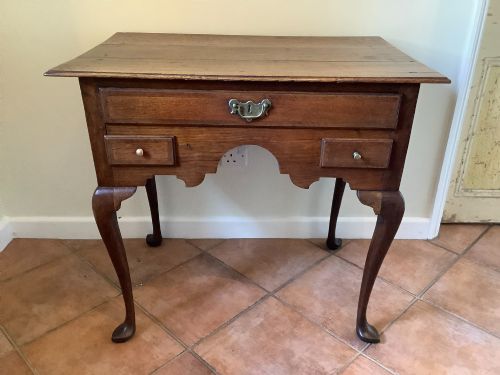
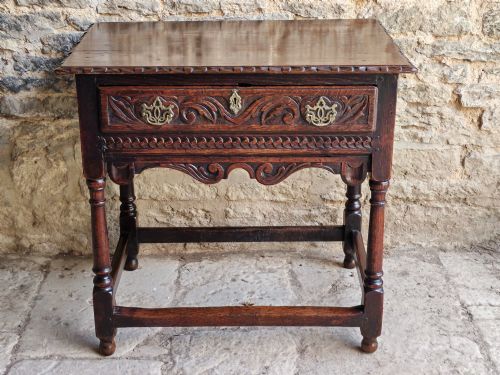
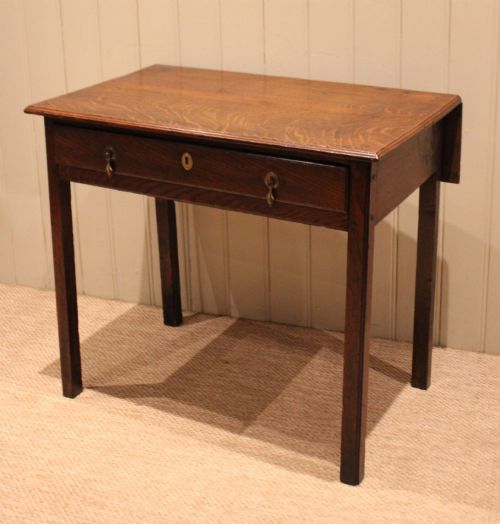
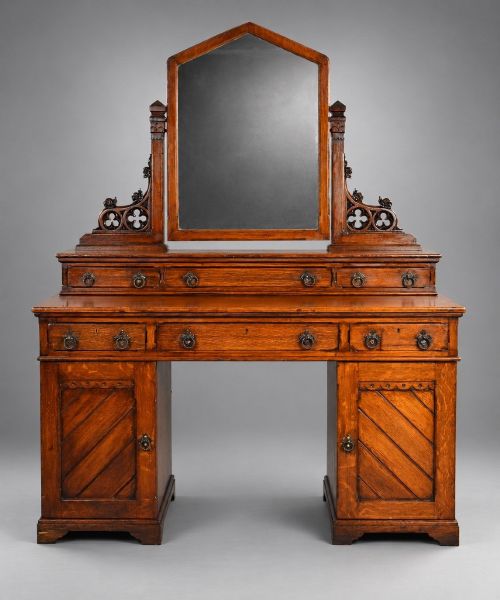
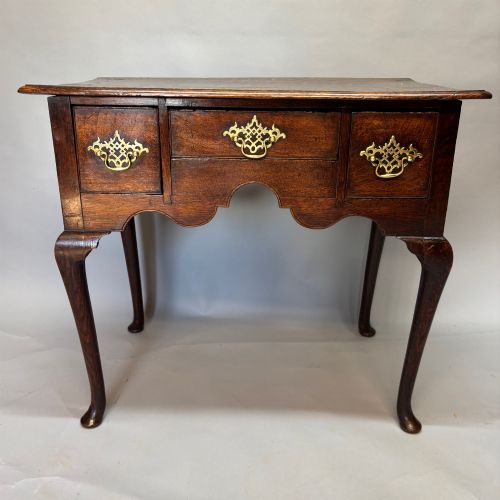
A dark oak dressing table spans formats from eighteenth-century lowboys and side tables to early twentieth-century dressing chests with triple mirrors and shaving stands. Buyers searching for a dark oak dressing table will encounter lowboys from the Georgian and seventeenth-century periods alongside later Edwardian and Art Deco iterations.
The utilitarian lineage of these pieces includes lowboys, side tables with drawers, and specialised dressing mirrors fitted for daily grooming routines. Many listings bridge the gap between simple side tables and dedicated dressing furniture by incorporating integrated drawers and adjustable mirror frames.
Origins stretch across English country workshops, Welsh regional centres, and later twentieth-century production lines. The enduring appeal lies in the deep patina of oak timber combined with practical drawer storage and surface space.
Judging quality
Quality rests on timber selection and the integrity of the original construction, distinguishing honest country pieces from heavily restored examples. Superior execution shows in crisp carving, well-fitted drawer linings, and the retention of period brass hardware.
Proportion and surface patination dictate desirability, where deep, undisturbed grain patinas indicate genuine age rather than applied chemical darkening. The alignment of drawers and the stability of leg joints separate robust cabinetmaking from weaker utilitarian builds.
Dark Oak Dressing Table Retail Price Guide 2026
Typical asking prices for dark oak dressing table among the pieces listed under this phrase on Sellingantiques today, from the lower quarter to the upper quarter. They describe what is for sale here now, not the wider market.
A Victorian shaving stand quietly awaits the return of the morning razor, complete with adjustable angles to catch the early light.

The Dark Oak Dressing Table Glossary
- Lowboy
- A small table with one or more drawers, originating in the late seventeenth century and frequently used for grooming or as a dressing table. They typically feature cabriole or straight legs.
- Dressing Chest
- A chest of drawers fitted with an integrated mirror, often triple-panelled, popular during the Edwardian and Art Deco periods. These pieces combine clothes storage with a surface for personal preparation.
- Shaving Stand
- A specialised adjustable stand incorporating a mirror and small surface areas designed for male grooming. These items reflect the functional tailoring of nineteenth-century domestic spaces.
- Wood Inlay
- The technique of inserting contrasting strips or pieces of wood into a recessed surface to form decorative patterns. This ornamentation appears on seventeenth-century and later revival pieces.
- Side Table
- A versatile small table designed to stand against a wall, frequently adapted for use as a desk or dressing surface. They form the largest category of furniture within this selection.
Dark Oak Dressing Table: Frequently Asked Questions
How do I date a dark oak table?
Dating relies on examining construction methods, tool marks, and timber characteristics. Hand-cut dovetails, pegged joints, and the natural patination of the oak provide clear chronological markers.
Later revival pieces from the Edwardian or Art Deco eras often employ machine-cut elements and standardised hardware that contrast with seventeenth and eighteenth-century examples.
Are lowboys suitable as modern desks?
Many lowboys and side tables function effectively as compact writing desks due to their shallow depth and kneehole clearance. Their drawer capacity accommodates modern stationery while maintaining a small footprint.
Buyers should check the height from the floor to the underside of the drawer rail to ensure comfortable seating.
How should I care for dark oak?
Maintain dark oak surfaces by applying natural beeswax periodically and avoiding direct sunlight or excessive heat sources. Gentle dusting with a dry cloth prevents the accumulation of grit in carved details.
Moisture should be wiped away immediately to protect the traditional wax or polish finish from water staining.
What is the difference between Georgian and Edwardian pieces?
Georgian pieces from the eighteenth century emphasise restrained proportions, pegged frame construction, and traditional drawer linings. They often display simpler lines with a focus on timber grain.
Edwardian interpretations frequently incorporate revival styles, lighter internal framing, and integrated mirror superstructures designed for bedroom dressing routines.