
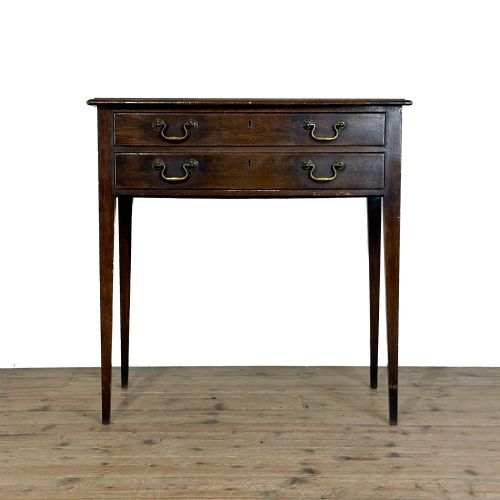
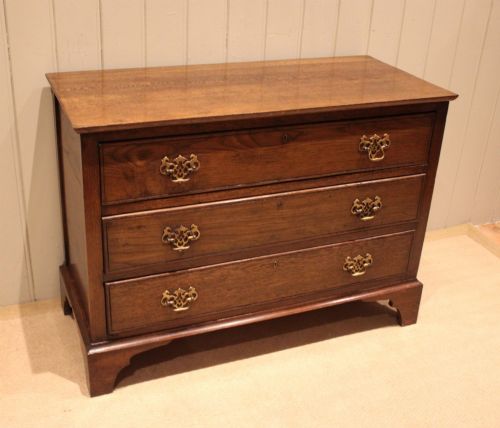
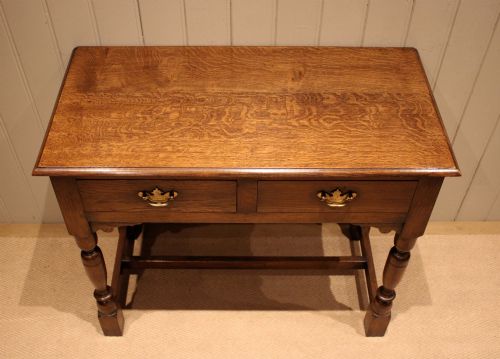

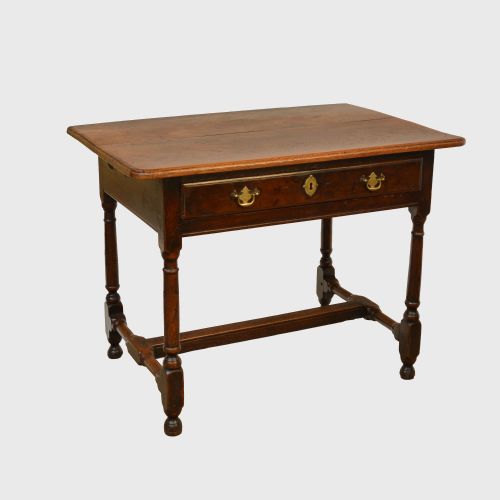
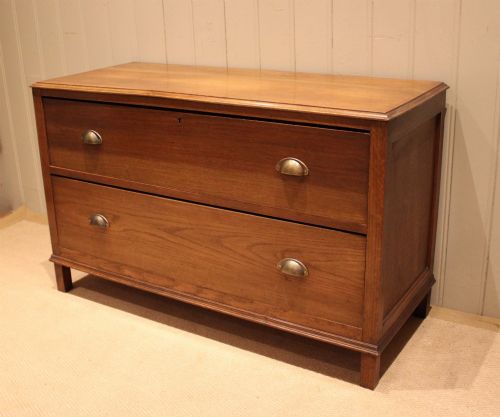
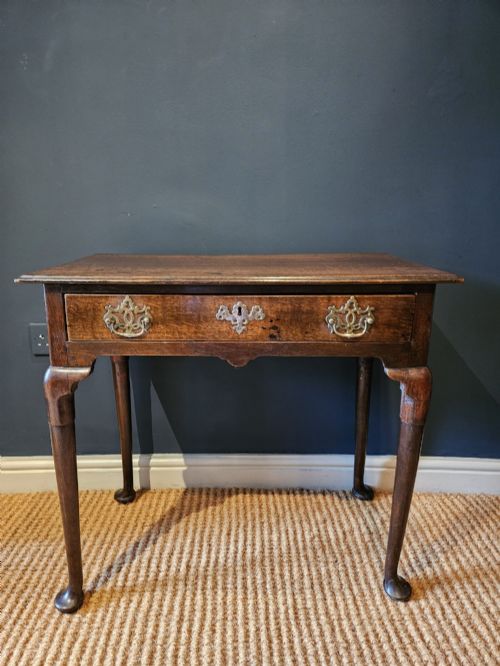
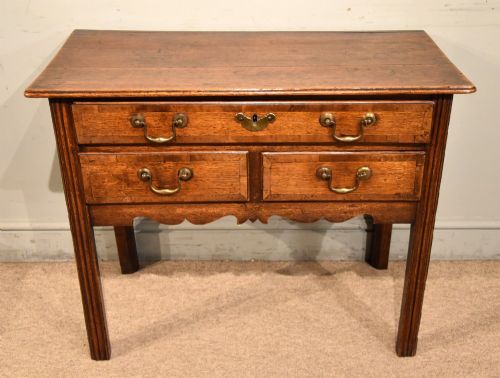
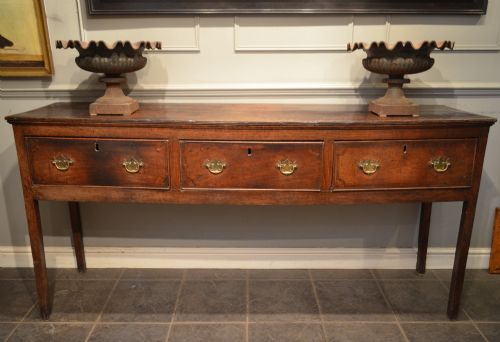

Country Oak Lowboy
A country oak lowboy is a sturdy side table or desk built for daily use, offering compact storage with simple rustic charm.
What country oak lowboys are
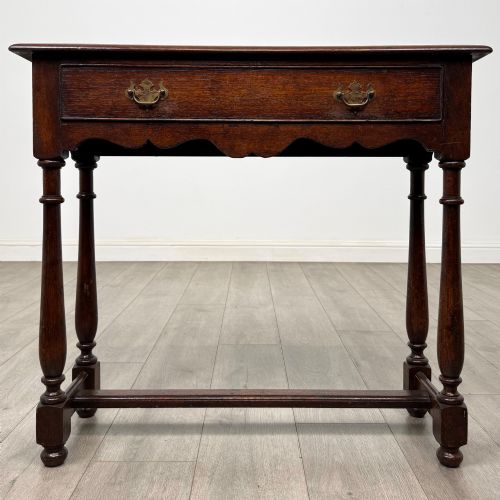
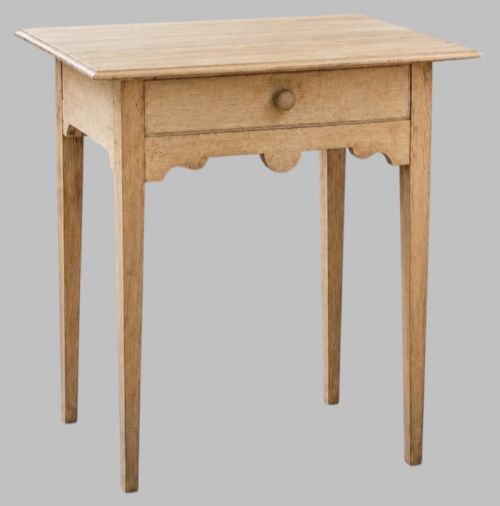
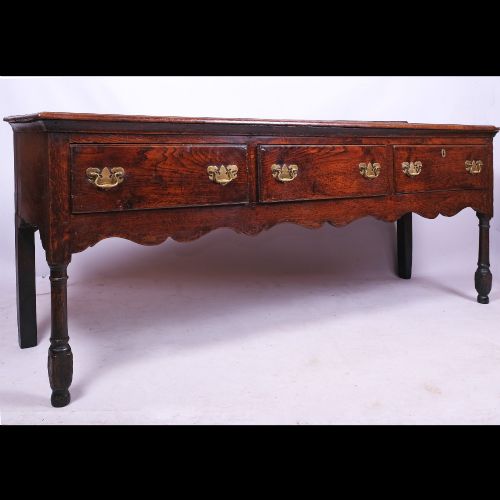
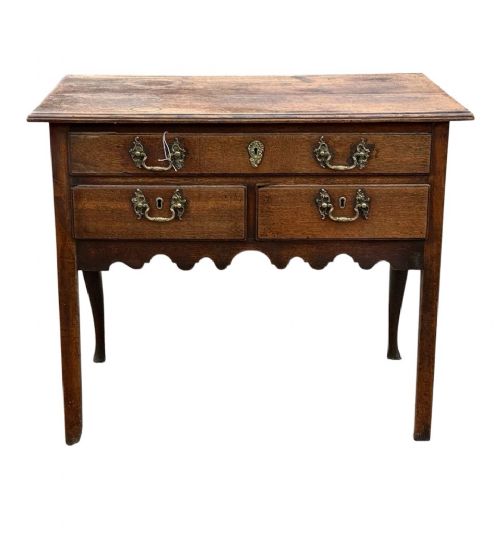
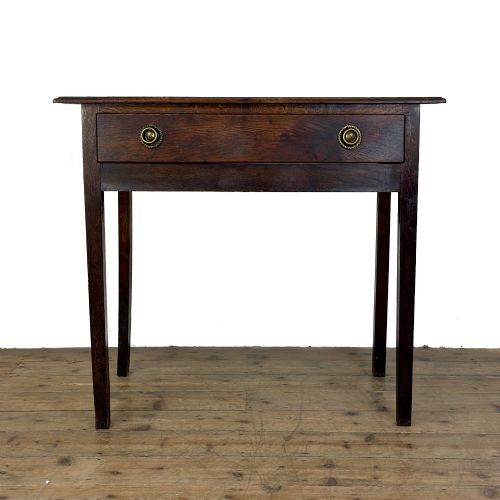
A country oak lowboy is essentially a compact side table or dressing table featuring drawers beneath the top surface. These utilitarian pieces originate primarily from the eighteenth century, spanning the Georgian period and frequently exhibiting regional English or Welsh craftsmanship.
Most examples function practically as side tables, hall tables, or small desks equipped with one to three drawers. The form prioritises function and honest construction over ornate display, serving traditional domestic spaces with understated utility.
How they were made
Makers utilised solid timber, constructing these tables predominantly from oak with occasional use of secondary woods for internal drawer components. The primary material provides a dense, durable framework designed to withstand decades of heavy household use.
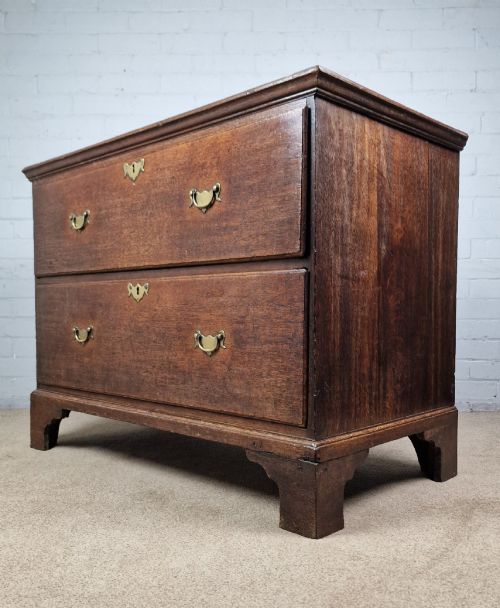
Metal hardware appears in the form of brass drop handles and drawer pulls, complementing the warm tones of the timber. Joinery relies on traditional hand-cut methods appropriate for regional country workshops of the period.
Retail Price Guide 2026
Typical UK retail prices for country oak lowboy, calculated from the Sellingantiques database of over a million retail prices indexed since 2003. This retail price guide relies exclusively on Sellingantiques data; no external sources or auction records are used, so the figures do not describe the wider market.
Every lowboy hides a multitude of lost hairpins and stray buttons within the dusty depths of its hand-dovetailed drawers.
What varies in quality
Quality rests upon the integrity of the timber selection and the retention of original brass hardware. Tables displaying well-figured grain and honest patination sit at the upper end of the scale compared to those with heavily altered surfaces.
Proportion and regional character distinguish finer provincial cabinetwork from later revival interpretations. Pieces retaining their original structural framing and drawer configurations command greater appreciation among collectors.
The Country Oak Lowboy Glossary
- Lowboy
- A small table with drawers, typically standing on four legs and used historically as a dressing table or side table.
- Georgian
- Relating to the period of British history covering the reigns of the first four Georges, associated with specific classical furniture styles.
- Oak
- A hard, durable timber native to Britain, widely utilised for country-made furniture due to its strength and distinct grain.
- Dresser Base
- The lower portion of a Welsh dresser, functioning similarly to a lowboy when adapted or built as a standalone side table.
- Patina
- The surface sheen and colour developed by timber over centuries through handling, light exposure, and polishing.
Frequently Asked Questions
What is a country oak lowboy used for?
These pieces function traditionally as side tables, hall tables, or compact desks within domestic interiors.
The drawer configuration allows for practical storage of small household items while maintaining a modest footprint.
How do I date a country oak lowboy?
Dating relies on examining construction methods, timber characteristics, and hardware styles. Eighteenth-century examples show hand-cut joinery and period-appropriate brass fittings.
Later nineteenth-century revival pieces often display different internal secondary woods and machine-influenced details.
Are all lowboys Georgian?
Many lowboys date from the Georgian era, particularly the mid to late eighteenth century. However, production extended into the Victorian period and the twentieth century through revival styles.
Evidence shows pieces ranging from the seventeen-fifties through to nineteen-twenty.
What distinguishes country oak from finer furniture?
Country furniture prioritises robust utility and local materials over sophisticated metropolitan fashions. Makers utilised native oak rather than imported mahogany or walnut.
The resulting pieces possess straightforward proportions and regional character distinct from urban cabinetwork.