
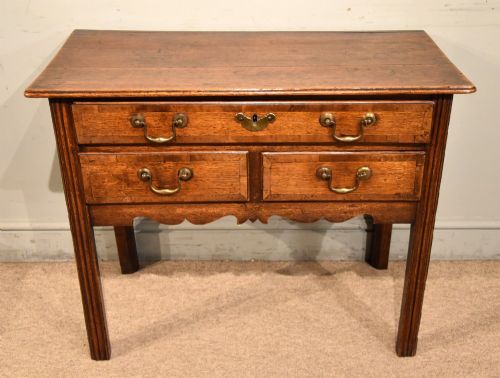
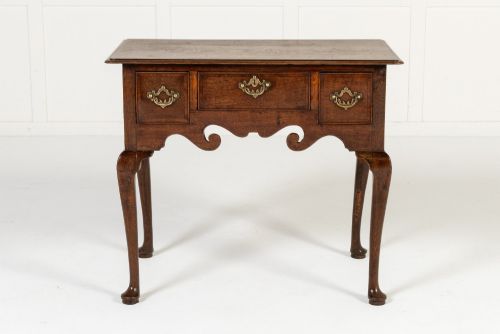
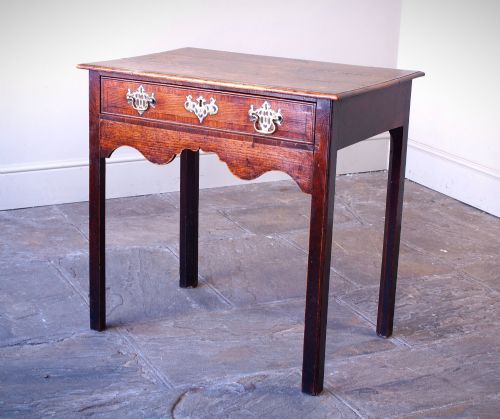
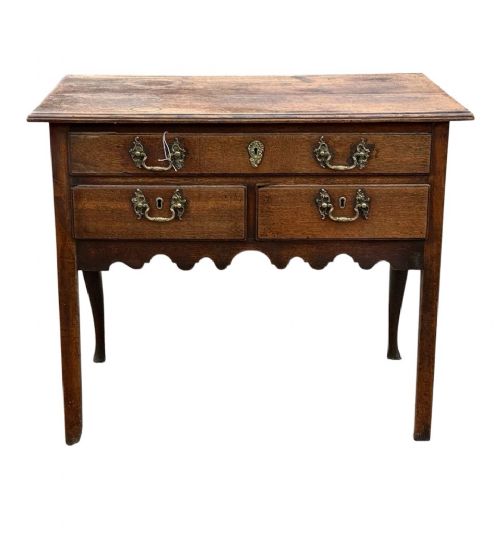

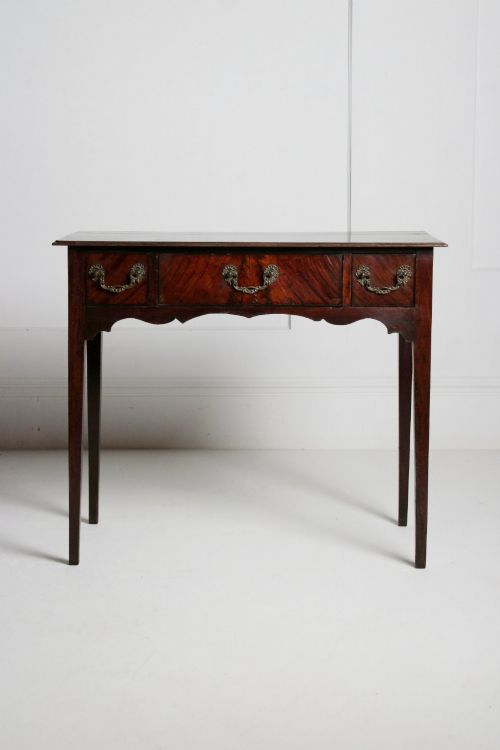


Carved Apron Lowboy
A carved apron lowboy is a low side table with a decorative skirt, offering period charm and practical storage for any room.
What They Are
When searching for a carved apron lowboy, you are looking at eighteenth-century side tables and dresser bases designed for domestic use. These pieces typically feature a low frame with multiple drawers beneath the top surface.
The versions you are most likely to meet on this page hail from the Georgian period, including the George II era and the year seventeen fifty. They survive in classic forms that function well as compact desks or side tables.
Originating in the eighteenth century, these lowboys embody the practical elegance of early British furniture design. They sit low to the floor and provide convenient drawer space without dominating a room.
How They Were Made
Cabinet makers utilised a variety of timbers to construct these tables, including oak, walnut, mahogany, and fruitwood. These woods were chosen for their durability and attractive grain patterns.
Metal hardware such as brass handles and escutcheons complemented the timber construction. Artisans shaped the aprons and frames by hand, employing traditional joinery techniques suited to the period.
Retail Price Guide 2026
Typical UK retail prices for carved apron lowboy, calculated from the Sellingantiques database of over a million retail prices indexed since 2003. This retail price guide relies exclusively on Sellingantiques data; no external sources or auction records are used, so the figures do not describe the wider market.
Every lowboy hides its own tiny secret in the depth of its drawers, built back when pockets were large and keys were precious.
What Varies in Quality
The choice of primary timber significantly influences the standing of a lowboy, with richly figured walnut and mahogany generally commanding greater attention than plain oak. The selection of wood dictates the visual depth and texture of the finished piece.
The finesse of the woodwork around the skirt and legs sets finer examples apart from simpler utilitarian ones. Delicately shaped aprons and well-proportioned drawer configurations demonstrate a higher level of artisan skill.
The Carved Apron Lowboy Glossary
- Lowboy
- A small table with drawers, built low to the ground during the eighteenth century for domestic storage. It often serves as a side table or dressing base.
- Dresser base
- A term used interchangeably with lowboy in early listings to describe a low furniture piece with drawer storage. These tables pre-date modern sideboard designs.
- Escutcheon
- A protective plate surrounding a keyhole on a drawer front. These are commonly cast from brass on period tables.
Frequently Asked Questions
What is a lowboy used for?
These tables served primarily as compact storage units and dressing surfaces in eighteenth-century homes. Their low profile made them suitable for smaller chambers where a tallboy or large chest would not fit.
Today, buyers utilise them as hallway tables, writing desks, or elegant bedside surfaces. The drawers provide discreet storage for small daily items.
How do I date an 18th century lowboy?
Dating relies on observing the timber species, construction methods, and stylistic cues of the Georgian period. Oak and walnut typically point towards the earlier part of the eighteenth century, while mahogany became more prominent later.
The presence of original brass hardware and hand-cut dovetails in the drawer construction further helps confirm the age of the piece. Comparing the leg style and apron shaping to known Georgian examples narrows down the decade.
Are all lowboys made of mahogany?
No, makers utilised a range of regional and imported timbers depending on availability and fashion. Oak and fruitwood appear frequently alongside walnut and mahogany in early examples.
Each timber brings a distinct character and colour to the table. Oak offers a robust, traditional grain, while fruitwood and walnut display softer, warmer tones.
How do I fit a lowboy into a modern room?
The modest proportions of these side tables allow them to sit comfortably against walls in living rooms, hallways, or bedrooms. Their neutral timber tones blend easily with various interior styles.
Keep the surface uncluttered to let the grain and carved apron remain the focal point. They pair well with both antique and contemporary surrounding furnishings.