






Carved Oak Lowboy Desk
A carved oak lowboy desk is a compact, multi-drawer dressing or writing table prized for its timber grain and utility.
Carved Oak Lowboy Desk
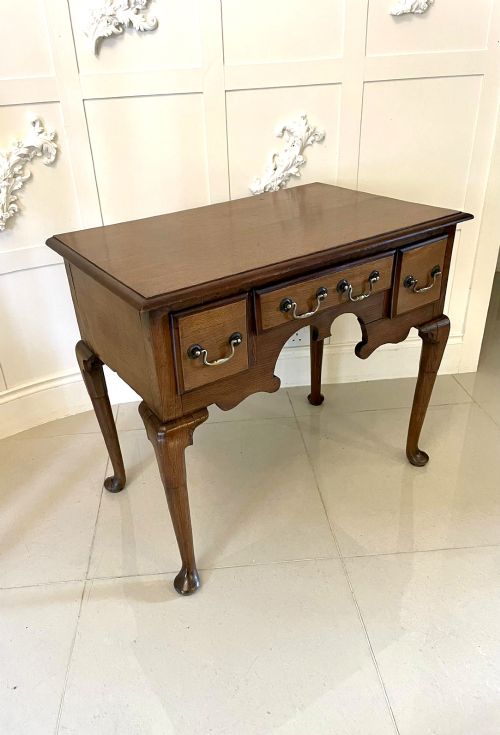
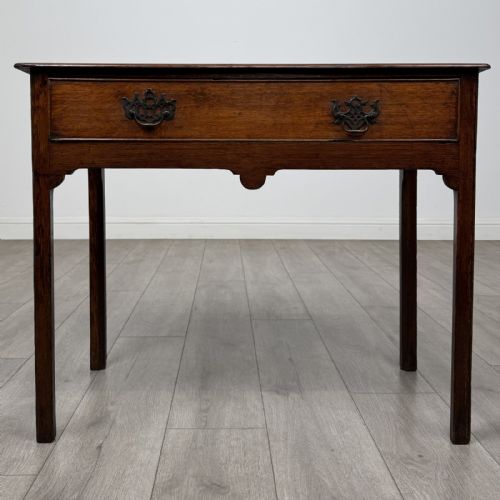
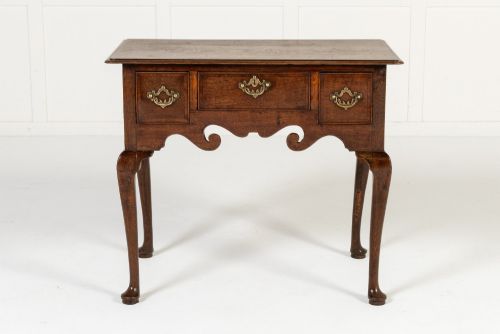
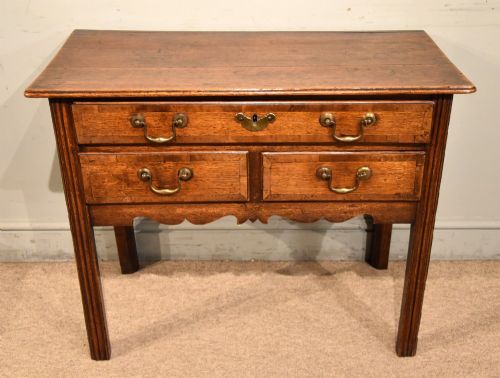
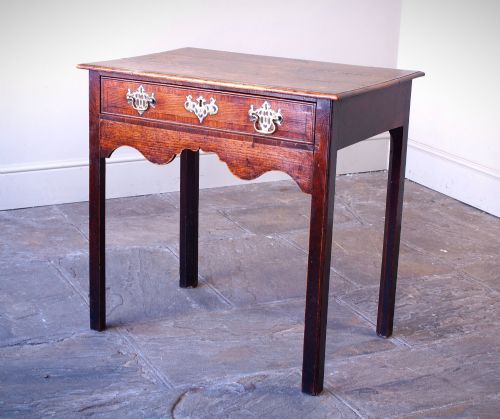
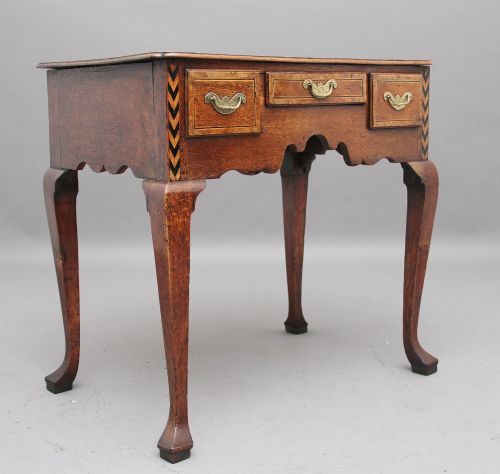
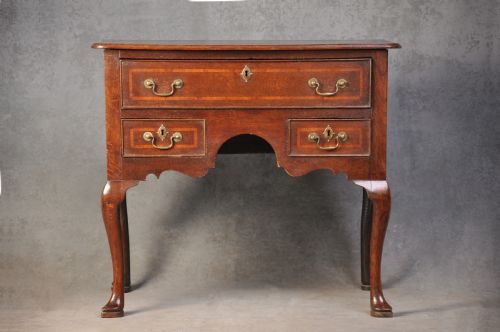
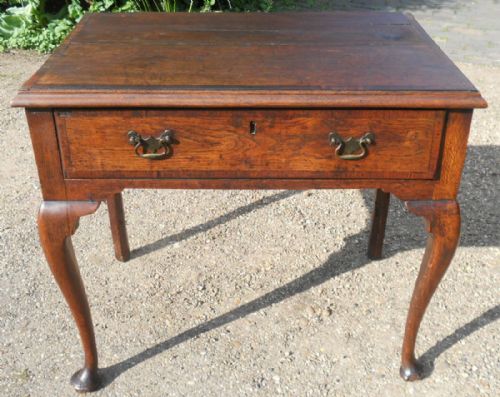
A carved oak lowboy desk typically presents as a low table featuring one to three drawers beneath the top surface. You are most likely to meet 18th-century Georgian examples alongside country vernacular pieces on this page.
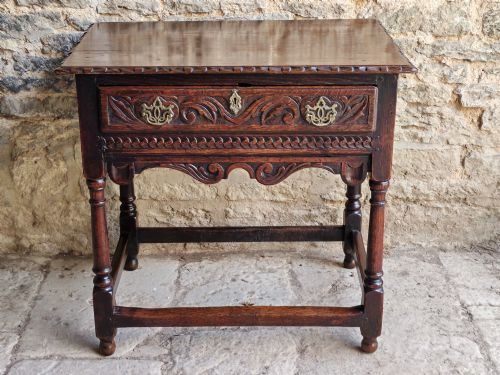
Makers designed these small tables to serve multiple domestic functions, including dressing tables, writing desks, and lamp tables. The listings span periods from the 17th century through the Georgian era, reflecting regional English and Welsh cabinetry.
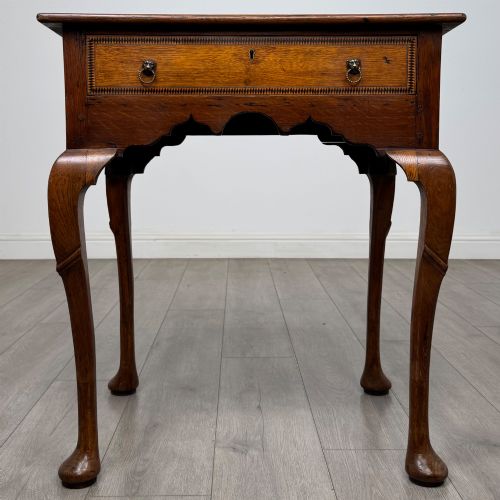
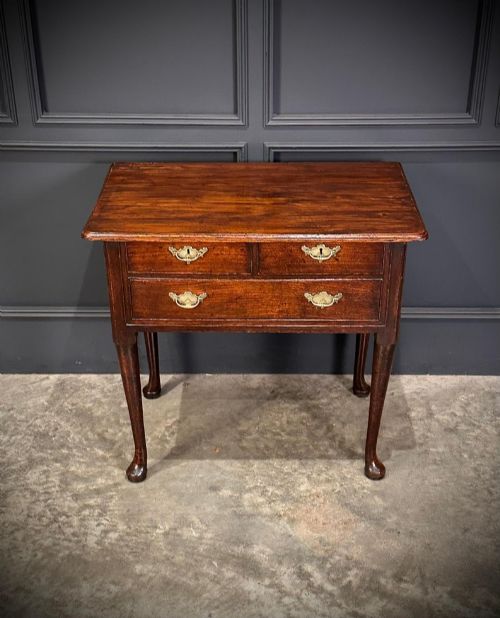
The form combines sturdy timber construction with accessible proportions suitable for smaller rooms. Side tables and lowboys share similar foundational silhouettes defined by straight or cabriole legs supporting a drawer-fitted frieze.
Materials and construction methods
Cabinet makers built these pieces primarily using solid oak, occasionally incorporating fruitwood elements and timber inlay for contrast. Secondary details relied on brass handles, drop pulls, and iron fixings.
Joinery techniques relied on pegged mortise and tenon frames to ensure rigidity across the table structure. Surfaces were planed and finished by hand, highlighting the natural figuring of the oak.
Carved Oak Lowboy Desk Retail Price Guide 2026
Typical asking prices for carved oak lowboy desk among the pieces listed under this phrase on Sellingantiques today, from the lower quarter to the upper quarter. They describe what is for sale here now, not the wider market.
Compact dressing tables often doubled as writing desks, accommodating powdered wigs by day and correspondence by night.
Distinctions in craftsmanship
Superior examples demonstrate tighter timber selection and more refined carving on the legs or apron. The crispness of the drawer linings and the retention of original brass hardware elevate certain pieces above standard vernacular items.
Proportion and stance dictate the visual appeal of a lowboy, with well-balanced cabriole legs or slender straight supports showing greater sculptural intent. The depth of patination on the oak surface reflects age and handling history.
The Carved Oak Lowboy Desk Glossary
- Lowboy
- A small table with drawers, typically standing on four legs, used historically for dressing or writing.
- Frieze
- The horizontal band beneath the top surface of a table that usually houses the drawers.
- Cabriole leg
- A furniture leg that curves out and then in, resembling the shape of an animal's leg.
- Vernacular furniture
- Domestic pieces made by local craftsmen using regional styles and readily available woods.
- Patina
- The surface sheen and colour developed on timber through decades of use, ageing, and polishing.
Carved Oak Lowboy Desk: Frequently Asked Questions
What is a lowboy used for?
Historically, these low tables served multiple domestic purposes ranging from dressing tables in bedrooms to writing desks and side tables in reception rooms.
Their compact height made them versatile surfaces for daily tasks and personal grooming.
How do you date an oak lowboy?
Dating relies on observing construction methods, timber choice, and stylistic details such as leg shape and drawer assembly.
Earlier 17th-century pieces often display heavier framing, while 18th-century Georgian examples introduce more refined cabriole legs and lighter proportions.
Where were lowboys made?
English and Welsh regional workshops produced the vast majority of these tables during the 17th and 18th centuries.
Local timber traditions heavily influenced whether makers chose plain oak, regional fruitwood, or specific inlay patterns.