

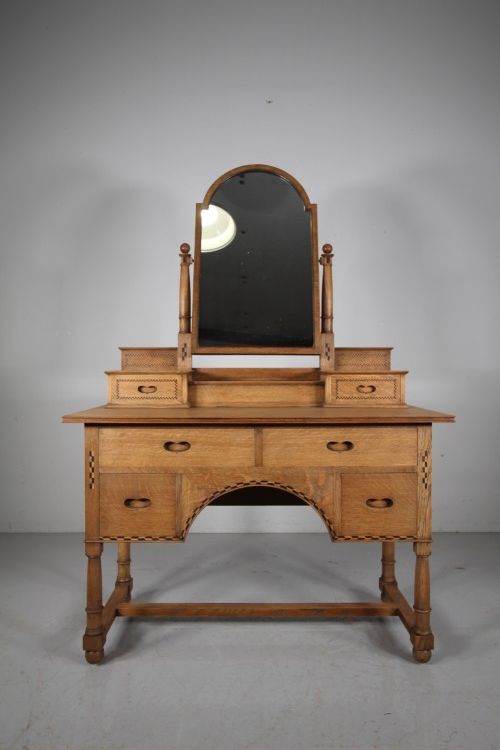
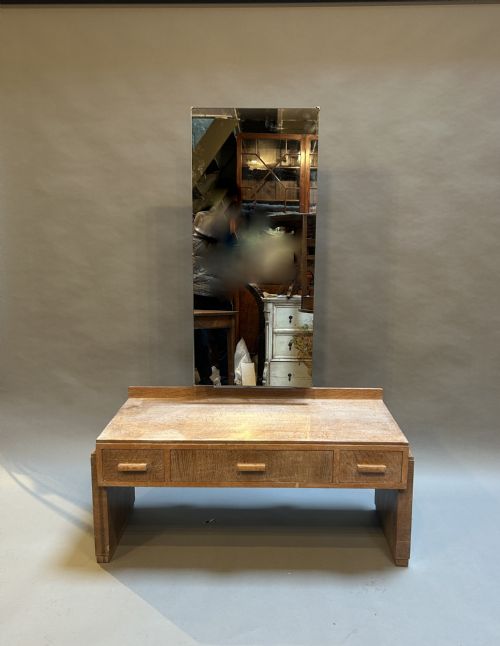


Antique Oak Vanity Desk
An antique oak vanity desk brings sturdy timber and practical drawers together, offering a functional surface that doubles as a compact dressing station or writing table.

Antique Oak Vanity Desk
When you search for an antique oak vanity desk, you encounter a practical fusion of storage and surface space built primarily during the eighteenth, nineteenth, and early twentieth centuries. These pieces span formal Georgian lowboys, elaborate Victorian designs, and streamlined Arts and Crafts or Art Deco interpretations.
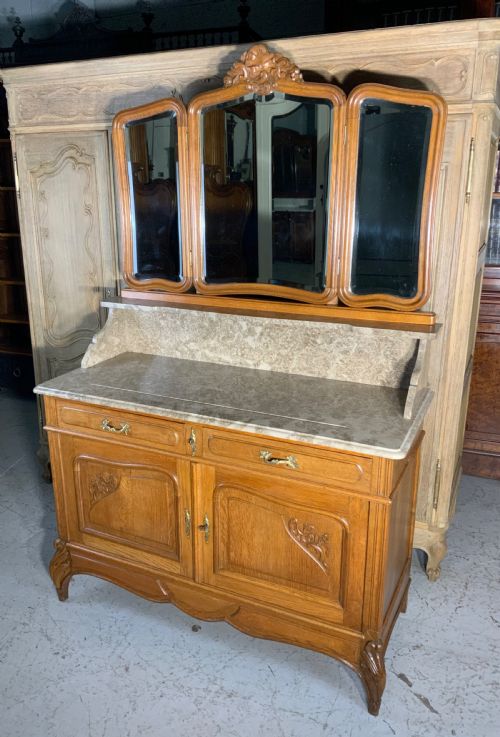
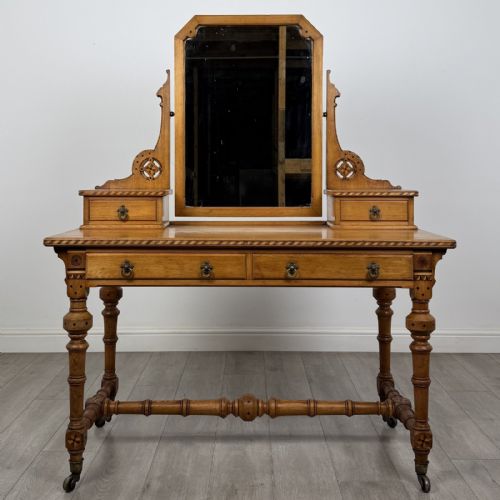
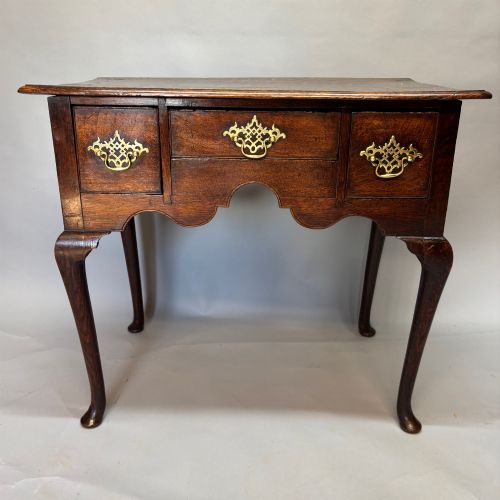
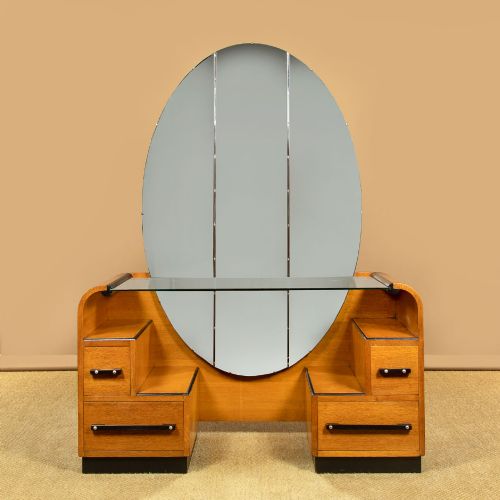
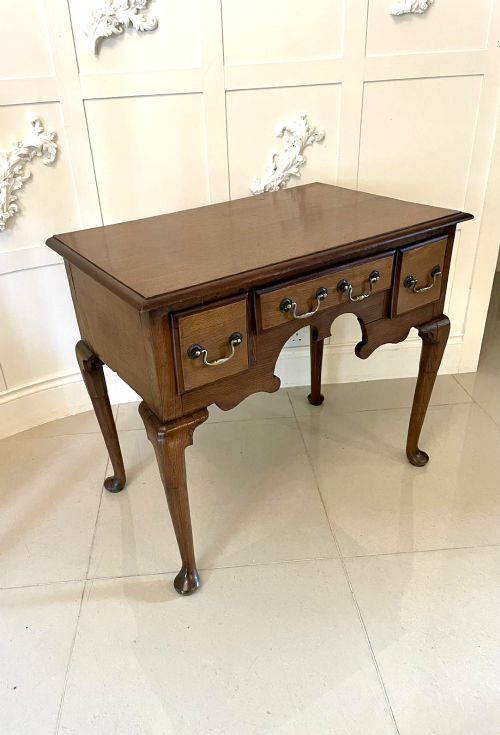
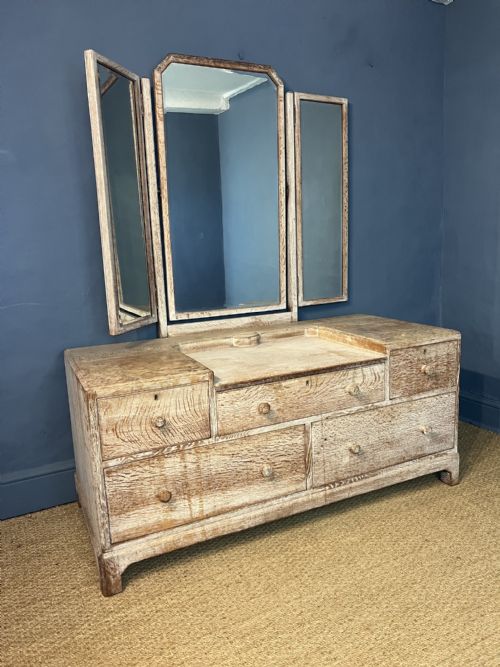
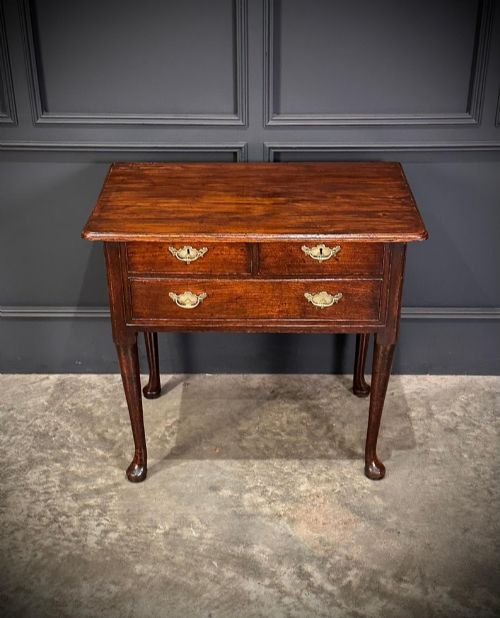
The most common forms on this page include eighteenth-century lowboys functioning as writing tables, Edwardian dressing tables fitted with mirrors, and robust 1930s limed oak pieces. They serve well in bedrooms as dressing chests or in reception rooms as writing desks.
Origins vary from English regional workshops to French provincial makers and influential London firms. Buyers choose them for their honest construction, durable timber, and versatility in modern interiors.
Materials and construction methods
Solid oak provides the structural core for these desks, often selected for its prominent grain and resilience, while variations like limed or bleached oak alter the surface tone. Secondary woods support internal drawer framing, and brass hardware such as drop handles or key escutainsets finish the exterior.
Craftsmen utilised traditional joinery, including dovetail joints for drawers and mortise-and-tenon framing for stability. Decorative elements range from hand-carving and marquetry inlay to stencilled decoration and polished glass mirrors.
Antique Oak Vanity Desk Retail Price Guide 2026
Typical asking prices for oak vanity desk among the pieces listed under this phrase on Sellingantiques today, from the lower quarter to the upper quarter. They describe what is for sale here now, not the wider market.
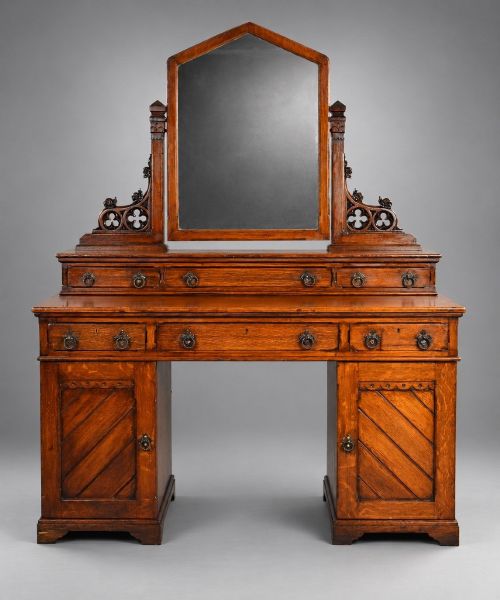
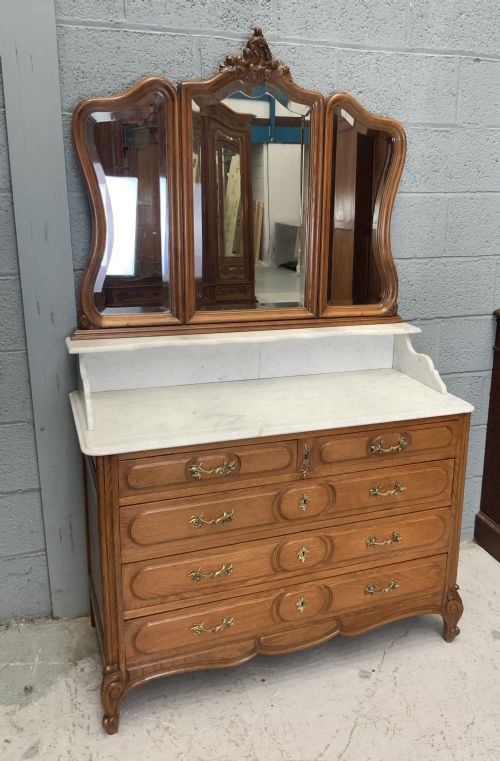
Listings feature oak desks spanning the eighteenth century through the 1930s, incorporating brass hardware, marble tops, and glass mirrors.
Distinctions in quality
Quality rests on the integrity of the timber selection and the precision of the cabinetmaker's joinery, distinguishing utilitarian items from high-workshop commissions. Pieces bearing maker documentation or specific atelier labels command greater recognition among collectors.
Proportion and originality dictate the tier of a piece, separating straightforward regional furniture from sophisticated examples featuring marquetry, integrated mirrors, or distinctive regional styles like the Cotswold School.
Heals·Heal and Sons·Shapland and Petter·Wright and Hunter
The Antique Oak Vanity Desk Glossary
- Lowboy
- A small oak table with drawers, typically dating from the eighteenth century and used historically for dressing or writing.
- Limed oak
- A finishing technique that fills the open grain of oak with a whitish pigment, popular in 1930s modern design.
- Dovetail
- A traditional interlocking joint utilised in drawer construction for superior strength and durability.
- Marquetry
- Decorative veneer work arranged in pictorial patterns on the surface of the wood.
- Kneehole pedestal
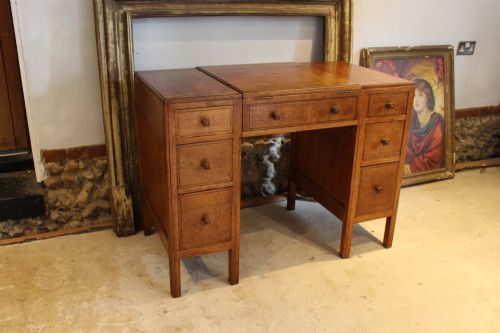
- A central recess flanked by banks of drawers, allowing a person to sit comfortably at the desk.
Antique Oak Vanity Desk: Frequently Asked Questions
What is an antique oak vanity desk?
It is a heritage timber table or chest equipped with drawers and a flat top, designed for grooming or writing.
These pieces bridge the gap between functional storage and decorative antique furniture.
How do I date an antique oak vanity desk?
Dating relies on examining construction methods, hardware types, and stylistic indicators such as cabriole legs or geometric mouldings.
Eighteenth-century pieces typically feature hand-cut dovetails and pegged joints, whereas twentieth-century examples display modernist influences.
Where should I place an antique oak vanity desk?
They fit well in bedrooms as functional dressing tables or in studies and hallways as compact writing desks.
Their neutral timber tones complement both traditional period homes and contemporary spaces.
Are these desks suitable for daily writing use?
Many lowboys and dressing tables provide adequate surface depth and knee clearance for writing.
Checking the internal drawer clearance and height ensures comfort for regular seating.
What distinguishes Arts and Crafts oak desks?
Arts and Crafts pieces emphasise visible hand-craftsmanship, honest joinery, and minimal applied ornament.
Sturdy construction and branded workshop labels often accompany this specific design movement.