


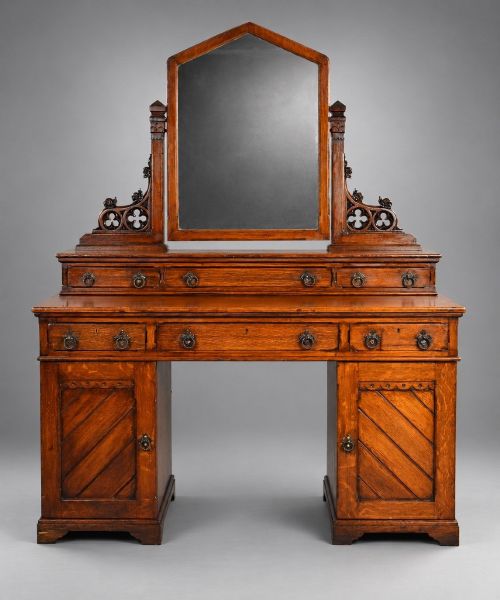
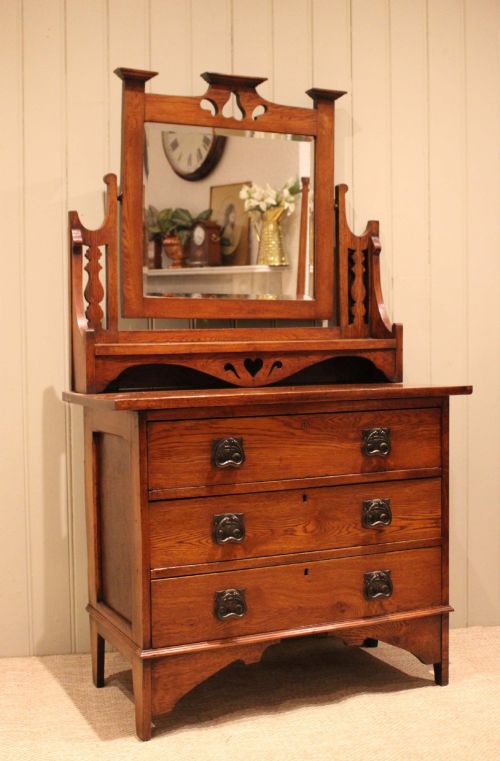
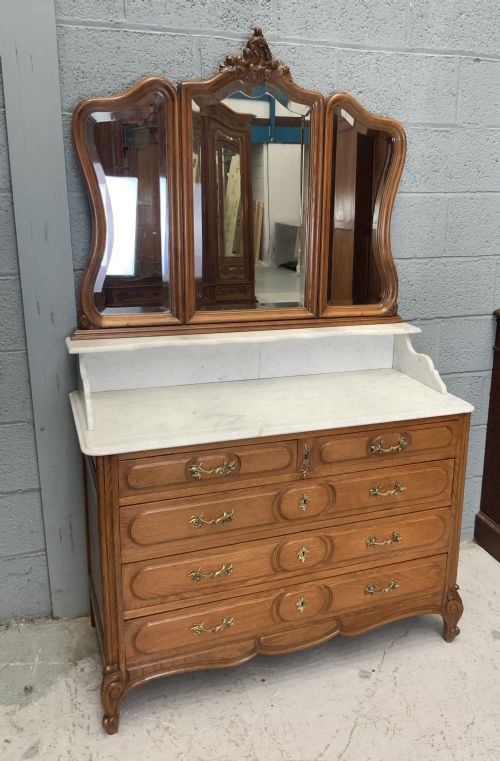


Brown Oak Dressing Chest
A brown oak dressing chest brings rich timber grain and period utility to a bedroom, offering surface space and drawer storage in a single sturdy form.
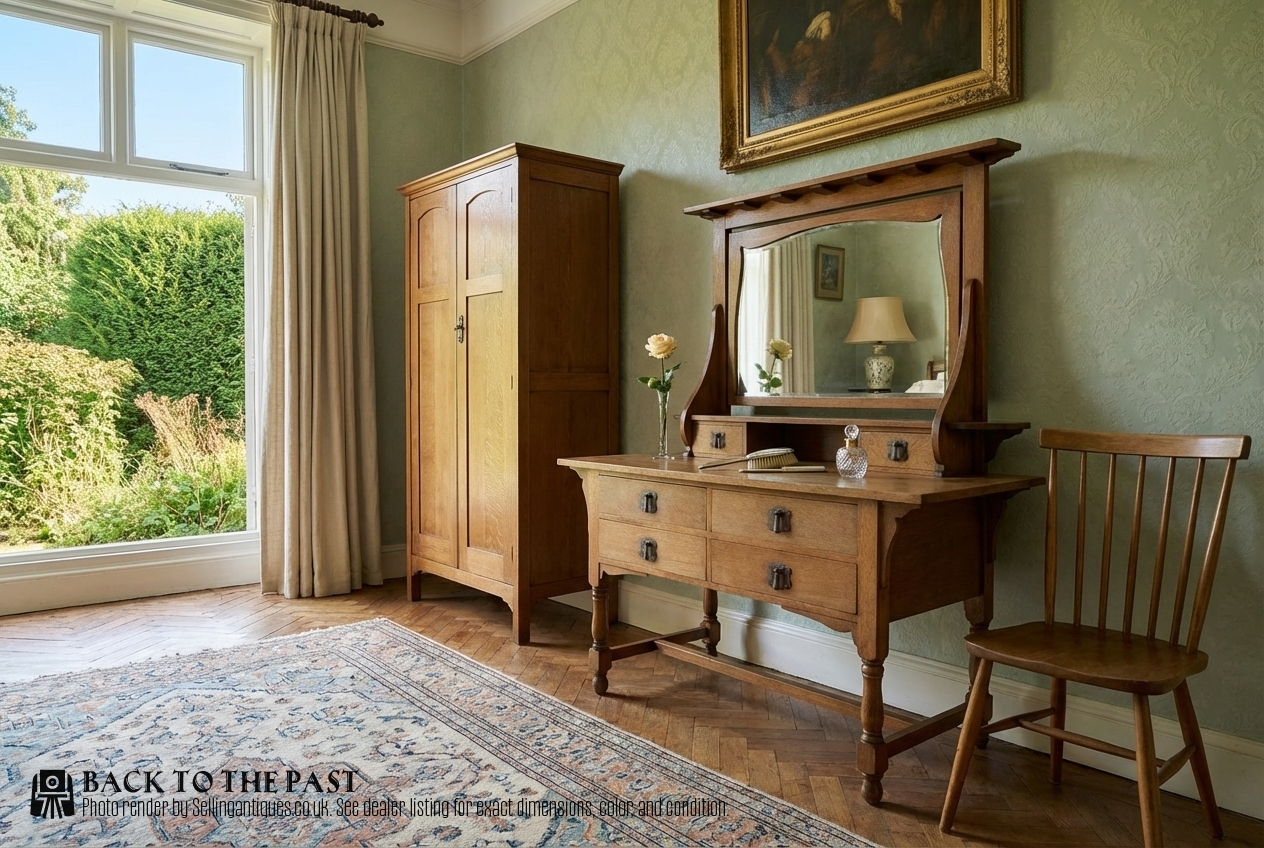
Brown Oak Dressing Chest
A brown oak dressing chest combines the functional storage of a chest of drawers with the surface space and mirror of a dressing table, originating across several centuries.
The versions met on this page span the Georgian, Victorian, Edwardian and early twentieth century eras, reflecting evolving domestic habits and cabinetmaking traditions.
Makers utilised resilient timber such as oak, sometimes pairing the chest with dressing tables, lowboys, washstands and writing desks to furnish period interiors.
Materials and construction
Cabinetmakers constructed these pieces primarily from solid oak, occasionally incorporating secondary timbers and brass, glass, iron or metal hardware for handles and fittings.
Decoration relied on structural elements, carving, and subtle inlay using materials like boxwood and ebony, alongside marble tops on specific washstand and dressing forms.
Brown Oak Dressing Chest Retail Price Guide 2026
Typical asking prices for brown oak dressing chest among the pieces listed under this phrase on Sellingantiques today, from the lower quarter to the upper quarter. They describe what is for sale here now, not the wider market.
Listings span multiple eras from the eighteenth century through to the 1930s, incorporating oak, brass, glass, and marble.
Assessing quality and character
Quality rests in the selection of the timber, the crispness of any carved detail, and the integrity of the joinery rather than superficial adornment.
Superior examples demonstrate thoughtful proportions, balanced drawer construction, and original metalwork that complements the rich grain of the oak.
Wright & Hunter of Belfast·Harris Lebus of London·Heals
The Brown Oak Dressing Chest Glossary
- Brown oak
- Timber featuring a natural, rich, dark brown coloration caused by a fungus while the tree is standing. It is prized for its depth of tone and distinctive grain patterns.
- Lowboy
- A small oak or cherry wood table with drawers, often used as a dressing table in the eighteenth century. It sits on four legs and provides a compact surface.
- Inlay
- A technique where contrasting materials such as boxwood and ebony are inserted into the oak surface to create decorative patterns. It adds fine detail to Arts and Crafts and Edwardian pieces.
- Washstand
- A piece of furniture designed for washing, sometimes featuring a marble top and related in form to dressing chests. These pieces served domestic hygiene needs before plumbed bathrooms.
Brown Oak Dressing Chest: Frequently Asked Questions
What is a brown oak dressing chest?
A brown oak dressing chest is a piece of furniture designed for bedroom use, combining drawers for storage with a surface and often a mirror for grooming.
These pieces reflect the styles of their respective periods, ranging from Georgian simplicity to Arts and Crafts movement ideals.
How do I date a dressing chest?
Dating relies on examining the construction methods, timber choice, hardware, and stylistic indicators such as Arts and Crafts carving or Georgian proportions.
Evidence from periods like the Edwardian era and the nineteenth century provides comparative benchmarks for specific construction details.
Are these pieces made of solid oak?
The listings show oak as the primary material, frequently accompanied by brass, glass, and occasional inlay woods like boxwood and ebony.
Cabinetmakers utilised the natural strength of oak to build durable furniture intended for daily domestic utility.
How do I care for antique oak?
Antique oak benefits from stable indoor humidity and temperature, away from direct heat sources that can dry out the timber.
Regular dusting with a dry cloth helps maintain the finish without the need for heavy chemical polishes.