
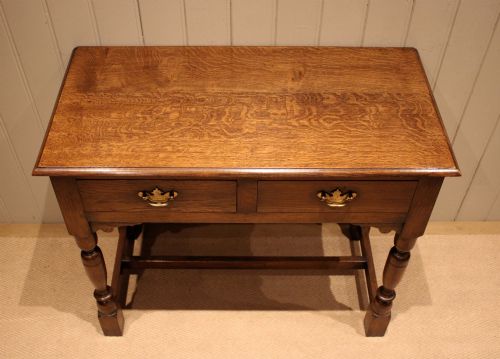

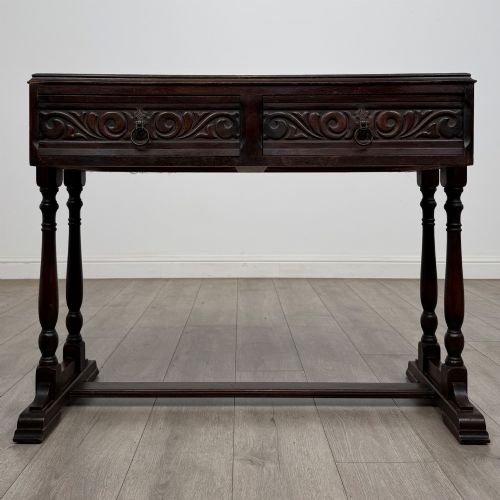
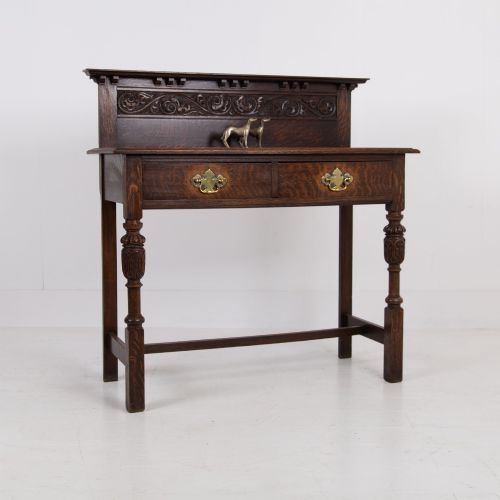


Jacobean Revival Dressing Table
These pieces of jacobean revival dressing table bring heavy oak and period weight to a bedroom.
What they are
A jacobean revival dressing table brings seventeenth-century architectural motifs into early twentieth-century domestic spaces. These pieces combine traditional woodwork with the practical needs of Edwardian and nineteen-twenties bedrooms.
Most examples found here date from the Edwardian era up to nineteen-twenty. They use sturdy timber construction to anchor the room while providing surface space and mirror arrangements for daily grooming.
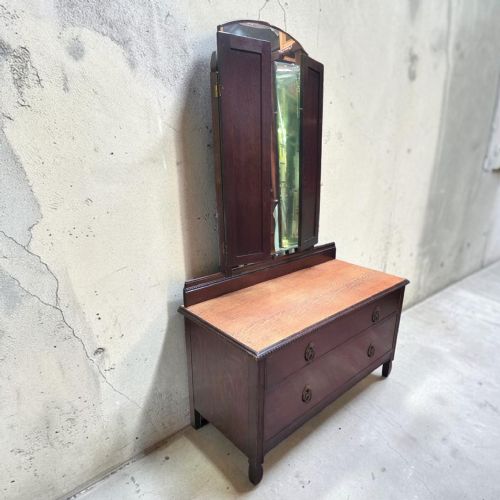
The form typically includes drawers flanked by upright supports holding either a triple mirror or a single oval glass. Buyers encounter sturdy oak frames built to last generations rather than light veneer constructions.
How they were made
Carpenters built each jacobean revival dressing table using solid oak timbers chosen for durability and strong grain patterns. These frames rely on traditional joinery methods to support heavy drawer loads and mirror attachments.
Makers shaped structural elements like legs and stretchers using turning lathes to create distinct profiles such as barley twists. Metal hardware including brass handles and hinges completed the assembly alongside bevelled glass mirrors.
Mirror configurations across the available inventory include both triple mirror layouts and single oval glass formats.
What varies in quality
The distinction between standard and superior pieces rests on the weight of the timber and the depth of the turned details. Better examples feature crisper carvings and more substantial oak construction throughout the carcass.
Mirror glass quality and the finishing of the original brass hardware separate ordinary workshop output from finer furniture. Well-executed barley twist legs and balanced proportions indicate greater care during construction.
The Jacobean Revival Dressing Table Glossary
- Jacobean Revival
- A nineteenth and twentieth century furniture style imitating the heavy, geometric designs of the early seventeenth century. It relies heavily on dark oak and architectural mouldings.
- Barley Twist
- A spiral turning technique used on furniture legs and supports. This decorative form creates a dynamic shadow effect along vertical wooden posts.
- Triple Mirror
- An arrangement of three hinged looking glasses mounted on a dressing chest. The side panels adjust to provide multiple angles for the user.
- Edwardian
- The period of British history spanning the reign of King Edward VII until nineteen-ten. Furniture from this era often lighter proportions while referencing earlier historical styles.
Frequently Asked Questions
How do I date a dressing table?
Dating relies on examining the hardware, mirror fixings, and secondary timbers used in the drawers. Edwardian and nineteen-twenties pieces show specific machine-sawn marks and screw types.
Styles from this era often blend heavy revival motifs with lighter construction methods than genuine seventeenth-century originals.
Are these tables made of solid oak?
The pieces listed on this page utilise solid oak for their main structures and drawer fronts. This heavy timber provides the durability expected from revival furniture.
Builders selected oak to achieve the authentic seventeenth-century appearance required by the revival style.
How do I care for antique oak furniture?
Maintaining these surfaces requires simple dusting with a dry cloth and occasional application of appropriate beeswax. Avoid placing them near direct heat sources to prevent wood splitting.
Protecting the glass mirrors involves using standard glass cleaner applied to a cloth rather than sprayed directly onto the frame.