


Antique Vanity Table Mirror
An antique vanity table mirror brings historical charm and reflective function to a chest, dressing table, or washstand.
Antique Vanity Table Mirror
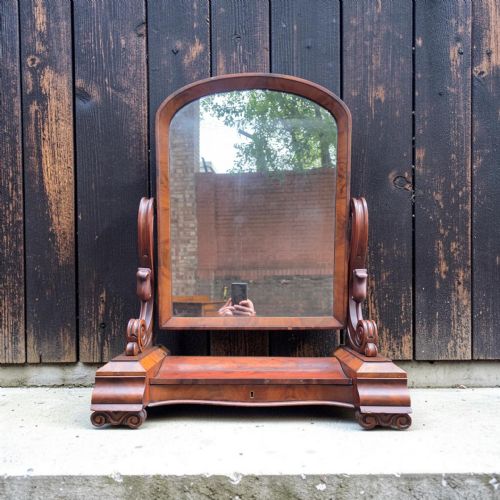
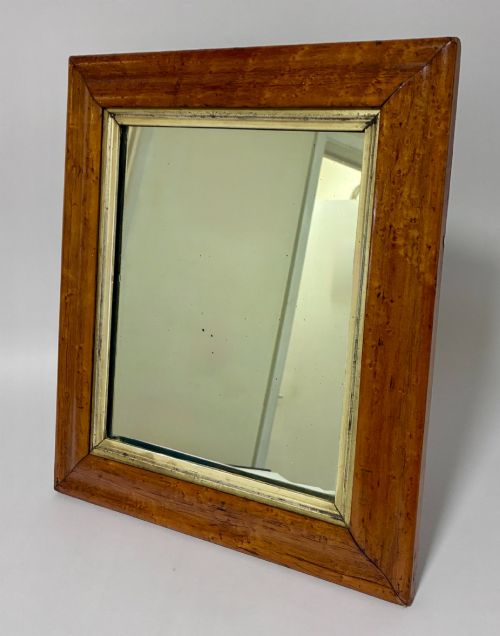
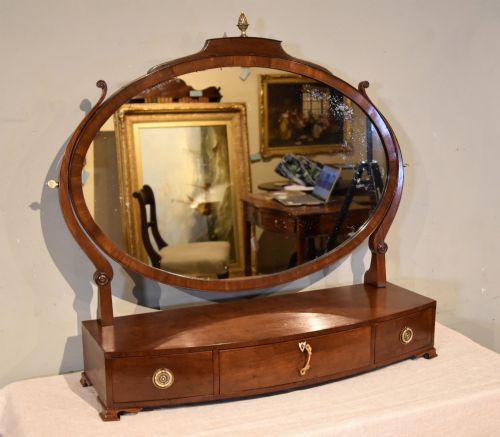
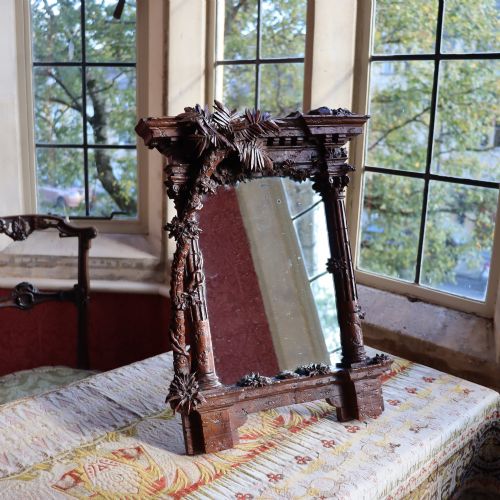
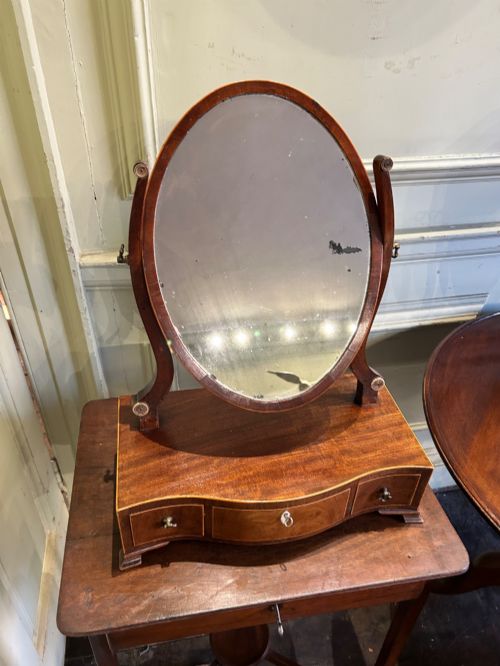
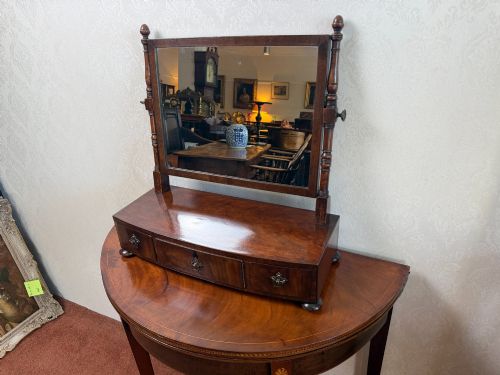
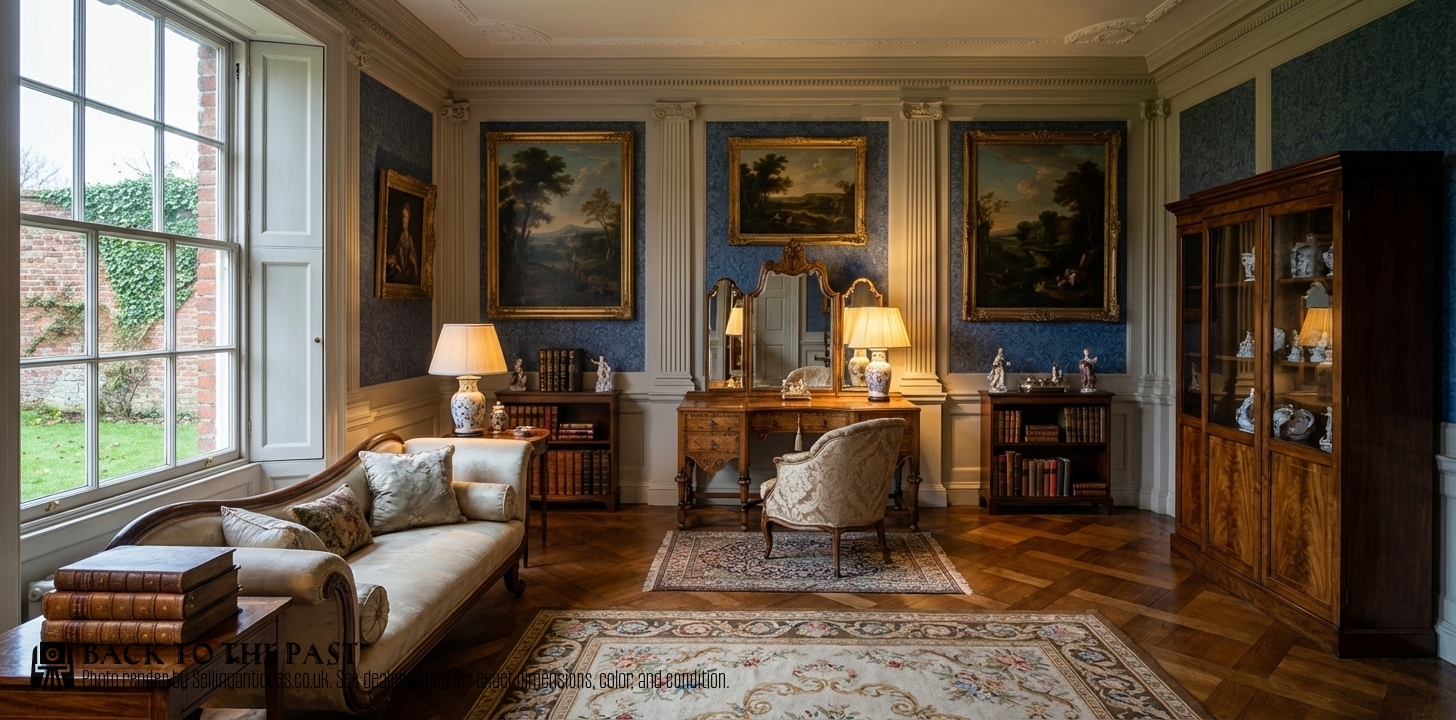
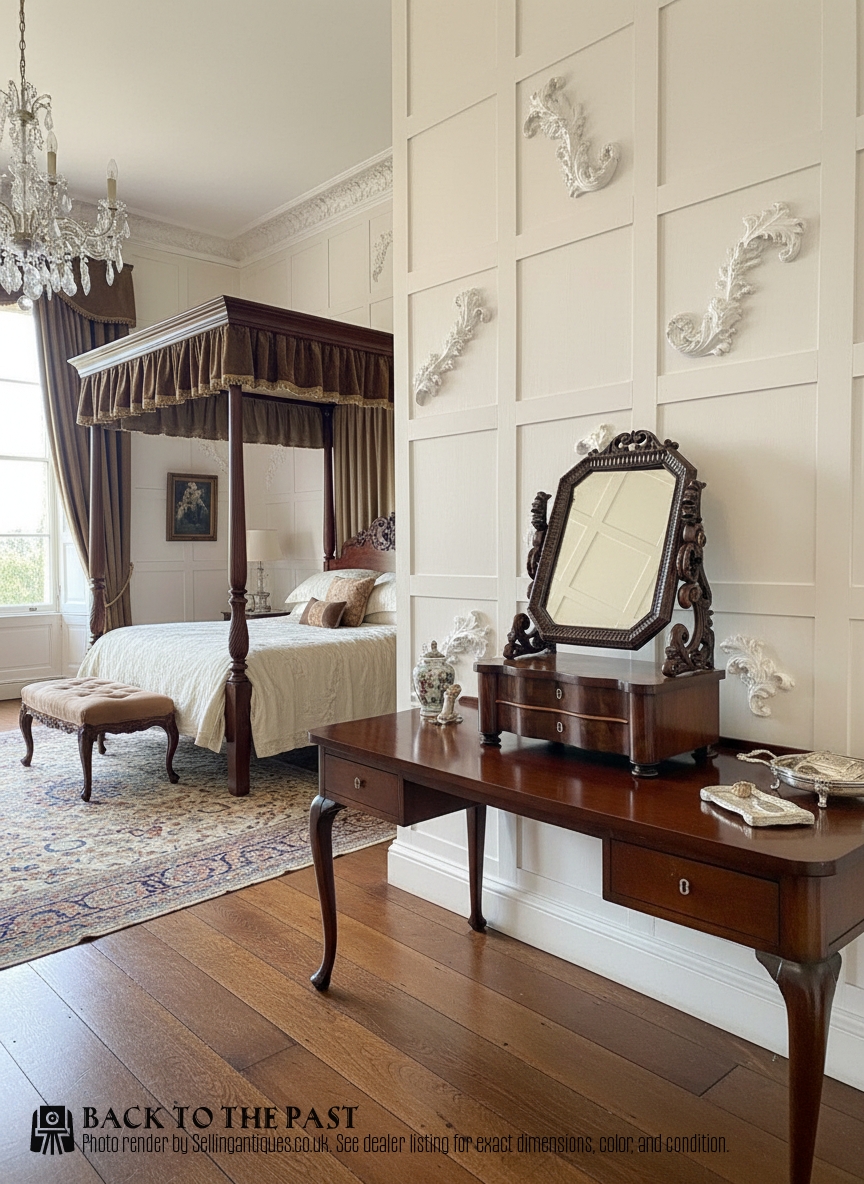
An antique vanity table mirror is a movable looking glass designed to sit upon a chest, table, or bureau rather than hang upon a wall. When you search for an antique vanity table mirror, you encounter smaller toilet mirrors, adjustable shaving stands, and swing mirrors meant for personal grooming. These items range from simple 18th-century pieces to elaborate 20th-century pedestal designs.
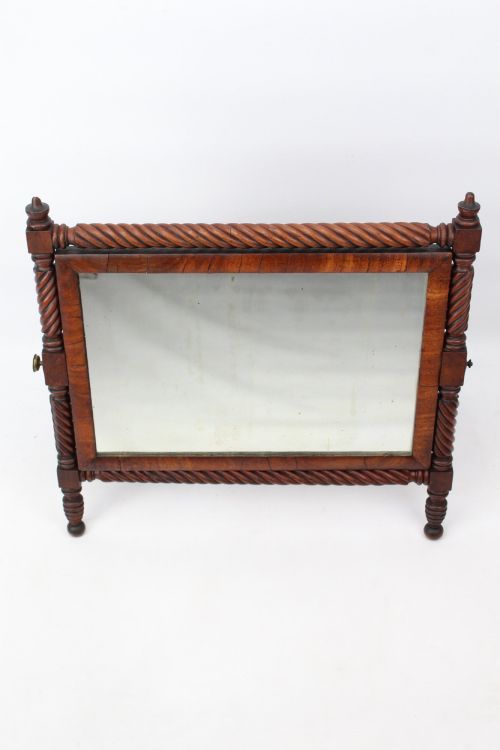
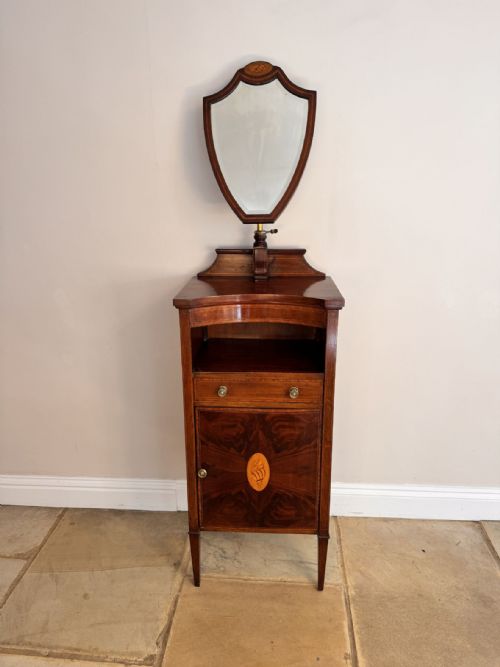
The versions most likely to meet you on this page span the Georgian, Victorian, and Edwardian eras up to the 1930s. Mahogany and walnut form the backbone of these offerings, often presented with swing plates mounted in wooden uprights and small box bases fitted with drawers. Smaller numbers arrive in brass, pewter, sterling silver, or lime wood.
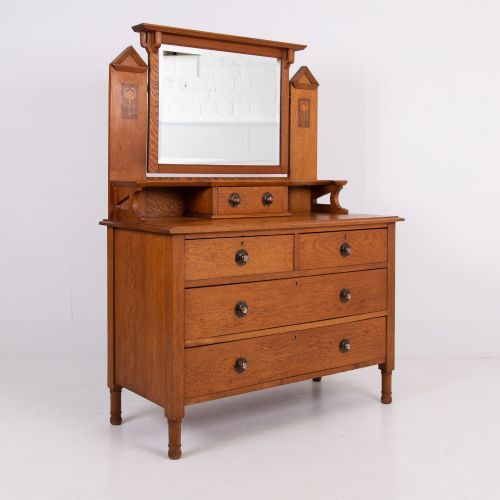
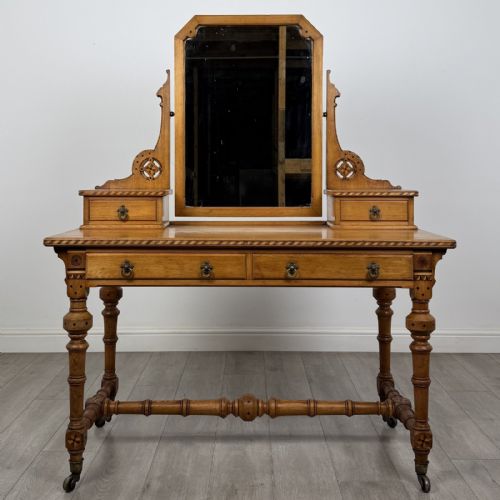
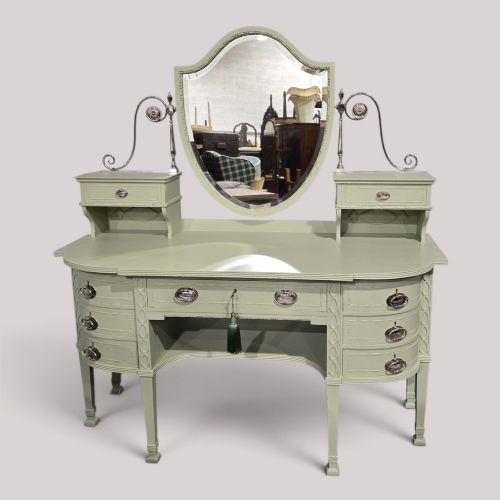
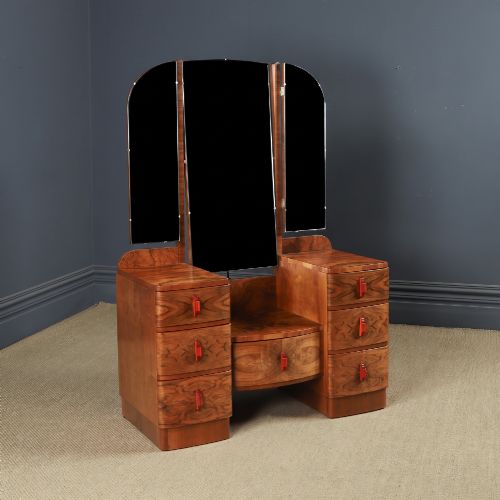
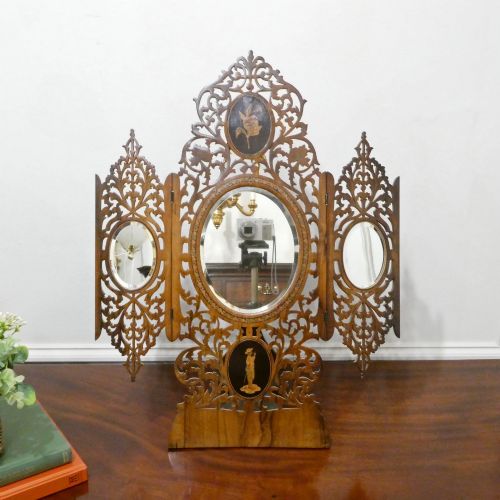
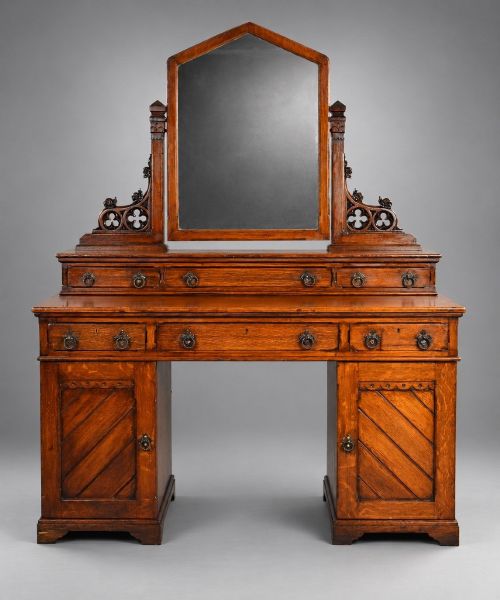
Beyond the basic mirror plate, the category includes triple-mirror dressing sets, cheval variations, and table-top bureau combinations. Some items function as standalone toilet mirrors, while others sit atop larger dressing tables and vanity units. The origins stretch across English workshops, French revival styles, and continental metalwork.
Materials and construction
Cabinetmakers constructed the wooden frames and bases from dense timbers like mahogany, walnut, oak, and satinwood, frequently employing burr veneers and boxwood stringing to create decorative surface patterns. These frames support pivoting mirror plates attached with brass pins or adjustable arms that allow the glass to tilt.
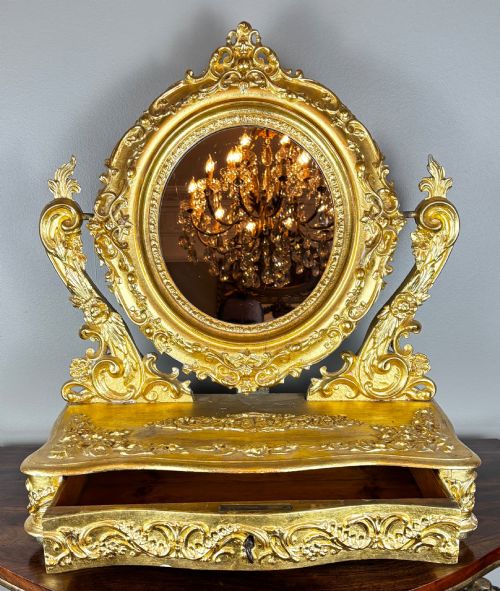
Metalwork frames utilise cast brass, gilt bronze, pewter, and sterling silver, sometimes incorporating champleve enamel or ormolu mounts for decorative effect. Hand-carved details appear on lime wood and mahogany pieces, reflecting stylistic revivals from Queen Anne to French Rococo and Art Nouveau.
Antique Vanity Table Mirror Retail Price Guide 2026
Typical asking prices for vanity table mirror among the pieces listed under this phrase on Sellingantiques today, from the lower quarter to the upper quarter. They describe what is for sale here now, not the wider market.
Listings feature periods from the 17th century through the Georgian and Victorian eras up to Art Deco 1930s designs.
What separates the finest examples
The quality of an antique vanity table mirror rests upon the selection of timber veneers, the crispness of any hand-carved ornamentation, and the proportion of the base to the mirror plate. Finer pieces display carefully matched burr walnut or figured mahogany, where wood grain flows symmetrically across the drawer fronts and frame.
Mechanisms also distinguish superior examples, such as smoothly operating brass adjustment screws, tightly fitted dovetail joints on the base drawers, and original mirror glass that retains its soft, aged depth. Heavier cast metals and solid silver frames exhibit sharp chasing and clear stamps, separating standard production from exceptional work.
Heal and Sons·Maples of London and Paris·WMF
The Antique Vanity Table Mirror Glossary
- Toilet mirror
- A smaller tabletop mirror, usually featuring a box base with small drawers, designed for placement on a dressing surface. These were essential bedroom furnishings in the eighteenth and nineteenth centuries.
- Swing mirror
- A looking glass hung on pivots between two vertical uprights, allowing the user to tilt the angle of the reflection. This mechanism is central to most traditional vanity table mirrors.
- Cheval mirror
- A large, full-length freestanding mirror supported by a frame with four feet or a pedestal base. Some smaller tabletop variations also adopt this pivoting full-frame structure.
- Stringing
- A narrow inlay of contrasting wood, such as boxwood, set flush into the surface of a darker timber like mahogany or walnut. It outlines panels and drawer fronts on better-quality furniture.
- Ormolu
- Gilt bronze mounts applied to furniture frames and mirror borders, popular in French revival and Empire styles. It adds decorative metallic contrast to the underlying wood.
Antique Vanity Table Mirror: Frequently Asked Questions
What is the difference between a toilet mirror and a dressing mirror?
A toilet mirror typically refers to a smaller tabletop glass mounted on a miniature chest or box base fitted with small drawers. These sat upon existing tables for grooming and storage.
Dressing mirrors often describe slightly larger standalone items or those integrated into larger dressing tables, though historical terminology frequently overlaps between the two terms.
How do I date an antique swing mirror?
Dating relies on timber choices, construction methods of the base drawers, and the shape of the mirror plate itself. Georgian pieces often feature shield or ovoid glass shapes with straight-grained mahogany.
Later Victorian and Edwardian examples introduce heavier carved frames, alternate metals, or darker walnut veneers, while 1930s versions embrace streamlined art deco geometry and blonde woods.
Were these mirrors originally part of larger tables?
Many tabletop mirrors were manufactured as independent pieces designed to sit on any suitable chest of drawers or surface. Others were paired directly with matching dressing chests or pedestals from the workshop.
Over time, individual mirrors and tables sometimes became separated or reunited, making the overall proportions and wood species key indicators of their original pairing.
How should I care for an antique mirror glass?
Original antique mirror glass often exhibits foxing, silver loss, or mild speckling, which forms part of its genuine historical character. Cleaning should be done gently with a soft cloth and mild cleaner, avoiding harsh chemicals.
Keeping the piece out of direct sunlight and managing room humidity prevents the wooden frames and veneers from warping or cracking over time.