



Antique Toilet Glass
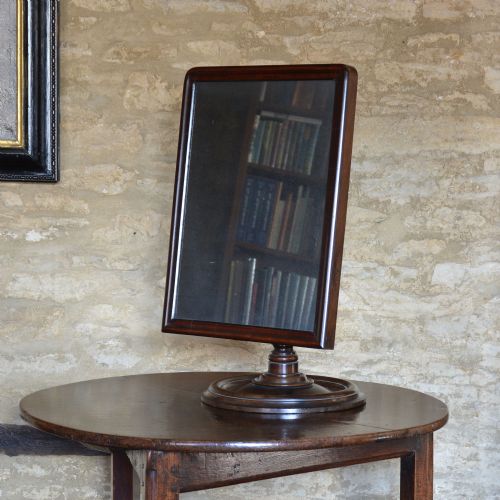
An antique toilet glass is a portable mirror designed for tabletop use, offering adjustable viewing angles for grooming and dressing.

Antique Toilet Glass
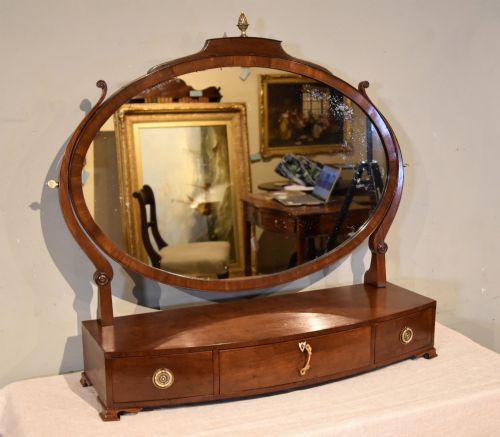
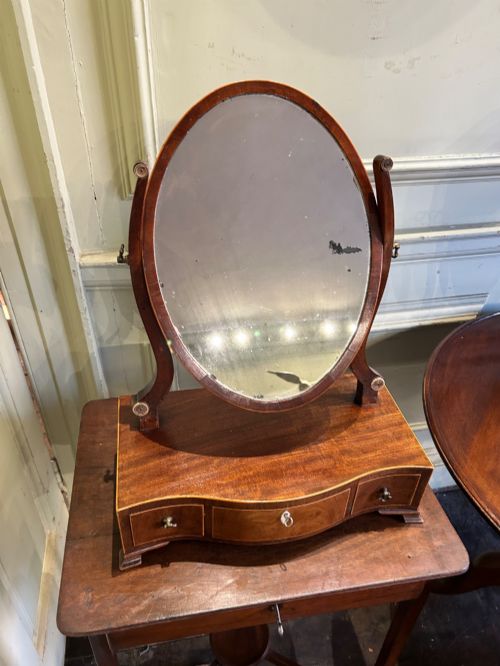
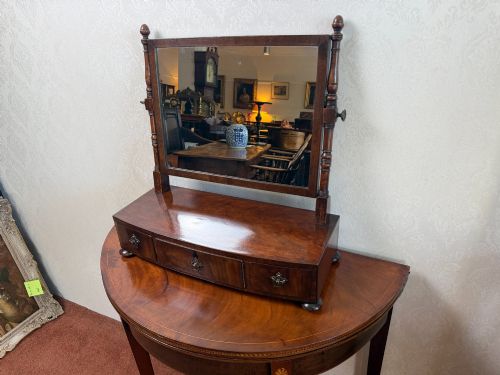
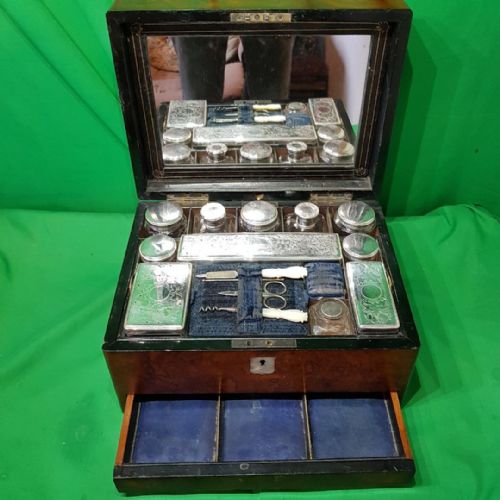
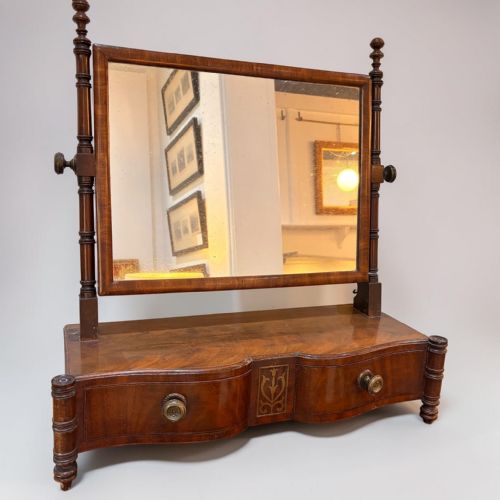
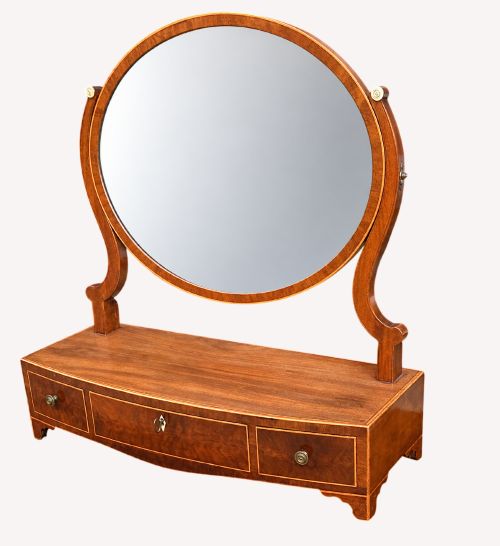
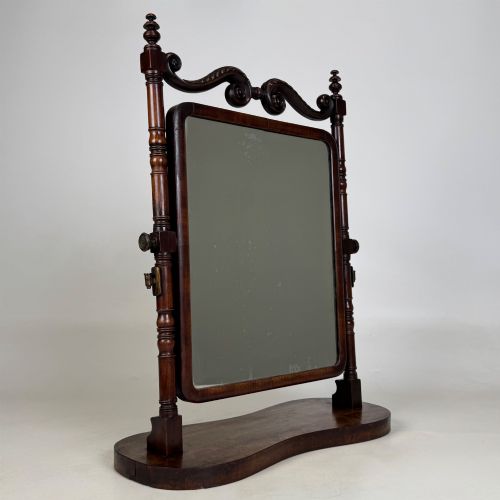
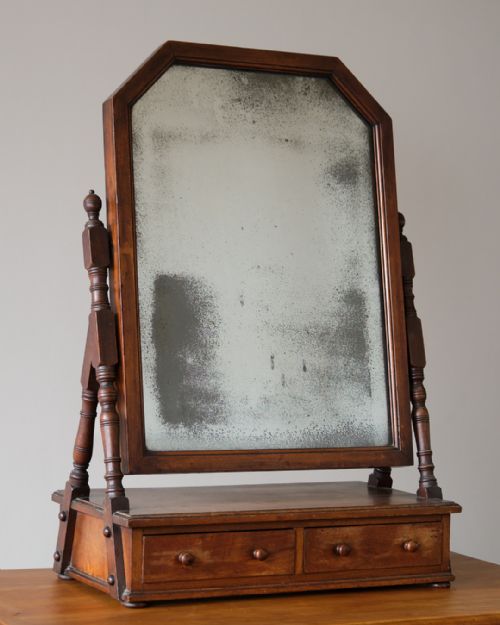
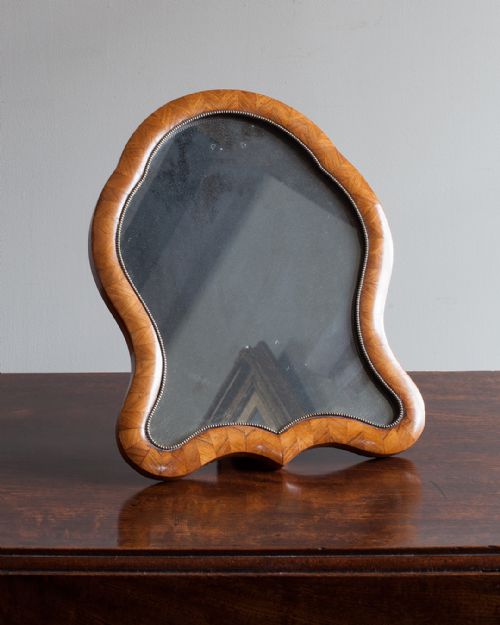
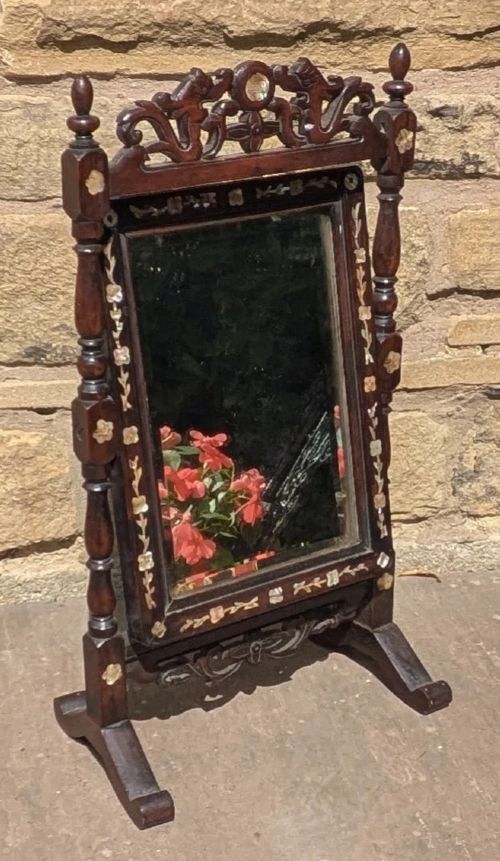
When you search for antique toilet glass, you encounter a selection of dressing table mirrors, swing mirrors, and small table mirrors designed for personal grooming. These pieces sit atop furniture, providing a reflective surface supported by a frame and often incorporating small drawers or compartments in the base.
The versions you meet most frequently on this page date from the Georgian, Regency, and Victorian periods, constructed predominantly in timber with pivoting mirror plates. They range from simple mahogany frames to elaborate walnut designs with crossbanding and boxwood inlay.
Originating in periods when personal care took place at a chest of drawers or specialised dressing table, these items served everyday domestic use. Their survival in varied styles demonstrates how cabinet makers adapted proportions and storage options across different centuries.
Materials and construction
Cabinet makers utilised dense timbers such as mahogany, walnut, and oak to build the supporting frames and base boxes, often employing veneers like maple, satinwood, and kingwood for decorative surface effects. Crossbanding and inlay work added geometric definition to the drawer fronts and upright supports.
The mirror glass itself was held within adjustable frames pivoting on brass screw pins or side arms, allowing the user to tilt the reflection as required. Smaller fitted compartments inside the base often utilised secondary softwoods alongside bone or silver details for hardware and storage.
Antique Toilet Glass Retail Price Guide 2026
Typical asking prices for toilet glass among the pieces listed under this phrase on Sellingantiques today, from the lower quarter to the upper quarter. They describe what is for sale here now, not the wider market.
Surviving examples span the eighteenth, nineteenth, and early twentieth centuries.
Distinctions in quality
Quality rests in the choice of timber and the precision of the cabinet work, particularly where veneers and crossbanding meet the main structure. Finer pieces display carefully selected wood grain figures, such as burr walnut or figured mahogany, matched symmetrically across the mirror frame and base.
The integrity of the mirror plate and the robustness of the brass pivoting hardware also separate standard examples from finer productions. Original mercury glass or early replacement mirror plates retain a softer, deeper reflection, while well-engineered brass supports ensure the swing action remains firm over time.
Heal And Sons·Henry Clifford Davis·Gorham
The Antique Toilet Glass Glossary
- Toilet glass
- A portable mirror, usually mounted on a small box or stand with drawers, designed to sit on a dressing table. These items became popular in domestic interiors during the seventeenth and eighteenth centuries.
- Swing mirror
- A mirror plate hung on pivots between two upright posts, allowing the glass to tilt. This mechanism forms the central functional element of most toilet glasses.
- Crossbanding
- A narrow strip of veneer laid around the border of a panel so that the grain runs at right angles to the central piece. Cabinet makers utilised this technique to frame drawer fronts and top surfaces.
- Cheval mirror
- A full-length freestanding mirror supported by a frame with four legs. Unlike a toilet glass, this larger form stands directly on the floor.
Antique Toilet Glass: Frequently Asked Questions
What is an antique toilet glass?
An antique toilet glass is a small tabletop mirror mounted on a pivoting frame, frequently attached to a base containing small drawers.
These pieces were traditionally placed on dressing tables or chests of drawers to assist with shaving, hairstyling, and personal grooming.
How do I date a toilet glass?
Dating relies on observing the timber species, construction methods of the base drawers, and the shape of the mirror frame. Georgian examples often feature slender mahogany uprights, whilst Victorian versions tend to utilise heavier burr walnut or mahogany with more robust proportions.
Secondary woods inside the drawers and the style of brass hardware also provide key chronological indicators.
How do I clean and maintain the wood?
Maintenance involves dusting with a soft cloth and occasionally applying a traditional beeswax to nourish the timber surface. Avoid using modern chemical sprays or placing the mirror in direct sunlight, which can dry out old veneers.
Keep the brass hardware clean using non-abrasive methods to preserve the original metal finish.