

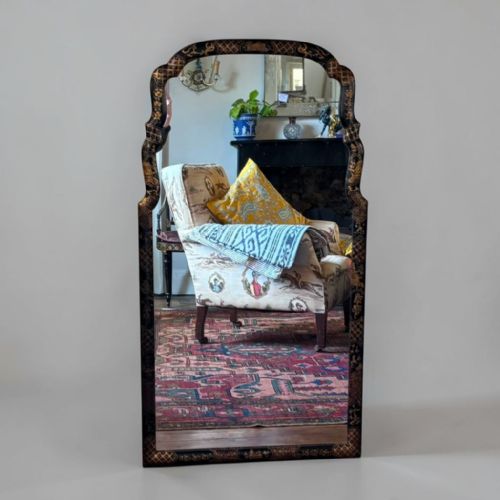


Black Lacquer Mirror
A black lacquer mirror brings depth and reflective light to a room through dark, lustrous surfaces and intricate ornamentation.
Black Lacquer Mirror
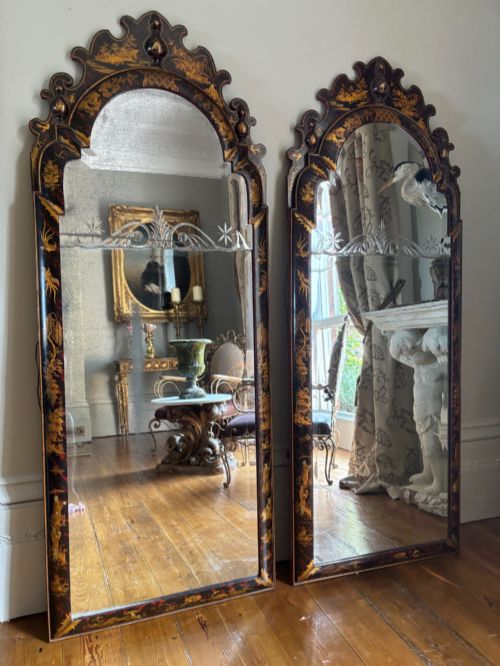
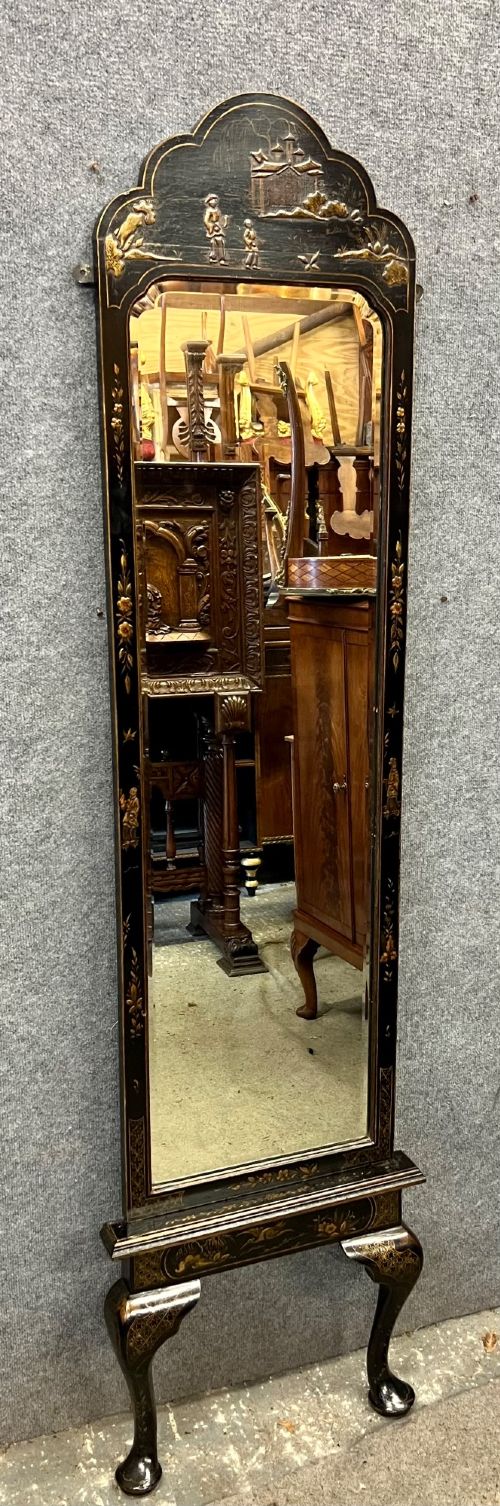
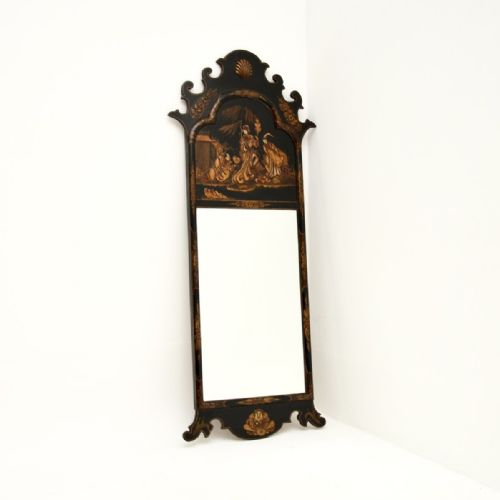
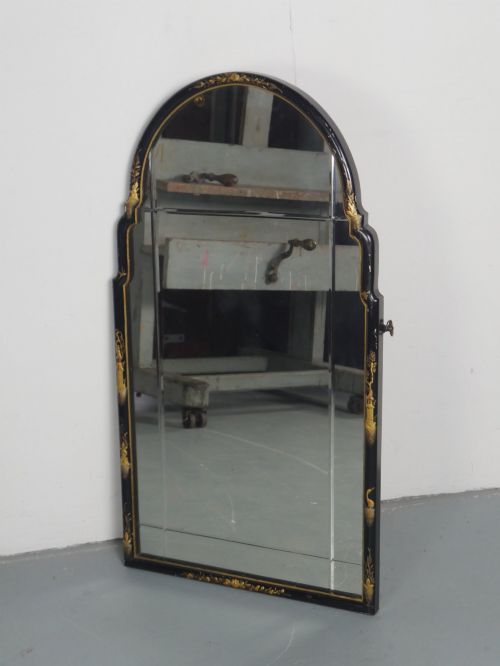
A black lacquer mirror appears across several distinct periods, with the 18th century, Victorian era and Edwardian decades providing the core of surviving examples. Buyers seeking a black lacquer mirror encounter forms ranging from simple oval wall hangings to elaborate overmantels, dressing mirrors and dressing tables with miniature bureau bases.
The aesthetic relies heavily on Chinoiserie decoration, Chinese export work, and revivals of the Queen Anne and French Empire styles. Wall mirrors and dressing mirrors dominate the selection, often featuring gilt highlights or carved wooden frames that complement the dark finish.
Earlier pieces from the 18th century sit alongside 19th-century interpretations and early 20th-century Edwardian or 1930s variations. This broad span means buyers find both restrained geometric shapes and heavily decorated surfaces featuring traditional Asian-style motifs.
Materials and construction methods
Craftsmen built these pieces using wood, ebonised wood and lacquered wood as the primary structural substrates for the mirror glass and brass hardware. Layers of dark lacquer created the deep, reflective black ground characteristic of the finish.
Decoration typically involved applied gilt work, painted motifs in the Chinoiserie tradition, and occasionally faux bamboo carving. The mirror glass itself was set into these frames, supported in larger pieces by heavy overmantel structures or dressing table attachments.
Black Lacquer Mirror Retail Price Guide 2026
Typical asking prices for black lacquer mirror among the pieces listed under this phrase on Sellingantiques today, from the lower quarter to the upper quarter. They describe what is for sale here now, not the wider market.
One exceptional survival even pairs a black lacquer mirror with a tiny fitted bureau base for secret correspondence.
Factors that define quality
The sophistication of the painted or gilt decoration dictates the visual success of the piece, with finer lines and more intricate Chinoiserie scenes marking out superior examples. The depth of the lacquer finish and the crispness of the wood carving or fret cutting also separate standard production from exceptional work.
The integrity of the frame construction and the original state of the mirror glass contribute significantly to the standing of an object. Pieces that retain their original brass fittings and undisturbed surface patination command greater appreciation among collectors.
The Black Lacquer Mirror Glossary
- Chinoiserie
- European interpretation and imitation of Chinese and East Asian artistic traditions, frequently utilised on lacquer furniture and mirror frames.
- Ebonised wood
- Timber treated to resemble ebony, providing a dark, uniform surface that often serves as the base for gilt decoration.
- Overmantel mirror
- A large mirror designed to hang specifically on the wall directly above a fireplace mantelpiece.
- Fret cut
- Woodwork pierced or cut with a fretsaw to create intricate geometric or ornamental patterns along the edge of a frame.
- Chinese export
- Items produced in China specifically for the Western market, combining Eastern techniques with European forms.
Black Lacquer Mirror: Frequently Asked Questions
Where should I hang a wall mirror?
Wall mirrors function effectively above fireplaces as overmantels, in hallways to reflect light, or above console tables in living spaces.
Positioning the glass opposite a window maximises natural light distribution throughout the room.
How do I care for lacquer surfaces?
Dust the surface gently with a soft, dry cloth to prevent the accumulation of abrasive particles on the lacquer.
Avoid chemical cleaners and moisture, as these can damage the delicate gilt and painted decorations.
What is a dressing mirror?
A dressing mirror is a smaller table-standing glass used for grooming, often mounted on a pivoting frame above a small set of drawers or a miniature bureau base.
These pieces sat atop dressing tables or chests in bedrooms.