
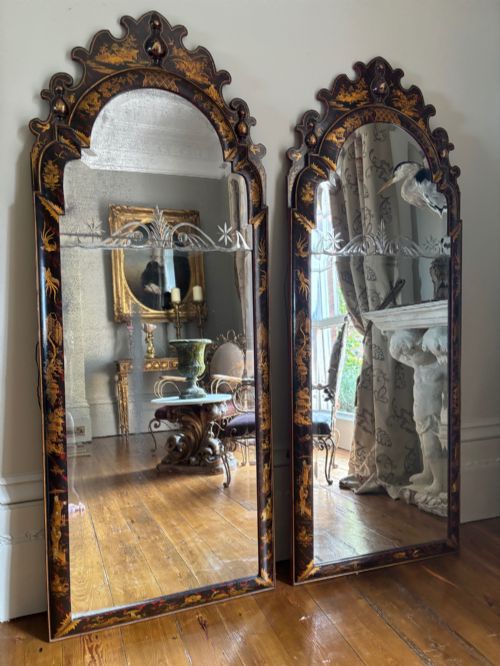


Black Chinoiserie Mirror
A black chinoiserie mirror brings hand-painted oriental motifs and dark lacquered surfaces into a room, offering both decorative presence and functional reflection.
Black Chinoiserie Mirror
A black chinoiserie mirror presents distinct oriental ornamentation set against a dark lacquered or ebonised wooden ground, often highlighted with gilt details. These pieces span centuries, encompassing wall mirrors, dressing mirrors, and toilet mirrors from various periods including the eighteenth, nineteenth, and early twentieth centuries.
The versions most commonly encountered on this page range from Victorian and Edwardian examples to revival pieces from the 1920s and 1930s. Forms vary from simple oval wall hangings to sophisticated toilet mirrors featuring bureau bases and intricate fret-cut frames.
Materials and construction
These items are constructed primarily from wood and lacquered wood, finished with applied layers of black lacquer and detailed gold leaf or gilt decoration. Glass and mirror glass form the reflective centres, occasionally accompanied by brass fittings or reverse-painted panels.
Techniques rely heavily on traditional lacquerwork alongside hand-carved wooden frames, encompassing fret-cutting and specialised surface ornamentation designed to imitate Chinese export wares.
Listings feature items spanning the 18th, 19th, and early 20th centuries, utilising lacquer, gilt, brass, and mirror glass.
Assessing quality
Quality reveals itself in the depth and execution of the lacquering and the finesse of the hand-painted chinoiserie motifs rather than surface sheen alone. Superior examples display crisp detail in the gilt work and substantial wooden framing, whereas simpler pieces rely on more uniform, mechanical decoration.
The integrity of the original glass, the subtlety of carved elements like faux bamboo framing, and the historical coherence of the period style all distinguish finer pieces from standard reproductions.
The Black Chinoiserie Mirror Glossary
- Chinoiserie
- European decorative style reflecting Chinese artistic influences, popular in furniture and mirrors. It employs pictorial scenes of figures, pavilions, and landscapes.
- Lacquer
- A durable resin finish built up in multiple layers and polished to a smooth sheen. On these mirrors, it provides the characteristic dark background for gilt artwork.
- Fret-cut
- Woodwork pierced with intricate geometric or organic patterns using a fine saw. This technique creates the openwork frames seen on many twentieth-century wall mirrors.
- Reverse-painted mirror
- Glass decorated on the rear surface so the image appears through the front. This technique produces a glossy, protected pictorial panel.
- Toilet mirror
- A small mirror mounted on a tabletop stand or miniature base. They were traditionally placed on dressing tables or chests of drawers.
Black Chinoiserie Mirror: Frequently Asked Questions
Where should I hang a black chinoiserie mirror?
These pieces suit living rooms, hallways, or above bedroom mantelpieces where their dark frames and metallic highlights can catch the light. They function effectively as focal points against lighter wall colours.
Ensure the wall fixings match the weight of the wooden frame, particularly for larger Edwardian or Georgian examples containing substantial glass panels.
How do I clean a lacquered mirror frame?
Dust the lacquered wood gently with a dry, soft microfibre cloth to protect the delicate gilt motifs and painted surfaces from abrasion. Avoid chemical sprays or excessive moisture.
Clean the mirror glass using a standard glass cleaner applied directly to a cloth rather than the frame to prevent liquid seeping beneath the lacquer.
Are these mirrors original eighteenth-century pieces?
The selection includes genuine eighteenth-century items alongside later Victorian, Edwardian, and 1920s revival pieces created in the same decorative spirit. Each listing records the specific period attributed to that item.
Examining the construction methods, backboards, and wear patterns helps distinguish original antique manufacturing from later twentieth-century interpretations.
What is a toilet mirror?
A toilet mirror is a smaller mirror designed to sit on a dressing table, chest, or bureau base, often featuring adjustable pivot arms. They were used for close grooming and personal dressing.
Some examples include miniature drawers or bureau compartments integrated into the base for storing small personal items.