


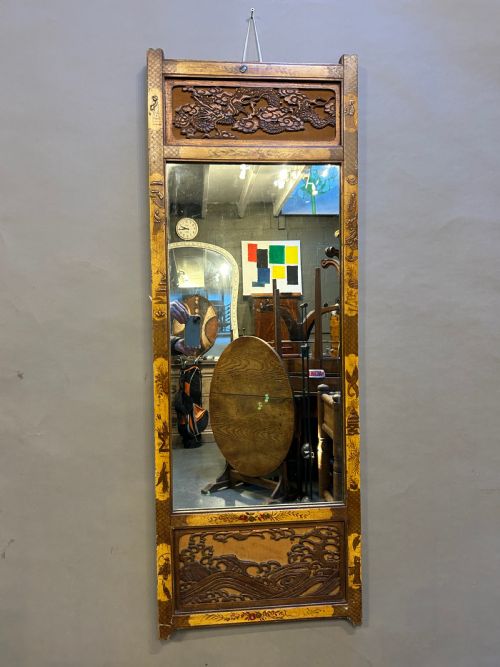


Chinoiserie Pier Glass
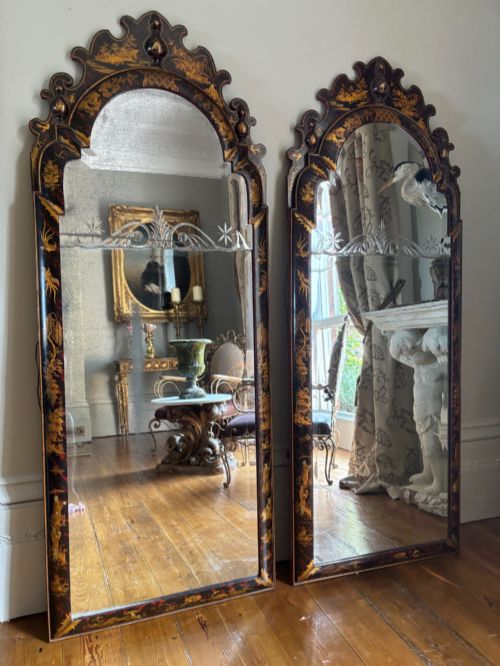
These chinoiserie pier glass mirrors bring fantastical hand-painted scenes and reflective depth to a room, offering both period character and light.
Chinoiserie Pier Glass
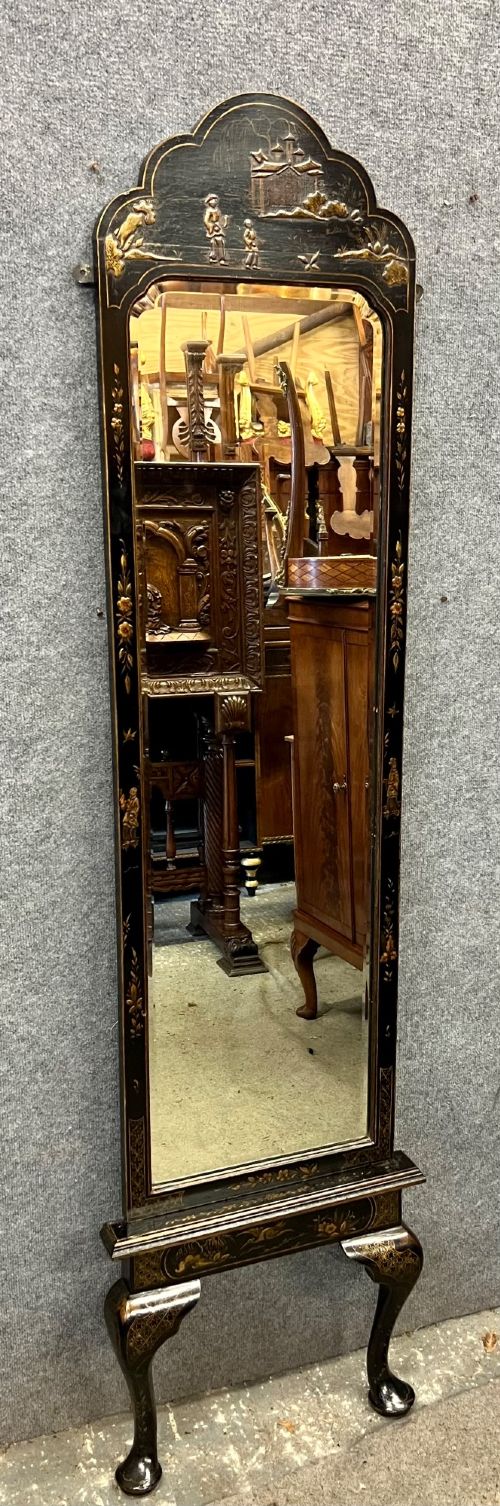
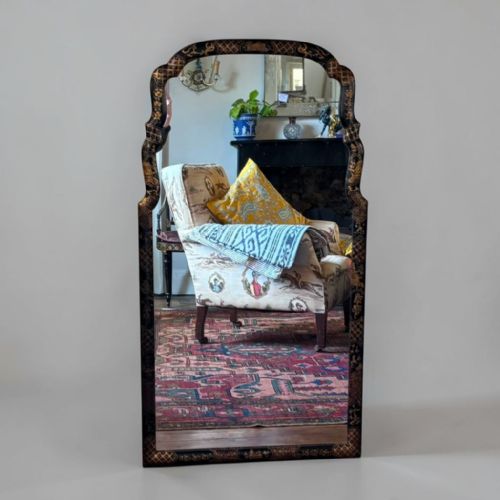
A chinoiserie pier glass is a tall, narrow wall mirror designed to hang between windows, bringing light into darker spaces of a room. When you search for chinoiserie pier glass, you find tall wall mirrors and occasional display cabinets featuring European interpretations of Chinese art.
The pieces on this page span several periods, including the Georgian era, the nineteenth century, and twentieth-century revivals like Queen Anne and George I styles. Most examples date from the nineteenth and early twentieth centuries, adopting earlier aesthetics.
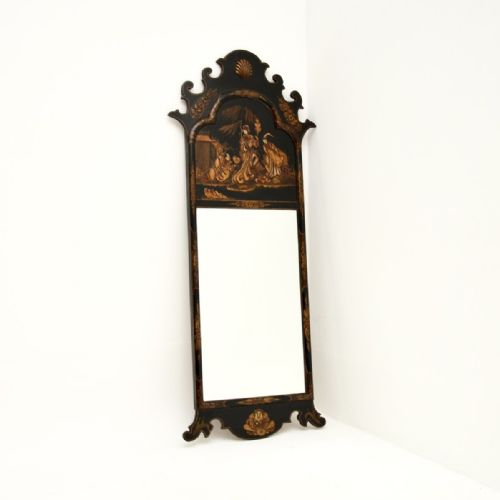
Forms range from arched pier glass mirrors to carved wooden frames and lacquered panels. While mirrors dominate the selection, related wall display cabinets also appear under this grouping.
Materials and construction methods
Makers built these frames using carved wood, mahogany, and applied lacquer over timber surfaces. Gold leaf and gilt finishes highlight the carved details, creating contrast with the painted backgrounds.
Lacquered wood and japanning techniques provide the distinctive glossy surfaces characteristic of these pieces. Mirror glass and gold leaf complete the construction, reflecting light across the painted scenes.
Chinoiserie Pier Glass Retail Price Guide 2026
Typical asking prices for chinoiserie pier glass among the pieces listed under this phrase on Sellingantiques today, from the lower quarter to the upper quarter. They describe what is for sale here now, not the wider market.
Many pieces feature imaginative landscapes populated by tiny hand-painted figures crossing impossible bridges.
Judging quality and craftsmanship
Quality rests in the depth of the wood carving and the finesse of the lacquered or painted decoration. Superior examples display intricate detailing on the frames and smooth, consistent finishes.
The integration of the mirror glass within the decorative frame indicates the level of care taken by the maker. Period execution and the retention of original gilding separate finer items from later reproductions.
Edwards & Roberts
The Chinoiserie Pier Glass Glossary
- Pier glass
- A tall mirror designed specifically to hang on the wall space between two windows. This placement maximises natural light in a room.
- Japanning
- A European imitation of East Asian lacquerwork involving layered varnishes and heat curing. It produces a hard, glossy dark finish often decorated with raised motifs.
- Chinoiserie
- The European interpretation and imitation of Chinese and East Asian artistic traditions. It appears frequently in decorative arts across the Georgian and revival periods.
- Gilt
- A thin layer of gold leaf or gold paint applied to wood surfaces. This technique adds brightness and highlights carved details on the frame.
Chinoiserie Pier Glass: Frequently Asked Questions
Where should I hang a pier glass?
A pier glass is traditionally designed to hang on the narrow wall space between two windows. This placement bounces natural light back into the centre of the room.
Today, they work equally well above a console table, mantelpiece, or in a hallway to create an illusion of greater space.
What is the difference between japanning and lacquer?
Japanning is the European technique developed to imitate genuine East Asian lacquerware. It relies on varnishes and heat drying to achieve a similar glossy surface.
True lacquer uses natural sap from specific Asian trees, whereas japanning uses European resins and shellac.
How can I tell a Georgian mirror from a revival piece?
Georgian mirrors show the construction methods, timber patination, and hand-cut glass characteristics of the eighteenth century. Revival pieces, created during the nineteenth or twentieth centuries, often copy these earlier styles using contemporary tools.
Examining the backboards, fixings, and secondary woods helps determine the actual period of manufacture.