


Decorative Chinoiserie Mirror
A decorative chinoiserie mirror brings unmistakable narrative flair to a room, using lacquered frames and motifs derived from East Asian art.
Decorative Chinoiserie Mirror
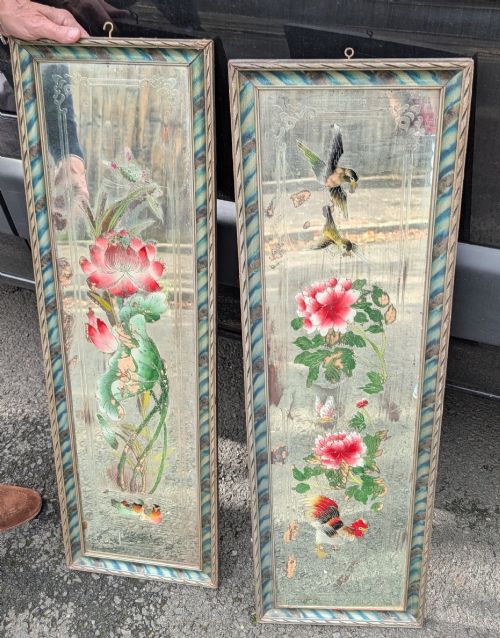
When you search for a decorative chinoiserie mirror, you encounter pieces that blend European furniture forms with motifs inspired by Chinese art and design. These wall mirrors draw the eye through distinctive framing, often taking inspiration from Qing Dynasty aesthetics or the rococo interpretations popular in Britain.
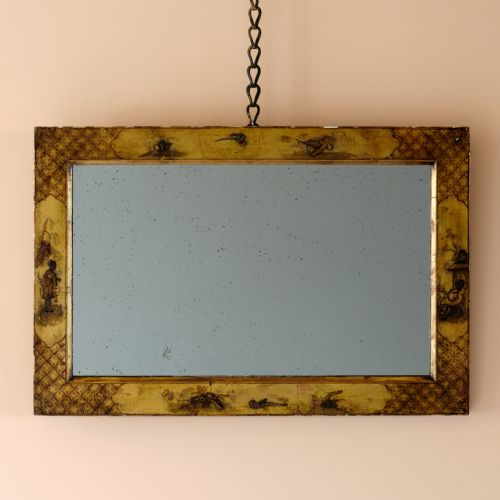
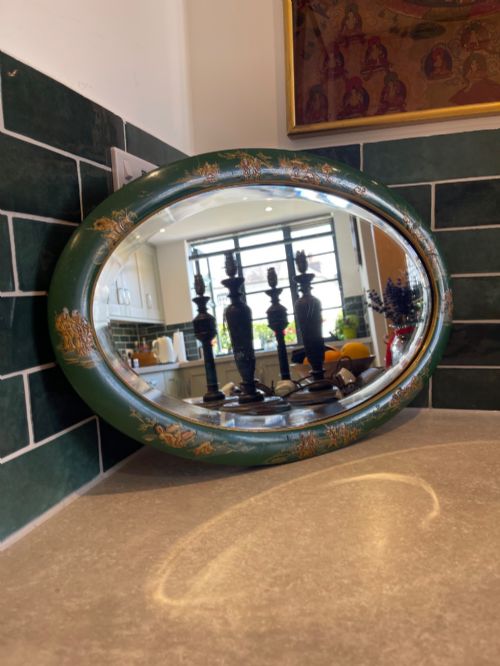
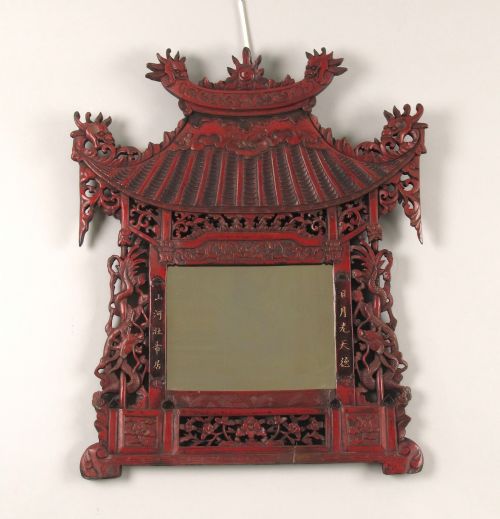
The versions most commonly met on this page date from the nineteenth century and the early twentieth century. You find them executed in various formats, ranging from compact wall hangings and oval designs to striking red lacquer pagoda mirrors and carved giltwood pieces.
Makers working in these styles utilised traditional lacquer techniques and ornate carving to evoke a sense of distant travels and exotic landscapes. Whether finished in black lacquer, scarlet red, or giltwood, each piece serves as a strong focal point in an interior scheme.
How they were made
The construction of these pieces relies heavily on wood as a stable foundation for intricate surface decoration. Artisans shaped timber frames before applying layers of lacquer, gold leaf, or gilt to achieve the signature lustrous finish.
Mirror glass is fitted securely within carved or lacquered borders, which frequently incorporate faux bamboo moulding or pagoda silhouettes. The integration of wood carving and painted decoration requires careful craftsmanship to ensure durability and visual depth.
The listings show a prevalence of nineteenth-century and early twentieth-century pieces, incorporating materials such as lacquer, giltwood, and mirror glass.
What varies in quality
Quality in these mirrors rests primarily on the depth and execution of the surface decoration and carving. Finer examples display meticulous hand-applied lacquer work and crisply carved giltwood details that retain their definition over time.
The distinction between standard and superior pieces also lies in the richness of the colour palette and the subtlety of the motifs. Well-executed pieces demonstrate a harmonious balance between the frame's architectural form and the narrative scenes depicted upon it.
The Decorative Chinoiserie Mirror Glossary
- Chinoiserie
- European interpretation and imitation of Chinese and East Asian artistic traditions, popular in decorative arts and furniture design. This style often employs whimsical scenes of figures, pagodas, and landscapes.
- Giltwood
- Wood that has been treated with gold leaf or a gold-coloured metallic finish to simulate solid gold. It provides a bright, reflective surface that enhances carved details.
- Lacquer
- A type of clear or coloured varnish applied in multiple layers to wood, creating a hard and durable finish. Traditional Asian lacquer creates a smooth, glossy surface often decorated with gold or painted motifs.
- Pagoda
- A tiered tower with multiple eaves, originating in East Asian architecture. This form frequently inspires the silhouette of decorative wall mirrors in the chinoiserie style.
- Chinese Chippendale
- An eighteenth-century English furniture style combining rococo curves with Chinese motifs such as fretwork and pagoda arches. This aesthetic heavily influences many carved wooden mirrors from later periods.
Decorative Chinoiserie Mirror: Frequently Asked Questions
Where should I hang a chinoiserie mirror?
These mirrors work exceptionally well in hallways, living rooms, or above mantelpieces where their decorative frames can command attention. They function as both reflective surfaces and primary artworks on a wall.
Because of their distinct visual weight, they pair effectively with both traditional period interiors and more eclectic, modern spaces that require a bold focal point.
How do I clean the lacquered frame?
Dust the lacquered surface gently with a soft, dry cloth to prevent the accumulation of particles without disturbing the finish. Avoid using chemical sprays or abrasive household cleaners that can damage lacquer or gold leaf.
For the mirror glass itself, apply a mild glass cleaner to a cloth rather than spraying directly onto the glass, ensuring moisture does not seep beneath the frame.
How can I tell the period of a mirror?
Examining the construction methods, backboards, and the composition of the mirror glass provides reliable clues to a piece's age. Nineteenth-century and early twentieth-century examples often exhibit distinct timber ageing and hand-carved detailing.
Comparing the specific shade of lacquer and the style of the motifs against known historical periods helps narrow down the exact decade of manufacture.
What is faux bamboo framing?
Faux bamboo framing involves carving wood to replicate the segmented, jointed appearance of natural bamboo stalks. This technique was highly favoured in nineteenth-century and Edwardian chinoiserie design.
It adds texture and an authentic botanical element to the mirror frame, reinforcing the East Asian aesthetic without relying on actual bamboo material.