


Antique Chinoiserie Mirror
When choosing an antique chinoiserie mirror, you invite centuries of European imagination and Asian decorative artistry into your room.
Antique Chinoiserie Mirror
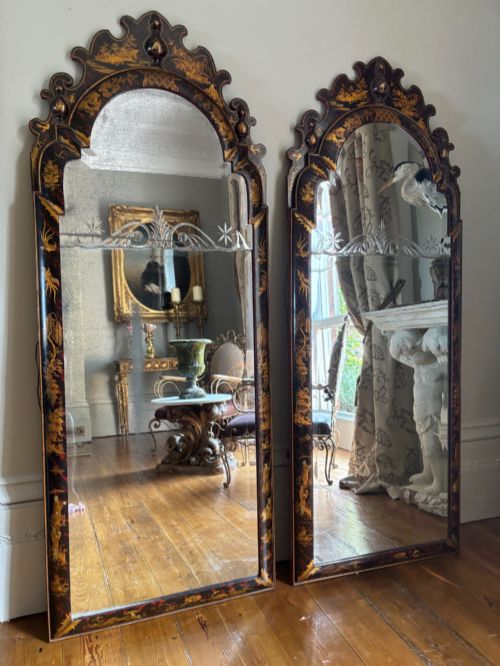
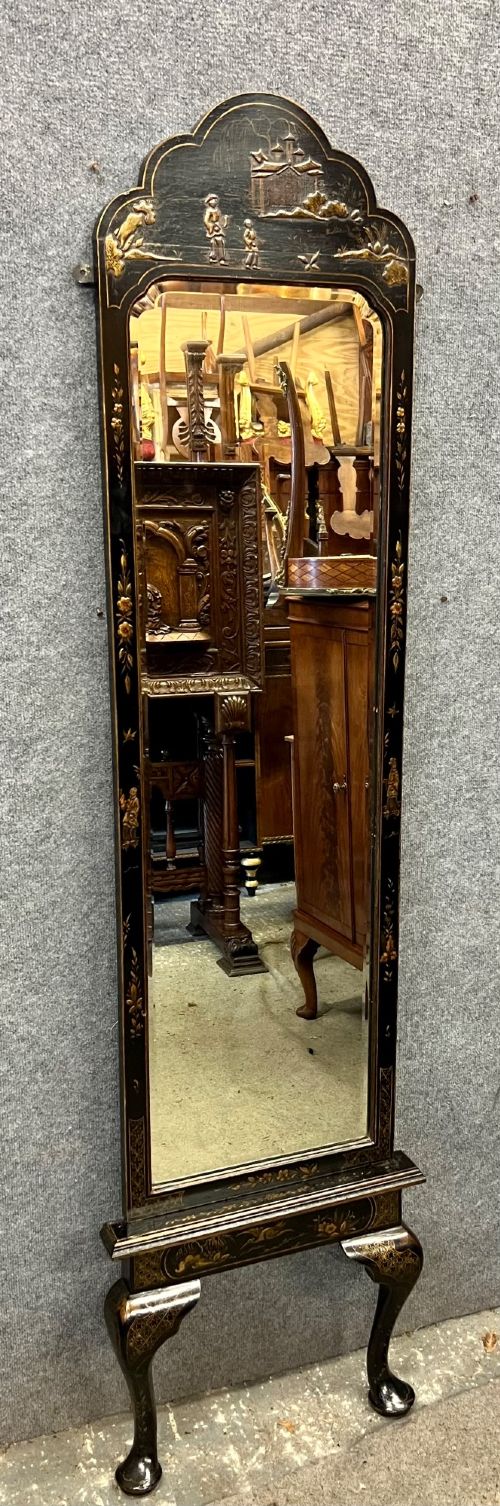
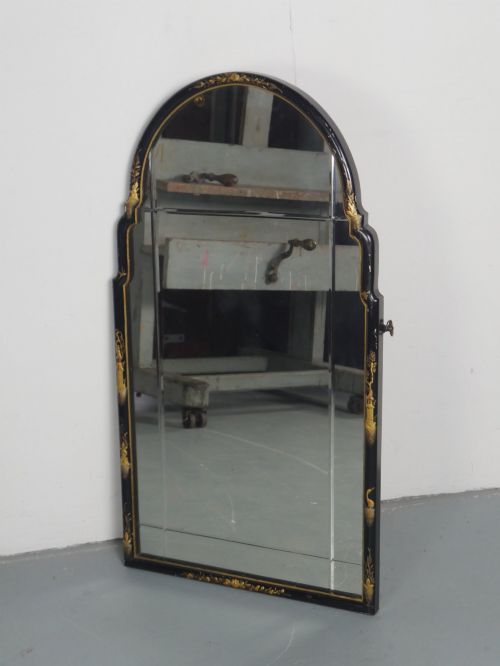
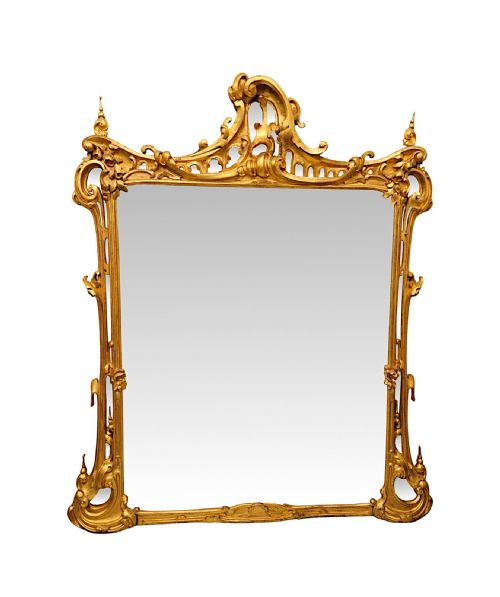
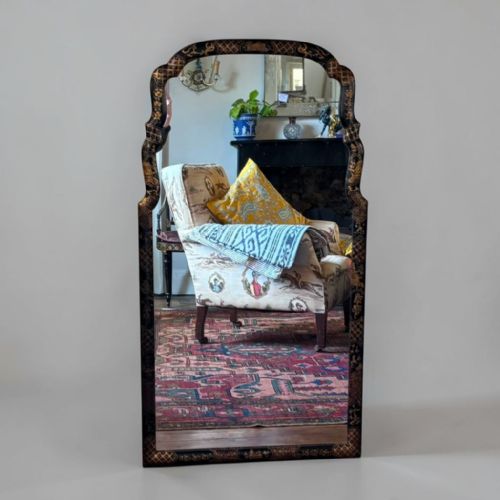
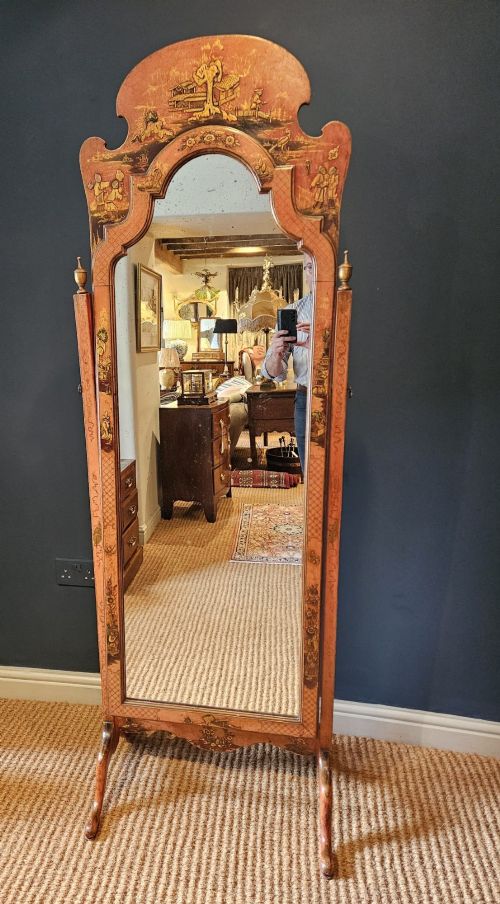
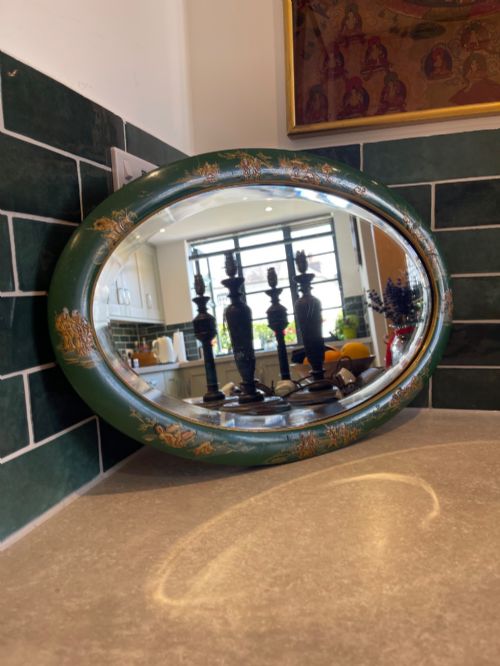
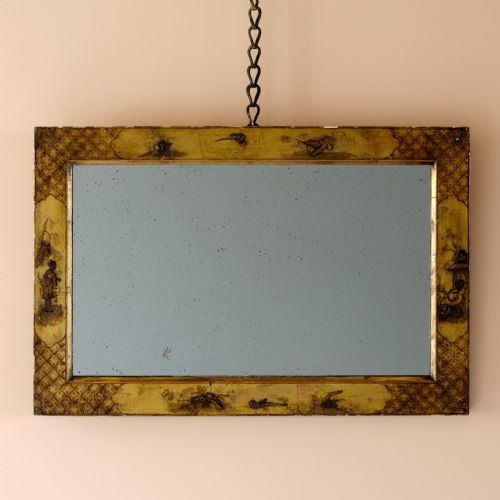
An antique chinoiserie mirror brings together European furniture forms and ornate decorative motifs inspired by East Asian art. When searching for this phrase, buyers encounter wall hanging glasses, overmantels, and dressing mirrors spanning from the Georgian period through the Edwardian era and into the 1920s and 1930s. The most common survivals on this page are wall mounted rectangular and oval formats finished in lacquer or giltwood.
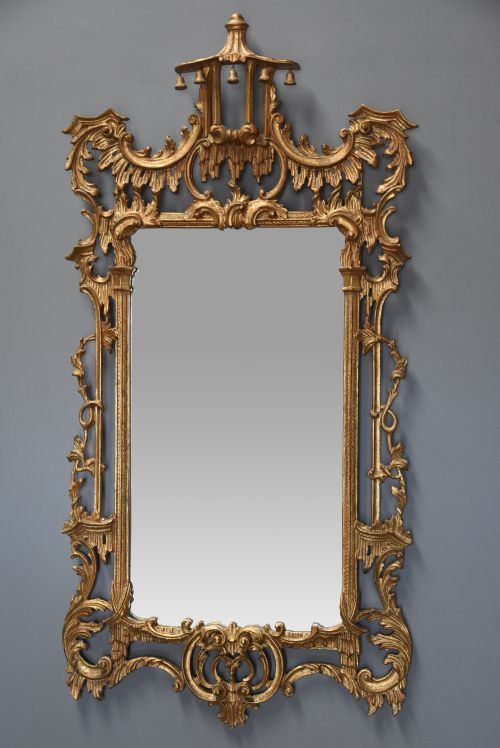
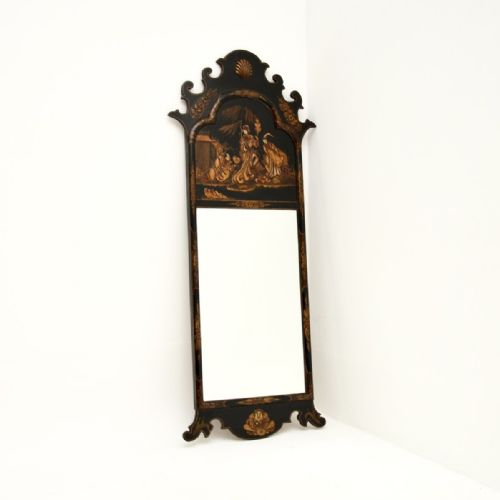
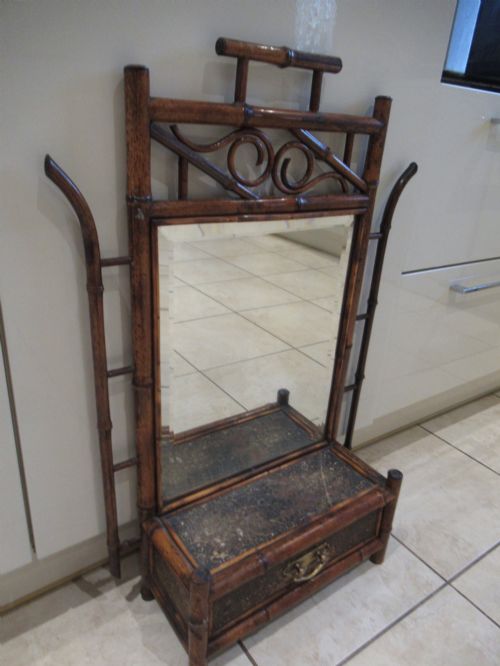
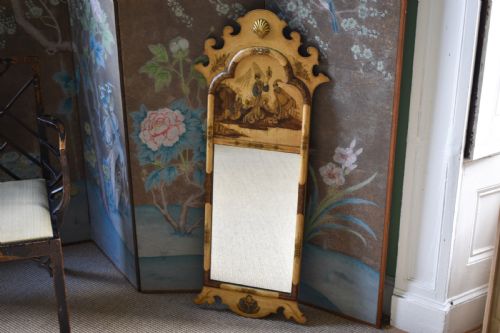
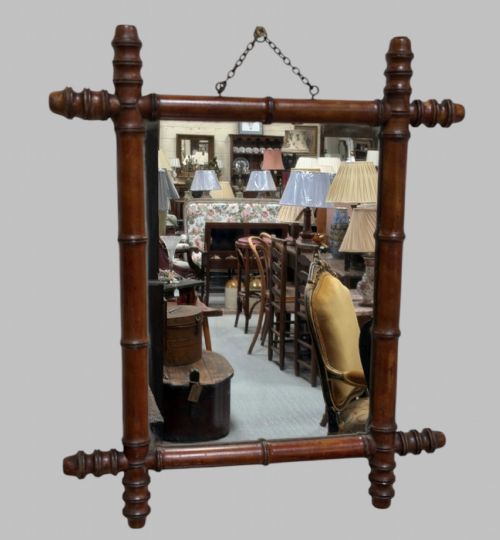
The aesthetic bridges several periods, taking distinct turns through Queen Anne silhouettes, Chinese Chippendale carving, and Victorian ebonised or faux bamboo framing. Many examples present painted figures, pagodas, and landscapes set against black or red grounds, while others rely purely on gilded woodwork shaped in the Rococo taste. These objects served utilitarian domestic functions in hallways, bedrooms, and reception rooms while signalling worldly taste.
How they were made
Maker construction relied heavily on timber frames carved from wood or built up with gesso and gold leaf to achieve elaborate Chinese Chippendale and Rococo profiles. Carvers shaped pinewood or hardwoods before applying layers of metallic leaf or burnished gilding to catch the candlelight of period interiors.
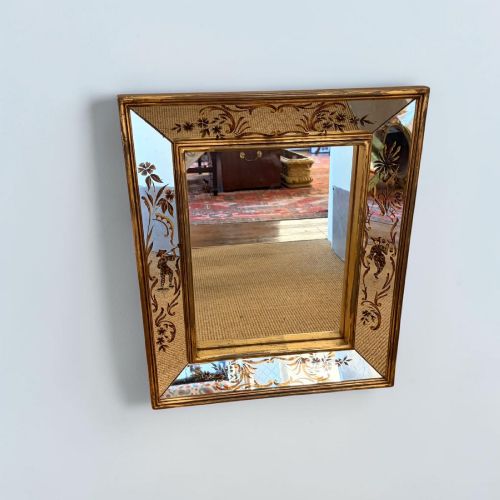
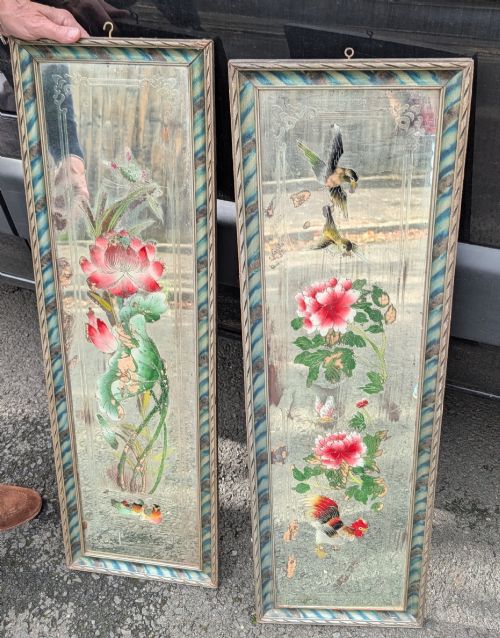
Lacquered surfaces required multiple coats of varnish built over wood bases, often cured and polished by hand to create deep black or red backgrounds. Artisans then applied painted or raised decorative scenes depicting pavilions, flora, and figures, sometimes incorporating reverse glass painting techniques where imagery is rendered directly onto the back of the mirror plate.
Antique Chinoiserie Mirror Retail Price Guide 2026
Typical asking prices for chinoiserie mirror among the pieces listed under this phrase on Sellingantiques today, from the lower quarter to the upper quarter. They describe what is for sale here now, not the wider market.
Gabriel Viardot spent the late nineteenth century dreaming up bamboo-effect frames that made polite Parisian drawing rooms feel entirely like Beijing.
What varies in quality
The depth and execution of the surface decoration separate simpler utility pieces from high-end commissions. Finely rendered hand-painted details and intricate raised lacquer work display greater artistic control than flat, stencilled motifs found on later commercial interpretations.
Carving finesse in the wooden frame dictates the standard of the piece. Crisp fretwork on Chinese Chippendale styles and substantial, well-proportioned giltwood moulding reflect superior craftsmanship compared to softer, more generalised joinery.
Gabriel Viardot
The Antique Chinoiserie Mirror Glossary
- Chinoiserie
- A European decorative style reflecting imaginative interpretations of Chinese and East Asian artistic traditions. It gained prominence during the seventeenth century and saw successive revivals in the Georgian, Victorian, and Edwardian periods.
- Japanning
- A European imitation of East Asian lacquerwork involving layered varnishes baked and polished to a hard finish. Craftsmen often used this technique on black or red furniture frames.
- Chinese Chippendale
- A sub-genre of the Rococo style characterised by fretwork, pagoda motifs, and asymmetrical fret patterns inspired by Chinese design. Thomas Chippendale popularised these designs in British cabinet making.
- Overmantel mirror
- A large looking glass specifically designed to hang above a fireplace mantelpiece. These pieces frequently feature horizontal proportions to match the width of the hearth.
- Reverse glass painting
- An artistic technique where the design is painted directly onto the rear surface of a glass panel. When viewed from the front, the image gains a glossy, preserved finish.
Antique Chinoiserie Mirror: Frequently Asked Questions
Where should I hang a chinoiserie mirror?
These mirrors suit hallways, living rooms, and bedrooms where they can reflect light and anchor a focal wall.
Overmantel versions work traditionally above a fireplace, while smaller wall-hanging frames complement console tables or dressing areas.
How do I date an antique chinoiserie mirror?
Dating relies on examining the frame construction, backing boards, and the physical characteristics of the mirror glass itself. Georgian and Victorian pieces show hand-beveled edges, older fixings, and traditional joinery distinct from early twentieth-century production.
Stylistic shifts, such as the heavy use of ebonised wood in the Victorian era or faux bamboo in the late nineteenth century, also help pinpoint the period of manufacture.
Were these mirrors made in England or Asia?
The vast majority of pieces matching this description were manufactured in Europe, particularly England and France, during periods of heightened enthusiasm for Asian aesthetics. European cabinet makers interpreted Eastern motifs using local timbers and traditional Western joinery techniques.
Export items made specifically in Asia for the European market do appear, though British and continental workshops produced most surviving wall and dressing mirrors.
What is the difference between black and red lacquer?
Black lacquer grounds offer a classic, restrained backdrop that highlights gold leaf motifs and subtle tonal paintings. This finish was widely favored across the eighteenth and nineteenth centuries for its versatility.
Red lacquer provides a bolder, more vibrant statement piece within a room, often associated with exuberant Queen Anne and Victorian revival interiors.