





Antique Lacquer Mirror
An antique lacquer mirror brings deep, lustrous surfaces and intricate oriental motifs into a room, catching the light with centuries of accumulated polish.
Antique Lacquer Mirror
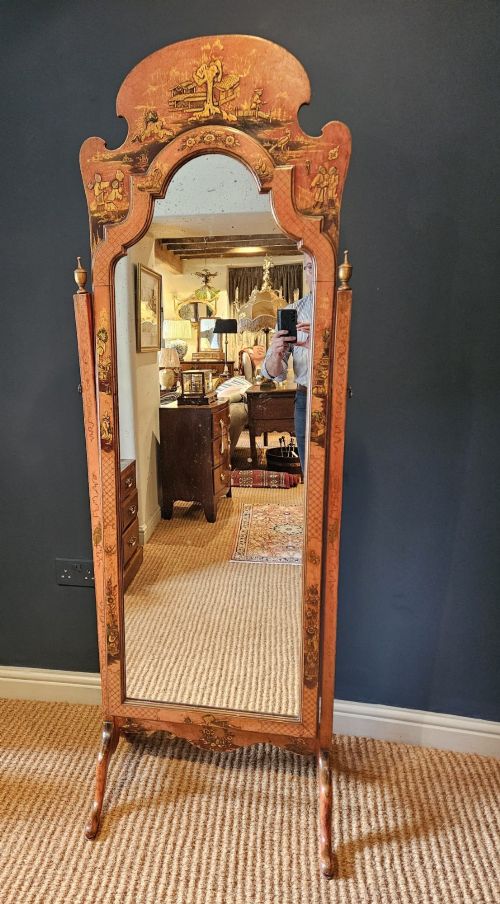
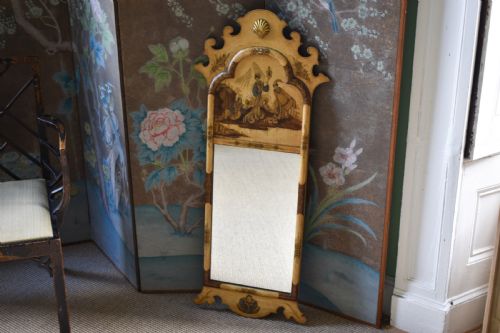
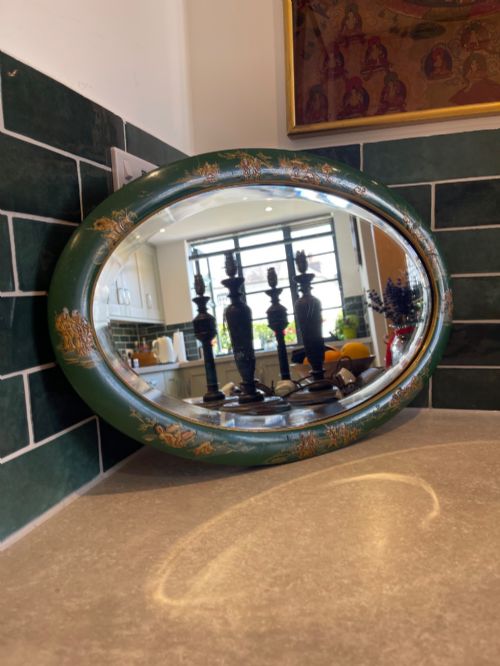
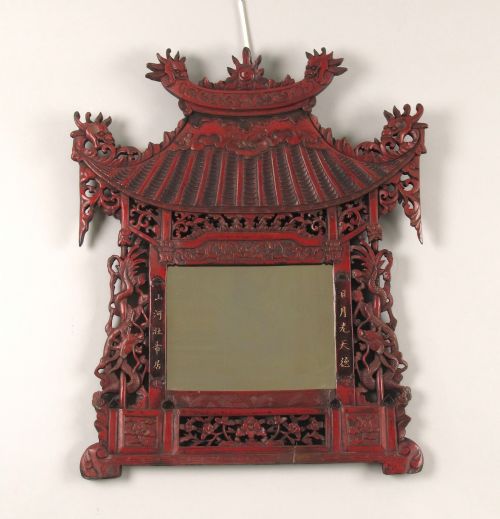
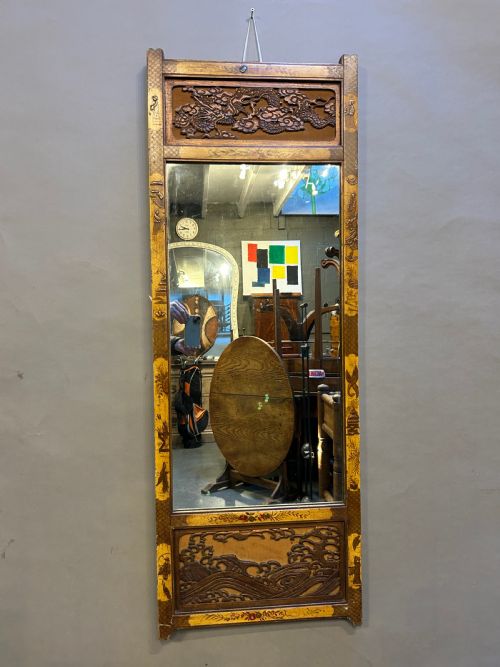
An antique lacquer mirror typically presents as a wall mirror, oval overmantel, or cheval glass decorated in the Chinoiserie taste. These pieces draw on styles spanning the eighteenth century through the Edwardian period and the 1920s.
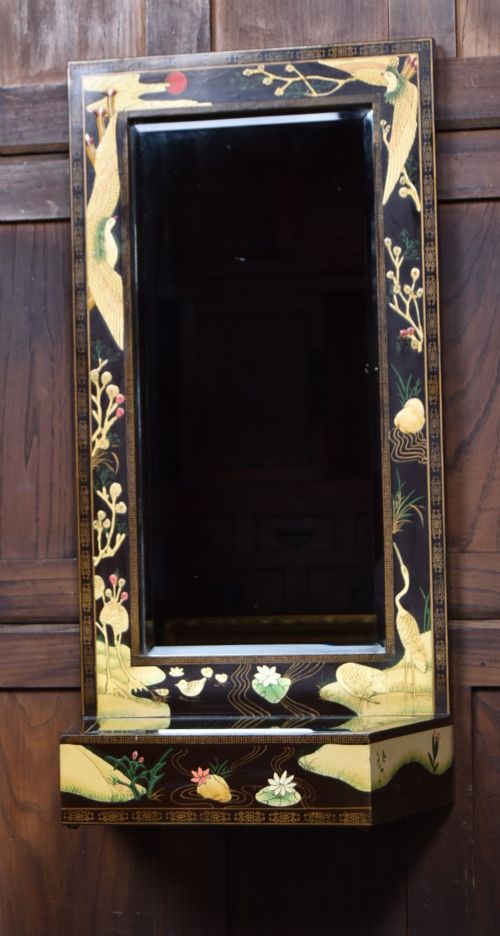
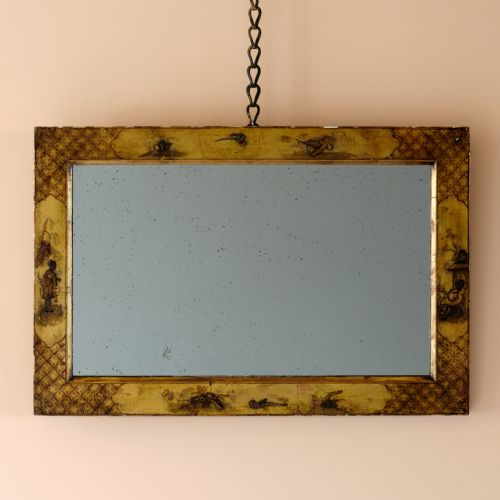
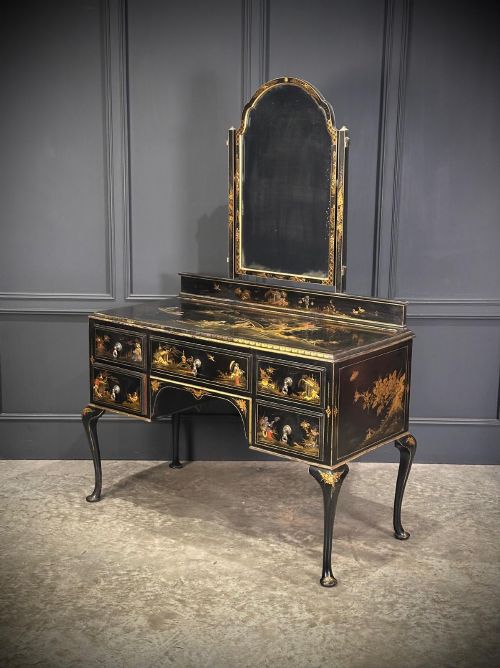
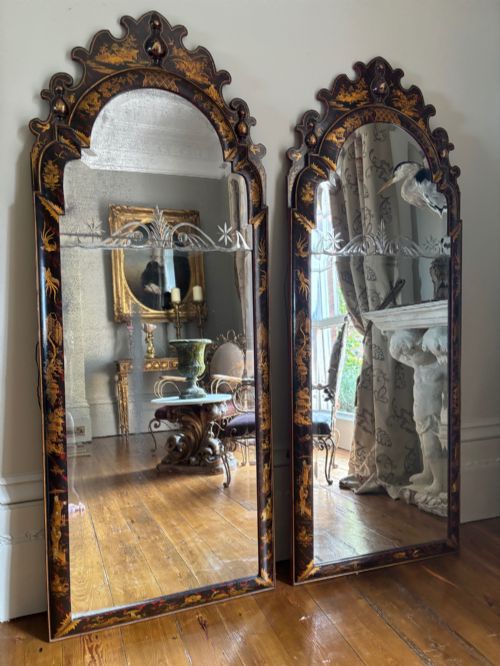
The buyer frequently encounters black or red japanned wooden frames embellished with gilt figures, pavilions, and landscapes. Smaller pier mirrors and dressing table mirrors also appear alongside larger architectural hanging pieces.
Origins range from English interpretations in the Queen Anne and Georgian revival styles to Chinese export pieces created for the Western market. Each form uses reflective glass set within a decorated wooden structure.
Materials and Construction
Makers constructed these frames from solid timbers such as wood and walnut, applying multiple layers of lacquer to build a smooth, dark or brightly coloured ground. Craftsmen then added gold leaf, gilt, and painted details depicting traditional motifs.
Mirror glass sits within the rebated frame, occasionally retaining its original bevel and silvering characteristics. Metal fixings and brass hardware secure the structures, while backing boards typically consist of older timber panels.
One Edwardian wall mirror incorporates a heart-shaped glass plate within its black lacquer frame.
Assessing Craftsmanship
Quality rests upon the depth of the lacquer surface and the crispness of the gilt decoration applied by the hand. Superior examples display detailed, layered brushwork and finely carved wooden mouldings beneath the finish.
The integrity of the frame construction and the preservation of the original japanned surface distinguish finer pieces from later, coarser reproductions. Balance in proportion and harmony in the pictorial composition separate better workshops from simpler production.
The Antique Lacquer Mirror Glossary
- Chinoiserie
- European decorative style reflecting Chinese artistic traditions. It employs whimsical scenes of figures, pagodas, and landscapes.
- Japanning
- European imitation of East Asian lacquerwork. Craftsmen built up layers of varnish and resin, curing and polishing the surface before applying gilt decoration.
- Cheval glass
- A full-length mirror hung in a freestanding frame. The frame allows the glass plate to tilt back and forth on pivot screws.
- Overmantel mirror
- A large horizontal mirror designed to hang above a fireplace mantelpiece. These pieces often feature elaborate frames matching the room architecture.
- Pier mirror
- A tall, narrow mirror designed to hang on the wall space between two windows. It frequently matches a console table placed directly beneath.
Antique Lacquer Mirror: Frequently Asked Questions
How do I clean an antique lacquer mirror?
Dust the frame gently with a dry, soft microfibre cloth to protect the delicate surface layers and gilt details. Avoid all liquid cleaners, abrasive pads, and chemical polishes that can lift the old varnish.
Use a standard glass cleaner applied directly to a cloth rather than the mirror itself when cleaning the glass plate. Keep moisture away from the wooden edges where the lacquer meets the glass.
Are these mirrors English or Chinese?
Many pieces originate from English workshops working in the Queen Anne, Georgian, or Edwardian Chinoiserie revivals. These domestic makers used European timbers and applied japanning techniques to imitate imported goods.
A smaller number represent actual Chinese export pieces made specifically for Western buyers. Both categories share similar decorative vocabularies inspired by Eastern design.
How do I date a lacquer mirror?
Examine the timber construction, the type of mirror glass, and the style of the frame moulding. Pieces from the eighteenth century show different joinery and hand-bevelled glass compared to Edwardian or 1920s revivals.
The wear pattern on the lacquer and the composition of the backing boards provide additional clues. Revivals often copy earlier Queen Anne or Georgian forms while using twentieth-century hardware.
Where should I hang a heavy wall mirror?
Mount heavy wall mirrors directly into wall studs or use appropriate masonry fixings capable of supporting the combined weight of the wood and glass. Ensure the hanging wire or integrated brackets are secure and rated for heavy loads.
Position the mirror at eye level to reflect natural light from nearby windows and brighten darker corners of the room.