


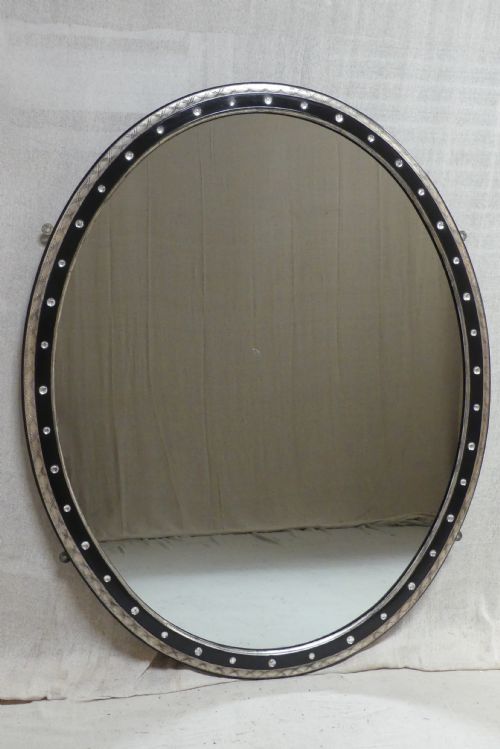
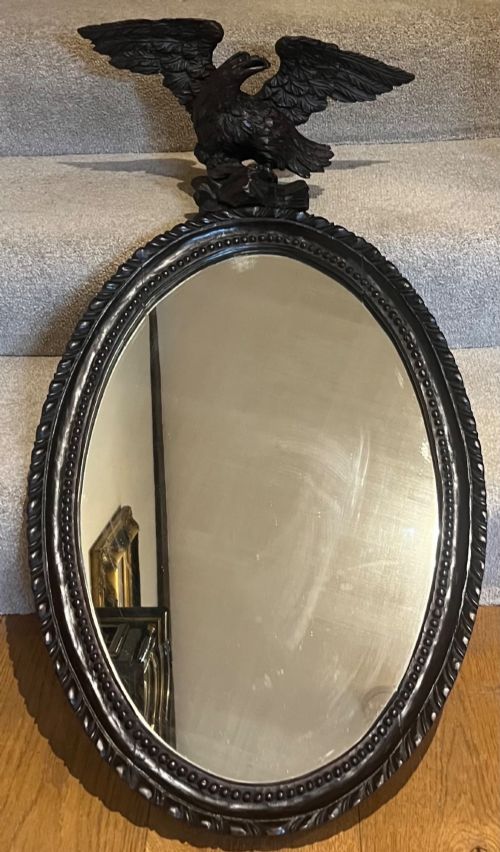
Black Framed Mirror
A black framed mirror brings dark contrast and architectural depth to a room, which is why collectors seek out these striking wall pieces.
What these pieces are
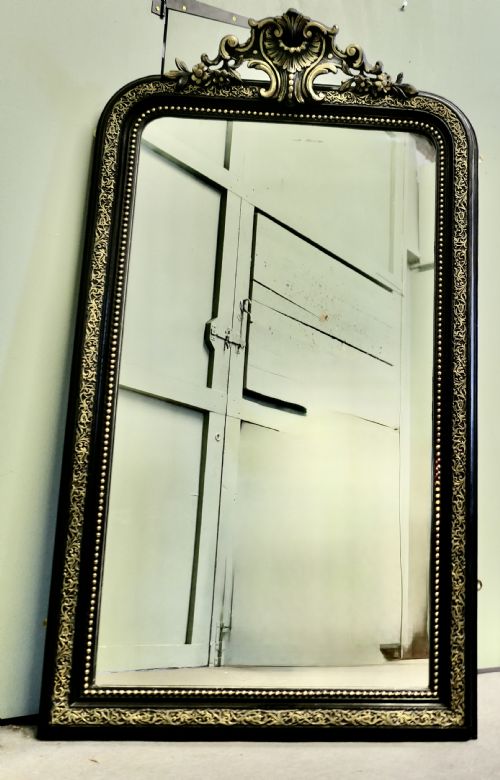
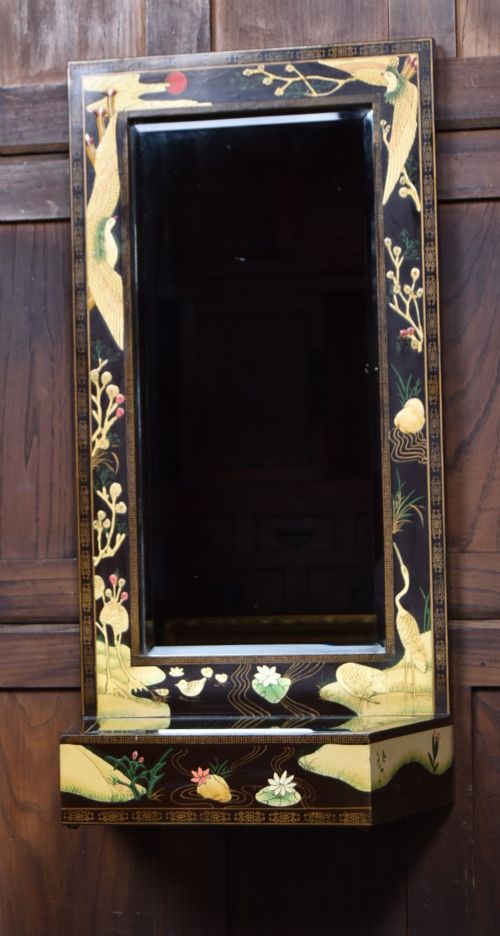
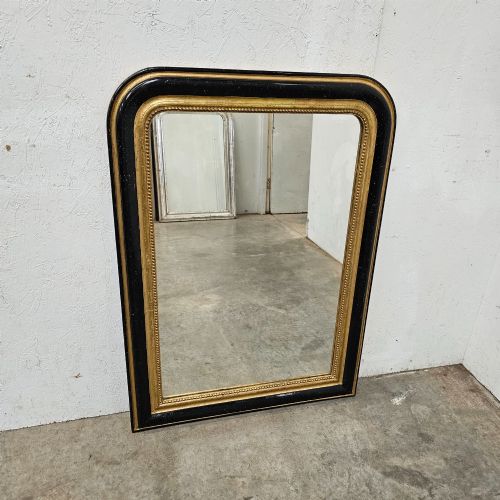
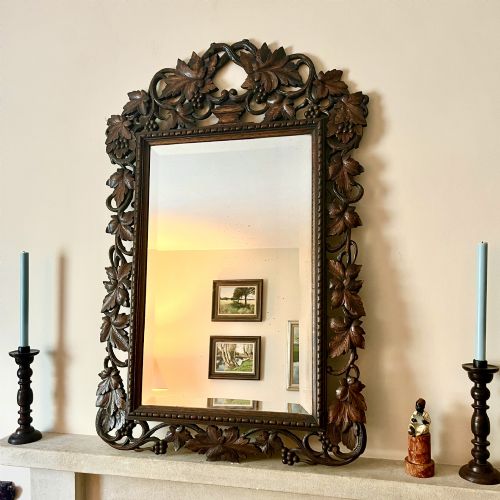
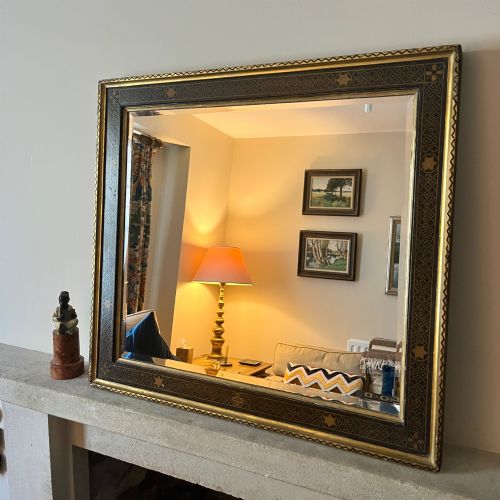
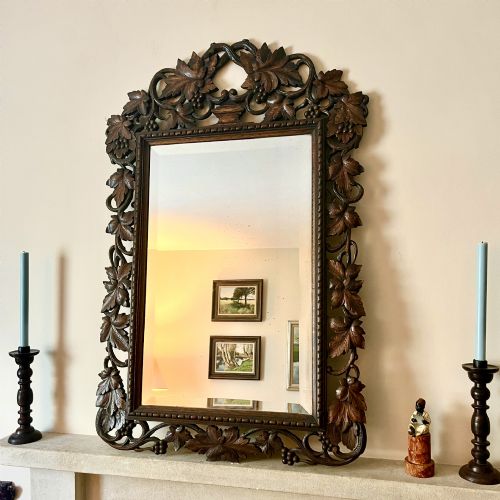
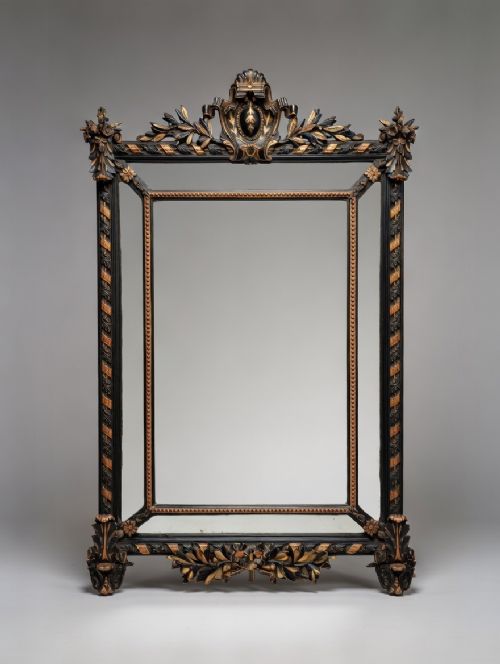
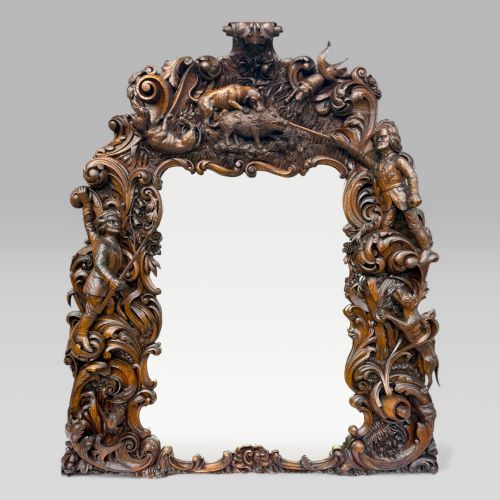
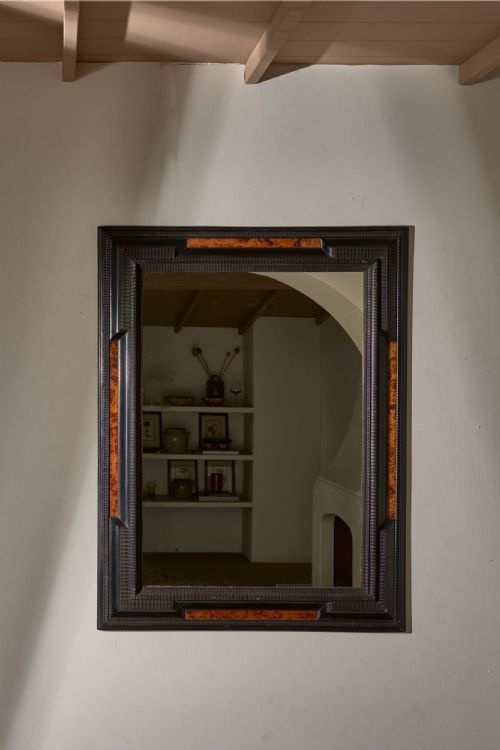
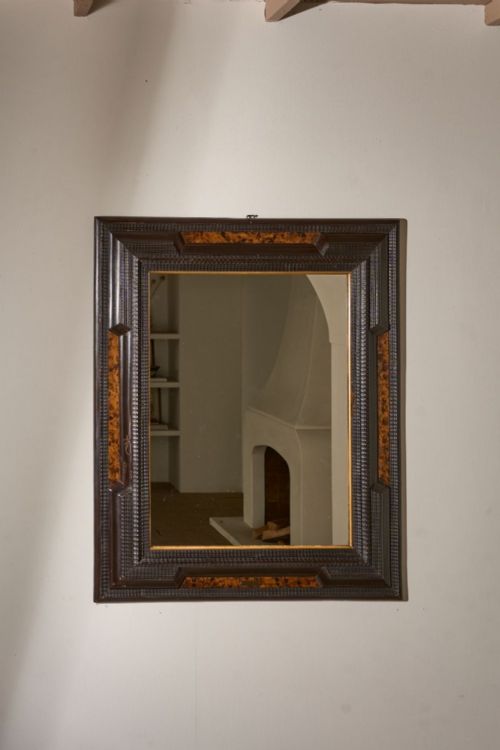
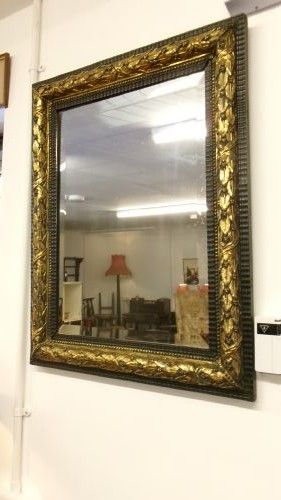
A black framed mirror encompasses dark-finished wall furnishings spanning the nineteenth and twentieth centuries, including Victorian, Edwardian, and nineteen-thirties examples. The selection ranges from carved wood and ebonised hall mirrors to lacquer finishes, shop mirrors, and fairground distortion pieces.
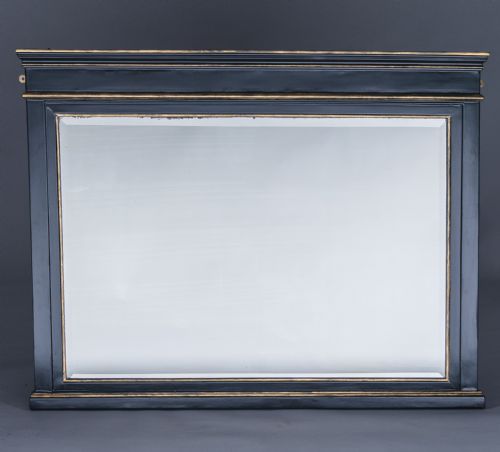
You are most likely to encounter nineteenth-century ebonised wood frames alongside later Edwardian etched glass panels and nineteen-thirties oval black lacquered wall mirrors. These items function primarily as wall mirrors, overmantles, and decorative accessories within domestic interiors.
How they were made
These items utilise wood, ebonised wood, ebony, and paint, often finished with faux tortoiseshell or gilt wood accents. Artisans shaped frames from carved wood and gesso, applying dark lacquers and ebonised treatments to achieve a solid black surface.
Mirrors incorporate glass, mirror glass, and mercury glass, sometimes featuring original bevelled edges or etched and engraved designs on the glass surface. Decorative elements include cut glass pediments and carved faux bamboo details.
Retail Price Guide 2026
Typical UK retail prices for black framed mirror, calculated from the Sellingantiques database of over a million retail prices indexed since 2003. This retail price guide relies exclusively on Sellingantiques data; no external sources or auction records are used, so the figures do not describe the wider market.
Among the historical items recorded is a nineteenth-century fairground distortion glass mirror, offering a delightfully unsettling reflection of the past.
What varies in quality
Quality rests on the depth of the finish and the integrity of the frame construction, distinguishing simple painted pine from dense ebonised wood, ebony, or detailed lacquer work. Hand-carved elements and applied faux tortoiseshell or gilt carving demonstrate superior craftsmanship compared to plain mouldings.
The Black Framed Mirror Glossary
- Ebonised wood
- Timber treated with a stain or finish to imitate ebony. This dark process was widely used in Victorian and later frames.
- Mercury glass
- Double-walled silvered glass popular in the nineteenth century. It creates a cloudy, reflective depth distinct from modern float glass.
- Faux tortoiseshell
- A painted or treated finish mimicking natural shell pattern. Artisans applied this technique to wood surfaces for decorative contrast.
- Overmantle mirror
- A large horizontal mirror designed to hang above a fireplace mantel. These pieces frequently feature carved wood and gesso frames.
- Pediment
- The decorative crown above a mirror frame. Cut glass variants add vertical architectural interest to the composition.
Frequently Asked Questions
Where should I hang a black framed mirror?
These mirrors work effectively above mantelpieces, in hallways, or as focal points on neutral walls where the dark frame creates strong visual contrast.
Positioning them opposite a light source maximises the reflective glass and brightens darker corners of a room.
How do I identify a Victorian black mirror?
Victorian examples often feature ebonised wood, deep gesso mouldings, or heavy carved wooden frames with original bevelled glass plates.
Look for construction methods and material patination consistent with nineteenth-century cabinet making.
What is ebonised wood?
Ebonised wood is ordinary timber treated with a chemical stain or black finish to replicate the appearance of costly solid ebony.
This technique provided nineteenth-century makers with a durable, uniform dark surface for decorative frames.
Are these mirrors heavy?
Many nineteenth-century and early twentieth-century pieces utilise solid wood, gesso, and thick glass plates, resulting in substantial weight.
Secure wall fixings suited to the weight of the specific frame are essential for safe hanging.