

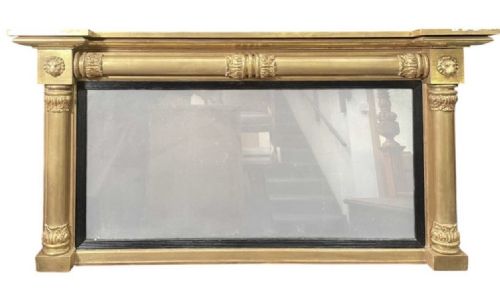
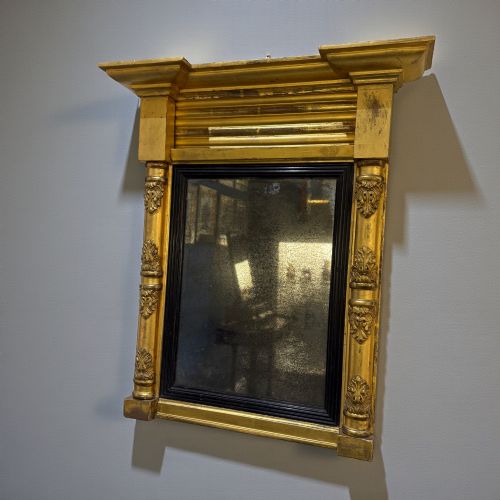
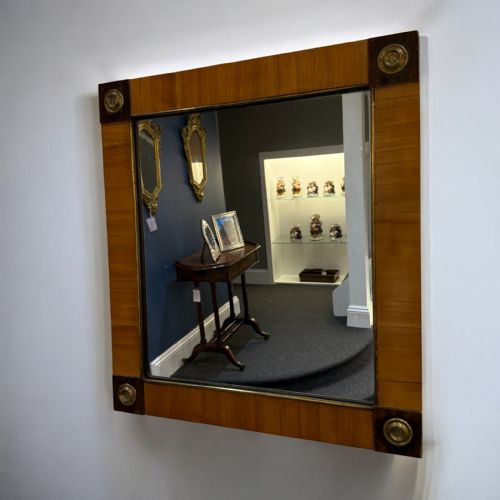
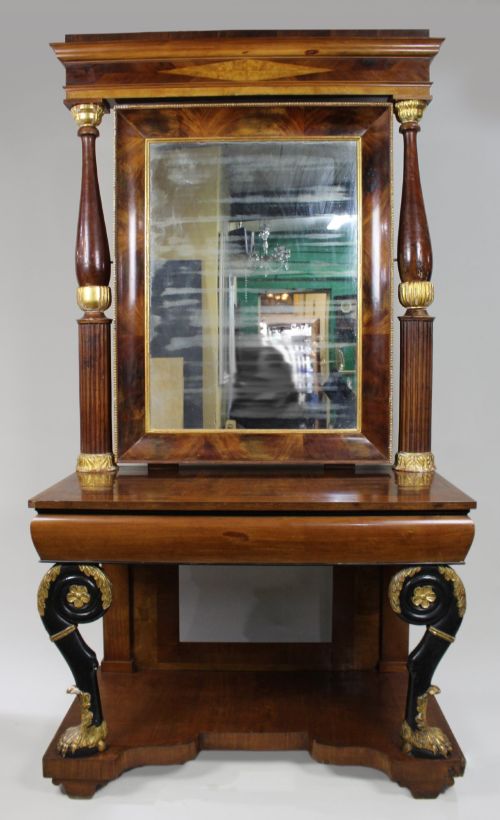
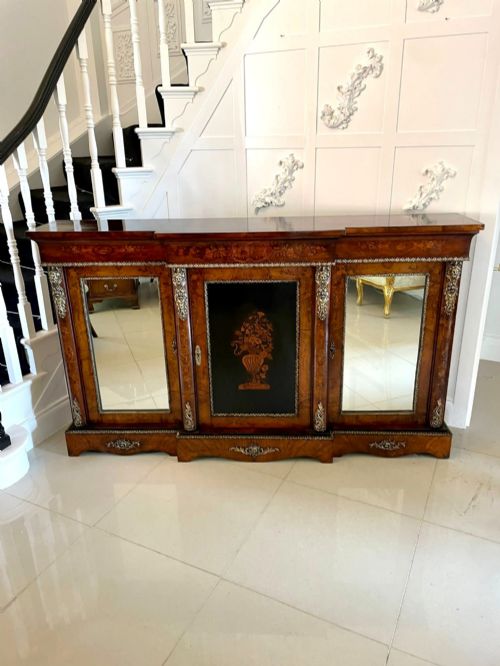
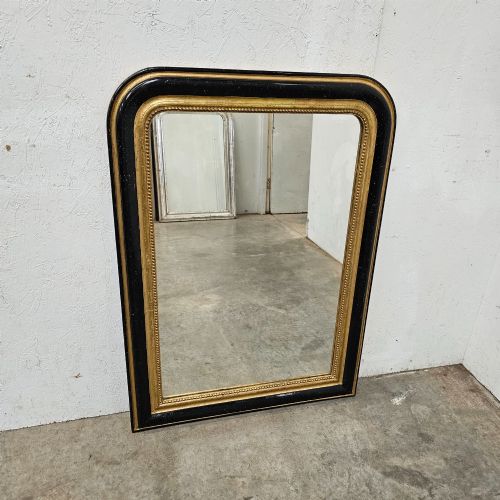
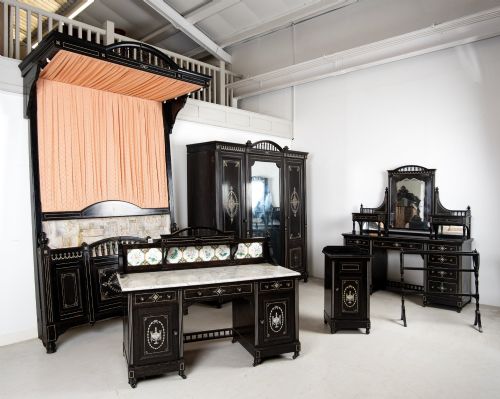
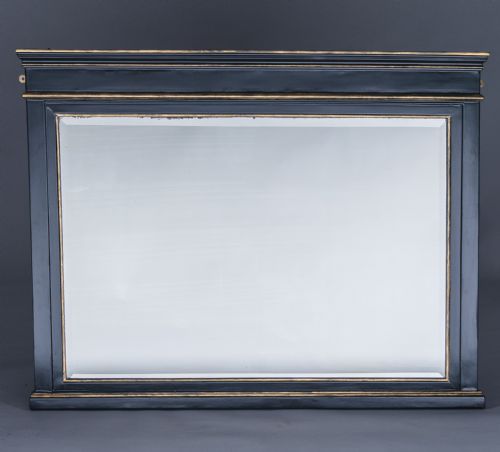
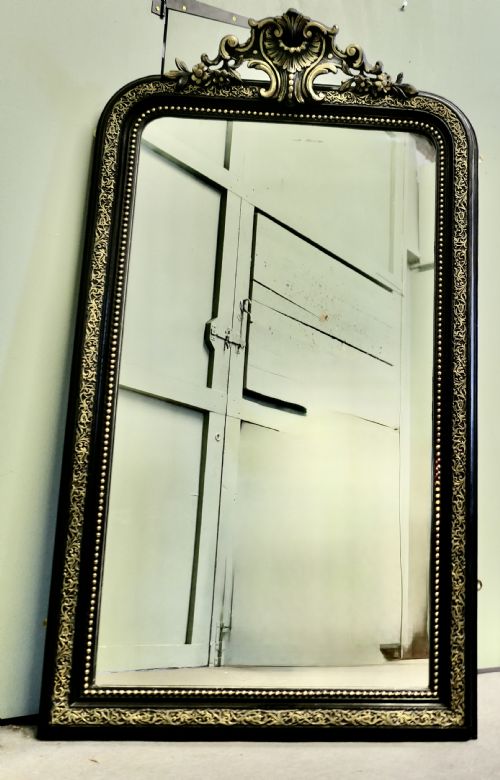

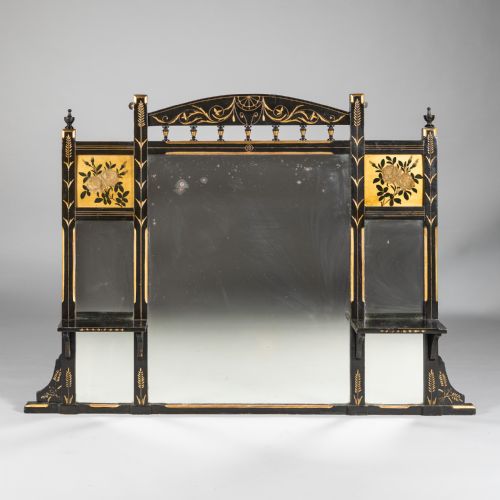
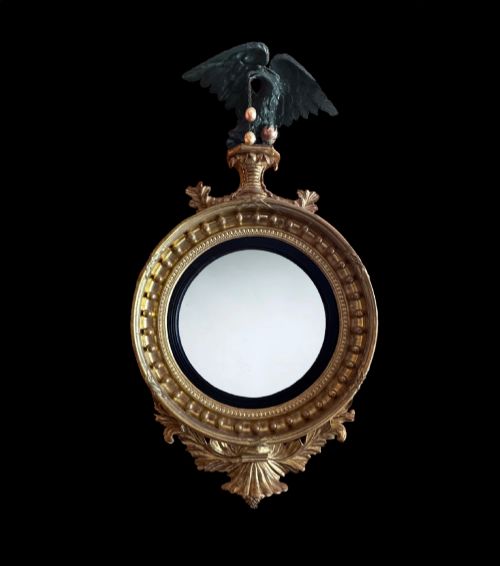
Ebonised Mirror
An ebonised mirror brings sharp, dark contrast to a room, using deep wood finishes and bright gilt to command attention.
Ebonised Mirror
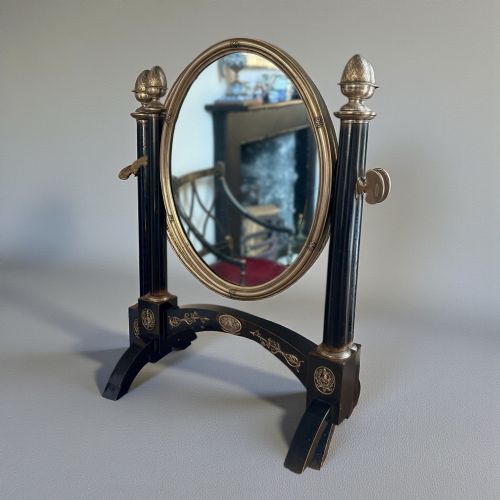
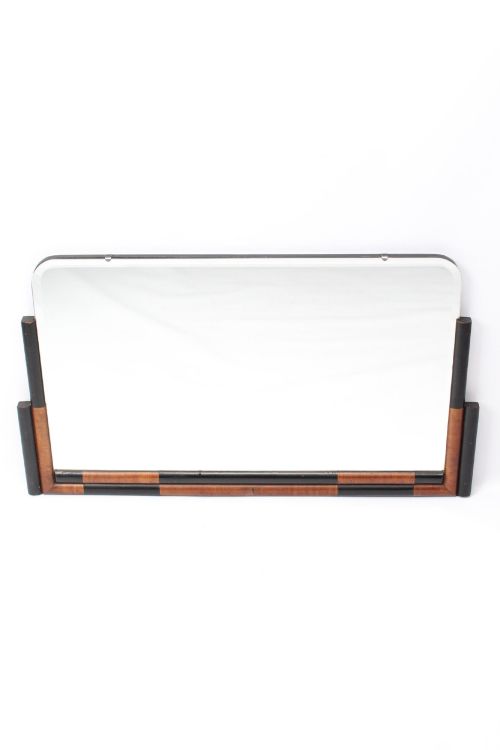
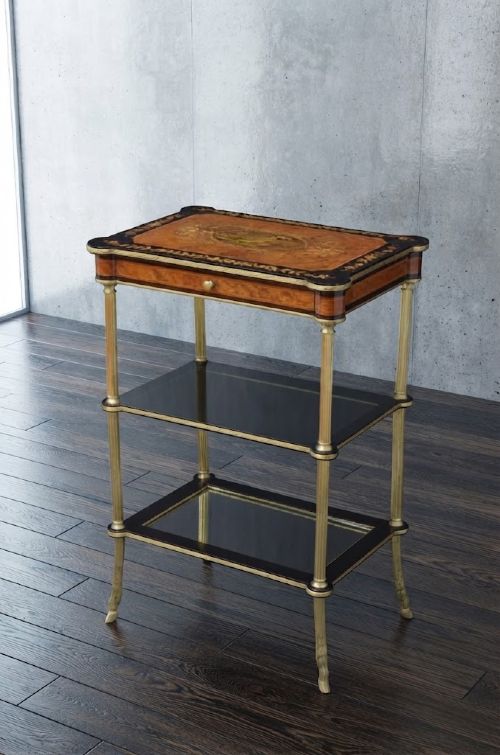
When you search for an ebonised mirror, you are looking at dark, dipped or stained timber frames designed to imitate ebony, frequently paired with parcel-gilt details. The examples you encounter on this page span the nineteenth century, including Victorian and Aesthetic Movement pieces alongside earlier Regency interpretations.
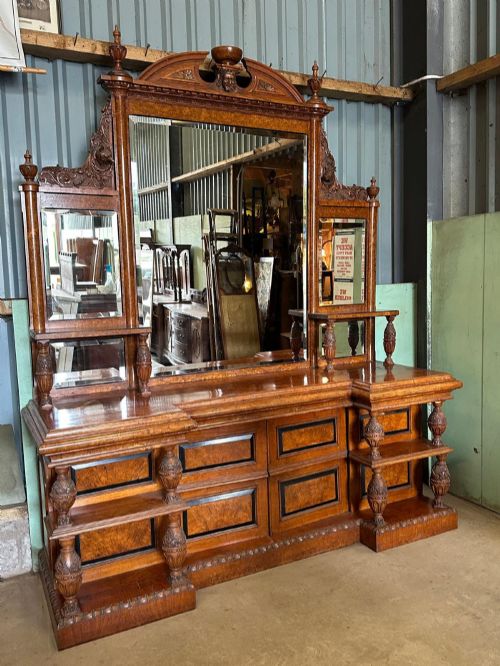
These pieces primarily take the form of wall mirrors and grand overmantels, though the selection also extends to smaller toilet mirrors and convex porthole frames. Many incorporate carved wooden mouldings, gilt slips, and intricate frames that reflect the decorative tastes of their respective periods.
Materials and Construction
Makers achieved the distinct dark finish by staining timber, such as fruitwood or walnut, or applying black paint and polish to simulate solid ebony. Gesso and gold leaf were then used to build up parcel-gilt highlights, catching the light against the dark wood.
Mirror glass of the period was set within these sturdy wooden frames, often accompanied by brass fixings and subtle inlaid details. Frames range from simple moulded rectangles to elaborate carved forms featuring ripple patterns or faux tortoiseshell effects.
Ebonised Mirror Retail Price Guide 2026
Typical asking prices for ebonised mirror among the pieces listed under this phrase on Sellingantiques today, from the lower quarter to the upper quarter. They describe what is for sale here now, not the wider market.
Listings feature nineteenth-century pieces incorporating ebonised wood, giltwood, and gesso across wall, overmantel, and convex formats.
Assessing Craftsmanship
The distinction between standard pieces and the finest work lies in the depth of the ebonisation and the precision of the carved parcel-gilt details. Superior examples display crisp moulding work, well-preserved gilding, and quality mirror glass with natural age and oxidation.
The integrity of the wooden frame and the joinery also separate ordinary items from exceptional ones. Finer pieces maintain their original finishes without excessive restoration, allowing the character of the nineteenth-century materials to show clearly.
Cottier & Co.·Garnett & Sons
The Ebonised Mirror Glossary
- Ebonised wood
- Timber treated with stain, paint, or chemical processes to imitate costly solid ebony. This finish became especially popular during the Victorian and Aesthetic periods.
- Parcel-gilt
- A decorative technique where specific raised portions of a frame are partially gilded with gold leaf, contrasting against a painted or dark wood ground.
- Overmantel mirror
- A large horizontal mirror designed to hang specifically above a fireplace mantelpiece. These often served as the visual centrepiece of a nineteenth-century room.
- Convex mirror
- A circular mirror with a curved glass surface that reflects a wide, distorted field of vision. They frequently feature ebonised slips and gilded frames.
- Gesso
- A plaster-like mixture applied to wooden frames as a base for gilding and fine carving. It allows craftsmen to create sharp, raised decorative details.
Ebonised Mirror: Frequently Asked Questions
How do I clean an ebonised mirror?
Dust the frame gently with a dry, soft cloth to protect the dark finish and any delicate parcel-gilt highlights from unnecessary wear.
Clean the mirror glass using a mild glass cleaner applied to a cloth rather than directly onto the surface to avoid moisture seeping behind the frame.
Where should I hang an overmantel mirror?
Position the mirror centrally above a fireplace mantelpiece to recreate its traditional nineteenth-century domestic setting and anchor the room's proportions.
Ensure the wall fixings are robust enough to support the substantial weight of the timber frame and glass.
What is an Aesthetic Movement mirror?
These pieces reflect the late nineteenth-century push for art in daily life, often featuring clean ebonised surfaces with minimalist gilded accents.
They break away from heavy historical revivals in favour of simpler, more refined geometric forms.
How can I date an ebonised mirror?
Examine the construction of the wooden frame, the type of mirror glass used, and any backing boards or fixings visible on the reverse.
Stylistic markers like ripple mouldings or faux tortoiseshell point directly to mid and late nineteenth-century workshops.