
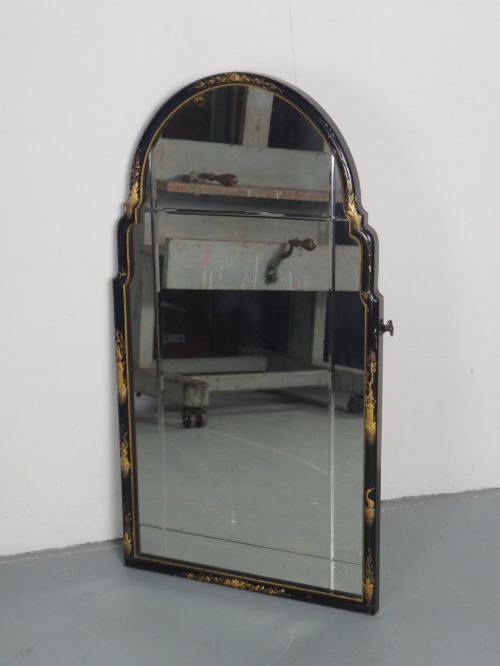
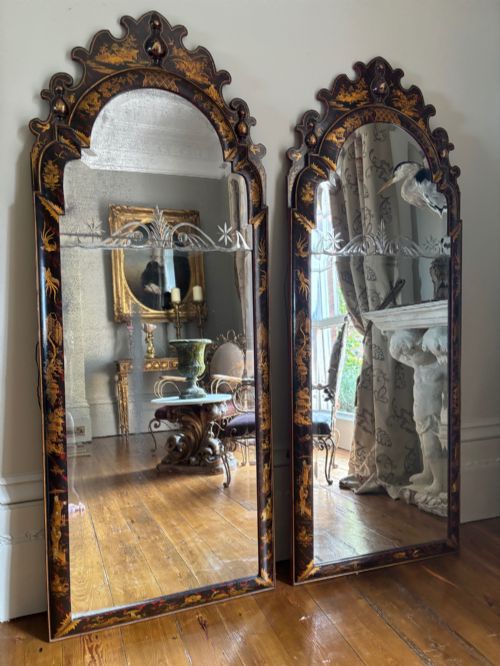


Black Japanned Mirror
A black japanned mirror brings a dark lacquer finish and gilt ornamentation into a room, offering the decorative depth collectors value in Chinoiserie and revival pieces.
Black Japanned Mirror
A black japanned mirror represents a tradition of European lacquering that mimics East Asian decorative arts, spanning from the eighteenth century to revival periods like Edwardian Chinoiserie and Queen Anne Revival. When searching for a black japanned mirror, buyers encounter various forms including wall mirrors, pier mirrors, oval wall mirrors, and small dressing or toilet mirrors.
The pieces on this page range from early eighteenth-century Chinese export examples and Georgian items to nineteenth-century Regency convex mirrors and twentieth-century interpretations. Toilet mirrors with miniature bureau bases and cushion mirrors also appear within the selection.
The aesthetic leans heavily on Chinoiserie and Chinese Export design, alongside Victorian Aesthetic Movement sensibilities and Regency proportions. Buyers are most likely to meet wall-hanging oval formats and dressing mirrors dating from the nineteenth and early twentieth centuries.
How they were made
Makers built these pieces using wood substrates prepared to receive successive layers of dark lacquer, creating the characteristic black japanned surface. Craftsmen applied gold leaf and gilt decoration by hand over the lacquer, often depicting figures, landscapes, and floral motifs in the Chinoiserie style.
Mirror glass was set into frames constructed from wood and lacquered wood, occasionally supplemented by brass hardware or parcel gilt highlights. The techniques combine traditional European cabinetmaking with simulated Asian lacquerwork developed to satisfy Western demand.
Materials recorded across the selection include lacquered wood, mirror glass, gold leaf, and brass.
What varies in quality
The distinction between standard decorative pieces and finer examples rests upon the execution of the hand-applied gilt ornamentation and the depth of the lacquer finish. Finer surfaces display intricate, crisp detailing in the Chinoiserie motifs rather than flat, simplified painting.
Age and construction integrity also determine standing, with eighteenth-century and early nineteenth-century items commanding attention for their period-specific joinery and materials. The quality of the original mirror glass and the subtlety of the parcel gilt work further separate the exceptional piece from the ordinary.
The Black Japanned Mirror Glossary
- Japanned
- European imitation of East Asian lacquerwork, created by applying layers of varnish and heat-curing them before adding gilt decoration. This technique gained popularity during the seventeenth and eighteenth centuries.
- Chinoiserie
- European interpretation of Chinese and East Asian artistic traditions, expressed through decorative motifs on furniture and mirrors. It dominated periods of revival design.
- Parcel Gilt
- Partial gilding applied to specific areas of an object, such as raised details on a black lacquer frame. It highlights particular design elements against a dark background.
- Pier Mirror
- A tall mirror designed to hang on the wall between two windows, often placed above a pier table. These pieces make extensive use of vertical space in period rooms.
- Cushion Mirror
- A mirror frame with a rounded, padded profile resembling a cushion, typical of seventeenth and early eighteenth-century English furniture. The sloping wooden frame catches the light effectively.
Black Japanned Mirror: Frequently Asked Questions
How do I date a black japanned mirror?
Dating relies on examining the construction methods of the wood frame, the characteristics of the mirror glass, and the style of the gilt decoration. Earlier pieces from the eighteenth century exhibit hand-beveled glass and traditional joinery.
Later revival pieces from the Edwardian era or the 1920s and 1930s often use machine-made glass and display standardised decorative motifs typical of those decades.
Where should I hang a black japanned mirror?
These mirrors work well in entryways, living rooms, or bedrooms where the dark lacquer and gilt finish can contrast with lighter wall colours. Oval wall mirrors and pier mirrors suit narrow wall spaces.
Smaller toilet mirrors with bureau bases function effectively on dressing tables or sideboards as decorative display pieces.
What is the difference between japanned and lacquered?
Lacquering properly refers to the use of sap from the East Asian lacquer tree, whereas japanning is the European method of imitating this finish using shellac, varnishes, and heat treatment.
In marketplace listings, the terms often overlap to describe dark resinous finishes decorated with gold Chinoiserie designs.
Are these mirrors fragile?
The lacquer and gilt surfaces require careful handling to avoid scratching or moisture damage, much like any antique painted wood furniture. Regular dusting with a soft dry cloth is sufficient for maintenance.
Older mirror plates may show foxing or silvering loss, which collectors view as an expected sign of age rather than a structural defect.