



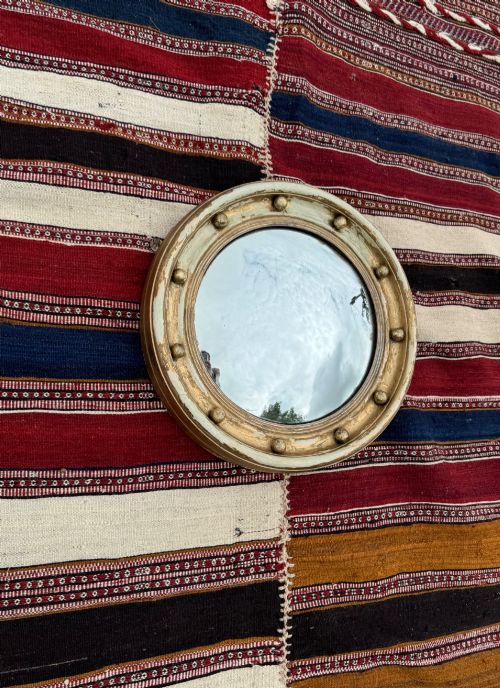
Convex Wall Mirror
A convex wall mirror gathers an entire room into its curved glass, bending perspective to create a luminous focal point.
Convex Wall Mirror
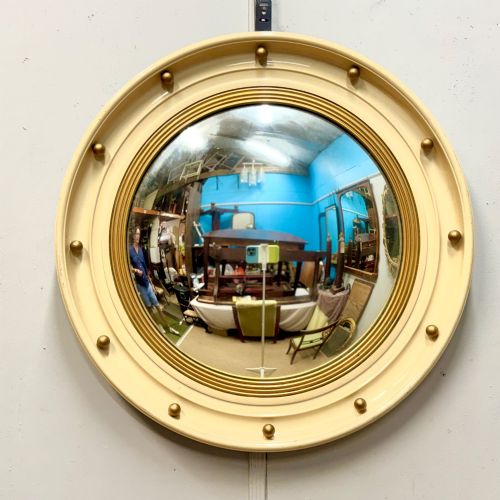
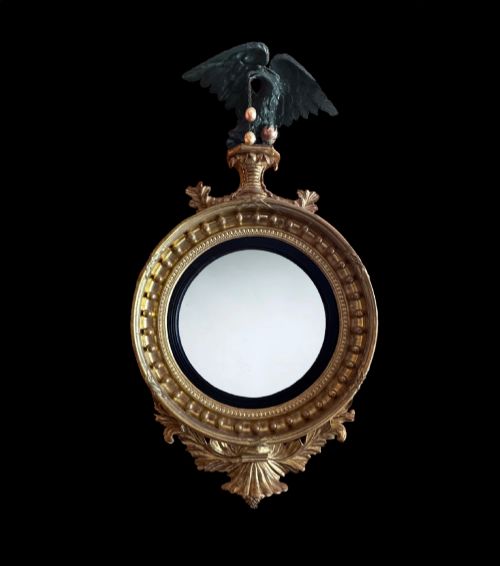
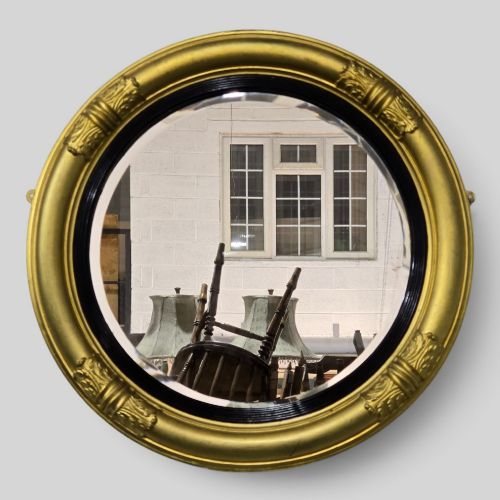
A convex wall mirror presents a wide, curved reflection that pulls the corners of an interior into a single circular frame. These decorative looking glasses appear frequently in Regency and nineteenth-century forms, alongside later revivals.
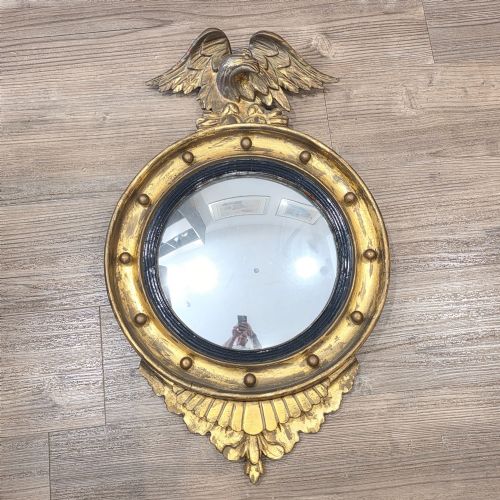
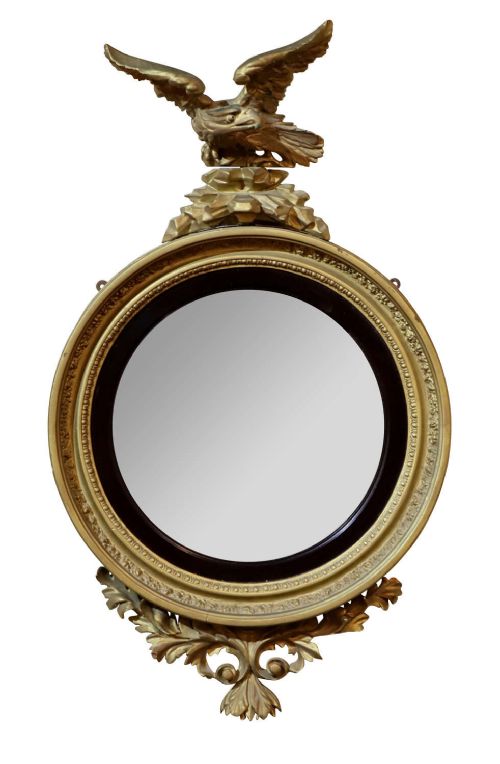
The most common examples on this page date from the Regency and Victorian periods, often framed in giltwood with circular profiles. Buyers also encounter butler's mirrors and sorcerer's glasses featuring deep, spherical plates.
Originating as functional pieces for monitoring domestic spaces or serving dining rooms, these round mirrors survive in varied scales from small intimate chambers to large architectural statements.
Materials and Construction
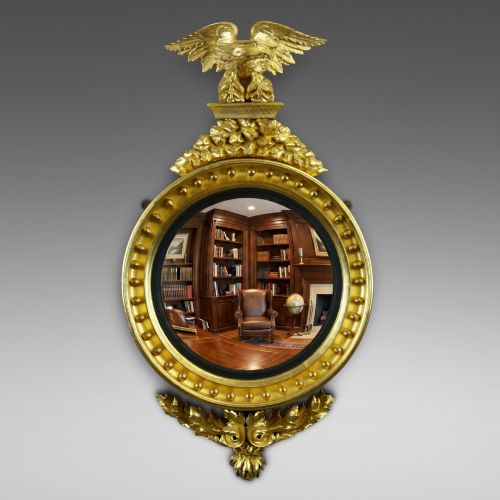
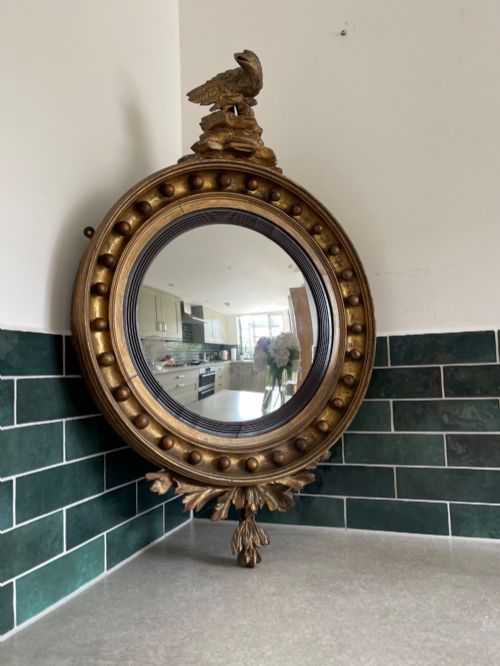
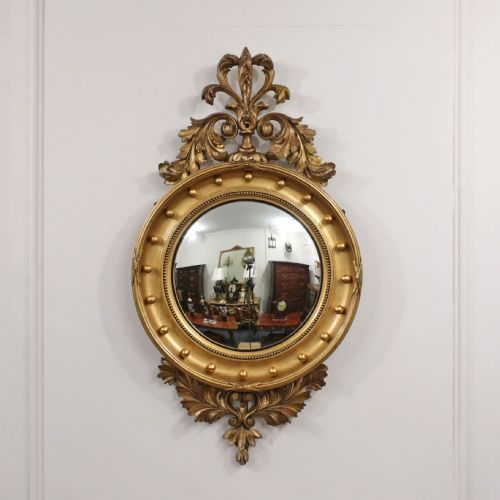
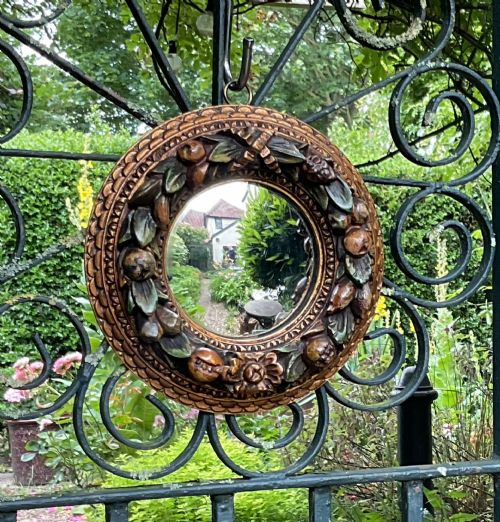
Frames rely on carved wood, gesso, and plaster built up over a wooden base to support intricate ornamentation like eagles and foliage. Gilding using gold leaf provides the classic bright finish seen across many Regency and Victorian examples.
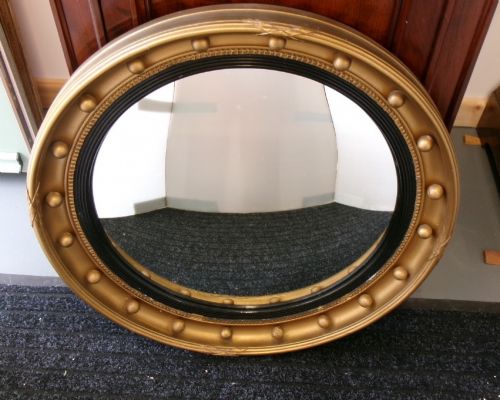
The characteristic curved glass plates require specialised blowing or slumping techniques before silvering. Ebonised slips and brass accents often frame the inner edge to create depth between the glass and the outer moulding.
Convex Wall Mirror Retail Price Guide 2026
Typical asking prices for convex wall mirror among the pieces listed under this phrase on Sellingantiques today, from the lower quarter to the upper quarter. They describe what is for sale here now, not the wider market.
Victorian guests loved watching themselves warp into miniature proportions inside the safety of the parlour.
Evaluating Quality and Detail
Quality rests in the crispness of the carved wood and gesso ornamentation, where sharp detail distinguishes superior studio work from softer, moulded replacements. The depth and integrity of the original gilding also signal a higher grade of craftsmanship.
The glass plate itself reveals much about the standard of the piece, with genuine period curved glass showing subtle optical distortions and age foxing rather than modern uniformity. Frame construction joints and the presence of untouched original backboards complete the assessment of authenticity.
Heals of London
The Convex Wall Mirror Glossary
- Convex glass
- A curved glass plate that projects outward, creating a distorted wide-angle reflection of the surrounding space. This spherical form defines the entire category.
- Giltwood
- Timber coated with a thin layer of gold leaf over a prepared gesso ground. This finish catches candlelight and natural illumination.
- Gesso
- A plaster-like mixture applied to wood frames to provide a smooth surface for carving and gilding. Artisans shape this material to form relief decoration.
- Ebonised wood
- Timber stained or treated to resemble dense, black ebony. This dark finish frequently appears on interior slips next to the glass.
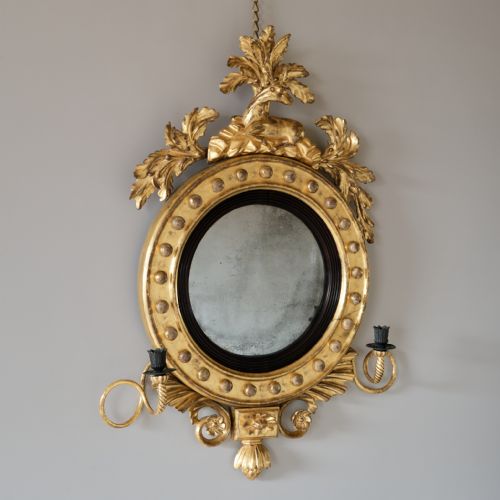
- Girandole
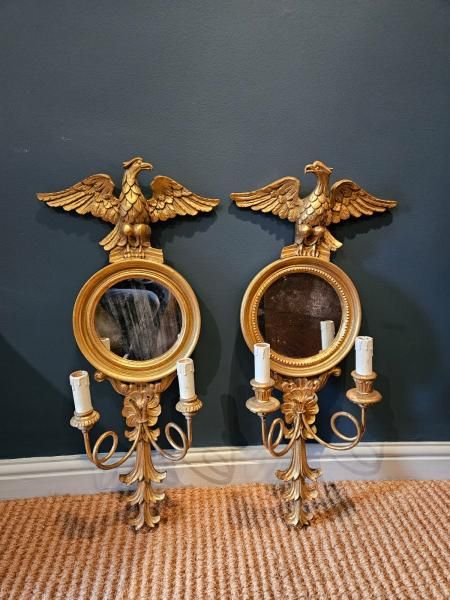
- A decorative wall mirror fitted with attached candle sconces. The curved glass helps to multiply the flickering light.
Convex Wall Mirror: Frequently Asked Questions
Where should I hang a convex mirror?
These mirrors excel in entrance halls, living rooms, and dining spaces where their wide-angle reflection captures the movement of the room. Hanging them at eye level allows the viewer to appreciate the curved perspective fully.
Because they concentrate natural light, placing them opposite a window or near a light source maximises their brightening effect in darker corners.
How do I identify a Regency convex mirror?
Regency examples typically feature circular giltwood frames accented with reeded ebonised inner lips and surmounted by carved eagles or crests. The proportions are balanced, often utilising heavy plaster and wood construction typical of the early nineteenth century.
Examining the backboards, fixings, and the character of the glass helps confirm the period of manufacture against later nineteenth-century revivals.
Why are they called sorcerer's mirrors?
The term stems from the mysterious, globe-like reflection that resembles scrying balls used historically for divination. Victorian interiors embraced this nickname, linking the unusual optical properties to esoteric decor.
Today, collectors use the terms interchangeably to describe nineteenth-century convex looking glasses with deep, atmospheric curves.