

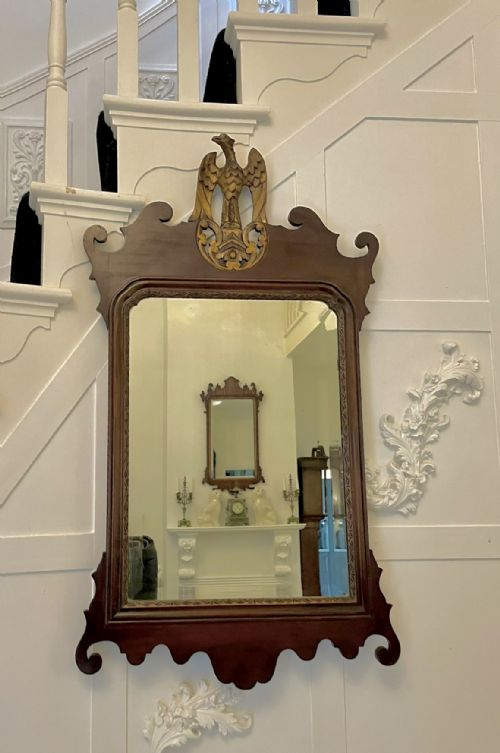
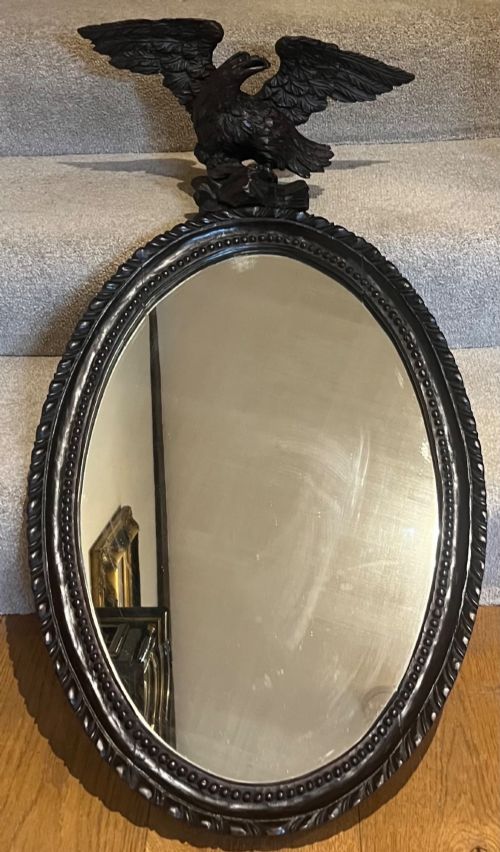


Carved Eagle Crest Mirror
A carved eagle crest mirror brings fierce neoclassical presence and brilliant light to a room through its soaring bird and gilded frame.
Identifying carved eagle crest mirror pieces
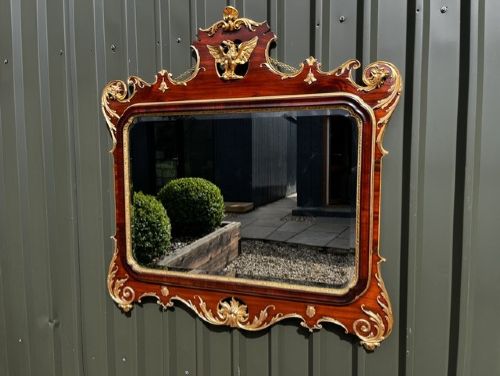
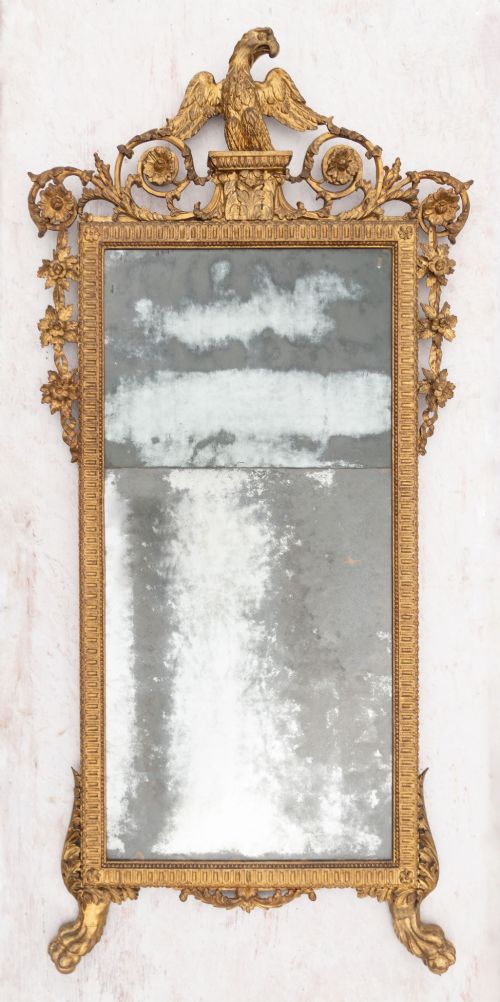
A carved eagle crest mirror is a striking wall hanging distinguished by its predatory bird ornament perched atop the frame. The examples available span Georgian, Regency, Edwardian, and nineteenth-century periods, taking the form of substantial wall mirrors or broad overmantels.
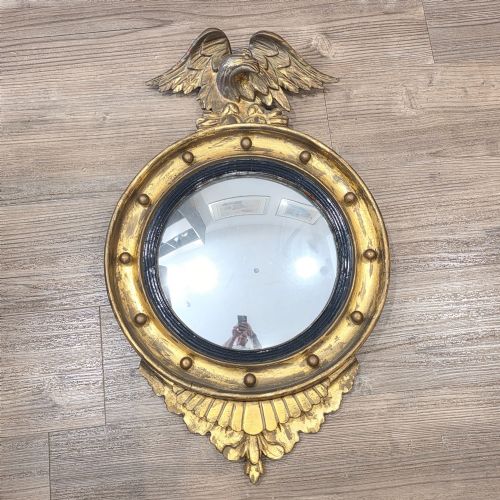
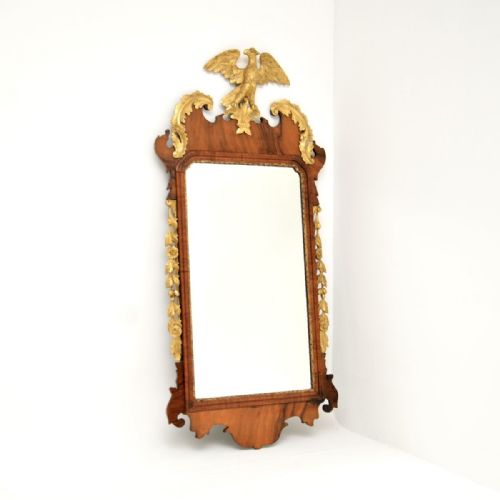
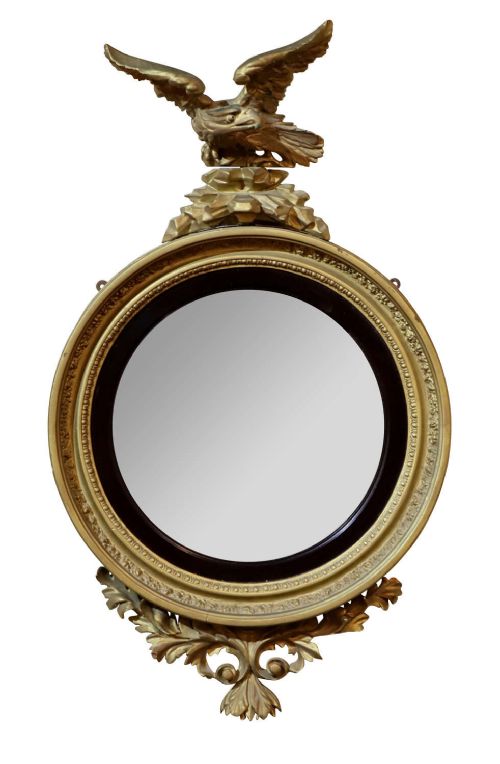
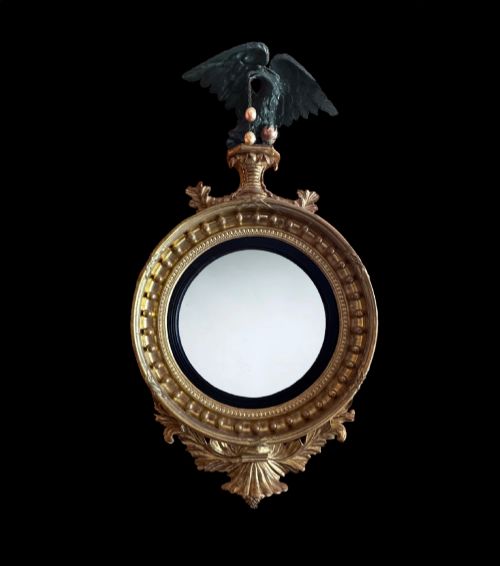
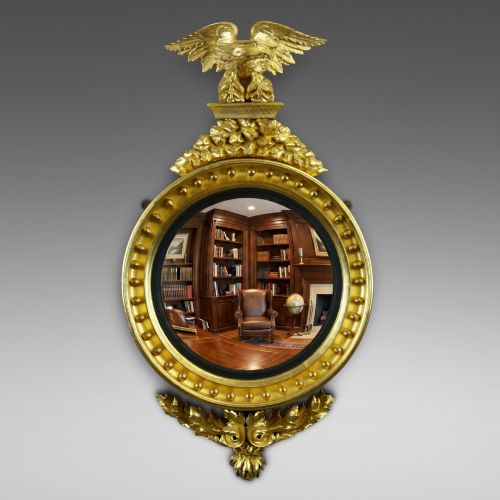
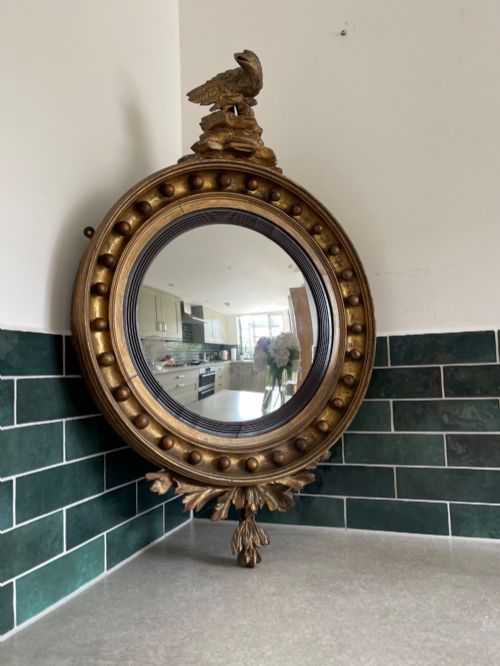
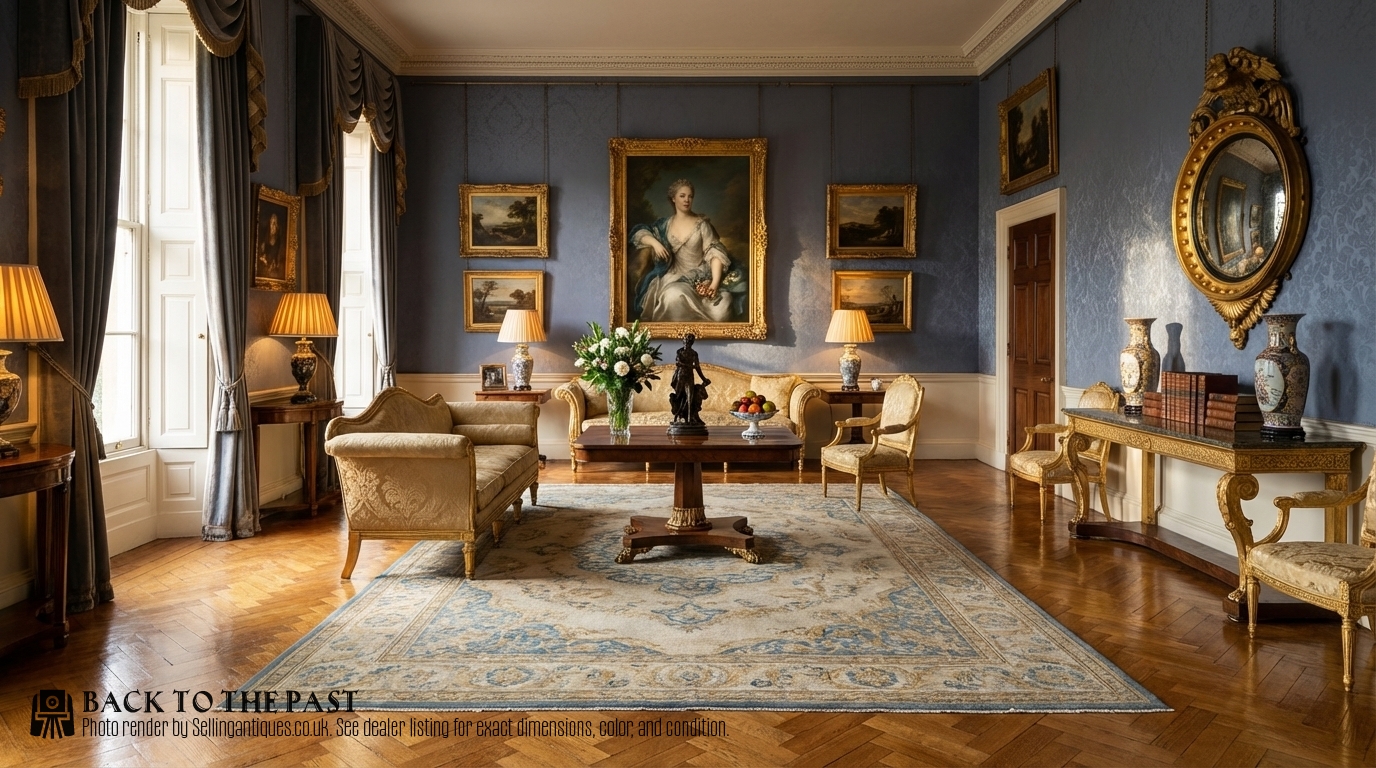
The most prominent iterations on this page are Regency convex mirrors featuring round gilded plates and fierce eagle crests. Buyers will also encounter Chippendale style mahogany fretted wall mirrors and grand gesso painted overmantels carrying the iconic bird motif.
Materials and construction
These pieces are built using timber foundations of mahogany, ebonised wood, and general wood substrates. Artisans then applied layers of gesso to carve intricate surface details before finishing the frames in rich paint or gold leaf.
Mirrors of this calibre incorporate thick glass plates, sometimes paired with inlaid details on Edwardian mahogany frames. The heavy bird crests and flanking ornaments are carved separately from timber or modelled in gesso before being secured to the main structure.
Retail Price Guide 2026
Typical UK retail prices for carved eagle crest mirror, calculated from the Sellingantiques database of over a million retail prices indexed since 2003. This retail price guide relies exclusively on Sellingantiques data; no external sources or auction records are used, so the figures do not describe the wider market.
The watchful eagle crest ensures your guests are perpetually supervised by a very shiny, golden bird of prey.
Assessing quality and craftsmanship
Quality separates the master carver's work from the utilitarian workshop through the crispness of the eagle's plumage and the naturalism of its stance. Finer specimens display deep, undercut carving in the gesso and giltwood rather than flat, moulded substitutes.
The handling of the reflective plate also dictates standard, where early convex glass offers a warm, warping distortion prized by collectors. Superior framing preserves the integrity of the original gilding and timber grain without heavy modern intervention.
The Carved Eagle Crest Mirror Glossary
- Convex mirror
- A round looking glass with a bulging curved surface designed to capture a wide-angle reflection of the entire room. These circular plates are frequently surmounted by carved eagles in Regency interiors.
- Giltwood
- Timber coated with a thin layer of gold leaf over a prepared gesso ground. This technique provides the brilliant metallic sheen characteristic of formal antique frames.
- Gesso
- A plaster-like mixture applied to wood frames and carved once set. It allows for sharp relief work and decorative moulding before gilding.
- Overmantel mirror
- A wide looking glass proportioned specifically to hang above a fireplace mantel. These expansive pieces often feature elaborate crests to fill tall chimney breasts.
Frequently Asked Questions
Where should I hang a convex mirror?
These round glasses excel in hallways, living rooms, and dining spaces where their wide-angle reflection can capture maximum light and activity. Positioning them opposite a window or doorway creates a luminous focal point in the interior.
Ensure the wall anchor is secure because the combined weight of timber, gesso, and thick glass demands robust hardware. Hanging them at eye level allows guests to appreciate both the reflective properties and the carved eagle crest.
What is the difference between Georgian and Regency frames?
Georgian pieces often favour rich mahogany timbers with fretwork and inlay, leaning towards architectural proportions. Regency examples embrace bolder neoclassical themes, heavily utilising circular convex plates and gilded gesso.
The eagle motif appears across both eras but shifts in character, moving from classical mahogany frets in the eighteenth century to fierce, gilded birds keeping watch over round convex mirrors in the Regency period.
Why do convex mirrors distort reflections?
The curved glass plate acts as a wide-angle lens, shrinking and bending the entire room into a single spherical view. This optical trick was originally intended to help servants monitor a large dining table from a distance.
Collectors prize this unique distortion as a hallmark of period authenticity in Regency convex mirrors. It adds an atmospheric, painterly quality to the interior space unlike standard flat glass.