




Georgian Eagle Wall Mirror
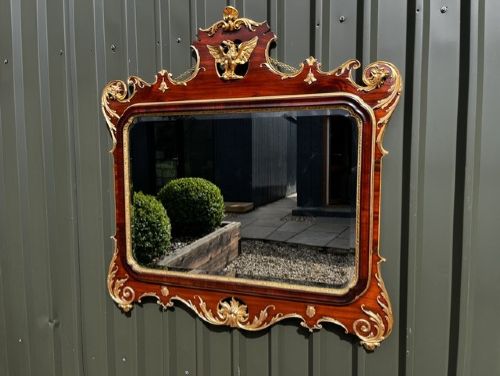
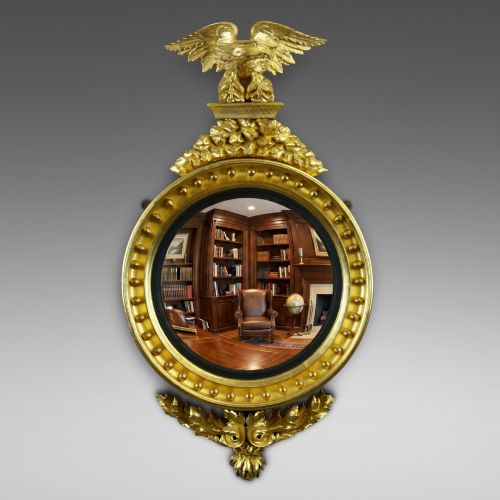
A georgian eagle wall mirror combines carved timber, gilded gesso and deep convex glass to focus light and command a room.
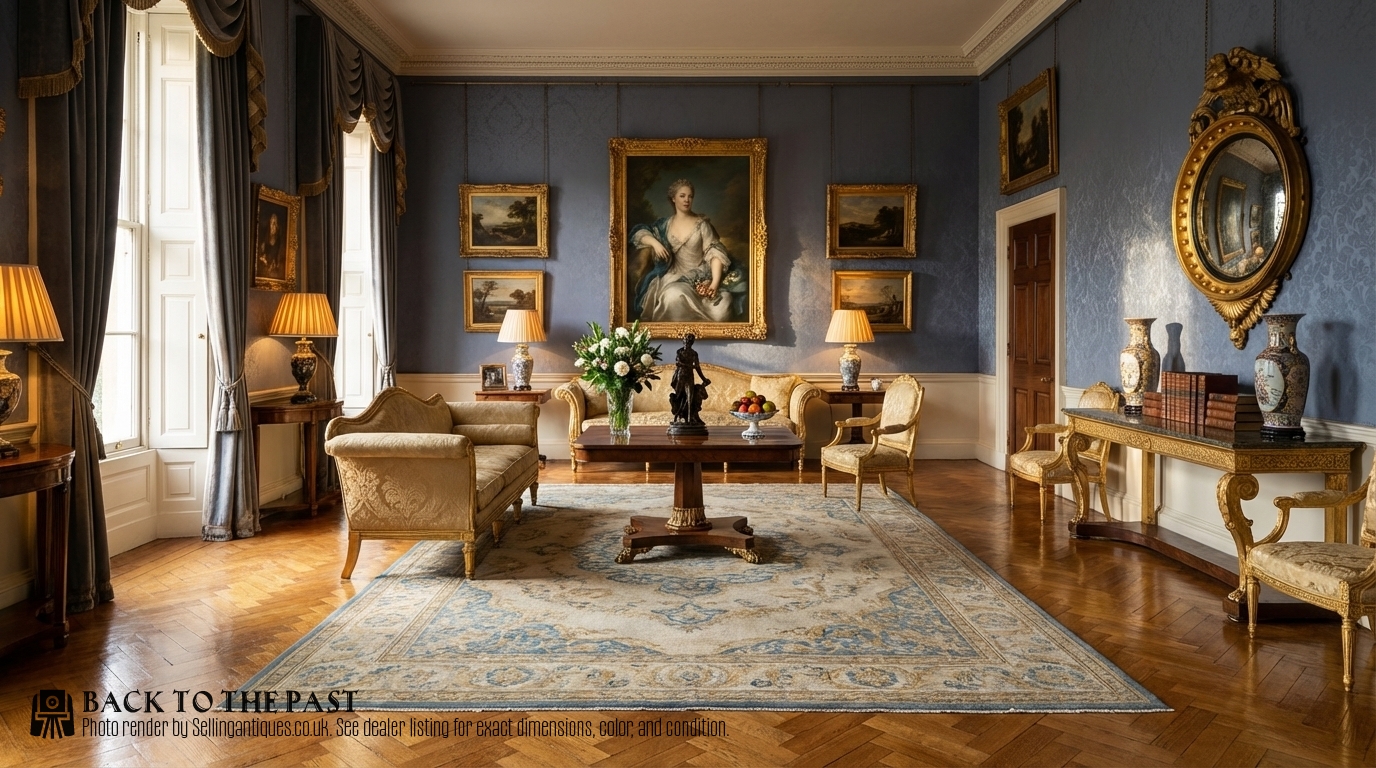
Georgian Eagle Wall Mirror
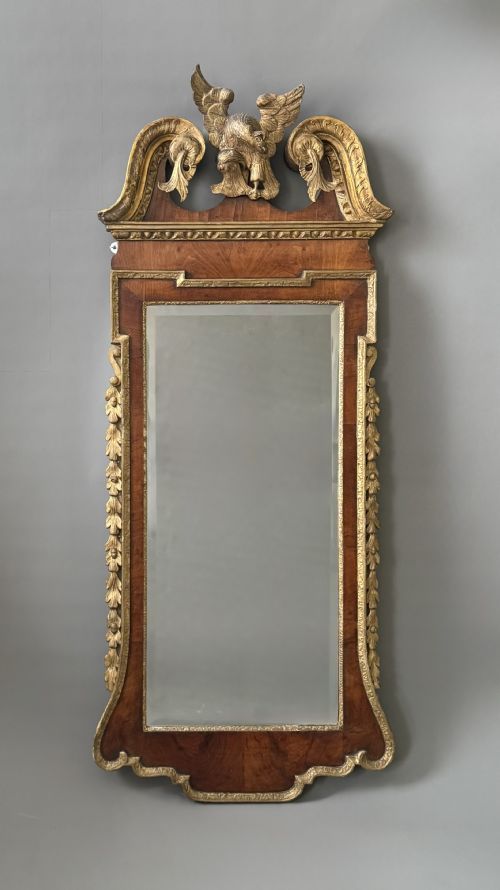
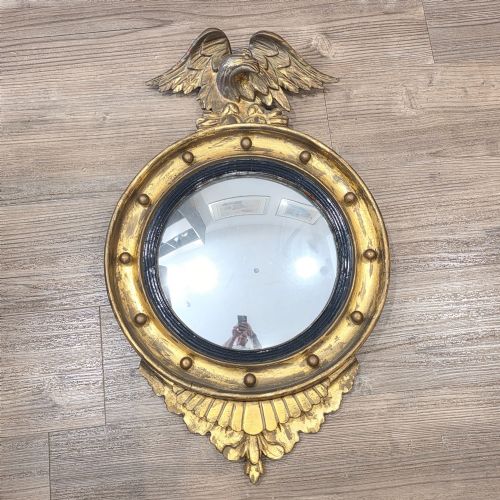
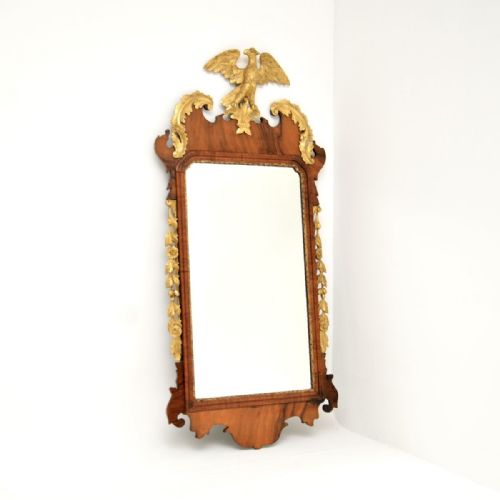
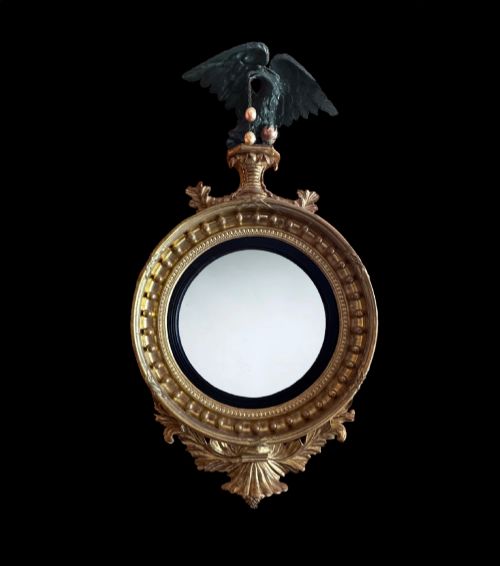
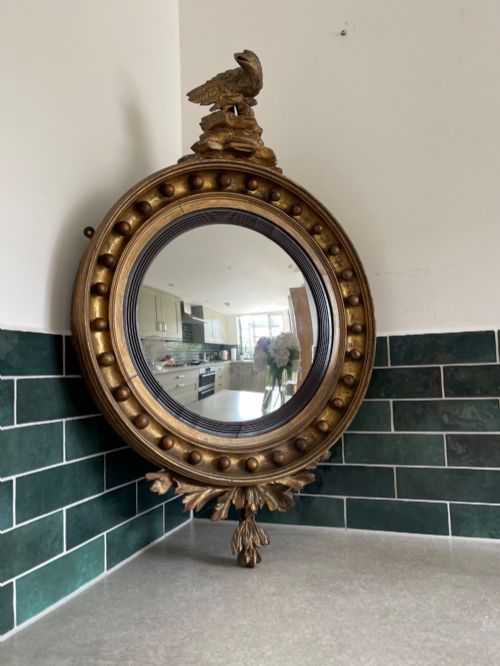
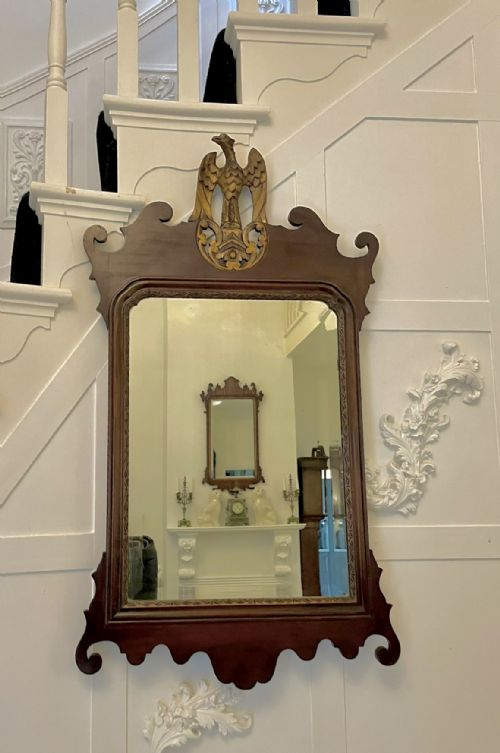
A georgian eagle wall mirror is a circular or upright wall-hanging glass frame topped with a carved bird, frequently encountered from the Regency and Georgian periods alongside later revival examples. These pieces range from substantial circular convex frames with spread eagles to upright mahogany fretted pier mirrors and rectangular formats with crests.
The materials span giltwood, gesso, walnut, mahogany and ebonised wood, sometimes accented with brass candle arms in girandole forms. Most examples date from the eighteenth and nineteenth centuries, with occasional Edwardian and twentieth-century interpretations appearing in the selection.
How they were made
Makers shaped timber frames from walnut or mahogany, often applying layers of gesso to carve intricate details such as foliage, scrolls and the iconic crests. Giltwood surfaces combine gold leaf laid over prepared gesso grounds on carved timber bases.
Mirror plates include Vauxhall plates and heavy convex glass discs designed to reflect interiors in miniature. Parcel gilt treatments highlight specific carved elements against dark wood grounds like walnut and mahogany.
Georgian Eagle Wall Mirror Retail Price Guide 2026
Typical asking prices for georgian eagle wall mirror among the pieces listed under this phrase on Sellingantiques today, from the lower quarter to the upper quarter. They describe what is for sale here now, not the wider market.
Many convex mirrors watch over the room beneath the watchful gaze of a wooden eagle perched atop the frame.
What varies in quality
Quality rests upon the crispness of the carved details, particularly in the rendering of the eagle wings, feathers and talons. Deep, well-defined carving on the frame and crest separates superior examples from softer, flatter work.
The condition and depth of the gilding and the authenticity of the original mirror glass significantly influence the character of the piece. Period glass plates with minor oxidisation contrast with bright modern replacements, while intact gesso mouldings preserve the original sharpness of the design.
William Kent
The Georgian Eagle Wall Mirror Glossary
- Convex mirror
- A round mirror with a bulging spherical glass plate that reflects a wide-angle view of the room. These are frequently surmounted by carved birds.
- Giltwood
- Timber coated with gold leaf applied over a fine plaster gesso ground. This technique creates a brilliant reflective surface across the carved frame.
- Vauxhall mirror
- A historic English mirror plate type known for its bevelled edges and thick glass. They date back to the famous London glasshouse.
- Girandole
- A wall mirror fitted with attached candle sconces or arms. The candle light reflects outwards from the glass and gilt frame.
- Parcel gilt
- A decorative treatment where portions of a wooden object are gilded with gold leaf while other areas show the natural wood grain.
Georgian Eagle Wall Mirror: Frequently Asked Questions
Where should I hang a convex mirror?
Convex mirrors project a wide-angle reflection of an entire interior space, making them effective opposite a window or above a fireplace mantel.
Because they concentrate light, placing them in darker hallways or opposite light sources brightens the surrounding room.
How do I identify a Regency period mirror?
Regency mirrors often feature bold round convex frames, reeded ebonised slip rings inside the moulding, and prominent crests like spread eagles or hoho birds.
They typically date from the early nineteenth century and rely heavily on bright giltwood surfaces and circular proportions.
What is a fretwork wall mirror?
Fretwork mirrors utilise flat boards of mahogany or walnut cut with intricate scroll patterns using a fretsaw. These pieces often feature gilded accents and parcel gilt detailing.
They connect closely to eighteenth-century cabinet maker styles and revival periods of the late nineteenth century.