


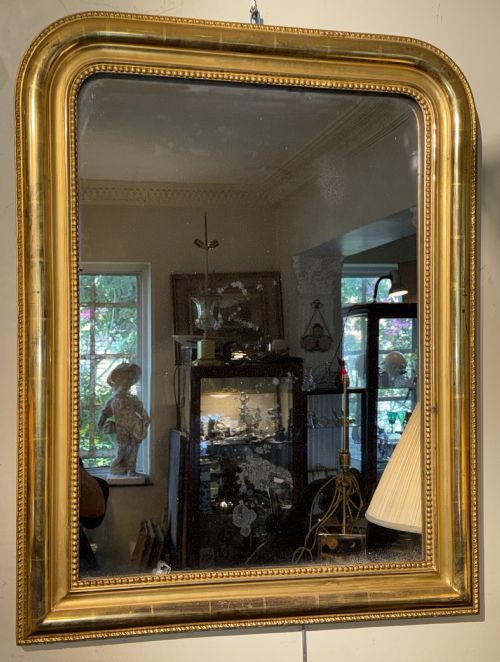
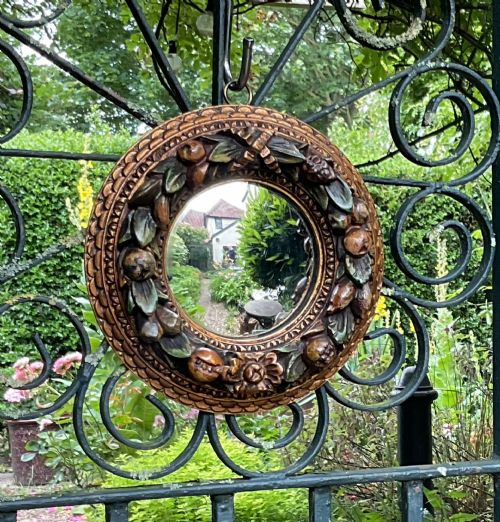
Antique Round Wall Mirror
An antique round wall mirror catches the light and expands a room, bringing the distinct convex sweep of the Regency era straight into a modern hallway.
What an antique round wall mirror is
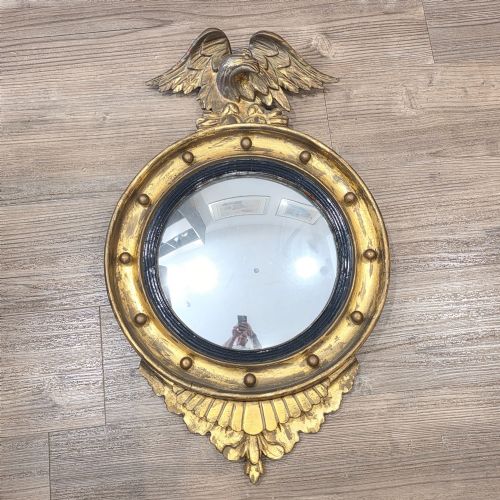
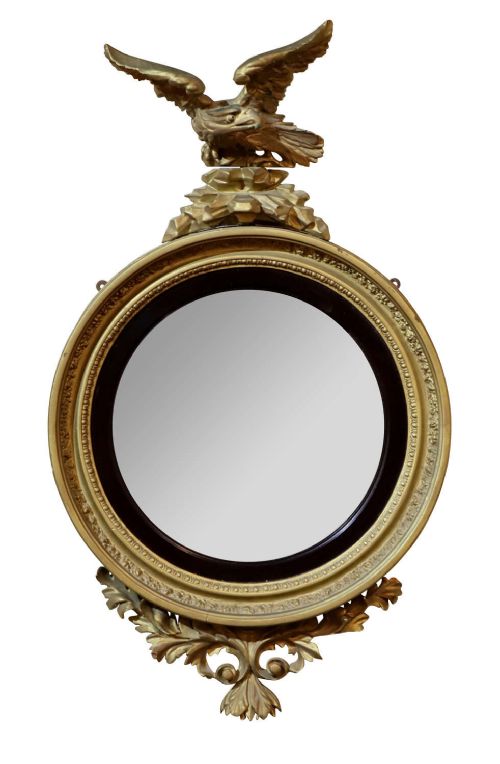
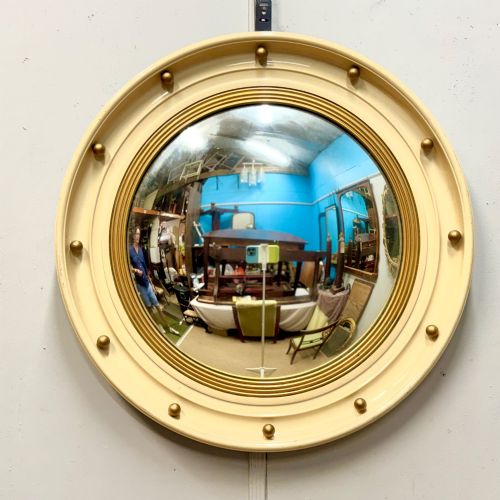
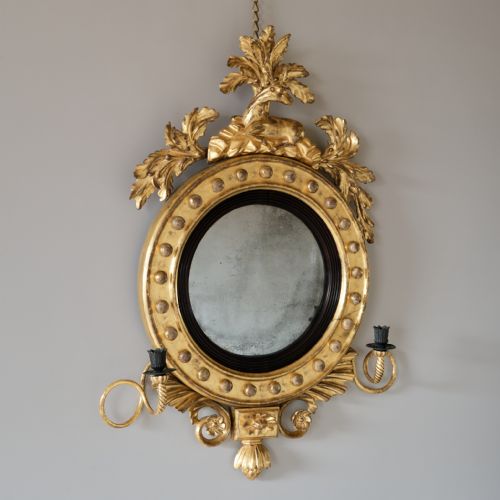
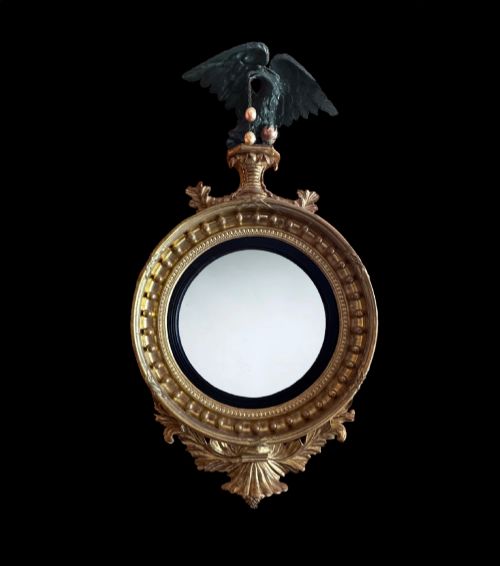
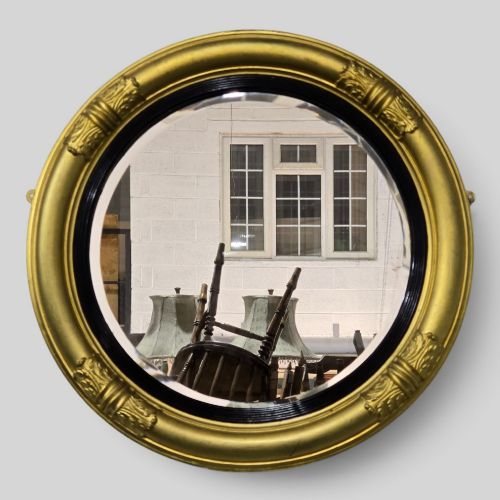
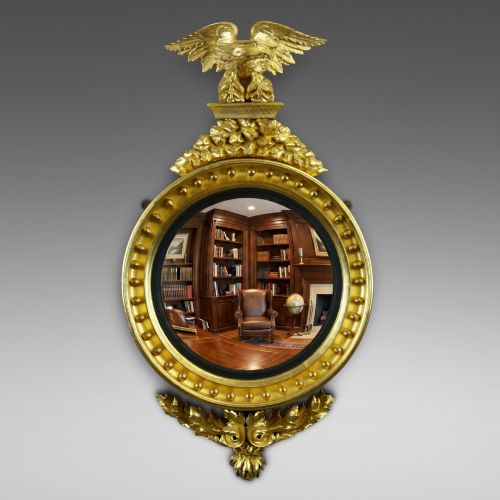
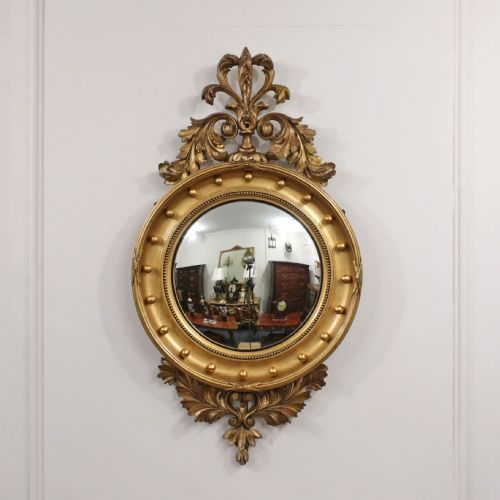
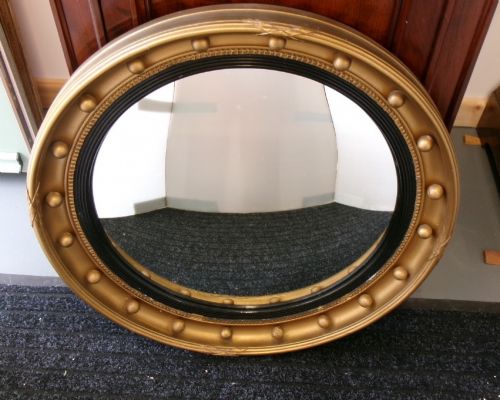
An antique round wall mirror draws the eye through a distinctive circular plate, capturing a sweeping, distorted perspective of the entire interior space. The examples found here span the Georgian, Regency, and Victorian periods, along with later revivals that echo these earlier forms. Most pieces on this page take the form of convex wall mirrors, housed within heavy circular frames designed to command a room.
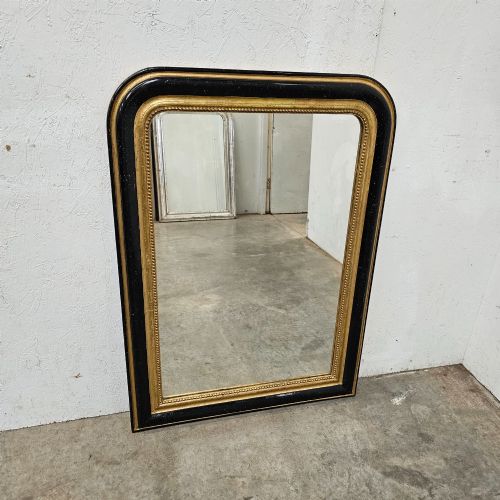
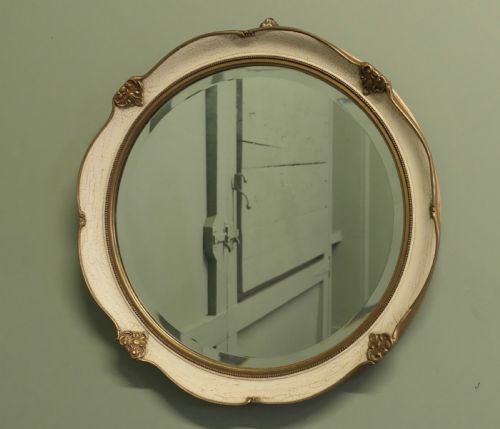
The materials and decoration range from carved giltwood and gesso to ebonised wood, mahogany, and brass. Many feature decorative wooden frames with foxed mirror plates, showing the natural silvering deterioration that comes with age. Makers from the 19th century onwards embraced these circular formats for hallways and principal rooms, creating functional objects that double as sculptural focal points.
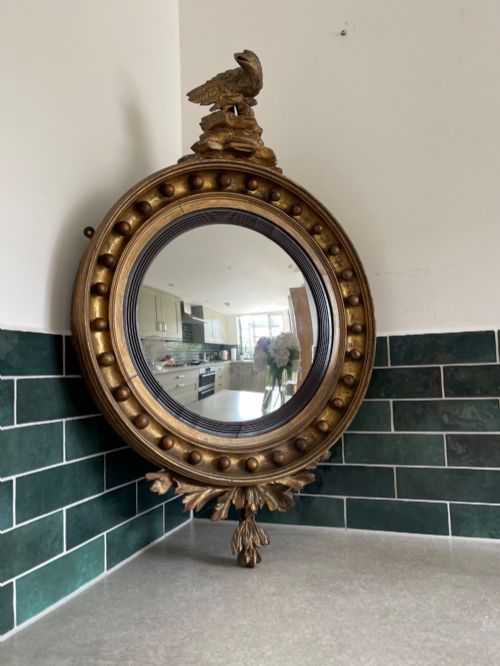
Buyers will encounter various stylistic interpretations, from simple mahogany surrounds to elaborate Grand Regency pieces topped with carved birds such as eagles. Chinoiserie and japanned finishes also appear, offering contrasting decorative schemes rooted in historical taste. Each iteration retains the signature circular symmetry that defines this specific category of antique looking glass.
How they were made
The construction of these circular frames relies on traditional joinery and carving techniques applied to woods such as mahogany, ebonised timber, and plain wood foundations. Carved giltwood and gesso elements provide the ornate surfaces seen on Regency and Georgian pieces, built up in layers before receiving their gold finish. Brass components and structural pins secure the heavy glass plates safely within their surrounds.
Mirror plates themselves are set directly into the rebated frames, utilising early glass-blowing and silvering methods that result in characteristic imperfections and foxing. Japanned and Chinoiserie finishes involve layered lacquering and hand-painted motifs applied to wooden carcases, requiring meticulous drying and polishing between coats. These combined methods produce sturdy, enduring wall hung furnishings designed to last centuries.
Retail Price Guide 2026
Typical UK retail prices for round wall mirror, calculated from the Sellingantiques database of over a million retail prices indexed since 2003. This retail price guide relies exclusively on Sellingantiques data; no external sources or auction records are used, so the figures do not describe the wider market.
Many convex mirrors feature an eagle perched on top, quietly watching over the hallway like a very shiny, gilded guard dog.
What varies in quality
The standard of carving and the crispness of the giltwood or gesso ornamentation set the finer examples apart from simpler production. Regency and Georgian frames exhibit deep, articulate relief work on decorative elements like balls, reeding, and crests. Lesser pieces rely on softer detailing or simpler wooden surrounds without the same depth of manual craftsmanship.
The condition and integrity of the original mirror glass significantly influence the character of each piece. Convex plates that retain their early foxing and distortion without modern replacement offer greater historical authenticity. The quality of the underlying timber frame and the preservation of original japanned or gilt surfaces further determine the standing of individual mirrors.
The Antique Round Wall Mirror Glossary
- Convex mirror
- A circular looking glass with a curved outward-facing surface that creates a wide-angle reflection of the room. This form was especially popular during the Regency period.
- Giltwood
- Timber that has been coated with a thin layer of gold leaf over a prepared gesso base. It provides a luminous surface that catches low interior light.
- Gesso
- A plaster-like mixture applied to wooden frames as a base for carving and gilding. It allows craftsmen to model intricate decorative details before finishing.
- Foxing
- The natural age-related spots and discolouration that develop within the silvering of antique mirror plates. Collectors view this as a mark of genuine antiquity.
- Japanned
- A European imitation of East Asian lacquerwork, typically featuring dark varnishes and painted decoration. It appears on select 19th-century circular frames.
- Reeding
- A decorative moulding consisting of parallel convex strips resembling bundled reeds. It frequently edges the inner rings of Regency circular frames.
Frequently Asked Questions
Where should I hang a convex mirror?
These mirrors work best opposite a window or in narrow spaces like hallways and landings. Their curved glass gathers and distributes light across the entire room.
Because they offer a wide-angle perspective, hanging them at eye level ensures maximum visual impact and allows guests to appreciate the distorted reflection.
How do I date an antique round mirror?
Dating relies on examining the construction of the wooden frame, the backing boards, and the characteristics of the glass plate. Georgian and Regency pieces often feature heavy carved giltwood surrounds with specific motifs like ball-stud bezels.
Later 19th-century examples and revivals introduce different timber choices and machine-sawn elements. Inspecting the foxing and silvering behind the glass also offers clues to its age.
What is the difference between convex and flat mirrors?
Convex mirrors curve outward to compress a wide field of view into a circular frame, functioning as optical devices as much as looking glasses. Flat mirrors provide a direct, undistorted reflection of whatever stands immediately before them.
Historically, convex mirrors were placed in principal rooms to monitor activity and illuminate dark corners.
How do I clean an old mirror plate?
Dust the frame and glass gently with a soft, dry cloth to remove loose particles. Avoid commercial chemical sprays that can seep behind the glass and damage fragile silvering or historical foxing.
If moisture is necessary, use a damp microfibre cloth sparingly and dry the surface immediately to protect the antique backing.