

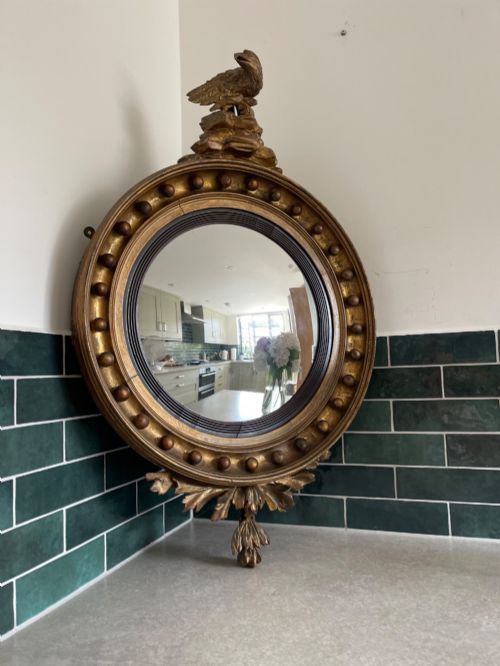

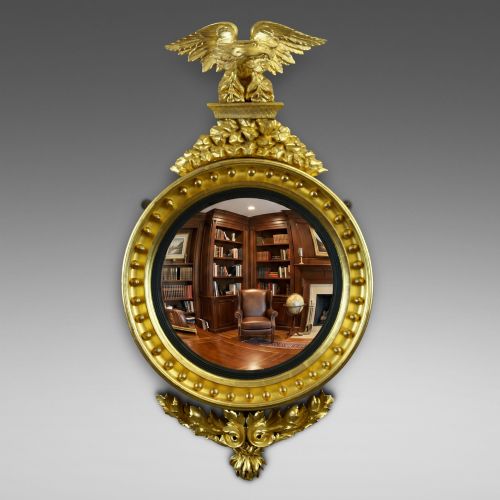

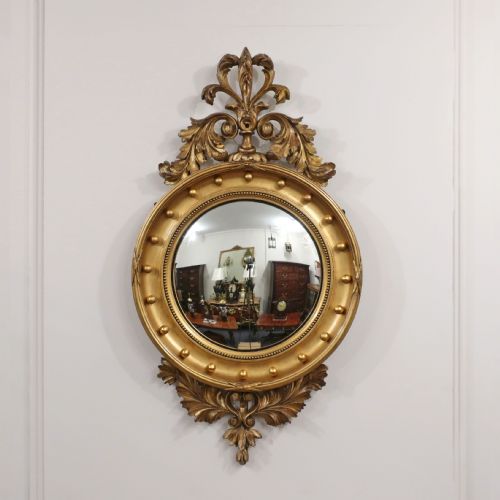

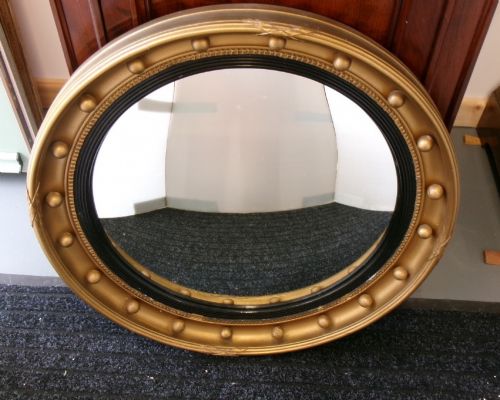

Gold Convex Wall Mirror
A gold convex wall mirror gathers the room in a single curved plate, bringing light and depth to any wall it occupies.
Gold Convex Wall Mirror
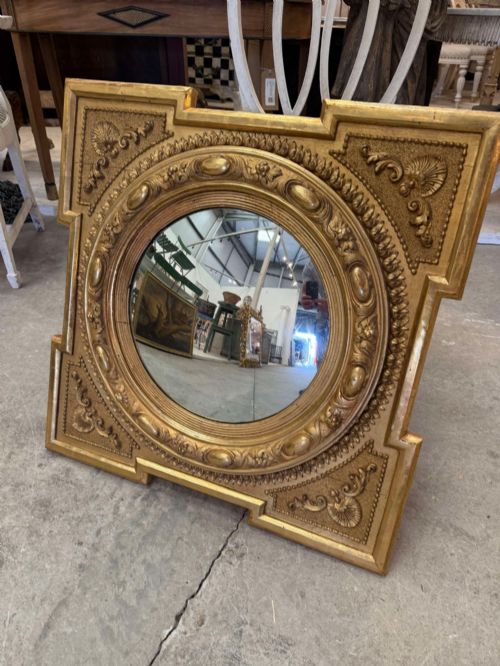
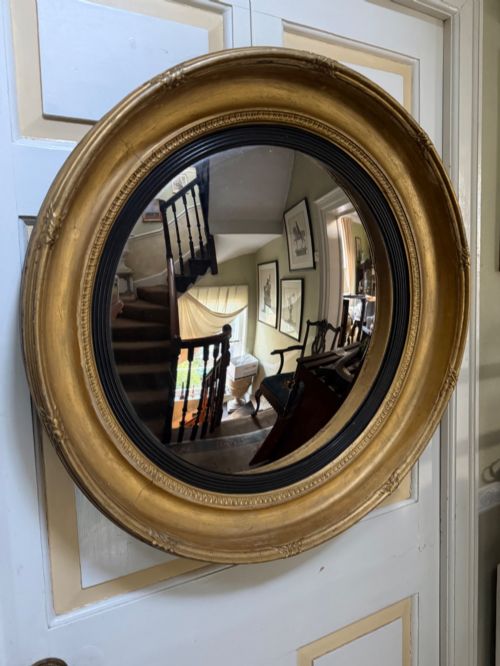
A gold convex wall mirror captures the entire interior in a curved glass plate, offering a wide, distorted view of the space around it. When searching for a gold convex wall mirror, buyers encounter round forms mounted in circular frames.
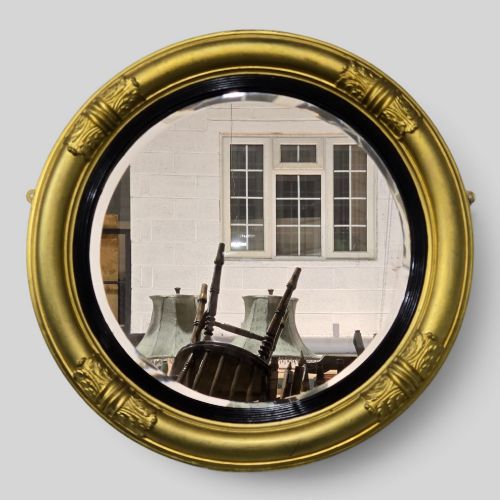
The pieces on this page stem predominantly from the Regency and nineteenth century, alongside later Victorian, Georgian, and early twentieth century examples. These circular frames often feature giltwood, gesso, and ebonised wood.
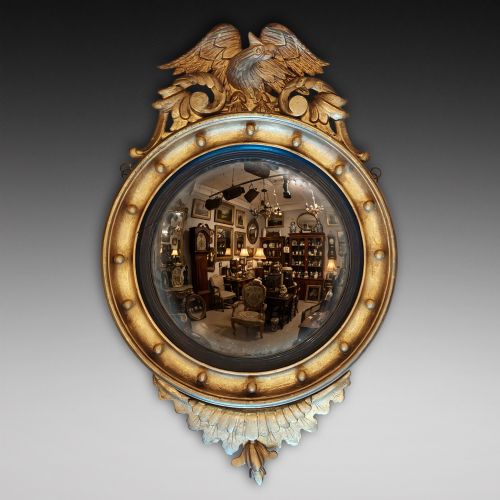
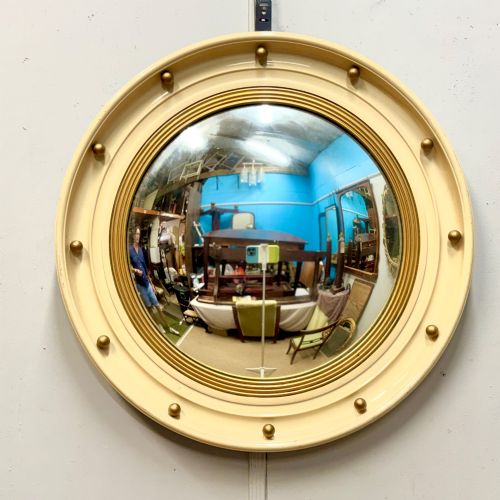
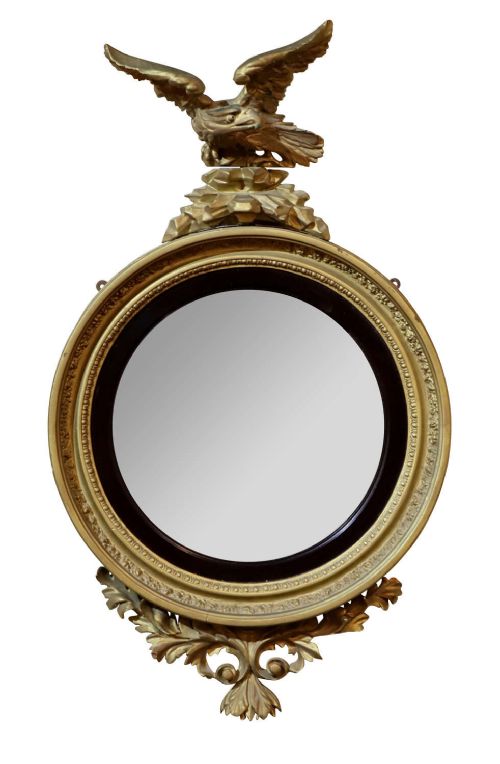
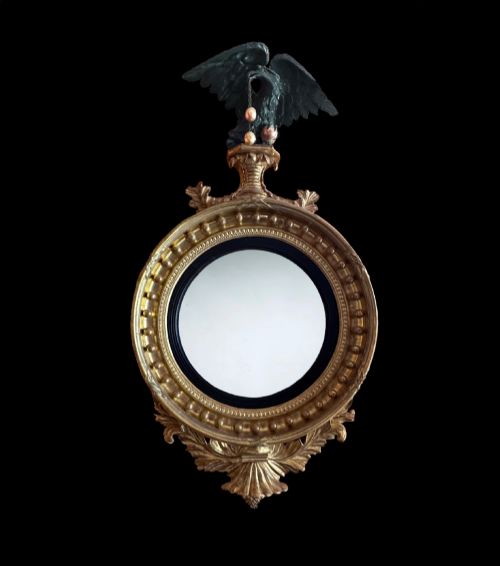
Many of the wall mirrors found here appear as traditional butlers mirrors or eagle-surmounted plates. The form ranges from small domestic items to larger scale wall pieces.
How they were made
Makers shaped timber frames from woods like ebonised wood before applying layers of gesso to build up decorative surface details. Gilding was then meticulously added to achieve the bright metallic finish seen across the wood.
The mirror glass itself was blown or cast to create the characteristic outward curve, backed by a reflective silvering technique. Ebonised slips frequently inner-lined the gilt frames to provide a sharp visual contrast.
Gold Convex Wall Mirror Retail Price Guide 2026
Typical asking prices for gold convex wall mirror among the pieces listed under this phrase on Sellingantiques today, from the lower quarter to the upper quarter. They describe what is for sale here now, not the wider market.
Listings span periods from the Georgian era through the Regency and Victorian periods, extending into early twentieth century examples.
What varies in quality
The standard of carving on the crests and frames dictates much of the visual weight, particularly on pieces featuring detailed eagle mounts or dragons. Crisp definition in the gesso ornamentation separates ordinary production from finer work.
The preservation of the original gilt surface and the clarity of the curved mirror glass determine the overall integrity of the object. Heavier, larger scale timber frames also demand superior joinery to support the weight of the convex glass plate.
The Gold Convex Wall Mirror Glossary
- Giltwood
- Wood that has been coated with gold leaf or gold paint. This finish creates the bright, reflective surface characteristic of many antique frames.
- Gesso
- A plaster-like mixture applied to wood frames to create a smooth surface for carving and gilding. It allows for intricate moulded details around the mirror edge.
- Ebonised wood
- Timber treated to resemble ebony, typically through staining or painting black. It is often used for inner slips on convex mirror frames.
- Convex glass
- Curved mirror glass that bulges outward toward the viewer. This shape produces a wide-angle reflection of the surrounding room.
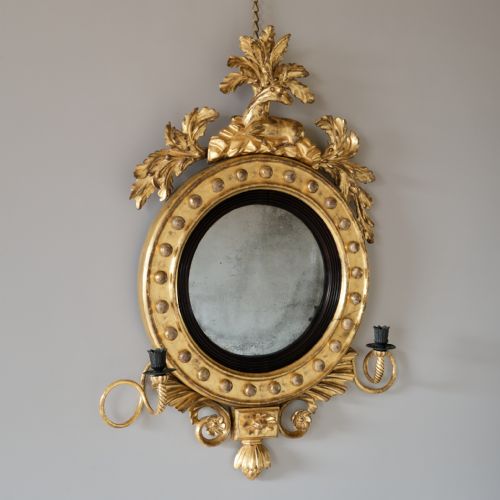
- Girandole
- A wall mirror featuring attached candle sconces. The arms extend forward to multiply the ambient light in a space.
Gold Convex Wall Mirror: Frequently Asked Questions
Where should I hang a gold convex wall mirror?
These pieces function well in reception rooms, hallways, and dining spaces where their wide-angle reflection can capture the entire room. Placing them opposite a window helps bounce natural daylight back into darker corners.
Because of their distinct optical properties, they suit positions at eye level where viewers can appreciate the spherical reflection. Their substantial frames also allow them to act as a primary focal point above a mantelpiece.
How do I identify a Regency period frame?
Regency frames often incorporate characteristic decorative elements such as carved eagle crests, balls set into the frame moulding, and reeded ebonised slips. The timber construction and gesso application reflect the neoclassical tastes of the early nineteenth century.
Proportions on these pieces tend to be balanced, utilising circular formats that emphasise the depth of the convex plate. Makers from this era frequently combined rich gilt finishes with contrasting dark inner rings.
What is the difference between a butlers mirror and a standard wall mirror?
A butlers mirror typically refers to a round convex glass set within a simple or ball-decorated frame, historically used in service rooms to monitor staff. Standard wall mirrors encompass a broader range of decorative styles and mountings.
While both share the curved glass characteristic, butlers mirrors lean toward utilitarian circular designs with minimal fuss. Other wall mirror variants on this page incorporate elaborate girandole arms or animal crests.
How should I clean a antique giltwood frame?
Giltwood surfaces require gentle dusting with a soft, dry brush to prevent damage to the delicate gold leaf and gesso. Moisture and modern chemical cleaners should be avoided entirely to preserve the historic finish.
The mirror glass itself can be cleaned sparingly with a cloth dampened slightly with water or a mild glass cleaner, taking care not to let liquid seep behind the frame edge.