




Regency Style Convex Mirror
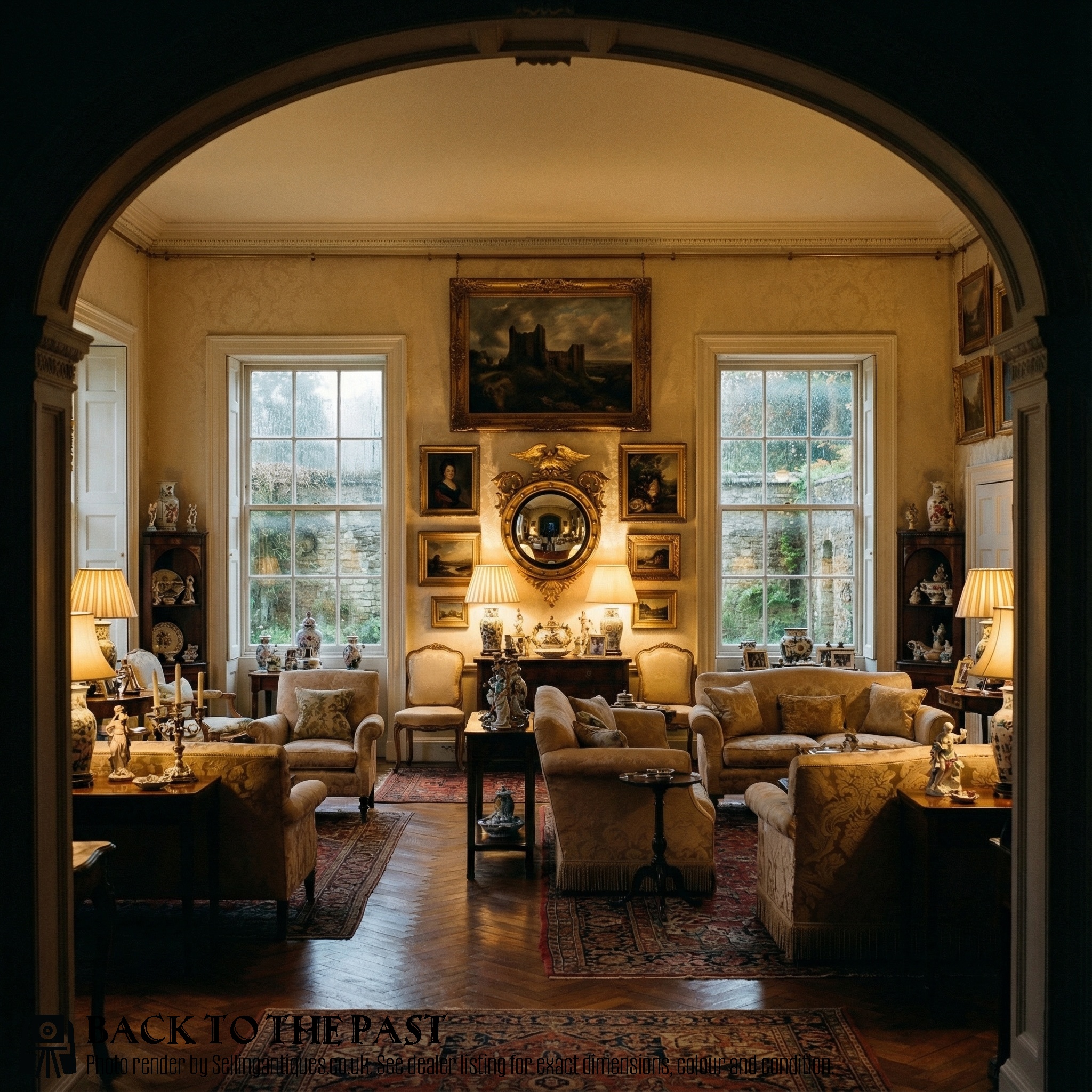
A regency style convex mirror gathers the whole room into a wide, luminous curve that draws the eye instantly.
What They Are
A regency style convex mirror offers a circular or oval reflective surface that bends light across the entire interior space. These pieces capture broad perspectives within a compact wall format, projecting deep visual space into smaller rooms.
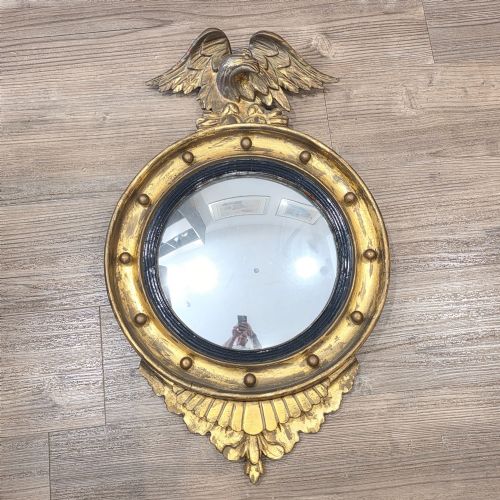
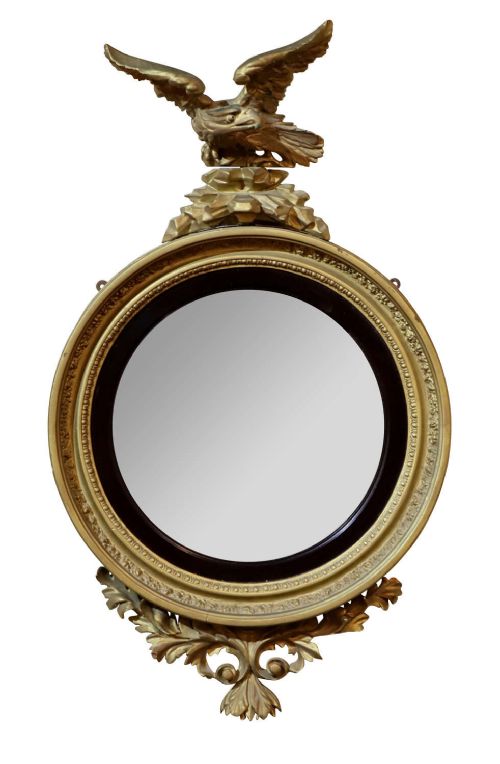
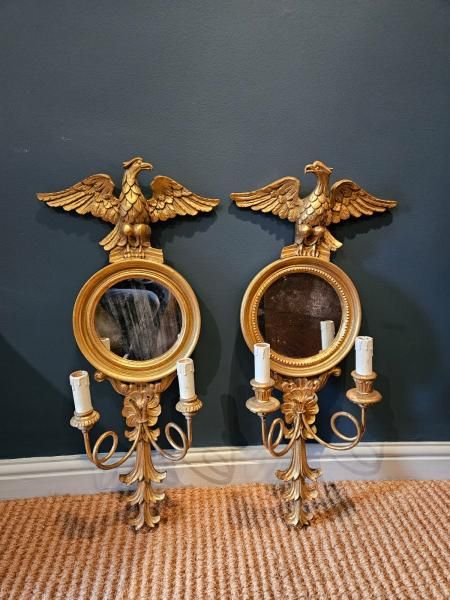
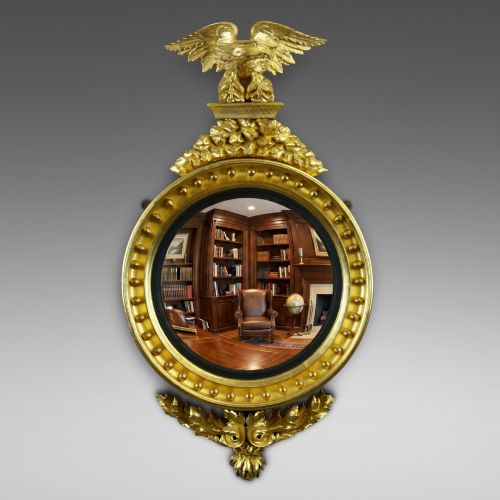
The versions met most often on this page date from the nineteenth century through the early twentieth century, spanning Victorian production and later revival periods. They appear predominantly as wall mirrors with round frames, occasionally featuring carved crests such as eagles.
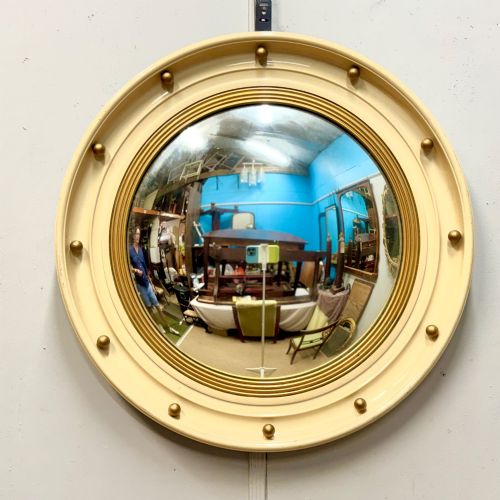
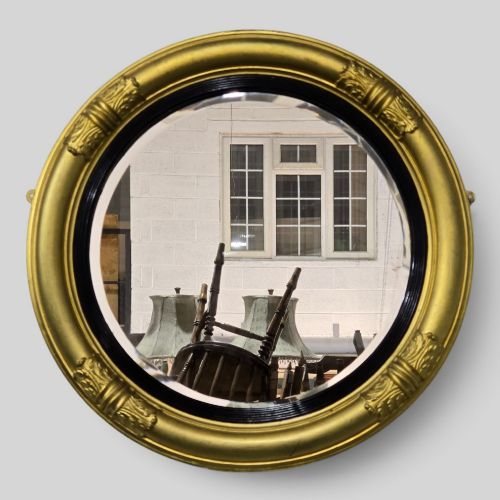
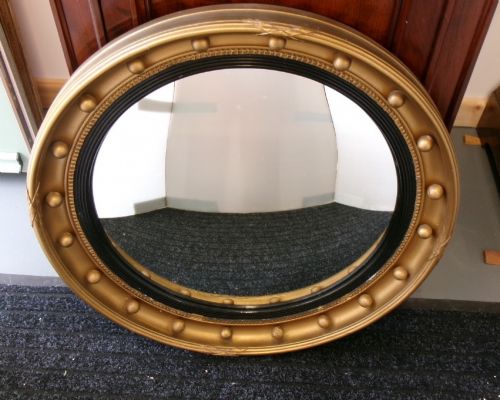
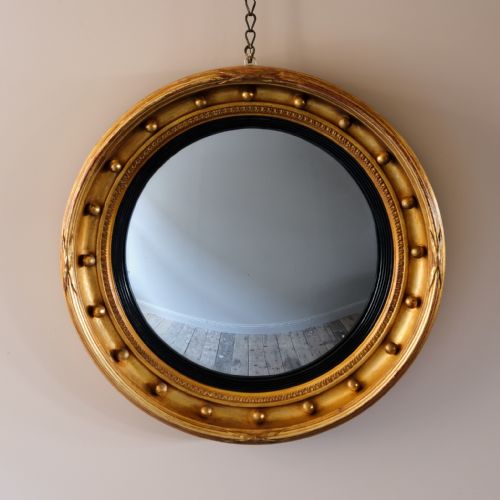
Makers shaped these circular frames from timber such as oak or mahogany, frequently applying giltwood, gesso, or ebonised finishes. Their distinct proportions range from modest porthole formats to larger decorative centrepieces.
How They Were Made
Craftsmen turned timber frames on lathes or carved them by hand from woods like oak and mahogany, building solid foundations for the reflective glass. Ebonised finishes or layered gesso provided smooth surfaces ready for gilding.
Makers applied thin sheets of gold leaf over prepared gesso layers to achieve the bright metallic sheen characteristic of giltwood frames. Curved glass plates were set securely within the rebates, often framed by reeded ebonised inner rims.
Retail Price Guide 2026
Typical UK retail prices for regency style convex mirror, calculated from the Sellingantiques database of over a million retail prices indexed since 2003. This retail price guide relies exclusively on Sellingantiques data; no external sources or auction records are used, so the figures do not describe the wider market.
Early convex mirrors were once known as butler's mirrors because their wide view allowed staff to survey the entire dining room discreetly.
What Varies in Quality
The depth and crispness of carved wooden details separate finely worked pieces from simpler production. Carved crests, such as eagles, demonstrate sculptural skill when the feather work and proportions remain sharp and balanced.
The application of the finish defines the visual weight of the frame, where smooth gesso under traditional leaf work retains subtle contours. Higher quality examples maintain integrity in the giltwood or ebonised surfaces over decades of ambient light exposure.
The Regency Style Convex Mirror Glossary
- Convex mirror
- A round mirror with an outward-curving glass surface that produces a wide-angle reflection of the room. This optical property distinguishes it from flat wall mirrors.
- Giltwood
- Wood coated with thin sheets of gold leaf over a prepared gesso base. It provides a bright, durable metallic finish popular in formal interior decoration.
- Gesso
- A plaster mixture applied to wood frames to create a smooth surface for gilding or painting. It allows craftsmen to model crisp decorative details.
- Ebonised
- Wood stained or treated to imitate ebony, producing a dense black finish. This technique creates a strong visual contrast against gilt slips or the reflective glass.
- Girandole
- A wall mirror featuring attached candle branches or sconces. The reflective glass multiplies the candlelight to illuminate the surrounding space.
Frequently Asked Questions
Where should I hang a convex mirror?
These mirrors suit principal reception rooms, hallways, or dining spaces where they can reflect natural light from windows or opposite doorways.
Because the curved glass captures a wide field of view, placing them opposite a focal point maximises their decorative impact.
How do I clean the curved glass?
Use a soft microfibre cloth and a mild glass cleaner sprayed lightly onto the cloth rather than directly onto the surface. Avoid letting moisture seep behind the frame where it might affect the backing or the giltwood.
Take care around the edges of the glass where the frame meets the mirror plate.
Are these mirrors heavy?
Most examples possess solid wooden frames and substantial glass plates that require secure fixings into wall studs or appropriate masonry anchors. The weight depends largely on the timber used, such as oak or mahogany, and the presence of carved crests.
Proper wall preparation ensures safe hanging for heavier giltwood pieces.
How do I distinguish revival pieces from nineteenth-century originals?
Examination of the timber, backing boards, and the construction of the gesso layers reveals the age of the piece. Nineteenth-century examples often show distinct patination and tool marks beneath the gilding.
Later revival works from the early twentieth century display consistent joinery and material handling typical of their own period of manufacture.