

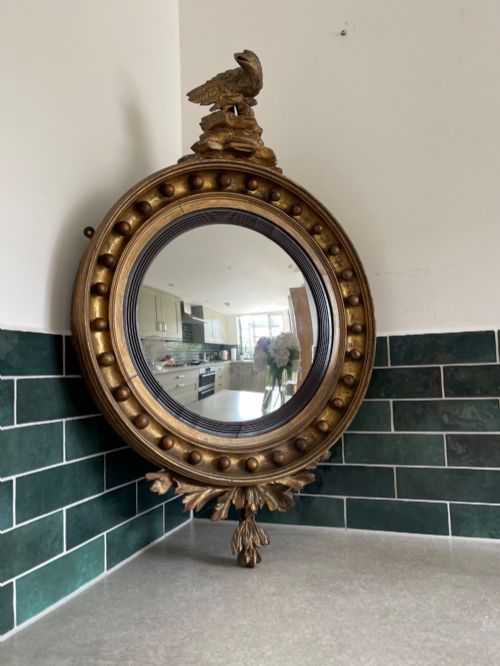
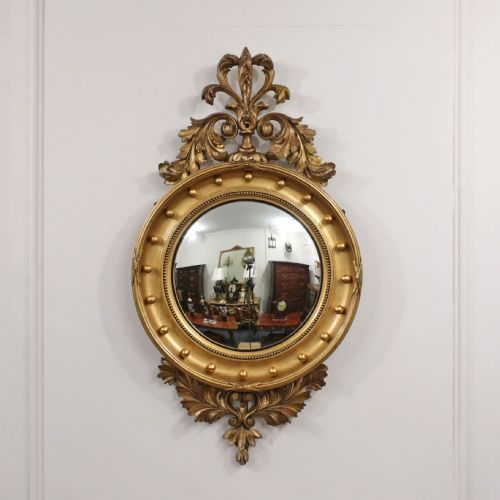
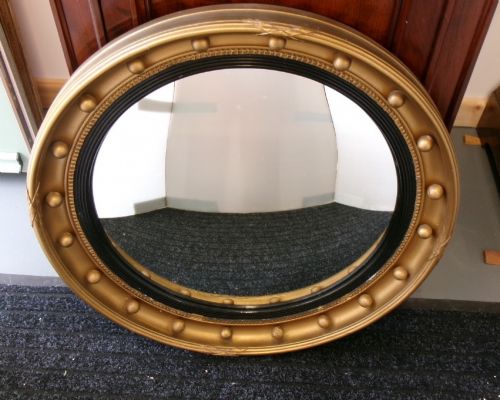
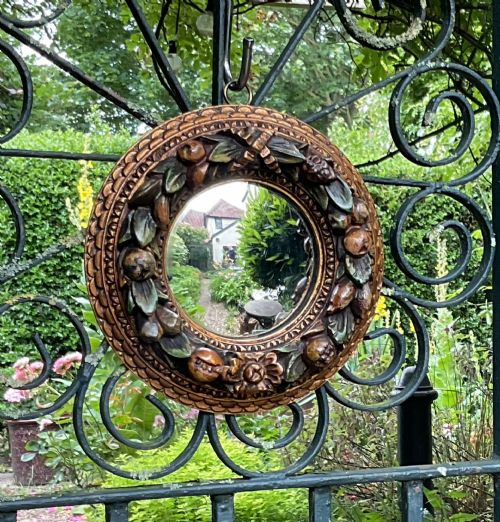

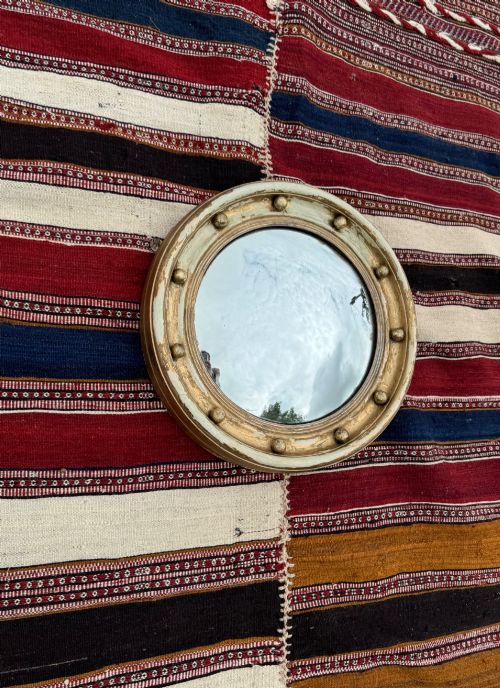

Gilt Convex Wall Mirror
A gilt convex wall mirror draws the eye across a room with its curved circular glass, making it a striking historic interior accent.
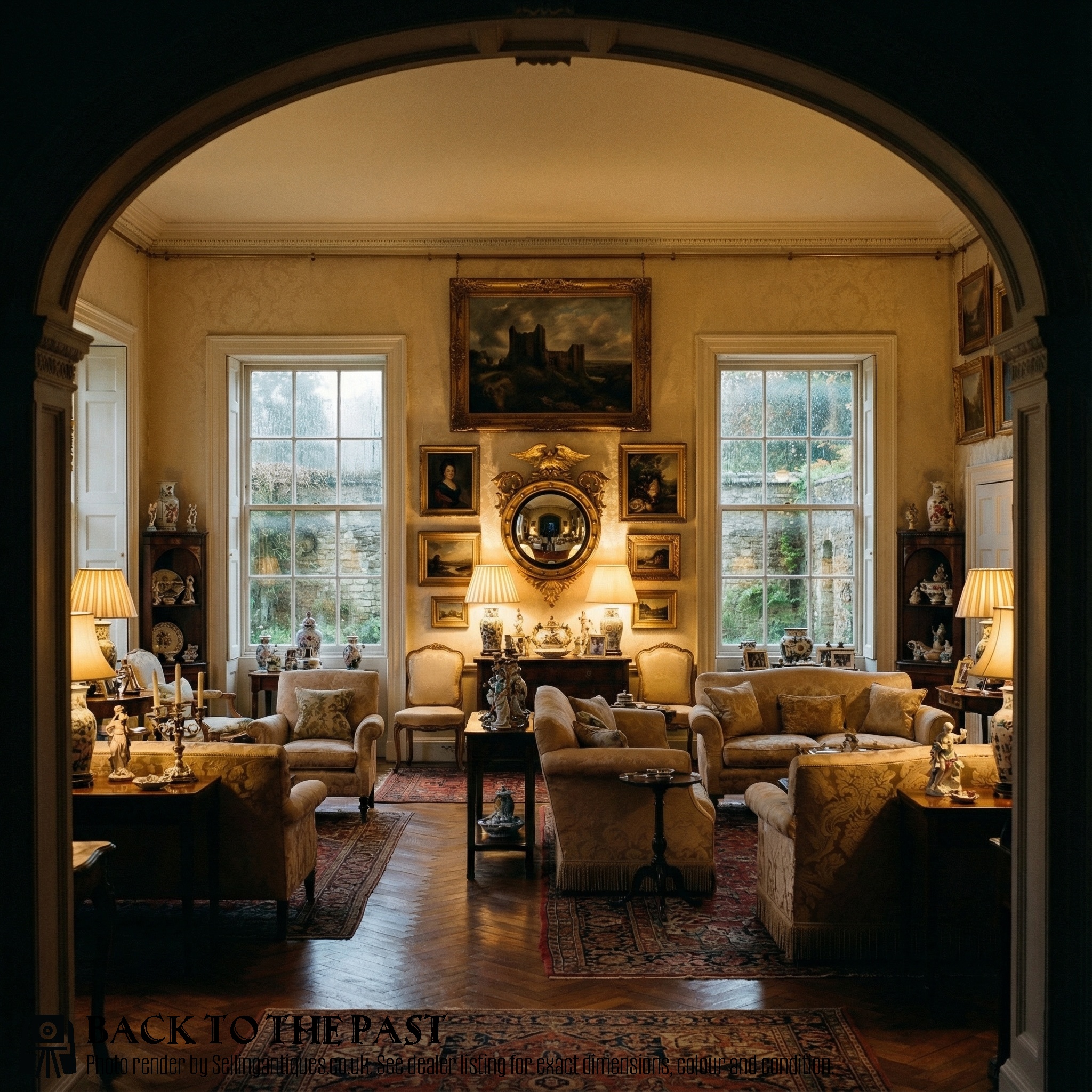
What a gilt convex wall mirror is
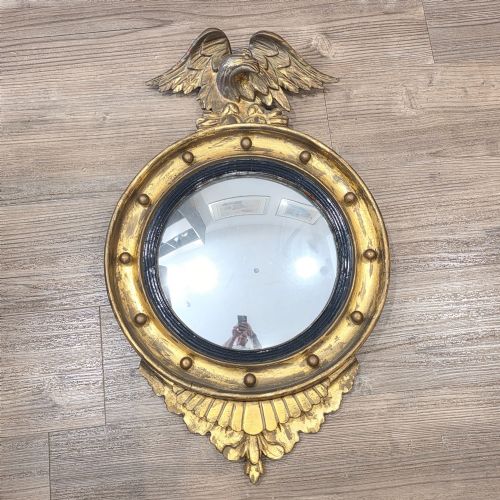
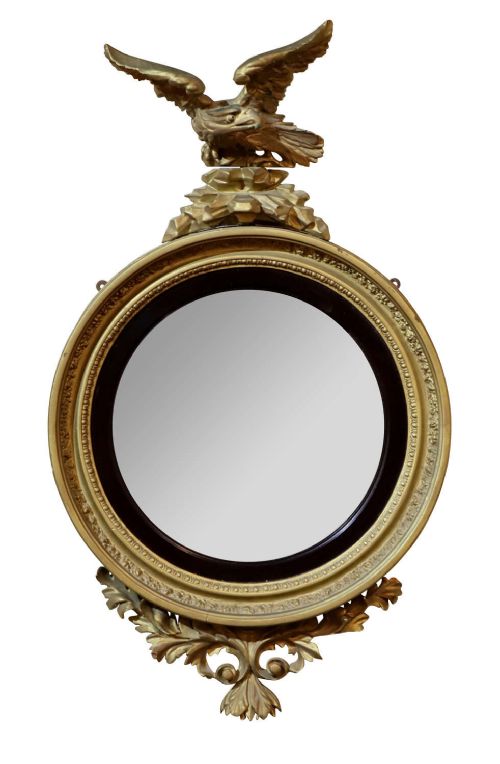
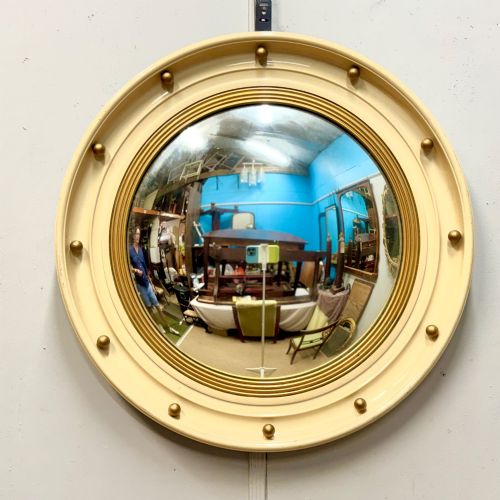
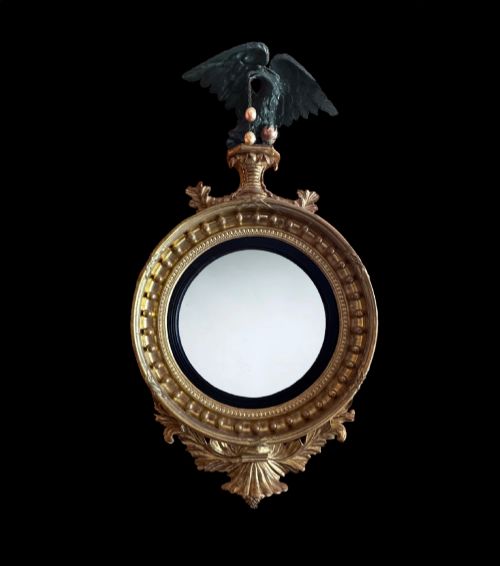
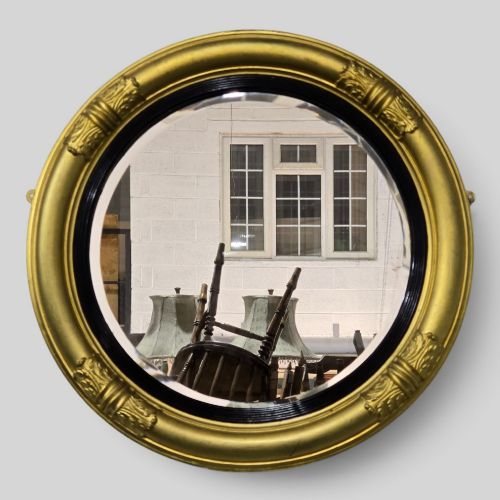
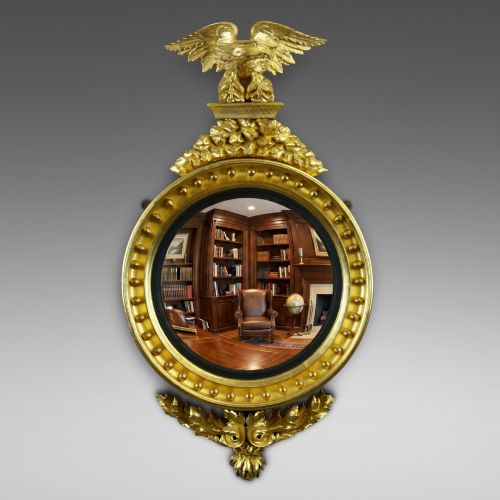
A gilt convex wall mirror, often called a bull's eye or witch's mirror, is a circular looking glass shaped to bend reflections outward across an entire interior space. The form appears frequently from the Regency period through to Victorian times, alongside later revivals.
Most examples found here take the form of round wall mirrors housed within ornate circular frames. These pieces originate across English and French workshops, utilising periods ranging from early nineteenth century Regency to Edwardian and Art Deco designs.
How they were made
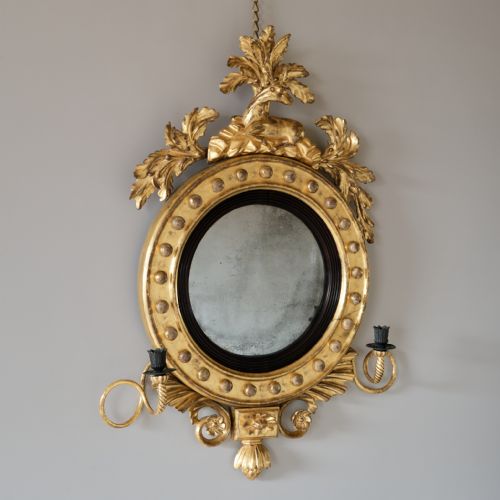
Frames are constructed from timber, plaster, and gesso, carved or moulded into circular profiles before receiving layers of gold leaf or surface gilt. Many incorporate ebonised wood details or brass fittings.
The mirror glass itself is formed with a pronounced convex curve, sometimes set within a reeded ebonised slip and surrounded by ball-bearing appliques or leaf motifs.
Retail Price Guide 2026
Typical UK retail prices for gilt convex wall mirror, calculated from the Sellingantiques database of over a million retail prices indexed since 2003. This retail price guide relies exclusively on Sellingantiques data; no external sources or auction records are used, so the figures do not describe the wider market.
Superstitious servants once believed these wide-angle mirrors guarded homes against evil spirits by trapping malicious glances in the curve.
What varies in quality
Quality rests in the crispness of the carved giltwood and gesso ornament, where sharper botanical or eagle crest details distinguish finer workshop output from simpler moulded plaster frames. The depth of the original gilding and the integrity of the curved mirror plate further separate standard examples from exceptional pieces.
Proportion and scale dictate visual impact, ranging from small miniature round frames to large scale English and French wall pieces that command an entire room.
The Gilt Convex Wall Mirror Glossary
- Convex mirror
- A circular looking glass with an outward-curving surface that captures a wide-angle reflection of the room. This form was especially popular during the Regency period.
- Giltwood
- Timber coated with gold leaf or metallic paint to create a brilliant decorative surface. It forms the primary frame material for these mirrors.
- Gesso
- A plaster-like mixture applied to wooden frames as a base for carving and gilding. It allows for intricate moulded details and leaf ornamentation.
- Ebonised wood
- Timber treated to resemble ebony, providing a dark contrasting slip around the inner edge of the circular frame. This technique adds depth to the profile.
- Girandole
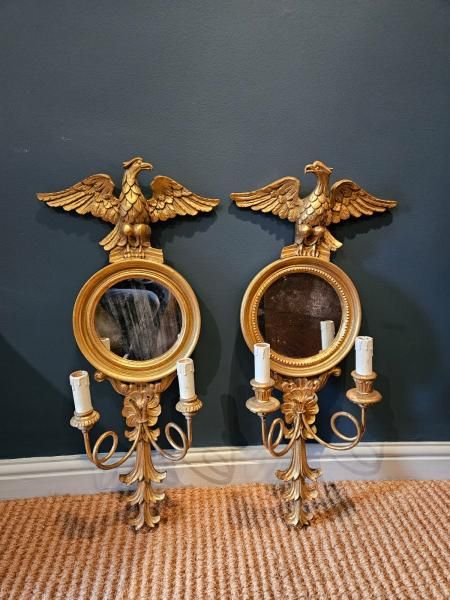
- A wall mirror fitted with candle arms or sconces attached to the frame. These brass or giltwood branches reflect candlelight across the interior.
Frequently Asked Questions
Where should I hang a convex mirror?
These mirrors function best opposite a window or in a hallway where the curved glass can capture and distribute ambient light.
Because the wide-angle reflection encompasses the entire room, positioning them at eye level maximises their decorative impact.
How do I date a convex mirror?
Dating relies on examining the frame materials, construction techniques, and the style of any carved ornamentation such as eagles or floral leaves.
Regency examples often feature distinct reeded slips and heavy gesso moulding, while later revival pieces show different timber composition and backing boards.
Are these mirrors heavy?
Many examples possess substantial weight due to the solid timber, plaster, and glass construction used in their circular frames.
Secure wall fixings and appropriate wall anchors are essential for supporting larger pieces safely.
What is a witch mirror?
Witch mirror is a historical term for a convex looking glass, originating from the belief that the wide field of view offered protection.
In practice, domestic servants and homeowners utilised the curved reflection to monitor activity across an entire room from a single vantage point.