



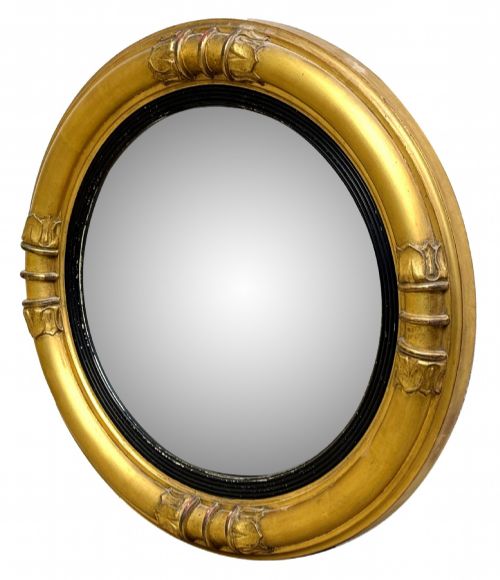
Circular Wall Mirror
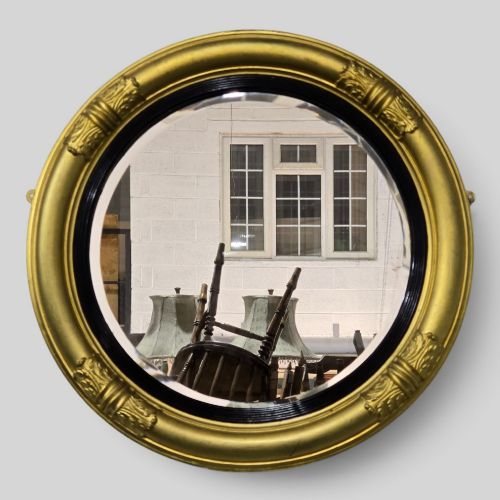
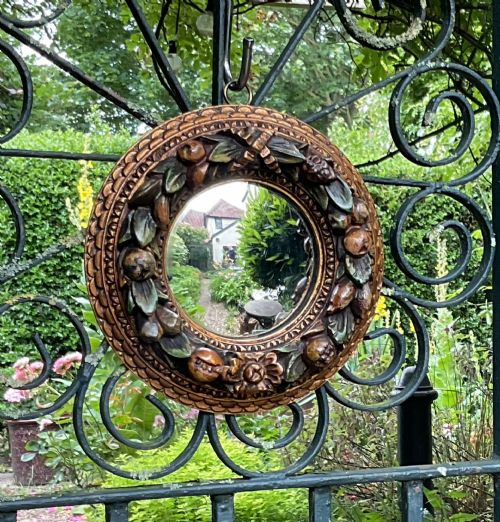
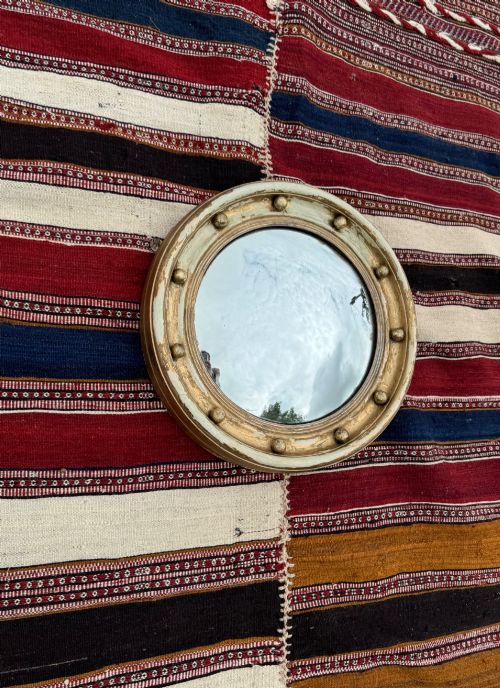
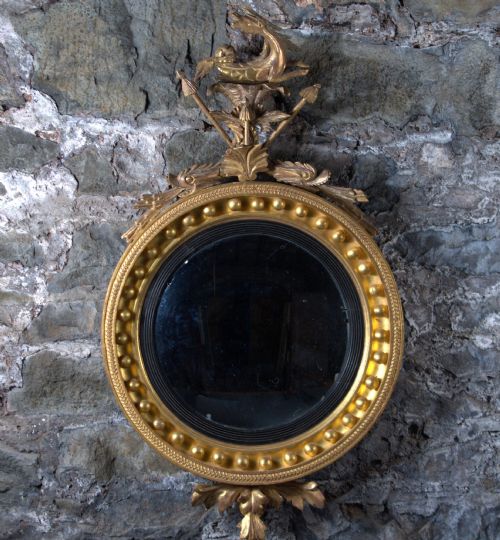
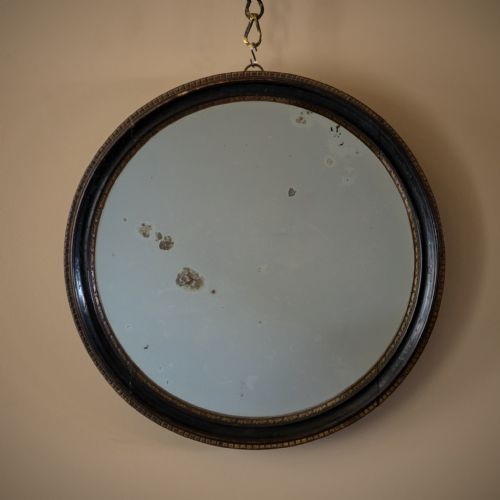
A circular wall mirror brings immediate focal weight to a room, reflecting light and space through frames of giltwood, oak, mahogany, and gesso.
What They Are
A circular wall mirror offers a distinct geometric counterpoint to standard rectangular room furnishings. When you search for a circular wall mirror, you encounter pieces spanning the nineteenth century, the Edwardian era, and the nineteen-twenties.
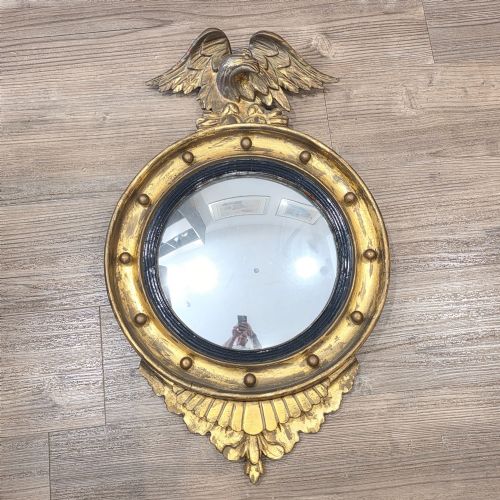
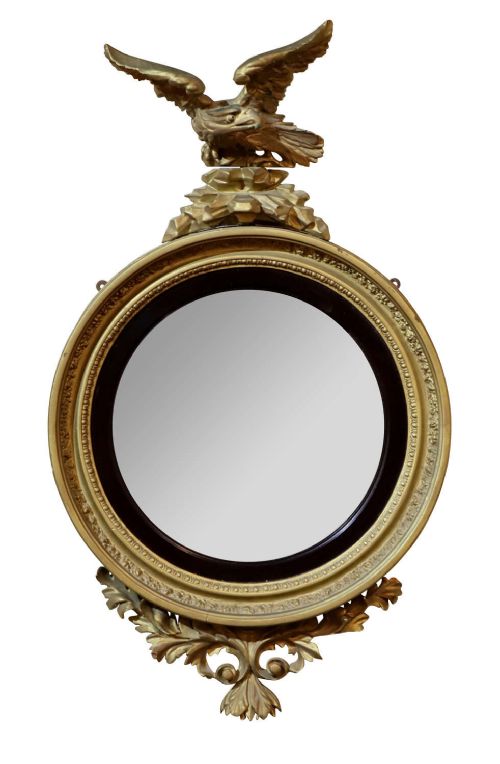
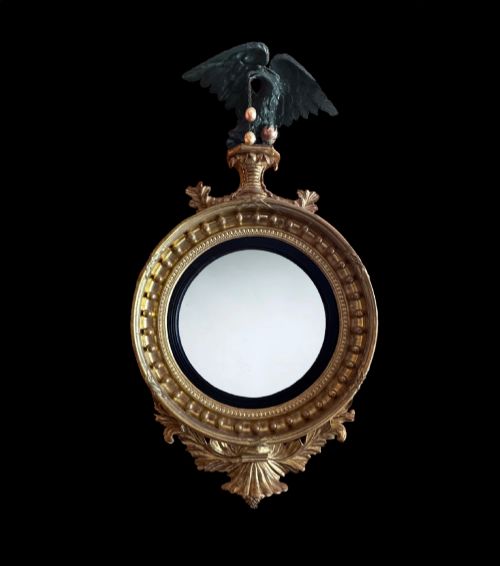
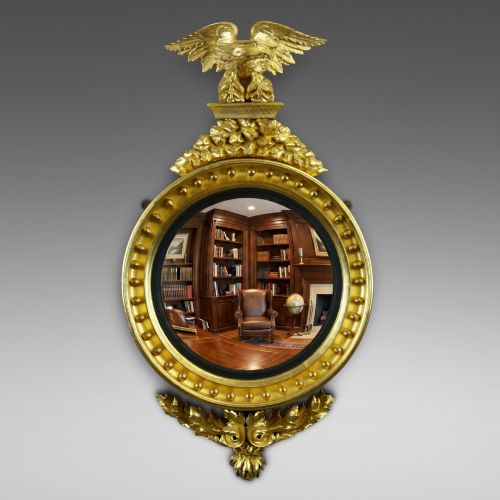
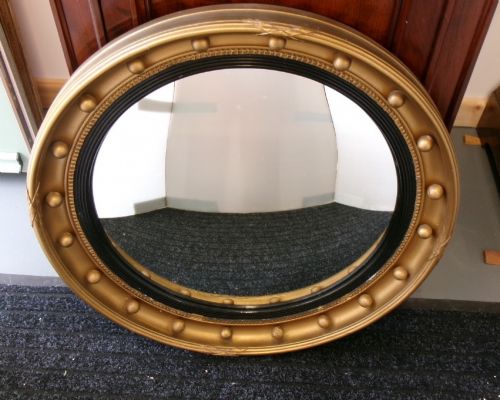
The selection ranges from small convex looking glasses framed in gilded wood to large mahogany and oak wall hangings. Styles draw on Regency, Gothic Revival, Victorian, and later decorative traditions.
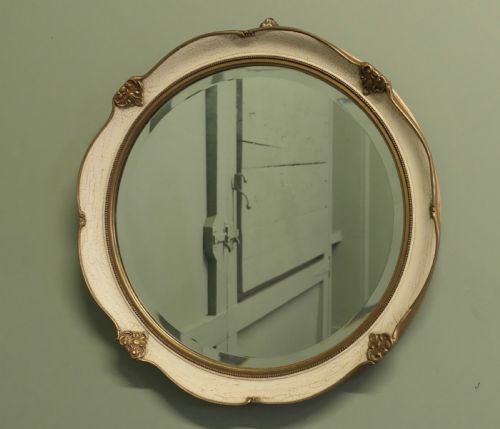
The mirror plates themselves utilise clear or bevelled glass, mounted within timber or gesso structures intended for domestic interior display.
How They Were Made
Frames rely on timbers such as oak, mahogany, walnut, beech, and ebonised wood, alongside carved and moulded gesso. Giltwood pieces employ layers of gold leaf applied over prepared gesso and wood bases.
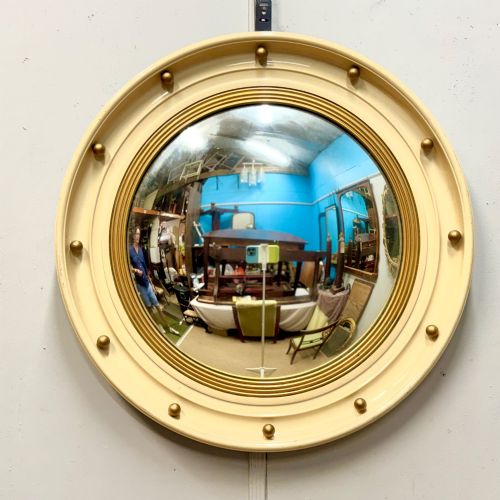
Glass is set within the frame rebate, with circular plates sometimes taking a convex form to project a wider field of room reflection. Edges frequently feature bevel cutting to catch and refract light.
Retail Price Guide 2026
Typical UK retail prices for circular wall mirror, calculated from the Sellingantiques database of over a million retail prices indexed since 2003. This retail price guide relies exclusively on Sellingantiques data; no external sources or auction records are used, so the figures do not describe the wider market.
Listings feature circular wall mirrors spanning the nineteenth century, the Edwardian period, and nineteen-twenty, utilising oak, mahogany, giltwood, and gesso.
What Varies in Quality
Quality rests in the depth and crispness of the frame carving and the application of the gilding or timber polish. Hand-carved giltwood and gesso show fine relief work in leaf and floral motifs.
The character of the glass plate itself distinguishes examples, where age imparts subtle foxing and distortion to early convex surfaces. Substantial framing timbers and secure original backing structures indicate superior construction.
Heals
The Circular Wall Mirror Glossary
- Convex mirror
- A round mirror with an outward-curving glass surface that creates a wide, panoramic reflection of the interior. These are often housed in circular giltwood frames with decorative ball mouldings.
- Gesso
- A plaster-based mixture applied to wood frames and carved or moulded into decorative relief patterns before gilding or painting. It provides a smooth surface for gold leaf application.
- Bevelled glass
- A mirror plate with edges angled and polished to a thinner profile, creating a decorative light-refracting border. This technique adds depth to the edge of the glass.
- Giltwood
- Timber, typically pine or lime, that has been coated with thin sheets of gold leaf over a prepared base. It defines much of the Regency and Victorian ornamental mirror production.
- Ebonised wood
- Timber treated with a chemical stain or dark finish to imitate expensive ebony. It appears on nineteenth-century frames seeking a sharp, dark contrast against the reflective glass.
Frequently Asked Questions
Where should I hang a circular wall mirror?
These mirrors suit spaces above mantelpieces, in hallways, or centred on feature walls where their round geometry breaks up vertical and horizontal room lines.
Ensure the wall fixings match the weight of the timber and gesso frame to support the piece securely.
How do I date a circular wall mirror?
Dating relies on timber choices, frame style, and the manufacturing method of the glass plate. Heavy mahogany and oak point to Victorian or Edwardian periods, while gesso ball-frame convex mirrors often follow Regency designs.
Examining the backboards and fixings provides further clues regarding the age of the construction.
What is the difference between flat and convex glass?
Flat glass provides a direct, true-scale reflection of the room opposite it. Convex glass curves outward to capture a wide-angle, fish-eye view of the entire interior space.
Convex mirrors were historically placed to monitor activity across a room from a single vantage point.
How do I clean an antique mirror frame?
Dust giltwood and carved gesso frames gently with a soft dry brush to protect delicate surface relief. Avoid using liquid cleaners or modern polishes on antique gilded or painted finishes.
Glass plates can be wiped sparingly with a damp cloth, taking care not to let moisture seep behind the rebate into the frame.