

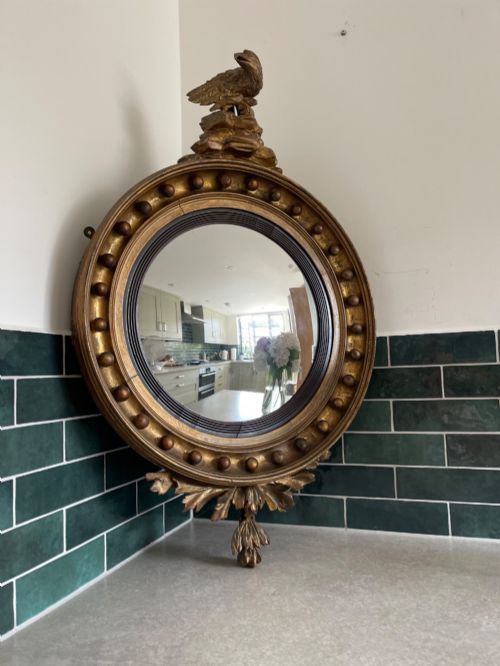

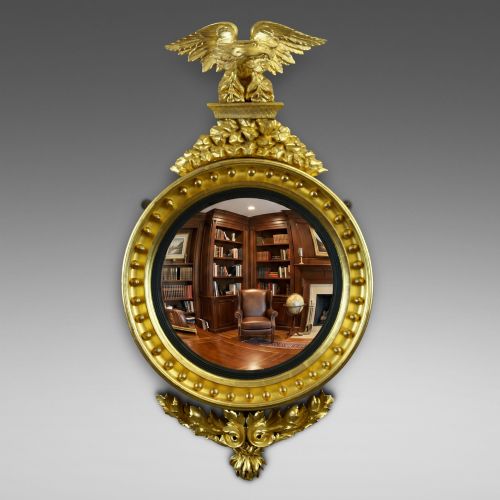

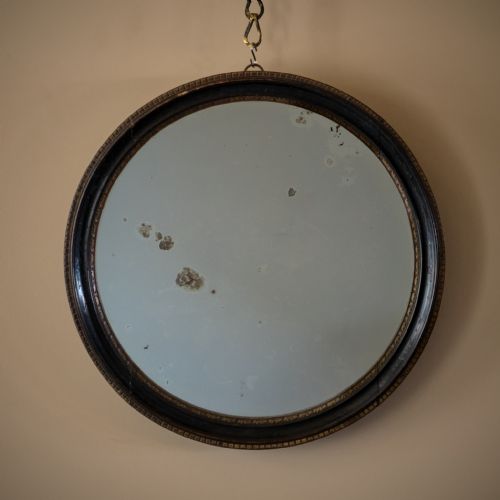
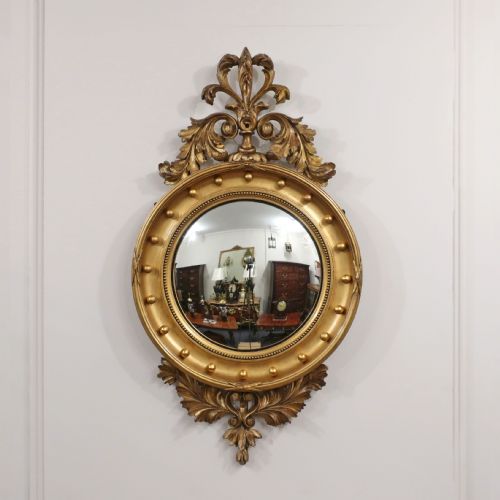

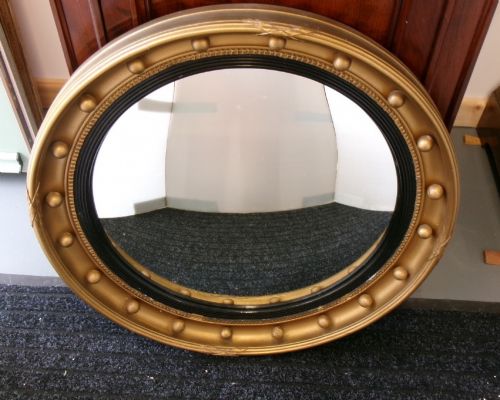
Gilt Convex Mirror
A gilt convex mirror distorts the room in a circular swell, pulling light and space into a single, curving focal point.
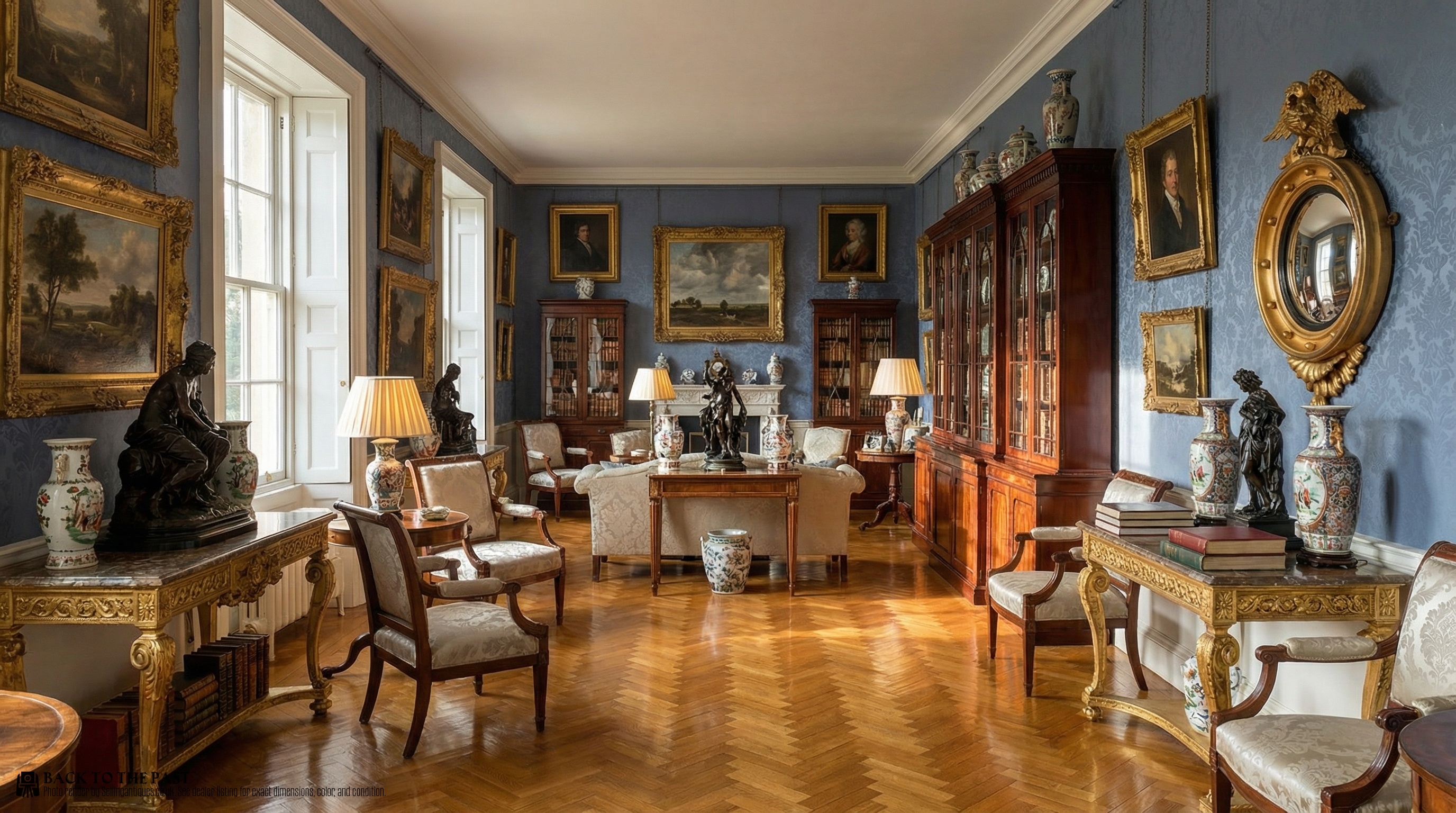
Gilt Convex Mirror
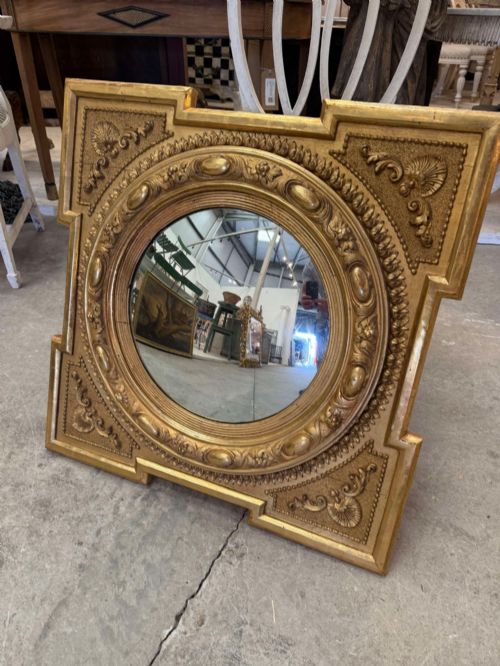
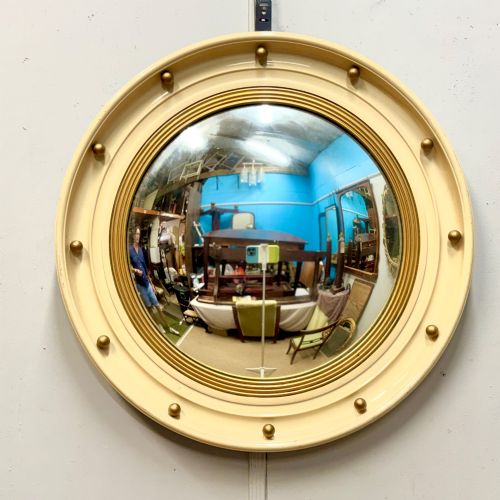
A gilt convex mirror is a circular wall glass designed to capture a wide-angle reflection of an interior. The form appears most frequently from the Regency period, though Victorian and early twentieth-century revivals also populate the selection.
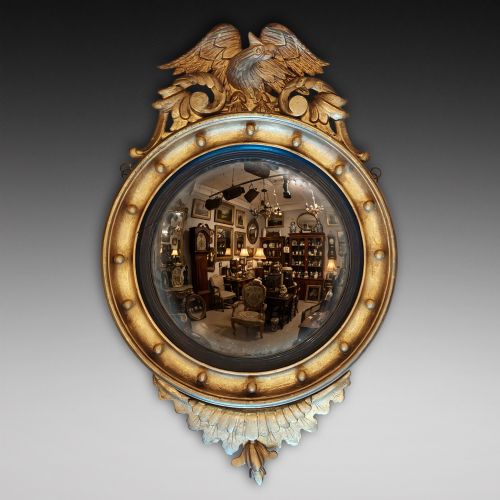
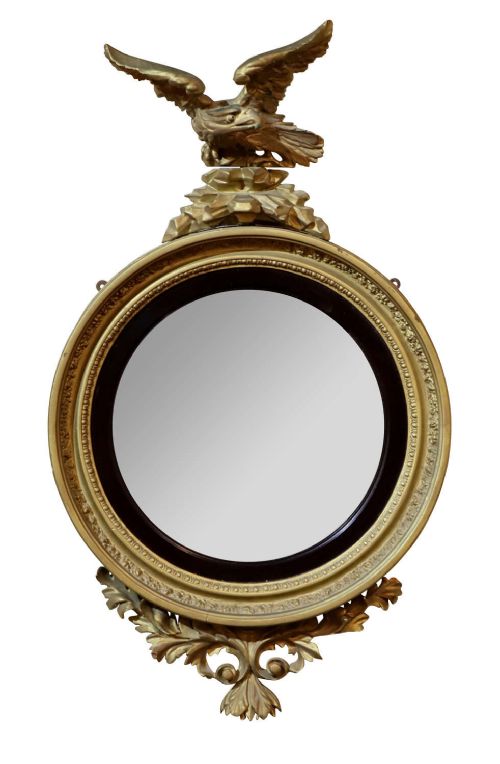
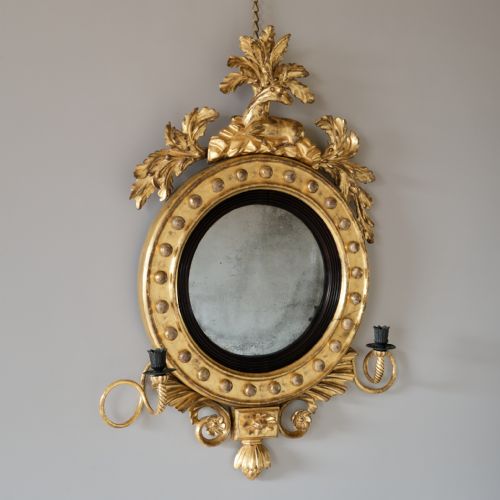
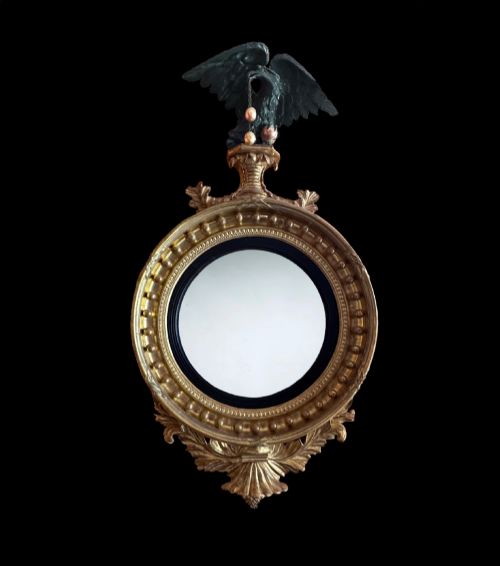
Most examples present a round plate set within a moulded wooden frame, frequently accompanied by ornamental crests such as eagles, dragons, or deer. These pieces function primarily as decorative wall ornaments rather than practical dressing glasses.
How They Were Made
Makers fashioned the frames from timber and gesso, applying gold leaf or paint over carved details. The convex glass plate, often blown or cast with a spherical curve, creates the characteristic bulging reflection.
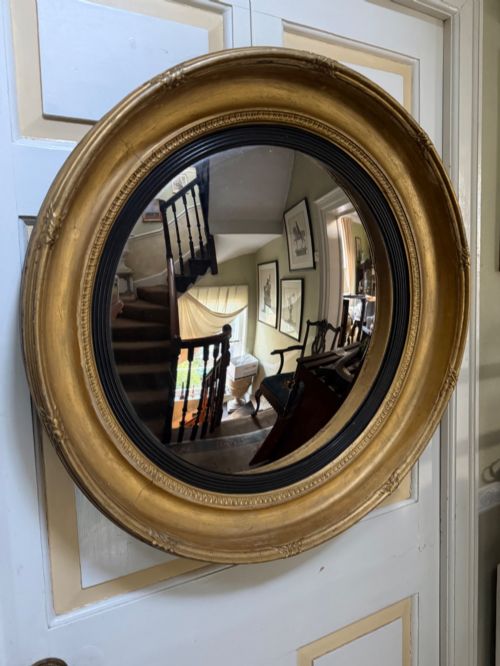
Many frames incorporate an ebonised inner slip alongside the gilt outer moulding to add visual depth. Elaborate crests and candle arms, where present, were carved separately and secured to the main circular structure.
Gilt Convex Mirror Retail Price Guide 2026
Typical asking prices for gilt convex mirror among the pieces listed under this phrase on Sellingantiques today, from the lower quarter to the upper quarter. They describe what is for sale here now, not the wider market.
What Varies in Quality
The crispness of the carved ornamentation determines the distinction between standard production and superior craftsmanship. Original gilding and untouched glass plates carry more weight than later surface refurbishments.
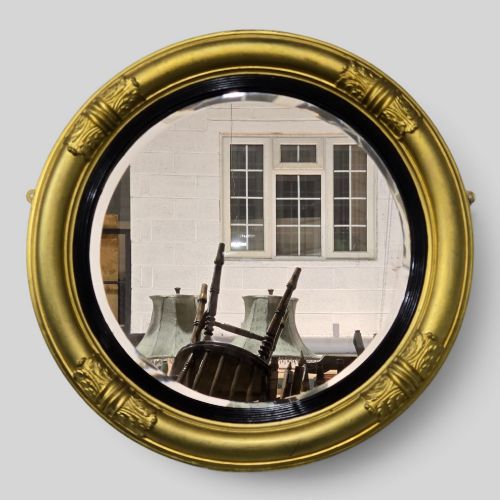
Proportion remains critical in these convex glasses, where the balance between the frame width, the reeded ebonised slip, and the central sphere dictates the visual impact on the wall.
The Gilt Convex Mirror Glossary
- Convex glass
- A curved mirror plate that swells outward, gathering a panoramic view of the surrounding room. This curved form was historically believed to ward off evil spirits.
- Giltwood
- Timber that has been coated with a thin layer of gold leaf over a prepared gesso base. It provides a warm, reflective metallic finish.
- Ebonised slip
- A dark, black-painted inner moulding positioned between the frame and the mirror glass. It creates a sharp visual border that frames the reflection.
- Girandole
- A wall mirror featuring attached candle sconces or arms that project outward. The metal branches allow the candlelight to multiply against the glass.
- Surmount
- An ornamental carved crest positioned at the top of the mirror frame. Common motifs include eagles, dragons, and floral scrolls.
Gilt Convex Mirror: Frequently Asked Questions
Where should I hang a convex mirror?
These circular glasses work best positioned on a main living room or dining room wall where they can reflect an entire interior space.
Because the curved glass pulls light from across the room, placing it opposite a window maximises its illumination.
How do I identify a Regency period piece?
Regency examples typically feature heavy giltwood frames with reeded ebonised slips and robust carved crests. The timber construction and traditional gilding methods help distinguish these early nineteenth-century works from later revivals.
Closer inspection of the gesso groundwork and the backboards often reveals the age of the construction.
Are all these mirrors gilded with gold leaf?
While the majority utilise traditional gold leaf over gesso, some later or alternative pieces employ paint or japanning. The finish depends heavily on the specific period and style of the workshop.
Examining the surface under natural light helps reveal whether the metallic layer is gold leaf or modern paint.
What is the purpose of the ebonised slip?
The thin black moulding sits directly around the mirror plate to create contrast against the bright gilt frame. This dark border helps draw the eye inward toward the curved glass.
Many period pieces incorporate this detail to add depth and formal structure to the design.