


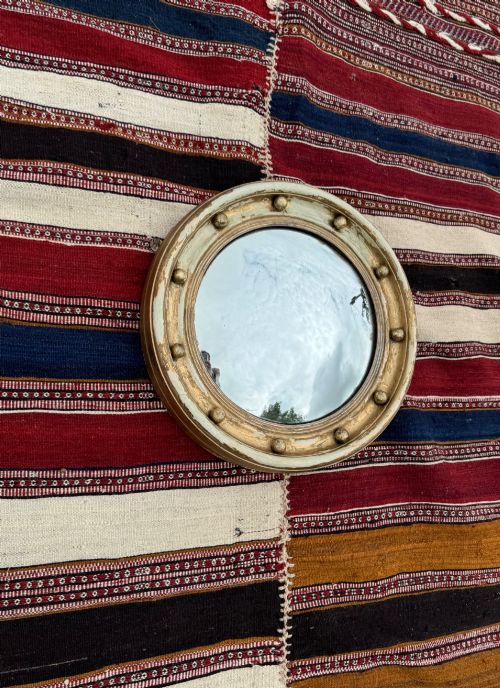


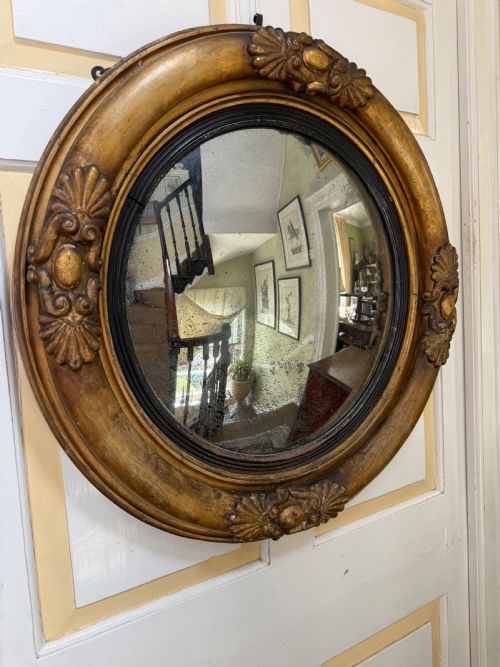


Fish Eye Wall Mirror
A fish eye wall mirror brings distortion and drama to a room, bending light across a circular glass plate in the manner of Regency salons.
What these mirrors are
A fish eye wall mirror is a convex looking glass designed to gather the light of a whole room into a single curved reflection. The examples found here span the Regency period, the nineteenth century, and later revivals, maintaining the distinct circular format throughout.
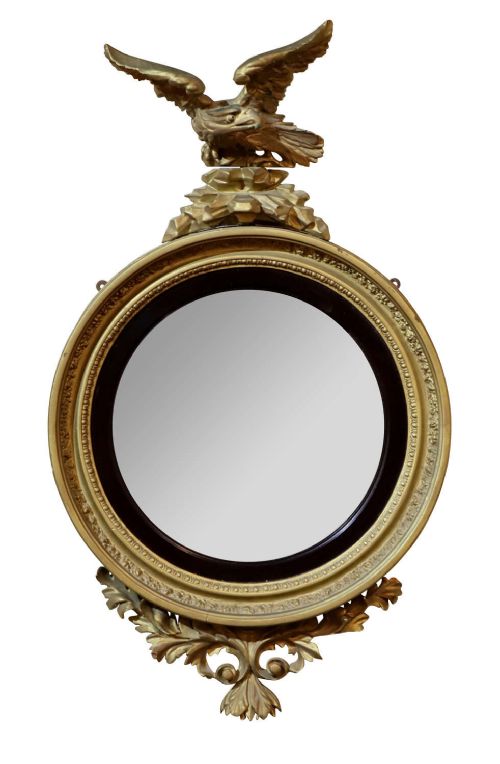
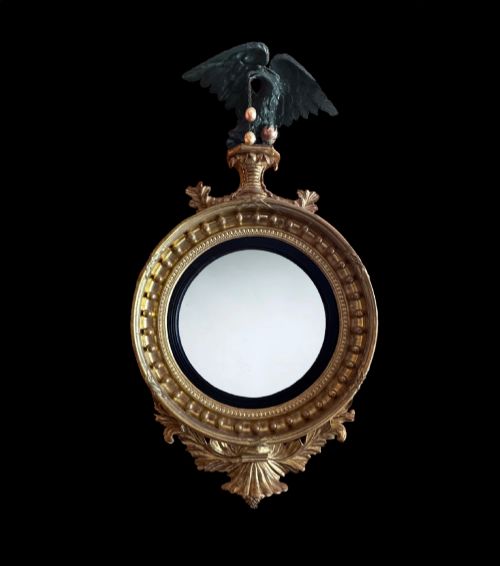
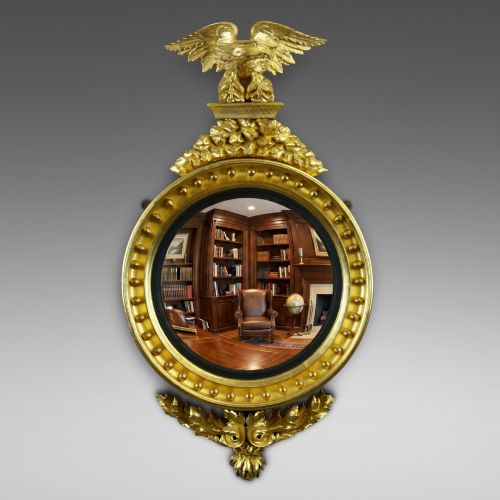
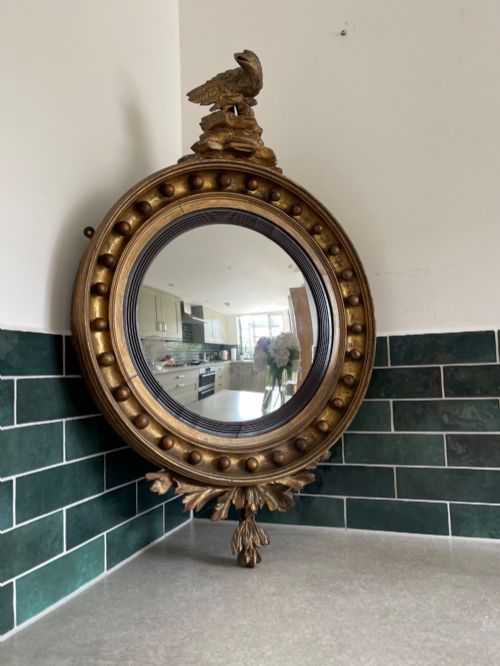
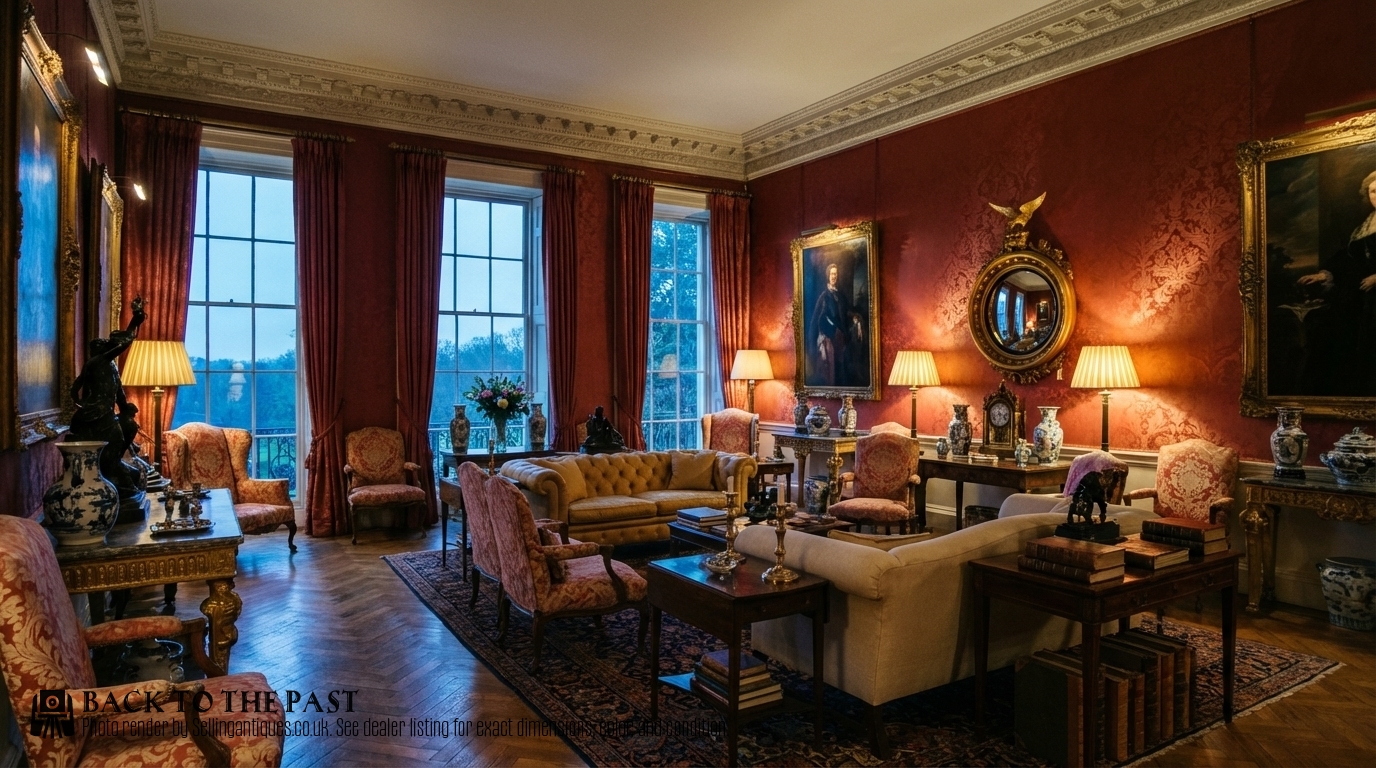
The dominant form on this page is the Regency convex mirror, often appearing with gilded frames and circular wooden surrounds. Pieces range from simple giltwood rings to larger examples topped with carved eagles and decorative mounts.
Makers drew on Regency style and grand Regency aesthetics across various centuries, producing both genuine period pieces and later nineteenth-century interpretations. These wall mirrors function primarily as optical instruments of decoration, originally placed to monitor servants or illuminate dark corners.
How they were made
Craftsmen built the circular frames of these mirrors using wood and ebonised wood, applying layers of gesso to build up decorative details before gilding the surface. Giltwood and gilt finishes dominate the evidence, requiring skilled application of gold leaf over prepared grounds.
The mirrored glass itself is curved to achieve the characteristic convex fish eye effect, set deep within a moulded or beaded bezel. Larger iterations incorporate carved wooden ornaments such as eagles, fixed securely to the top of the circular frame.
Retail Price Guide 2026
Typical UK retail prices for fish eye wall mirror, calculated from the Sellingantiques database of over a million retail prices indexed since 2003. This retail price guide relies exclusively on Sellingantiques data; no external sources or auction records are used, so the figures do not describe the wider market.
Listings feature periods from the nineteenth century alongside Regency and Victorian eras, utilising giltwood and ebonised wood.
What varies in quality
Quality reveals itself in the depth and crispness of the gesso moulding and the purity of the original gilding. Finer pieces display sharper carved details on mounts like eagles and more refined reeding around the frame.
The integrity of the curved glass plate and the weight of the timber backing separate standard production from superior craftsmanship. Early Regency examples exhibit hand-blown glass characteristics that differ visibly from later nineteenth-century plate.
The Fish Eye Wall Mirror Glossary
- Convex mirror
- A curved glass plate that reflects a wide-angle, distorted view of an entire interior space. This optical property defines every piece in the fish eye wall mirror category.
- Giltwood
- Wood that has been coated with gold leaf or gold paint over a gesso base. It provides the bright reflective framing typical of Regency design.
- Gesso
- A plaster-like mixture applied to wood frames to create a smooth surface for carving and gilding. It allows for intricate relief ornamentation.
- Ebonised wood
- Timber treated to resemble dark ebony wood, creating a stark contrast against gilt details. This finish appears on selected nineteenth-century frames.
Frequently Asked Questions
Where should I hang a fish eye wall mirror?
These mirrors suit principal reception rooms where their wide field of view can capture the entire space. Placing them opposite a window maximises the light they draw into the interior.
Ensure the wall fixings are substantial, as the combination of heavy timber frames and glass requires secure support. Position them at eye level to fully appreciate the optical distortion.
How do I distinguish a Regency mirror from a revival piece?
Examine the construction of the timber backing and the composition of the gesso, as older pieces show distinct ageing patterns in the materials. Genuine Regency examples date from the early nineteenth century and carry period-specific joinery.
Revival pieces often date from the late nineteenth century or replicate Regency style with heavier, more uniform machine-finished components. Comparing the weight and the method of gilding helps clarify the date of manufacture.
What is the purpose of the eagle mount?
The eagle motif is a traditional decorative addition associated with grand Regency convex mirrors. It symbolises power and adds vertical height to the circular composition.
Not all mirrors feature this ornament, as many rely entirely on simple moulded giltwood frames. When present, the carving style helps indicate the period of the piece.
How do I clean a convex glass mirror?
Dust the curved surface gently with a soft, dry cloth to prevent scratching the glass or damaging the surrounding giltwood. Avoid spraying cleaning liquids directly onto the frame, as moisture can degrade the gesso and gold leaf.
Use a mild glass cleaner applied sparingly to a cloth rather than the mirror itself. Take care around the edges where the glass meets the frame to protect the historic backing.