

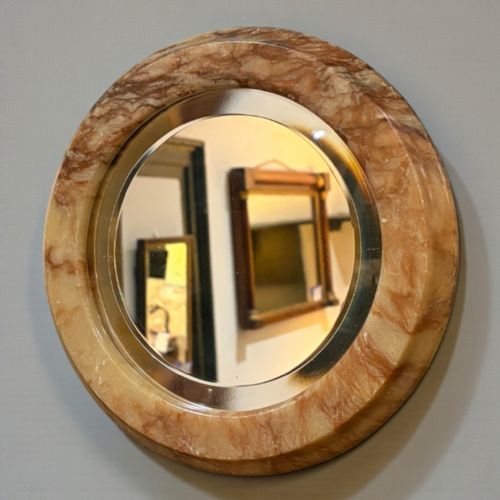
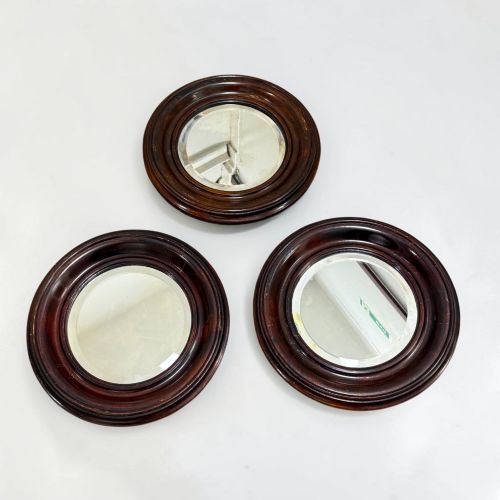
Antique Round Mirror
An antique round mirror brings a focused circular reflection and sculptural presence to a room, drawn largely from Regency and Victorian periods.
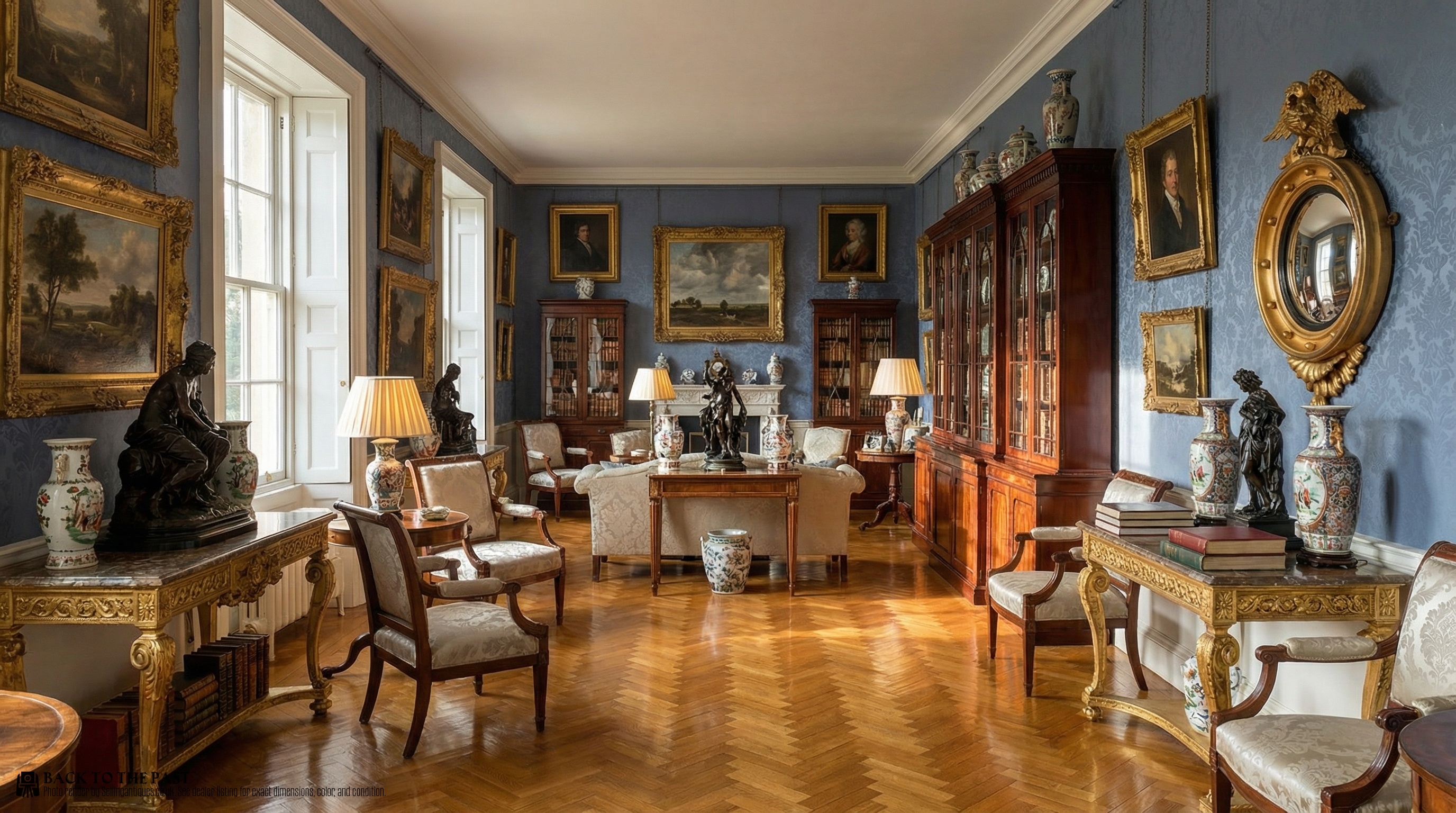
Antique Round Mirror
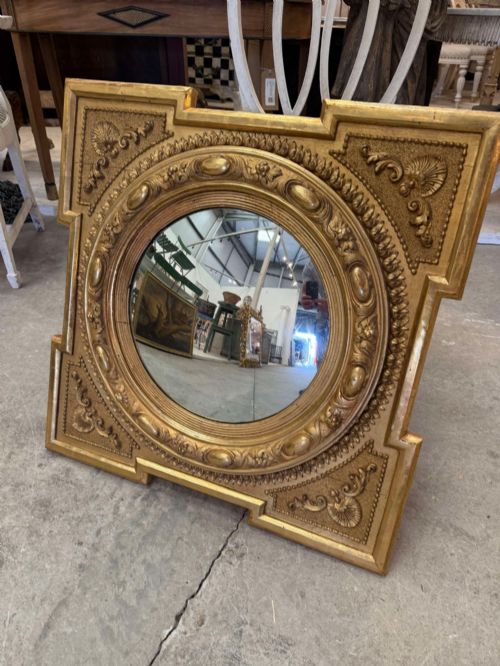
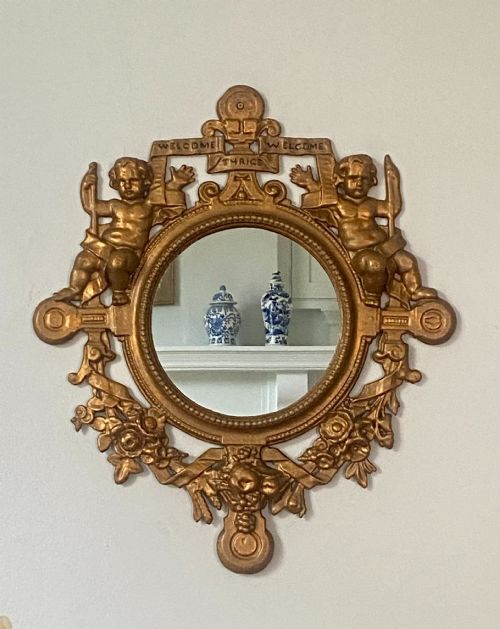
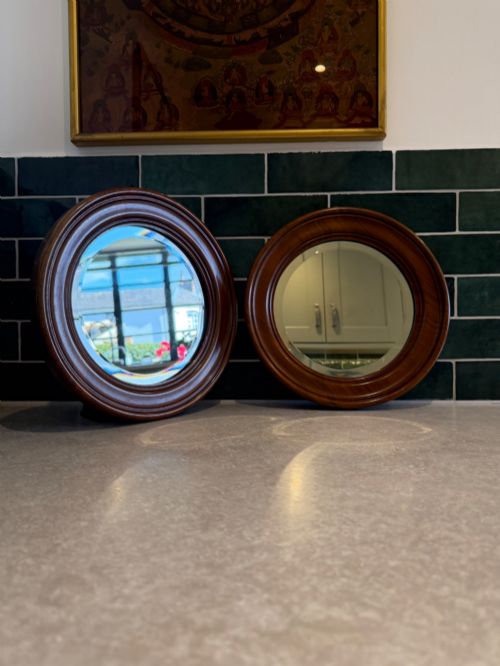
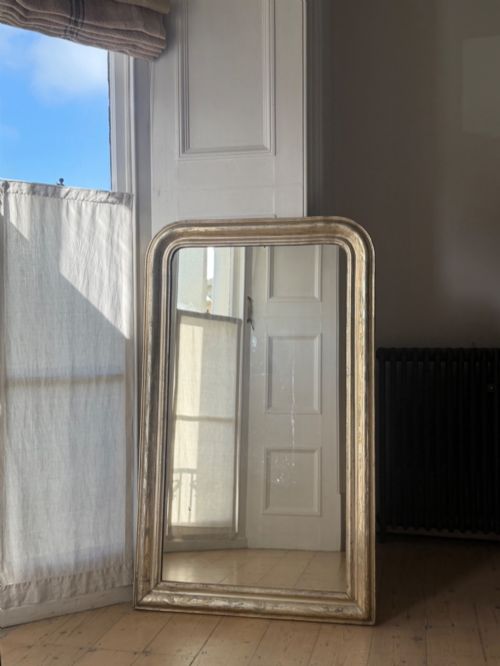
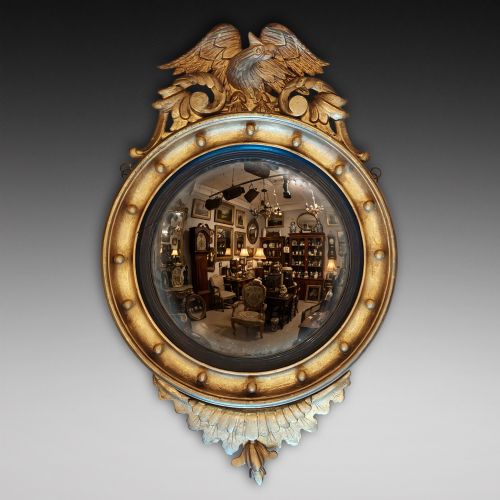
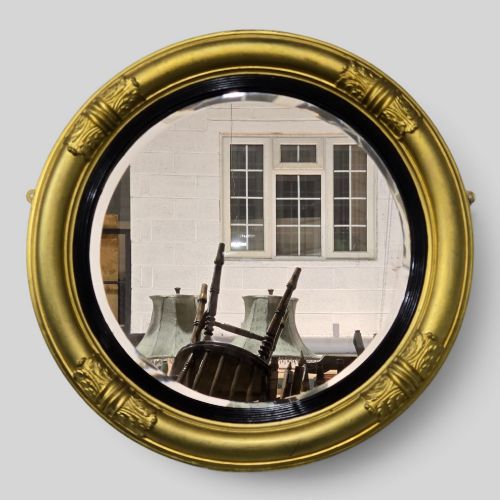
An antique round mirror spans compact dressing glasses and substantial convex wall plates designed to draw light across a room. When you search for an antique round mirror, you encounter distinct formats ranging from Regency convex wall pieces with eagle surmounts to Victorian telescopic shaving stands and later French Louis Philippe designs.
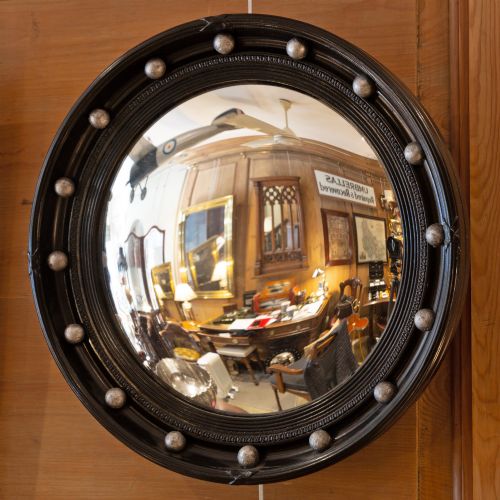
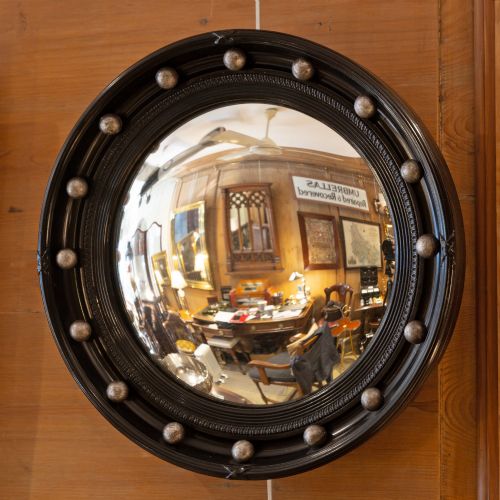
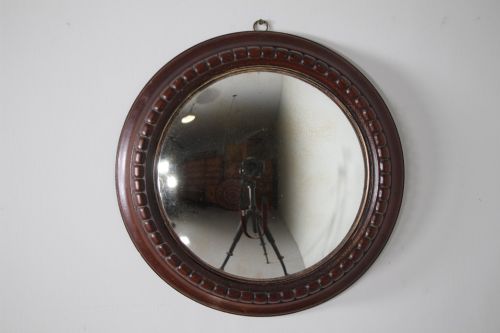
Convex and porthole variants dominate the selection, often carrying giltwood frames or ebonised slips intended to distort and widen the field of vision. Alongside these circular hanging plates, the records include standing mirrors, hand-held vanity pieces, and overmantel forms that establish a commanding focal point.
The materials span traditional carved wood and gesso finished in gilt or silver, alongside brass fittings and mahogany frames. Dating spans from the Georgian era through the nineteenth century and into early twentieth-century Edwardian and Art Deco interpretations.

How They Were Made
Carved wood and gesso provide the structural foundation for many circular frames, building up relief ornaments such as eagles, dragons, and foliate scrolls before the application of gold leaf or paint. Ebonised wood and solid mahogany are also utilised to contrast against gilt slips and bright mirror glass.
Mirror plates of the period frequently employ convex glass blown or slumped to curve the reflection, sometimes accompanied by foxed silvering that shows age spots across the surface. Brass components are cast and turned for structural joints on standing vanity glasses and telescopic shaving mirrors.
Antique Round Mirror Retail Price Guide 2026
Typical asking prices for round mirror among the pieces listed under this phrase on Sellingantiques today, from the lower quarter to the upper quarter. They describe what is for sale here now, not the wider market.
Materials across the listings include giltwood, gesso, ebonised wood, mahogany, brass, and glass spanning from the Georgian period through the 1940s.
What Varies in Quality
The crispness of the carved detail on wooden and gesso elements separates workshop production from standard output, particularly in complex ornaments like eagle surmounts or dragon mounts. Frames that retain their original gilding without heavy overpainting demonstrate superior preservation.
The integrity of the mirror plate itself influences character, where undisturbed foxing or clear, distortion-free convex glass indicates careful stewardship over centuries. Frame construction joinery, especially around the circular wooden rims and backboards, further distinguishes the better examples.
The Antique Round Mirror Glossary
- Convex mirror
- A round mirror with a bulged, outward-curving glass surface that bends reflections to capture a wide-angle view of the interior. These pieces are frequently called butler's mirrors or witch's mirrors.
- Giltwood
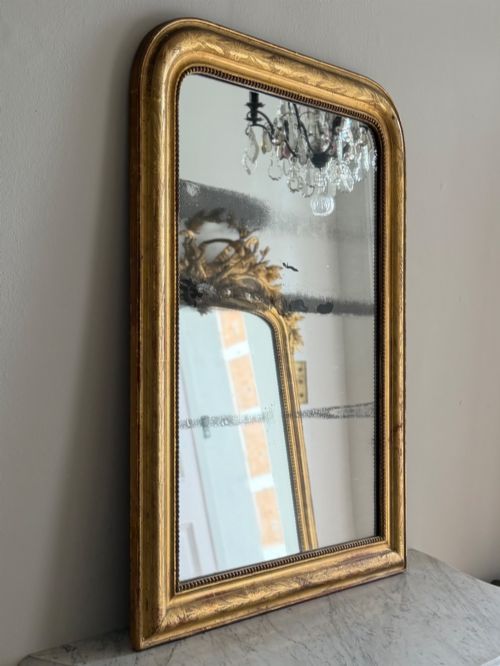
- Timber coated with a thin layer of gold leaf over a prepared gesso ground. This technique gives the frame a brilliant metallic sheen.
- Gesso
- A plaster-like mixture applied to wood frames and carved into decorative relief details before gilding. It provides a smooth base for fine moulding.
- Ebonised slip
- A thin inner moulding finished to imitate ebony wood. This dark border creates a visual contrast against a gilt exterior frame.
- Foxed mirror plate
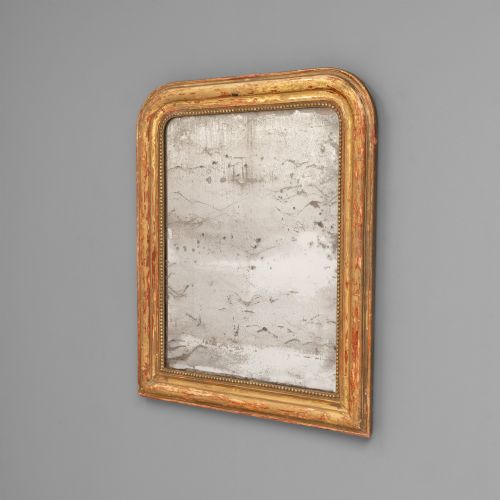
- Glass displaying natural age spots, darkening, and oxidation within the silvering layer. Collectors value this patination as evidence of genuine antiquity.
Antique Round Mirror: Frequently Asked Questions
Where should I hang a convex mirror?
Convex mirrors excel in narrow hallways, living rooms, and above mantelpieces where their wide-angle reflection can draw in light from adjacent windows.
Because they bend and condense the room's perspective, placing them opposite a light source maximises their decorative impact.
How do I clean an antique mirror glass?
Clean antique mirror glass gently with a soft microfibre cloth and a minimal amount of distilled water or mild cleaner. Avoid spraying liquid directly onto the glass to prevent moisture from seeping behind the plate and damaging the old silvering or foxed backing.
What is a witch's mirror?
A witch's mirror is a historical term for a convex round mirror that creates a distorted, panoramic view of an entire room. Historically, superstitious beliefs held that these reflective spheres warded off evil spirits and monitored household occupants.
They are functionally identical to nineteenth-century butler's mirrors.
How can I date an antique round mirror?
Dating relies on examining the frame style, construction materials, and the characteristics of the mirror plate itself. Regency examples often feature distinct eagle surmounts and gilt convex forms, whereas Victorian and Edwardian pieces introduce alternative woods, telescopic stands, and bevelled edges.