
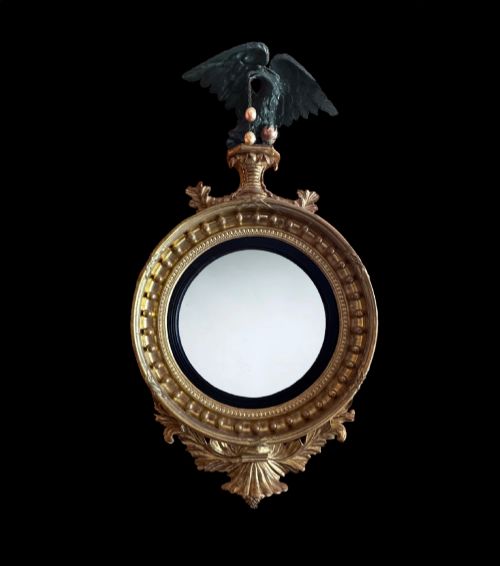

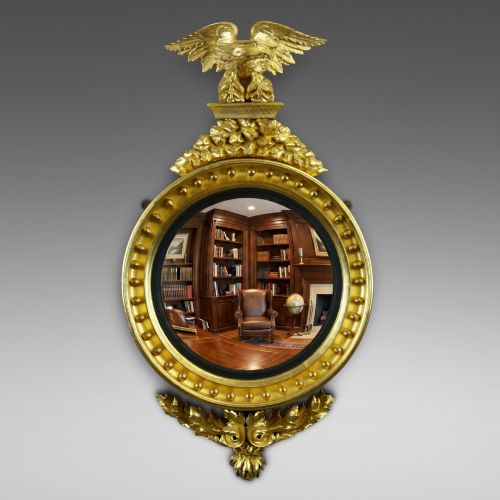
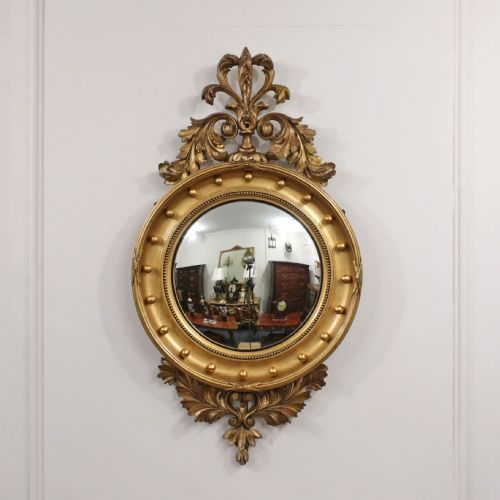
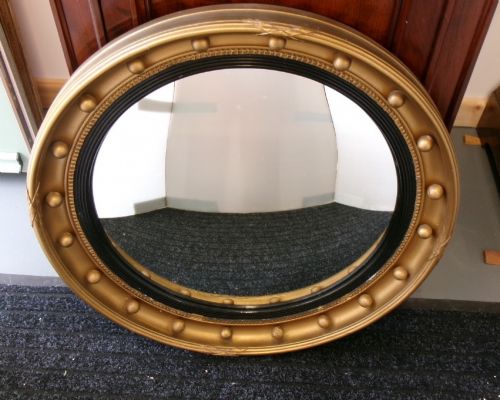





Ball Frame Mirror
A ball frame mirror bends light across a room, and the examples gathered here offer that distinctive round presence in giltwood and ebonised wood.

Ball Frame Mirror
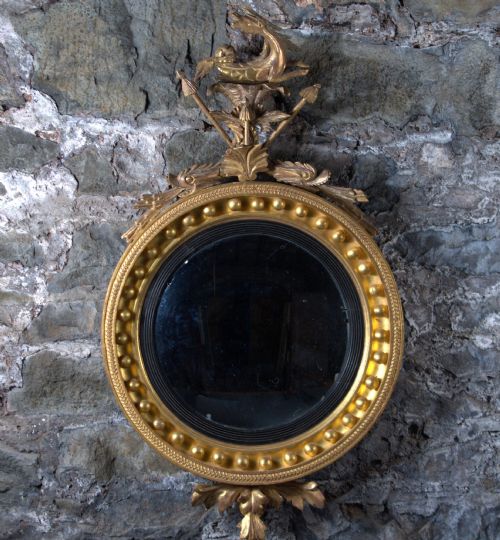
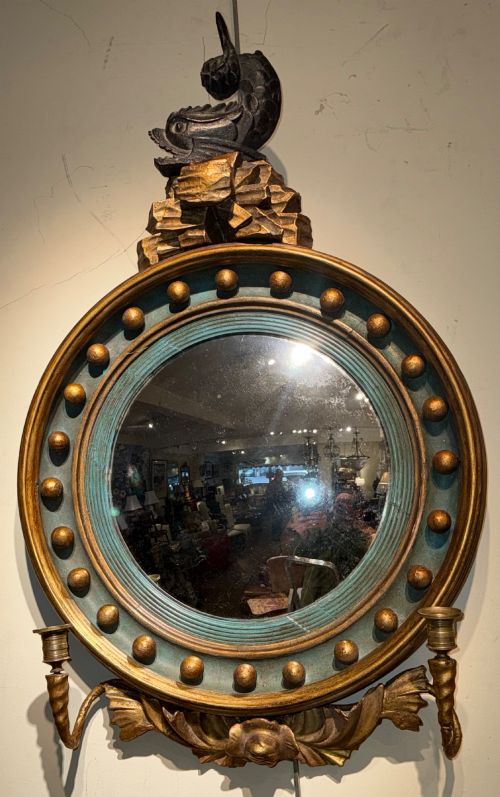
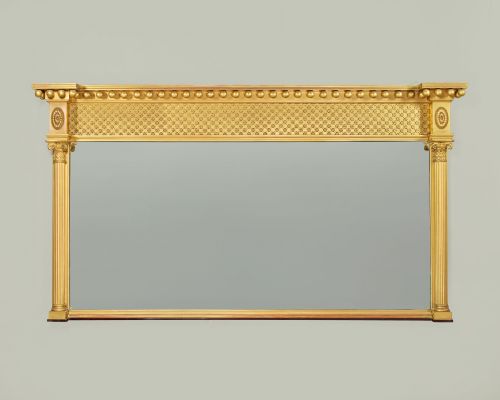
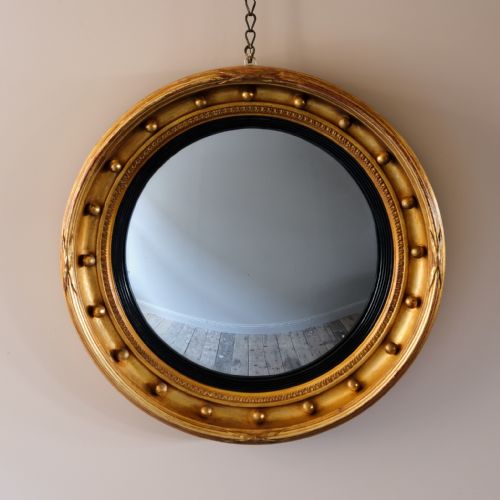
A ball frame mirror is a circular looking glass defined by spheres set into its moulding, commonly known as a convex or porthole mirror. When searching for a ball frame mirror, collectors typically encounter pieces dating from the Regency period through to the Victorian era and Edwardian times. These round wall mirrors and overmantle mirrors pull light from across an interior, creating a wide fish-eye reflection of the room.
The version most frequently met on this page is the Regency giltwood convex mirror, often decorated with carved details such as dragons or ebonised sight rings. Makers designed these circular forms to hang prominently in halls and principal rooms, serving both as optical devices and striking focal points. Alongside authentic Regency pieces, buyers also find later revivals from the nineteenth and early twentieth centuries mirroring those original proportions.
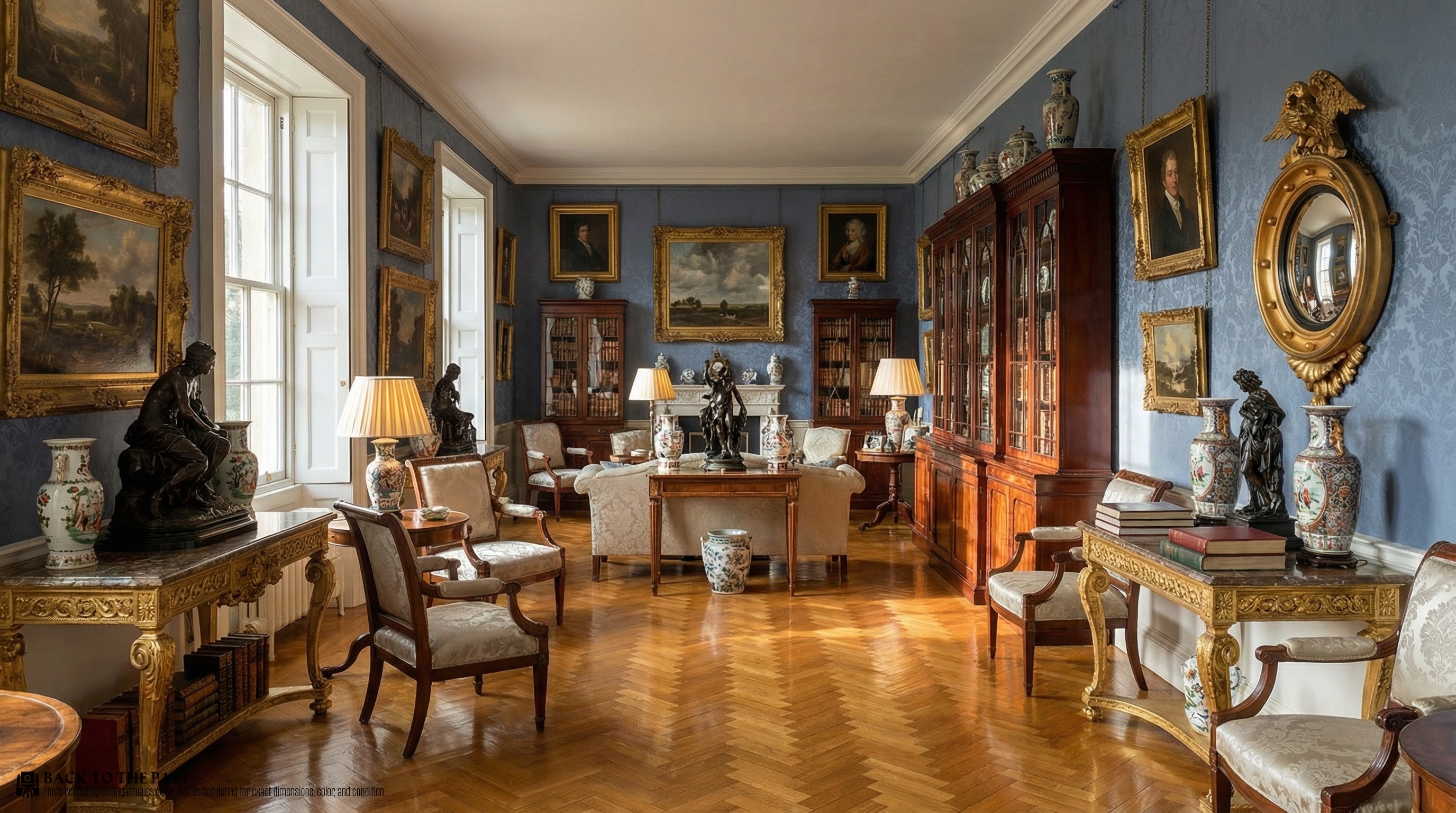
How they were made
Craftsmen shaped these frames using wood, gesso, and composition, applying multiple layers of gold leaf or paint to achieve a gilded finish. The distinctive spheres embedded in the moulding were often cast in composition and secured around the circular wooden base before gilding. Mirrored glass in these convex forms required specialised blowing or curving techniques to create the characteristic outward-bulging surface.
Makers integrated decorative elements like verre eglomise panels into the upper or lower sections of the frame on select pieces. Ebonised wood details were frequently introduced alongside gold leaf to create sharp contrast within the moulding. Structural integrity relied on solid wooden backing boards and sturdy iron rings fixed securely to support the heavy glass.
Ball Frame Mirror Retail Price Guide 2026
Typical asking prices for ball frame mirror among the pieces listed under this phrase on Sellingantiques today, from the lower quarter to the upper quarter. They describe what is for sale here now, not the wider market.
Regency convex mirrors were often placed in butler's pantries so staff could monitor the entire dining room with a single glance.
What varies in quality
The standard of carving and the crispness of the composition balls define the upper tier of these pieces. Hand-carved giltwood frames with deep relief and well-preserved original gilding sit comfortably above mass-produced later revivals. The depth and clarity of the convex glass also dictate value, with older plates showing characteristic ripples and minimal silvering loss.
Proportion and decorative additions such as carved dragons, eagles, or elaborate candle sconces elevate specific examples. The integration of ebonised sight rings and intact verre eglomise glass panels points to higher workshop ambition during construction. Frames that retain their original surfaces without heavy overgilding demonstrate superior survival through the centuries.
The Ball Frame Mirror Glossary
- Convex glass
- A curved glass plate that bulges outward to reflect a wide-angle view of the surrounding interior. This spherical form creates the signature fish-eye perspective seen in round wall mirrors.
- Giltwood
- Timber coated with a thin layer of gold leaf over a prepared base of gesso. It provides the brilliant metallic lustre seen on traditional frames.
- Composition
- A pliable mixture of whiting, resin, glue and linseed oil pressed into moulds to form decorative spheres and ornaments. It allowed makers to produce intricate frame details efficiently.
- Verre eglomise
- A cold decoration technique where designs are painted and gilded on the reverse side of glass panels. These panels frequently appear above or below the main mirror plate in Regency pieces.
- Ebonised wood
- Timber treated with a dark stain or finish to imitate ebony. This dark contrast is often used on the inner ring surrounding the mirror glass.
Ball Frame Mirror: Frequently Asked Questions
Where should I hang a convex mirror?
These mirrors work best in hallways, dining rooms, and living spaces where their wide-angle reflection can capture natural light from windows and opposite walls.
Because they project the entire room into a single spherical view, hanging them at eye level in a central position maximises their visual impact.
How do I date an antique convex mirror?
Dating relies on examining the construction of the wooden backing, the composition of the frame, and the characteristics of the glass plate. Regency examples often feature distinct carved wooden details and heavier construction compared to Edwardian or later revival pieces.
Checking the fixing methods and the wear on the gilding also helps distinguish nineteenth-century production from twentieth-century alternatives.
What is the purpose of the balls on the frame?
The spherical balls embedded in the moulding serve a decorative function, catching light from multiple angles and adding texture to the circular silhouette. This distinctive ornamentation defines the classic porthole appearance.
In period workshops, these spheres were cast individually in composition and attached securely to the wooden frame before gilding.
Are these mirrors heavy to hang?
These pieces carry substantial weight due to the solid wooden frames, composition ornamentation, and thick curved glass plates. Secure wall fixings into masonry or heavy timber studs are essential for safe installation.
Professional hanging using robust steel wire and wall anchors ensures the heavy frame remains secure over time.