


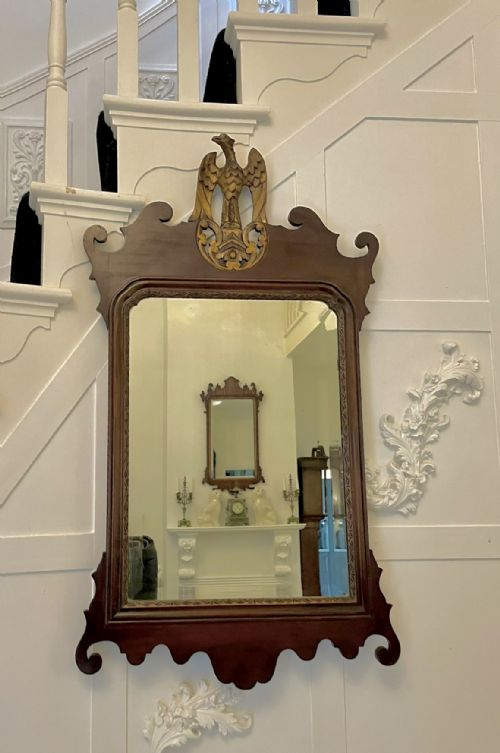


Gilded Eagle Mirror
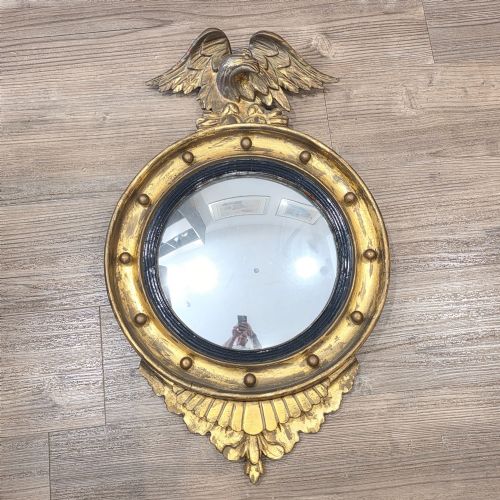
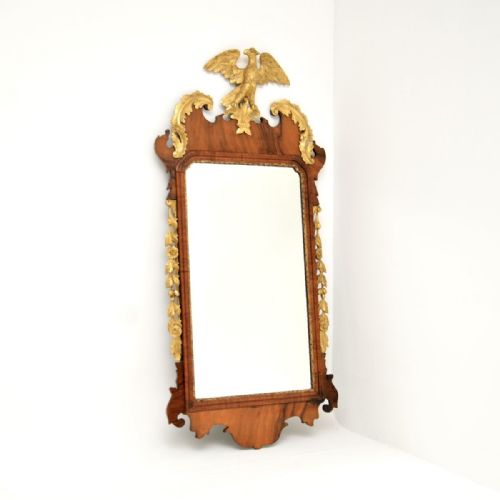
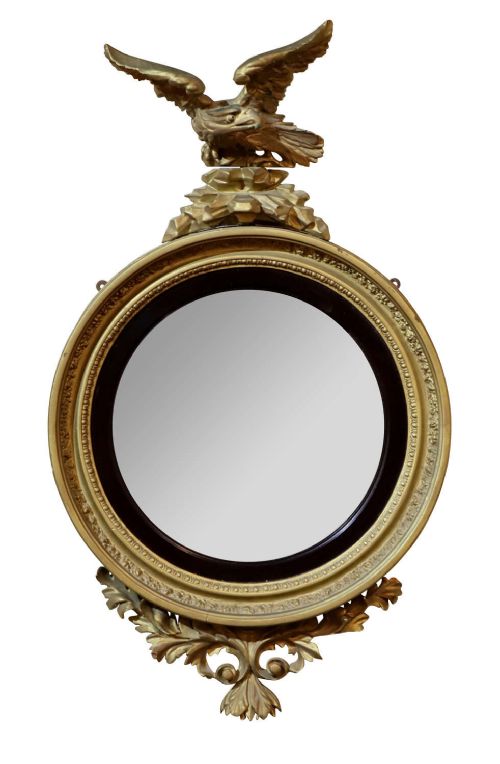
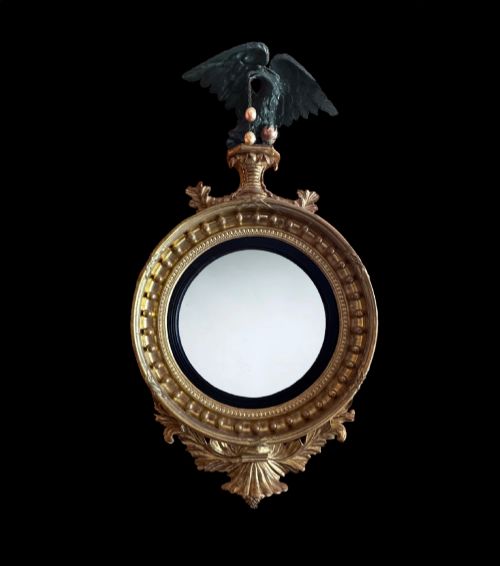
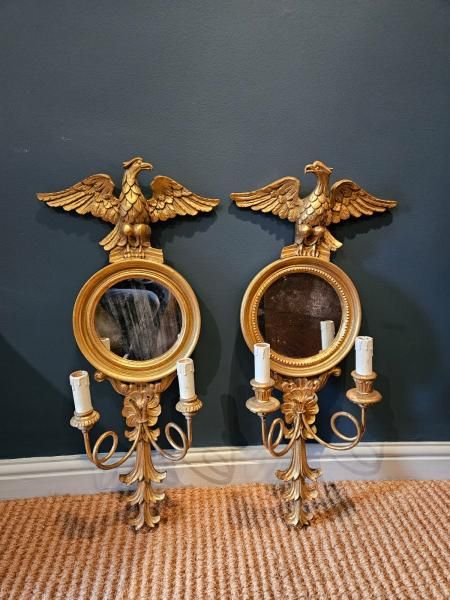
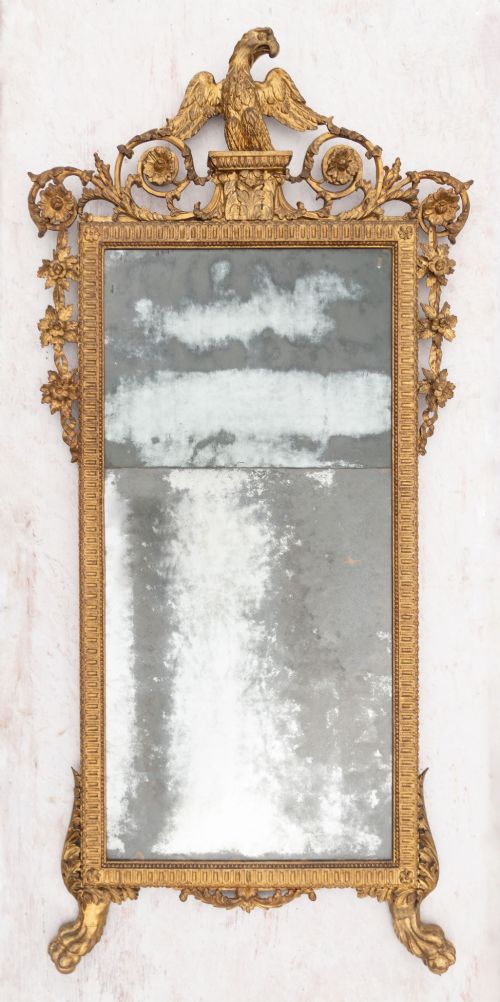
These gilded eagle mirrors bring deep reflection and grand Regency presence into a room, crowned by the traditional heraldic bird.
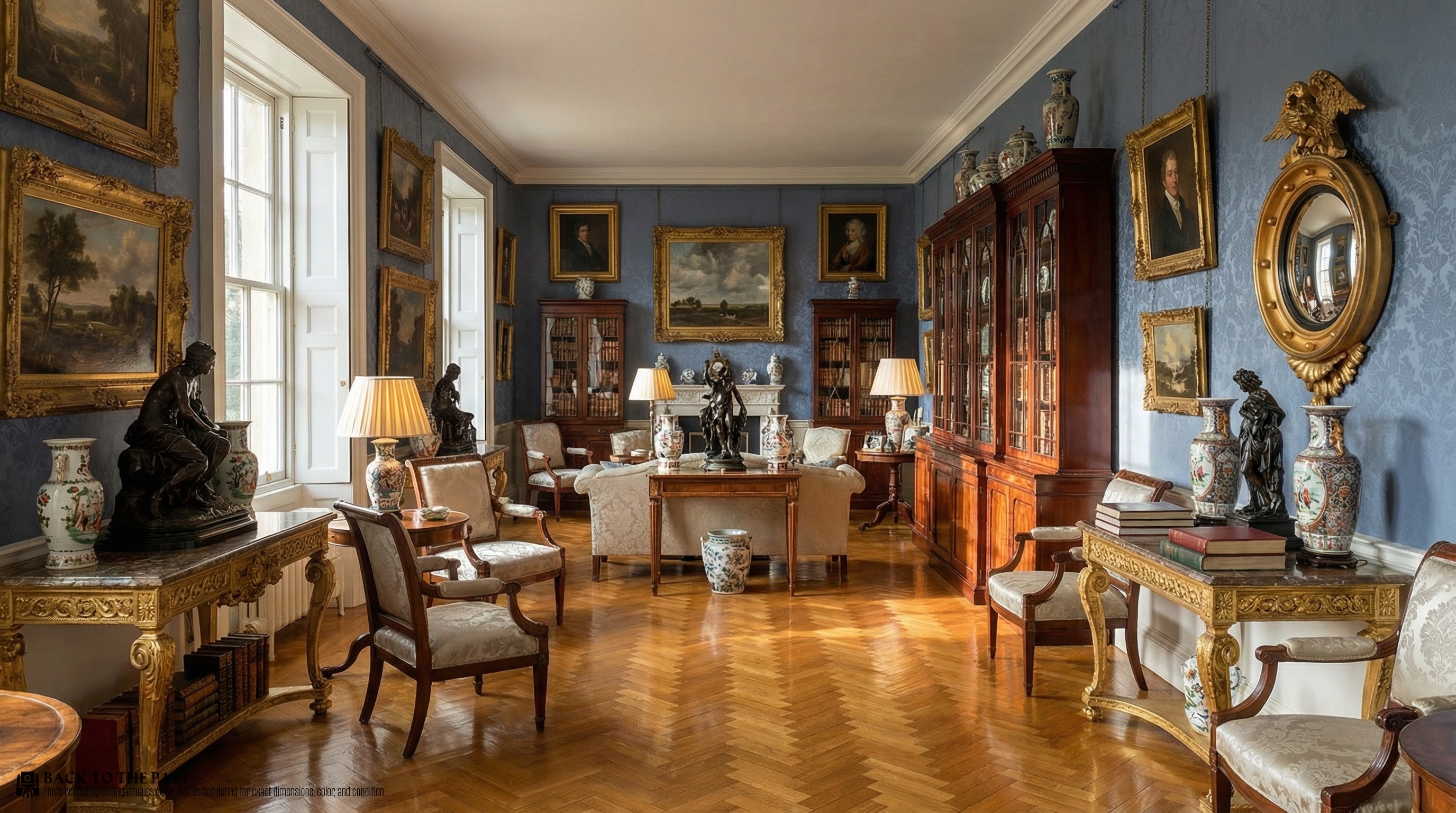
What a gilded eagle mirror is
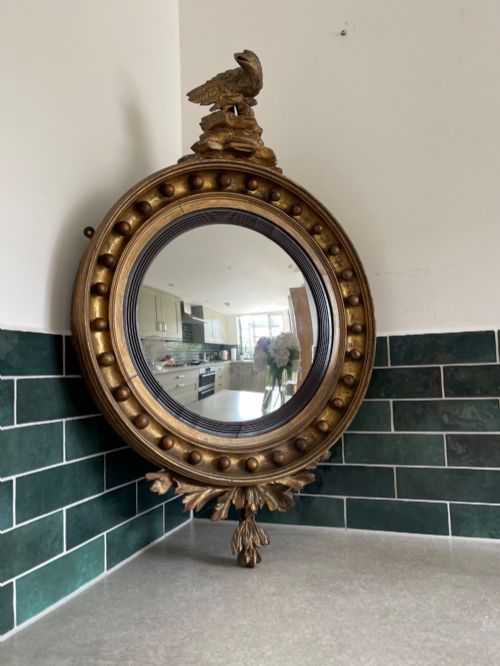
A gilded eagle mirror commands attention on a wall through its bold circular form and the majestic bird perched upon the crest. When searching for a gilded eagle mirror, collectors encounter striking convex glasses that throw a curved, fish-eye reflection across the interior.
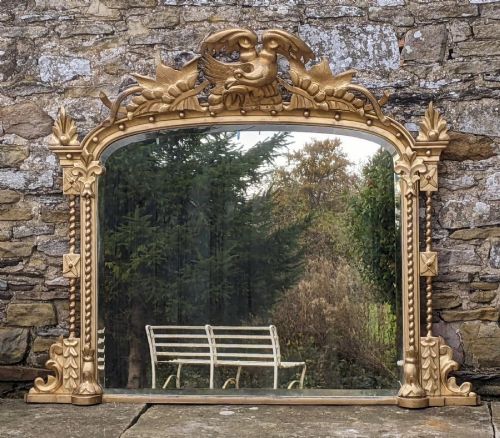
The pieces recorded here span the Regency era, the nineteenth century, and later revivals from nineteen hundred and nineteen twenty. Wall mirrors and circular convex glasses dominate the selection, bringing period character directly from the Regency style into modern spaces.
How they were made
Carved giltwood and gesso form the primary structure of these frames, providing a smooth base for the brilliant gold leaf application. Mirror glass sits deep within the circular surrounds, sometimes paired with ebonised wood details and mahogany elements.
Makers shaped timber and applied gesso to build up the intricate details around the crest and base. The combination of carved wood, applied gesso, and fragile mirror glass required immense skill from period craftsmen.
Retail Price Guide 2026
Typical UK retail prices for gilded eagle mirror, calculated from the Sellingantiques database of over a million retail prices indexed since 2003. This retail price guide relies exclusively on Sellingantiques data; no external sources or auction records are used, so the figures do not describe the wider market.
What varies in quality
The crispness of the carved eagle and the depth of the gilding separate standard examples from the finest pieces. Superior craftsmanship shows in the fluid lines of the carved foliage and the intact brilliance of the original gesso and gold leaf.
Proportion and the handling of the convex mirror glass define the visual weight of the object. Finer examples maintain an authoritative presence through balanced proportions and deeply worked wooden frames that hold their historic character.
The Gilded Eagle Mirror Glossary
- Convex mirror
- A curved glass plate that reflects a wide, distortion-heavy view of the entire room. This specific form allows viewers to survey an entire interior space from a single vantage point.
- Giltwood
- Timber coated with a thin layer of gold leaf over a prepared gesso ground. This technique gives frames a brilliant metallic finish that catches interior candlelight and daylight alike.
- Gesso
- A plaster-like mixture applied to wood surfaces and carved before gilding. It provides a smooth, workable layer for crisp decorative details.
- Ebonised wood
- Timber treated to imitate expensive ebony through staining or painting. It creates a stark, dark contrast against bright gold leaf sections.
Frequently Asked Questions
Where should I hang a convex mirror?
These mirrors command central placement on a principal wall where they can reflect the breadth of the room. Their curved glass naturally draws the eye and opens up darker corners.
Position the glass at eye level to make the most of the fish-eye reflection and to appreciate the carved eagle crest above.
How do I date a Regency mirror?
Examine the construction of the timber frame, the composition of the gesso, and the characteristics of the mirror glass itself. Regency pieces typically feature heavy carved giltwood and specific convex forms.
Later revivals from the Edwardian period or nineteen twenty often reveal subtle differences in the preparation layers and the crispness of the carving.
What is the purpose of the eagle?
The heraldic eagle perched on top serves as a traditional symbol of power, majesty, and patriotic authority. It adds significant vertical height and dramatic silhouette to an otherwise circular frame.
Carvers used the bird to anchor the composition and signal high status in Regency interior design.