

Antique Fretwork Mirror
An antique fretwork mirror brings pierced wooden scrollwork and clean lines into a room, catching the light against panelled walls.

Antique Fretwork Mirror
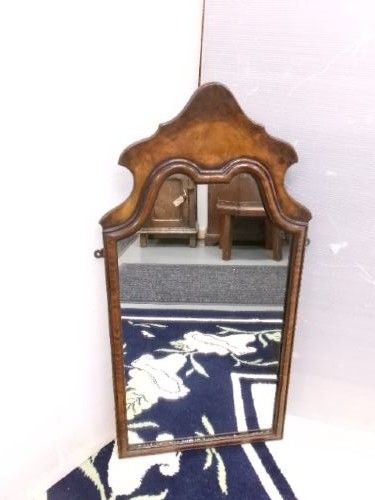
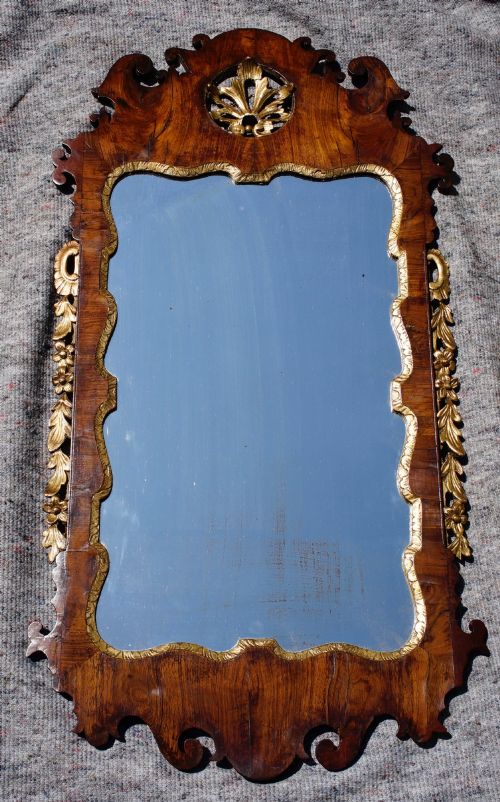
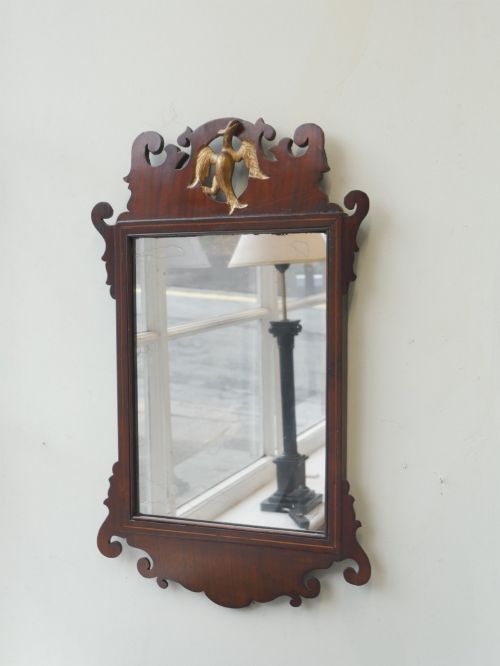
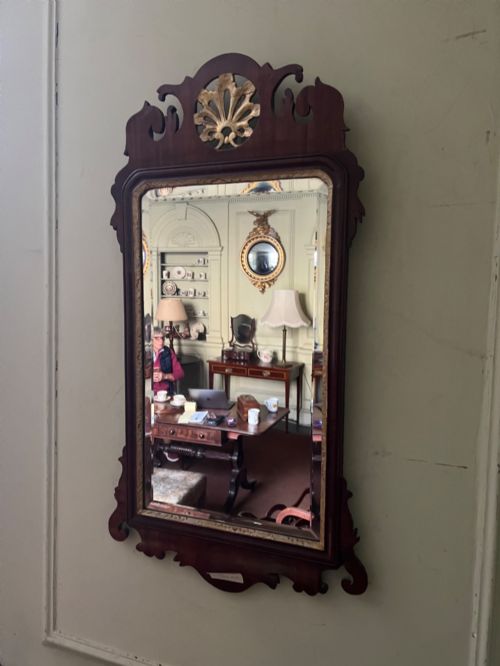
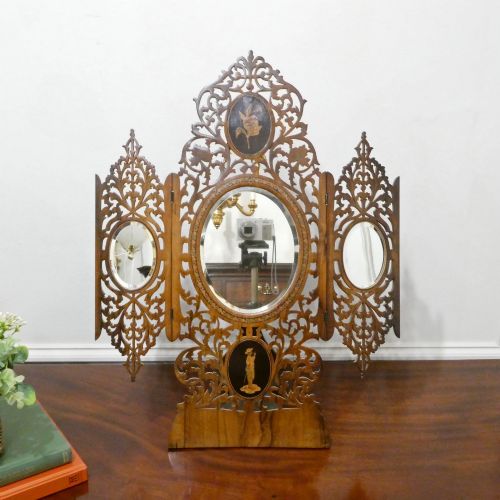
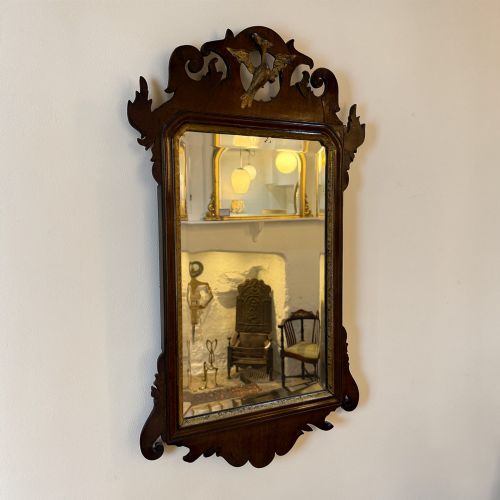
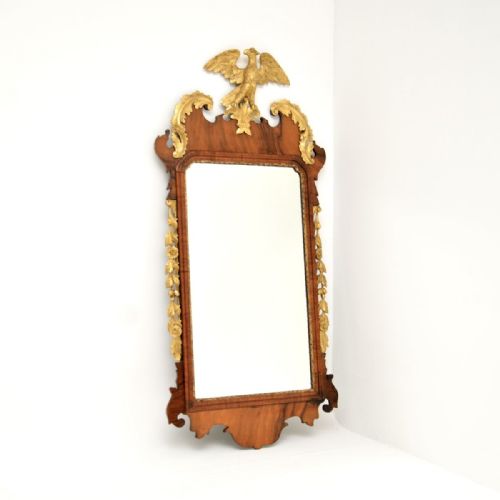
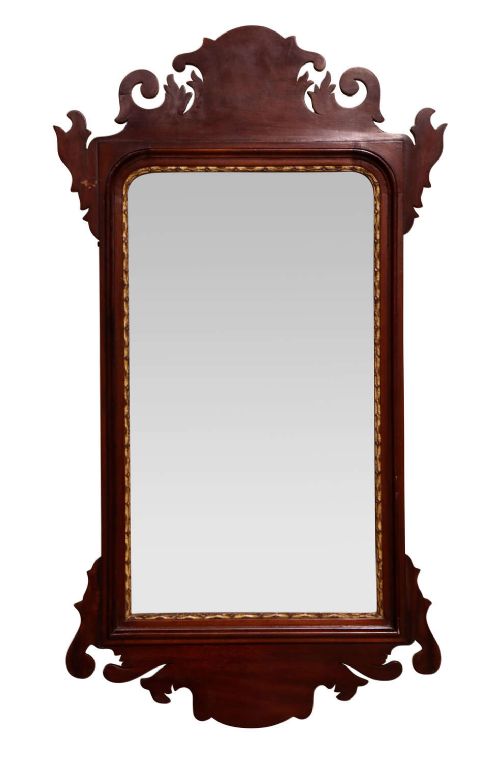
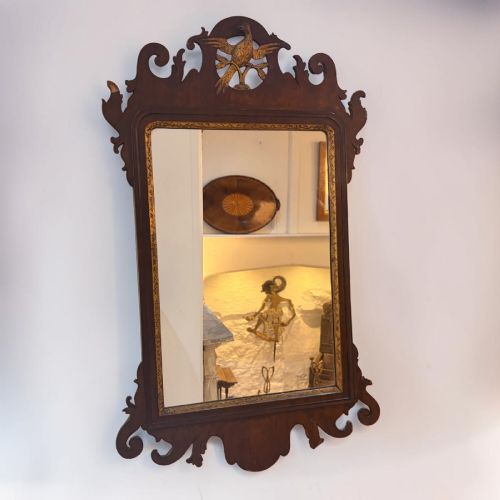
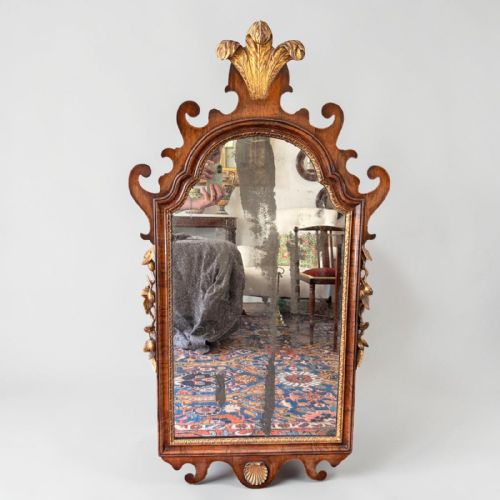
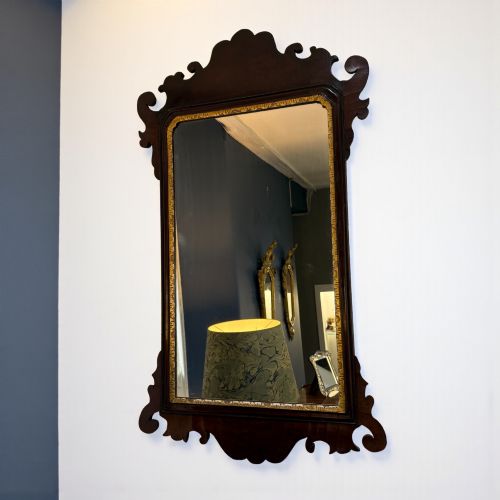
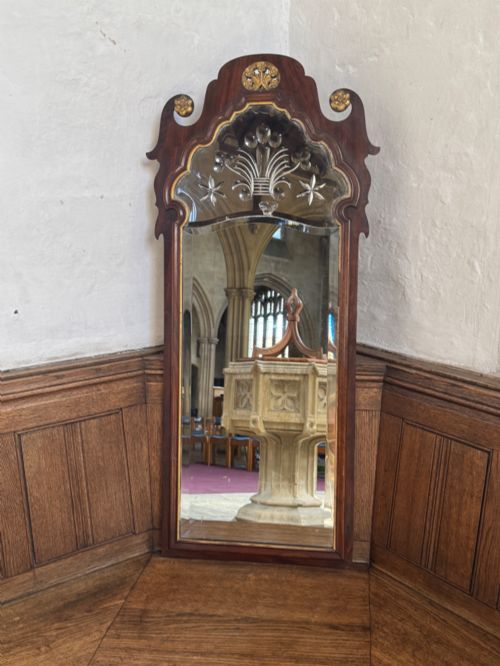
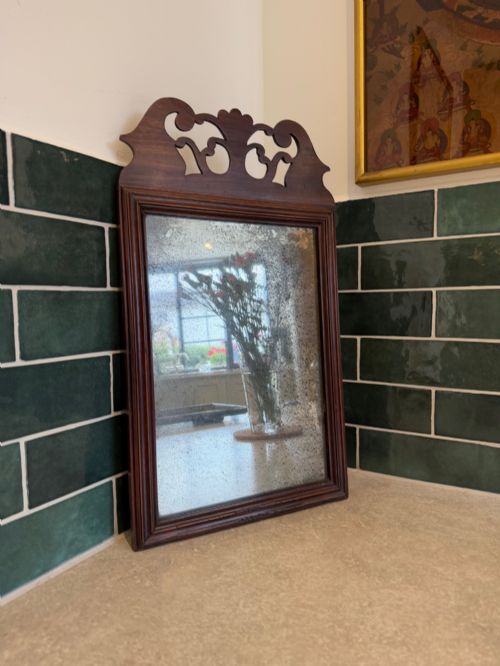
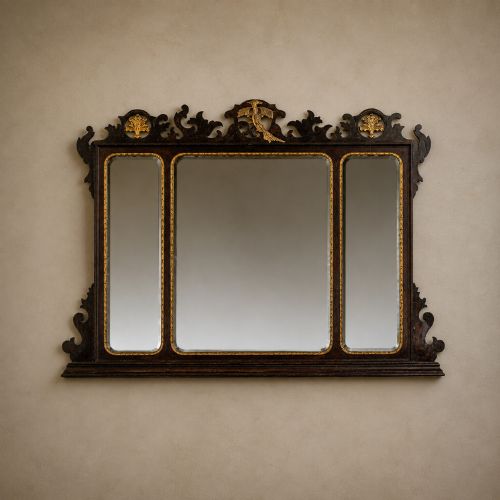
An antique fretwork mirror is a wall-hanging glass plate set within a pierced wooden frame, usually featuring symmetrical scrolls, brackets, and a carved crest at the top. Buyers seeking this specific form will encounter numerous examples originating from the Georgian period through to later revival eras. Walnut and mahogany predominate among the timber frames, often accented with parcel gilding or applied gold leaf.
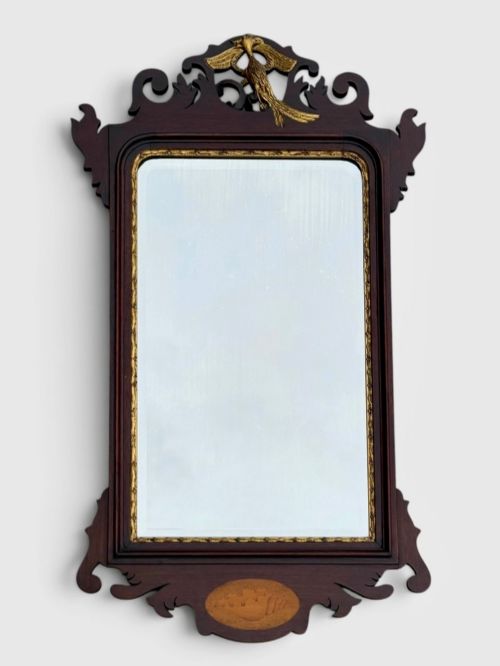
The most common versions met on this page are Georgian originals from the eighteenth century alongside later Chippendale Revival and Georgian Revival pieces produced around nineteen hundred and the early twentieth century. These later interpretations faithfully reproduce the scrolling ears and pierced outlines of earlier models while utilising machine-sawn fretwork or updated glass plates. Wall mirrors and overmantel mirrors form the majority of the available shapes.
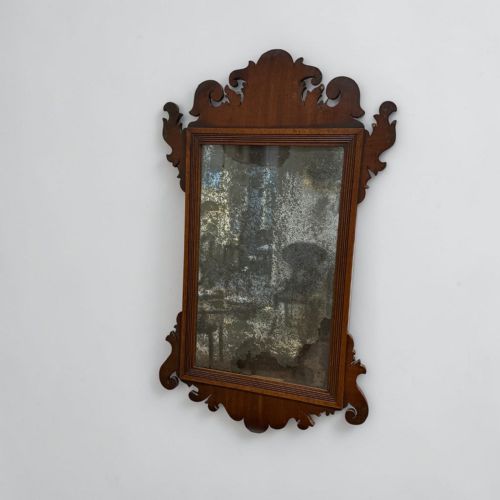
Earlier eighteenth-century pieces display deep-grained walnut or rich mahogany veneers mounted on pine carcases, frequently retaining original mirror glass with minor foxing. Revival iterations from the Victorian and Edwardian periods offer similar silhouettes in lighter walnut or mahogany, sometimes incorporating inlay or bevel-edged glass. Buyers select these items to anchor a room with traditional woodwork and reflective depth.
Evaluating quality and execution
The distinction between ordinary and superior examples lies in the crispness of the pierced scrollwork and the depth of the timber grain. Fret-cut borders executed with sharp internal angles and delicate symmetry demonstrate a higher level of cabinet-making skill than thicker, softer machine-cut alternatives.
Originality of components elevates a piece considerably, particularly the survival of early or untouched mirror plates with authentic distortion and silvering wear. Frames that retain their original parcel gilt highlights and secondary wood backing boards without extensive timber replacement represent the upper tier of the market.
Antique Fretwork Mirror Retail Price Guide 2026
Typical asking prices for fretwork mirror among the pieces listed under this phrase on Sellingantiques today, from the lower quarter to the upper quarter. They describe what is for sale here now, not the wider market.
Current listings feature walnut, mahogany, and giltwood frames spanning the Georgian, Victorian, and Edwardian periods.
The Antique Fretwork Mirror Glossary
- Fretwork
- Pierced woodwork cut with a scroll saw or fretsaw to create decorative patterns and openwork silhouettes. This technique defines the outer frame of every piece listed.
- Parcel Gilt
- Partially gilded woodwork where gold leaf highlights specific carved details, mouldings, or crests against a dark wood background. It provides subtle contrast on Georgian and revival frames.
- Ho-Ho Bird
- A stylized Chinese phoenix commonly carved onto the cresting of eighteenth-century and revival mirrors. It appears frequently atop Chippendale style frames.
- Pier Mirror
- A tall, narrow mirror designed to hang on the wall space between windows, often positioned above a console table or pier table. These reflect additional light into darker Georgian rooms.
- Giltwood
- Timber carved and coated with a thin layer of gold leaf or gesso preparation. It catches daylight brilliantly in formal reception spaces.
Antique Fretwork Mirror: Frequently Asked Questions
How do I hang a heavy wooden wall mirror safely?
These frames require secure wall fixings suited to the weight of the dense timber and glass plate. Professional mirror brackets or sturdy picture wire attached to strong fixing points on the rear carcase ensure the piece remains stable against the wall.
Position the mirror at eye level where it can reflect natural light from windows or bounce illumination from a fireplace mantel. Avoid damp walls that might affect the wooden veneer or cause corrosion behind the mirror glass.
Are eighteenth-century mirrors different from Edwardian revivals?
Eighteenth-century originals exhibit hand-cut fretwork with slight irregularities in symmetry and patinated mahogany or walnut surfaces. The glass plates often show subtle waviness and age-related foxing spots that confirm their longevity.
Edwardian and Victorian revival pieces display cleaner machine-sawn precision, uniform bevel-edged glass, and brighter finishes. Both eras offer sturdy construction, but older examples carry the distinct hand-tooled character of period workshops.
What is a Chippendale style frame?
A Chippendale style frame draws upon the eighteenth-century designs published by Thomas Chippendale, featuring elaborate scrollwork, pierced ears, and gilded crests. These designs borrow motifs from Gothic, Chinese, and Rococo traditions.
Revival cabinet-makers reproduced these classic proportions during the nineteenth and twentieth centuries to satisfy demand for classical English furniture styles.
How should I clean an antique glass plate?
Clean the mirror surface gently with a soft microfibre cloth and a mild glass cleaning solution applied to the cloth rather than directly onto the glass. This prevents moisture from seeping behind the old rebate and damaging the backing.
Keep abrasive materials and harsh chemical sprays away from both the glass and the surrounding timber frame to protect original gilt leaf and wood finishes.