



Gilded Mahogany Mirror
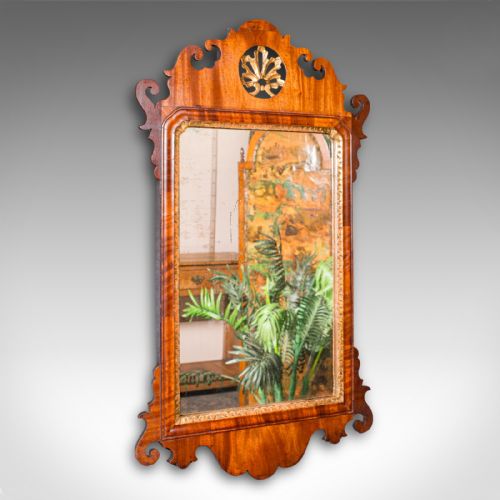
A gilded mahogany mirror brings rich timber grain and reflective light together, offering the warmth of mahogany contrasted with bright gilding for any interior space.
Gilded Mahogany Mirror
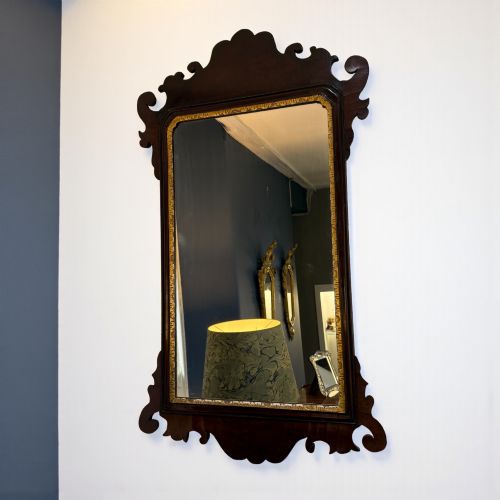
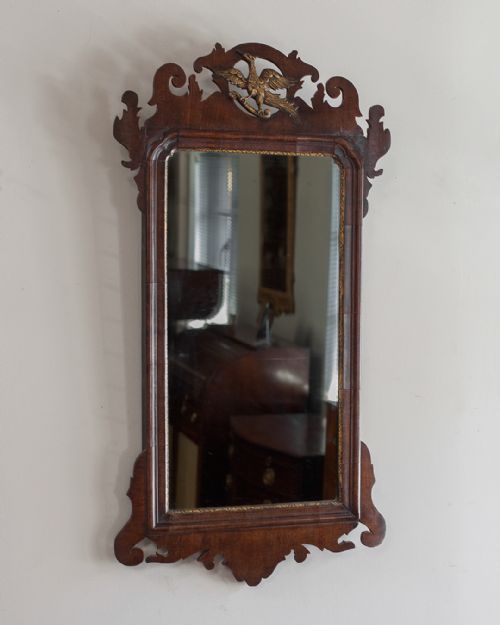
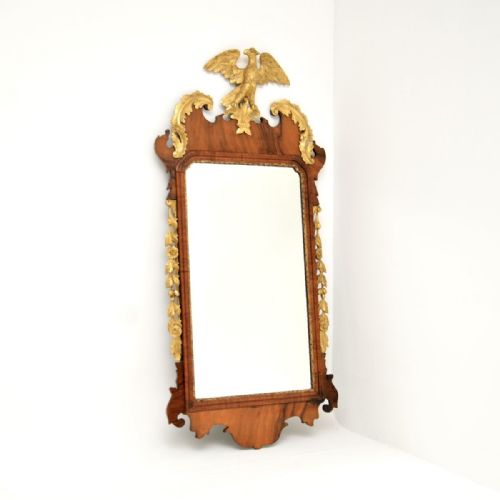
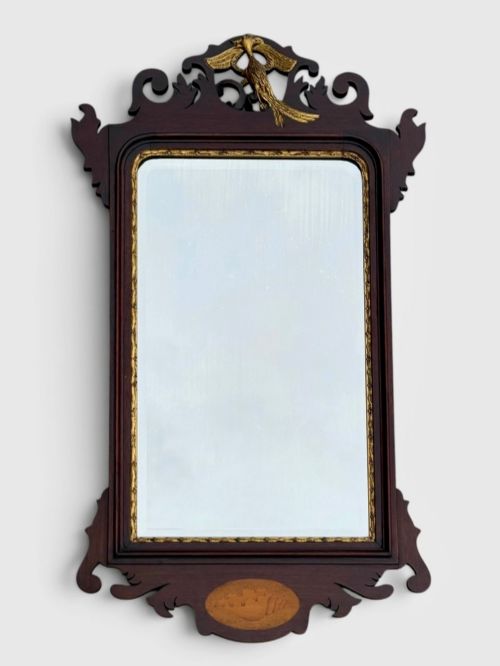
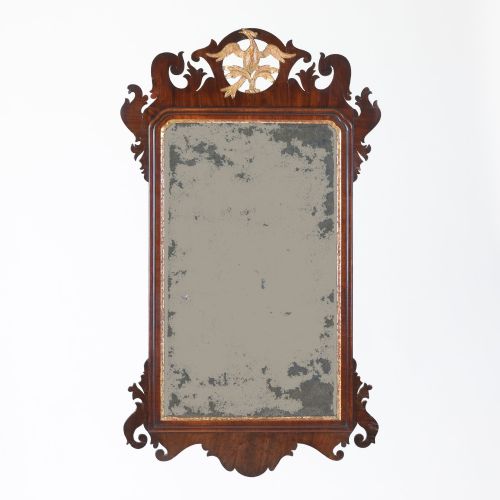
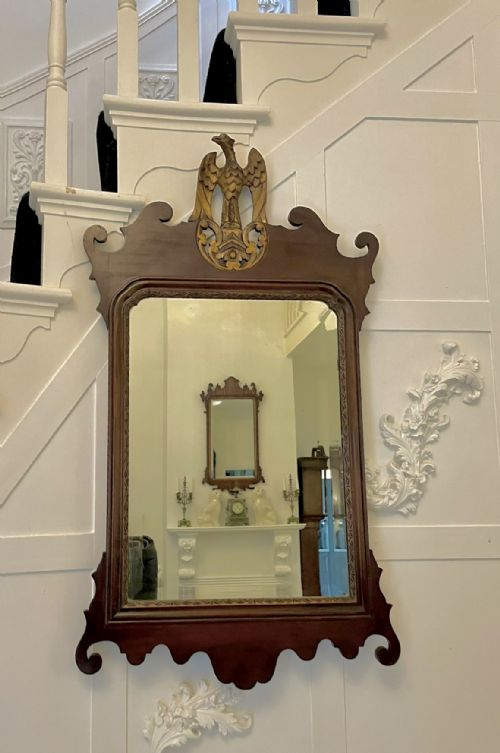
When searching for a gilded mahogany mirror, you encounter pieces spanning from the eighteenth century through to the twentieth century, combining dark tropical hardwood with applied gold leaf or gesso. These frames appear in various forms, from simple wall mirrors to elaborate fretwork designs featuring carved details like birds and scrolling foliage.
The version most commonly met on this page is the wall-hanging format, frequently styled after Georgian or Chippendale designs with parcel-gilt accents. Alongside traditional wall mirrors, the selection includes pier mirrors, cheval mirrors, and occasional console tables incorporating matching timber and gilt components.
How they were made
Craftsmen built the structural frames using solid mahogany, frequently utilising walnut or secondary timbers for internal bracing and backing boards. Timber surfaces were polished, while specific carved elements or mouldings received layers of gesso before being finished with gold leaf.
Detailing often involved intricate fret-cutting using hand saws to achieve pierced silhouettes, alongside parcel-gilding where only raised carvings or specific borders highlight the dark grain of the mahogany underneath.
Gilded Mahogany Mirror Retail Price Guide 2026
Typical asking prices for gilded mahogany mirror among the pieces listed under this phrase on Sellingantiques today, from the lower quarter to the upper quarter. They describe what is for sale here now, not the wider market.
Watch out for mischievous carved Ho-ho birds perched atop eighteenth-century frames, keeping a watchful eye over your hallway.
What varies in quality
The standard of a piece depends heavily on the precision of the hand-carving and the depth of the timber selection, such as flame mahogany veneer or dense solid stock. Crisp edges on fretwork and well-defined gilding separate master craftsmanship from later commercial reproductions.
Proportion and balance dictate the visual success of the frame, where classical architectural elements like swan neck pediments or Ho-ho birds are executed with natural fluidity rather than stiff symmetry.
William Kent
The Gilded Mahogany Mirror Glossary
- Parcel-gilt
- Partially gilded, where gold leaf is applied only to specific carved details or mouldings while leaving the underlying mahogany wood exposed. This technique highlights particular decorative motifs against the dark timber ground.
- Fretwork
- Openwork ornamentation cut from thin boards using a fret saw, creating geometric or scrolling patterns. It defines the lightweight silhouette of many eighteenth-century wall mirrors.
- Gesso
- A plaster-like mixture applied to timber surfaces as a smooth preparation layer before gilding. It allows carvers to achieve sharp relief details that take gold leaf cleanly.
- Pier mirror
- A tall glass designed specifically to hang on the wall space between two windows, often placed above a matching console table. These frequently incorporate gilded wood and mahogany frames to maximise reflected light.
- Vauxhall glass
- Early mirror glass characterised by bevelling and occasional slight imperfections in the manufacturing process. It appears in traditional eighteenth-century English wall mirrors.
Gilded Mahogany Mirror: Frequently Asked Questions
How do I hang a heavy antique wall mirror safely?
Heavy frames require fixings secured directly into structural wall studs or masonry rather than relying on standard plasterboard plugs. Professional mirror hangers utilise suitable weight-rated brackets to support the substantial combination of timber and glass.
Ensuring the hanging wire or integrated mirror plates match the exact load prevents shifting over time. Distributing the weight evenly protects both the antique frame and the wall surface.
Where should I place a pier mirror in a room?
Historically positioned between windows to bounce natural daylight back into darker Georgian rooms, pier mirrors work well in similar architectural spots today. Placing one above a sideboard, mantel, or console table creates a balanced focal point.
The vertical proportions of these mirrors help elongate wall spaces visually while adding reflective depth to hallways, reception rooms, and morning rooms.
How do I clean gilded mahogany frames safely?
Dust the carved frame gently using a soft, dry brush to remove particles without disturbing delicate gold leaf or aged gesso. Avoid using liquid polishes or chemical solvents near the gilded sections, as moisture damages traditional finishes.
Glass panels can be cleaned with a minimal amount of glass cleaner applied to a cloth rather than sprayed directly, preventing overspray from reaching the surrounding timber and gilt.
How can I tell an eighteenth-century mirror from a later revival piece?
Examine the construction methods, backboards, and secondary timbers used in the frame, as older pieces exhibit hand-cut joinery and aged patination. Eighteenth-century mirrors often display subtle tool marks and glass with minor distortions characteristic of early production methods.
Revival pieces from the Victorian or Edwardian eras generally feature more uniform machine-sawn elements, standardised screw types, and cleaner, flatter mirror plates.