





Carved Eagle Wall Mirror
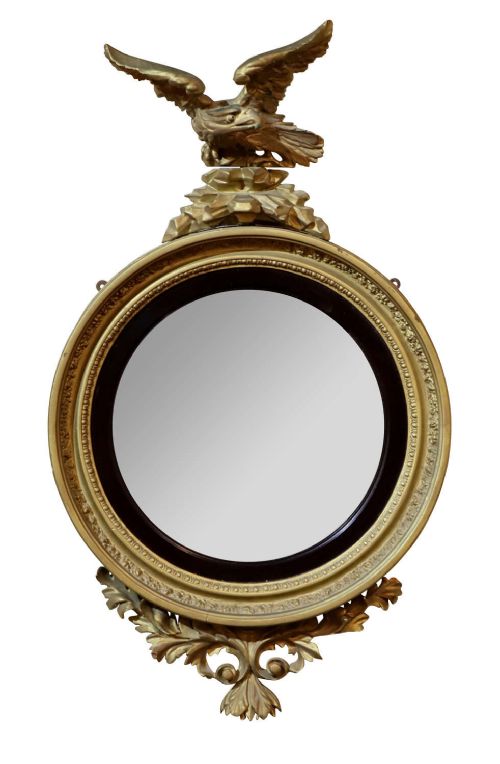
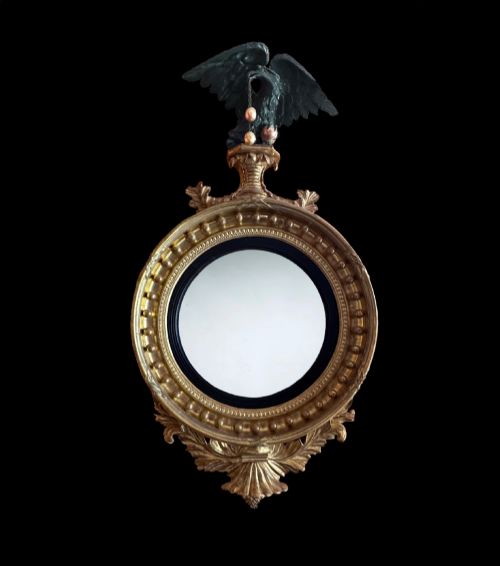
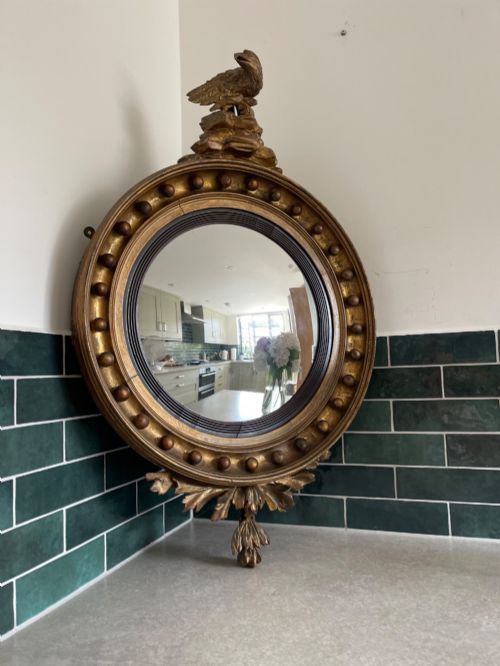
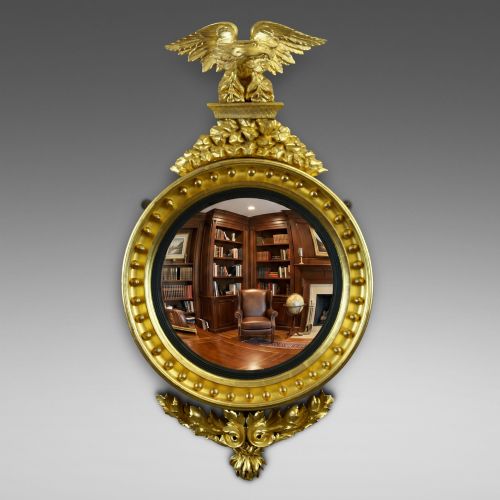
A carved eagle wall mirror commands attention with its soaring bird crest and convex glass, bringing depth and theatre to a room.
Carved Eagle Wall Mirror
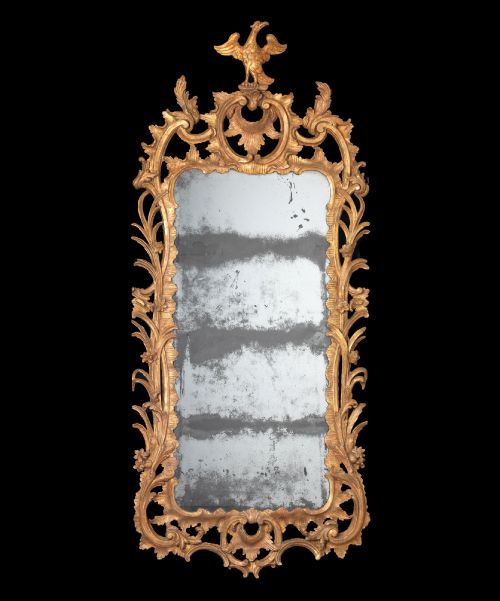
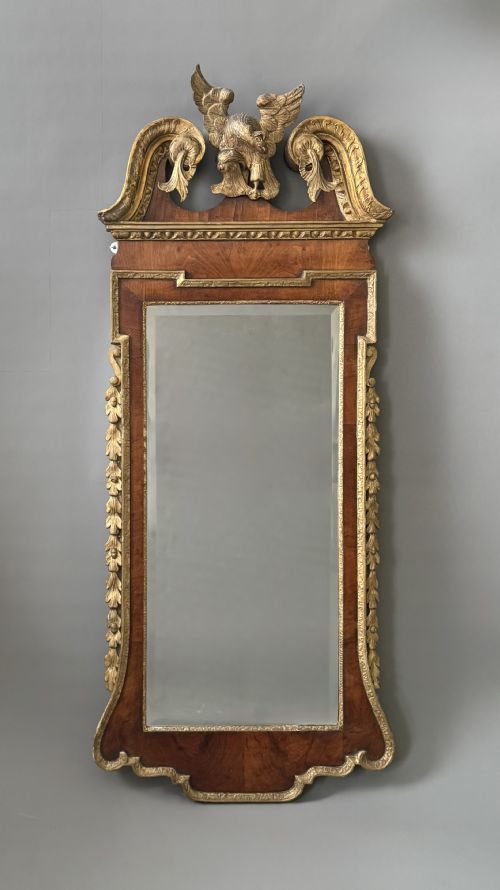
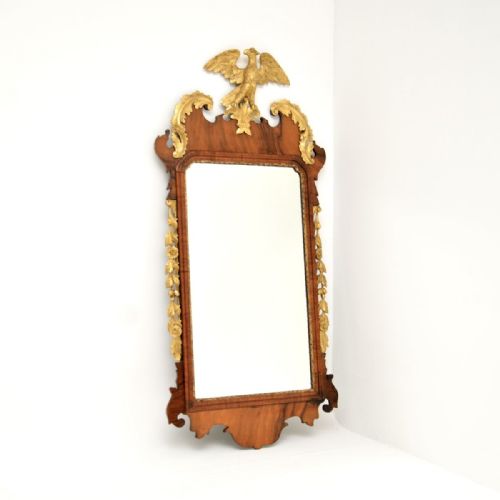
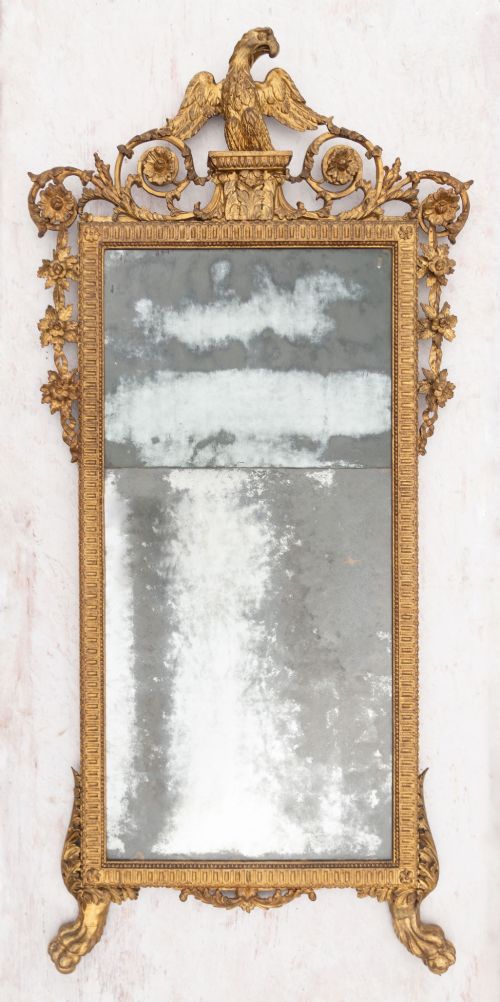
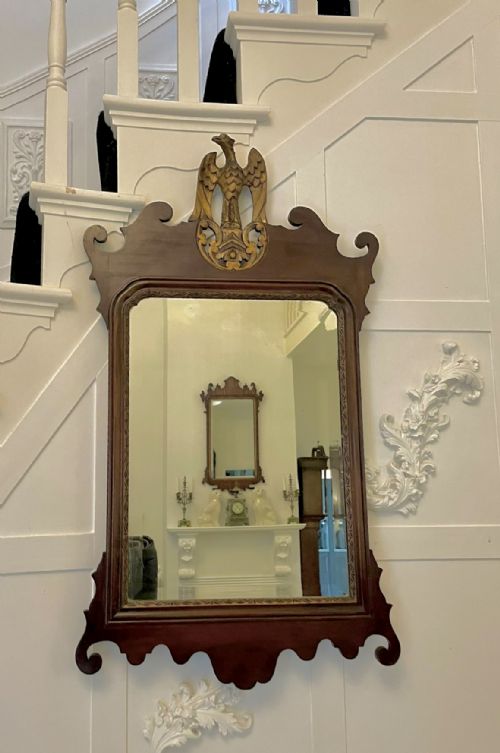
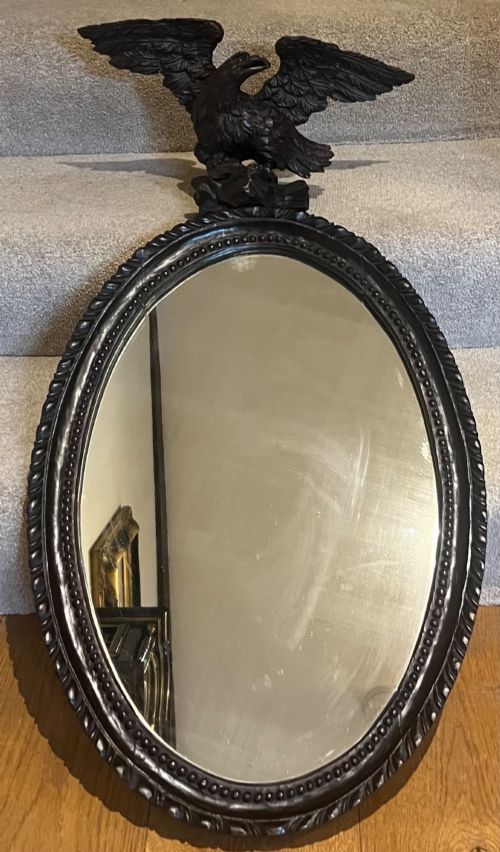
A carved eagle wall mirror is a commanding focal point, defined by the bird of prey perched atop the frame. These pieces span several centuries, with the Regency and Georgian periods offering the most recognisable examples on this page.
Buyers will encounter circular convex mirrors framed in giltwood alongside rectangular mahogany and walnut fretted wall mirrors. The eagle crest often dominates the upper portion, accompanied by intricate foliate carving or side candle sconces known as girandoles.
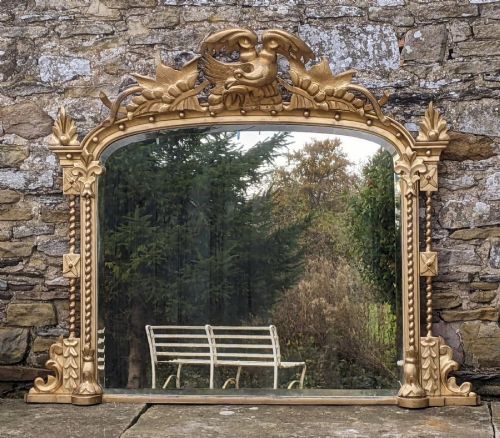
Origins range from English workshops to continental European makers, including Black Forest carvings and Italian mirrors. Each version reflects the prevailing taste of its era, from the bold styling of George II revivals to Edwardian interpretations.
How carved eagle wall mirrors were made
Giltwood frames rely on a base of gesso applied over carved timber, allowing artisans to achieve crisp details and a smooth surface before applying gold leaf. Walnut and mahogany provide sturdy structural foundations for fretted and parcel-gilt wall mirrors.
Convex mirror glass creates a wide-angle reflection of the interior, curved during manufacture to distort perspective in a deliberate aesthetic choice. Carved wooden eagles and birds of prey are fashioned separately and mounted securely to the top of the frame.
Carved Eagle Wall Mirror Retail Price Guide 2026
Typical asking prices for carved eagle wall mirror among the pieces listed under this phrase on Sellingantiques today, from the lower quarter to the upper quarter. They describe what is for sale here now, not the wider market.
Listings feature walnut, mahogany, gesso, and giltwood spanning the Georgian, Regency, and Edwardian periods.
What varies in quality in carved eagle wall mirrors
The definition and depth of the wood carving distinguish superior examples from simpler ones, particularly in the plumage of the eagle and the crispness of the giltwork. Hand-carved detailing reveals the skill of the maker through proportion and balance.
The integrity of the original mirror glass and the preservation of the giltwood or polished timber surface indicate how well a piece has survived. Original mercury glass and undisturbed gesso layers hold greater interest for collectors.
William Kent
The Carved Eagle Wall Mirror Glossary
- Convex mirror
- A circular mirror glass curved outward to reflect a wide, panoramic view of the room. This form was especially popular during the Regency period.
- Giltwood
- Timber coated with a thin layer of gold leaf over a prepared gesso ground. It provides a luminous finish that catches natural light.
- Girandole
- A wall mirror featuring attached candle sconces that project forward from the frame. The polished glass and gilt surface help amplify the candlelight.
- Parcel gilt
- Wood finished with partial gilding, where selected carved details are highlighted in gold against a contrasting walnut or mahogany background.
- Fretwork
- Openwork ornamentation cut from thin wood panels using a fretsaw. This technique creates intricate geometric or scroll patterns on Victorian and Edwardian frames.
Carved Eagle Wall Mirror: Frequently Asked Questions
Where should I hang a convex mirror?
These mirrors work best on a principal wall where they can capture light and reflect the entire room.
Because convex glass shrinks the field of view while offering a wide-angle perspective, hanging one opposite a window or fireplace maximises its visual impact.
How do I identify a Regency convex mirror?
Regency examples typically feature a circular frame rendered in giltwood, surmounted by a carved eagle or bird crest.
They often include a reeded ebonised inner slip and decorative spherical balls embedded in the outer frame moulding.
What is the difference between Georgian and Victorian styles here?
Georgian and George II revival pieces often showcase rich mahogany veneers, parcel-gilding, and intricate fretwork.
Victorian interpretations lean towards heavier carved giltwood frames and Black Forest bird of prey motifs.
Were these mirrors used for lighting?
Certain examples known as girandoles incorporate candle sconces mounted directly to the frame.
The reflective convex glass and gilt surface helped multiply the flickering candlelight across the interior space.