





Regency Girandole Mirror
A regency girandole mirror gathers light into a convex glass plate, casting the room outward across a gilded frame.
Regency Girandole Mirror
A regency girandole mirror is a round or oval wall glass designed to illuminate interiors through reflected candlepower. The form centres on a prominent convex glass plate that pulls the entire room into a single curved perspective.
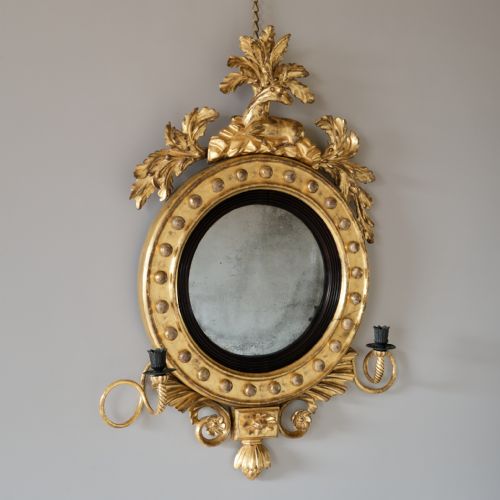
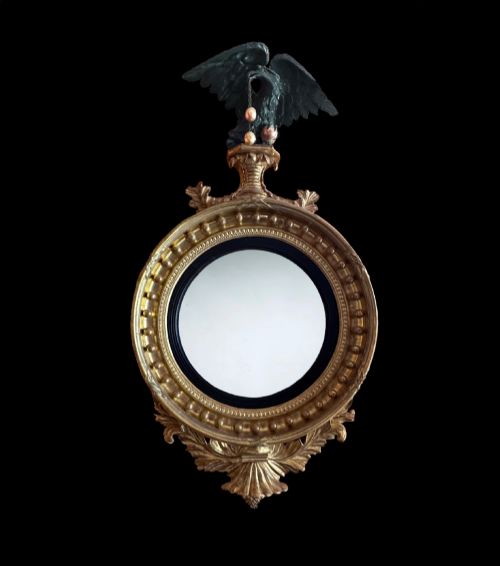
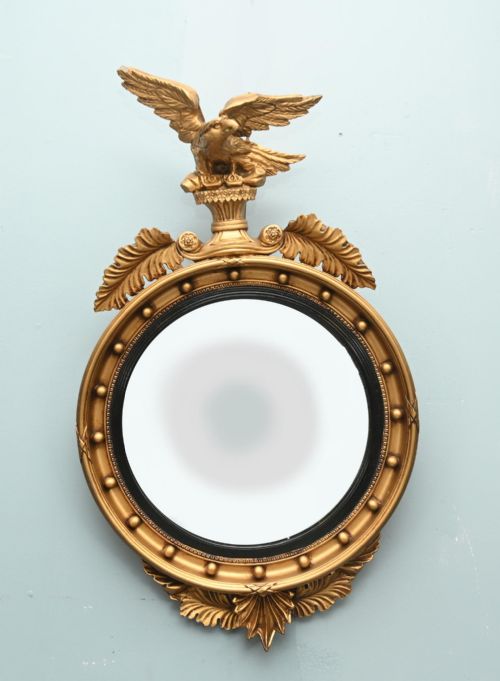
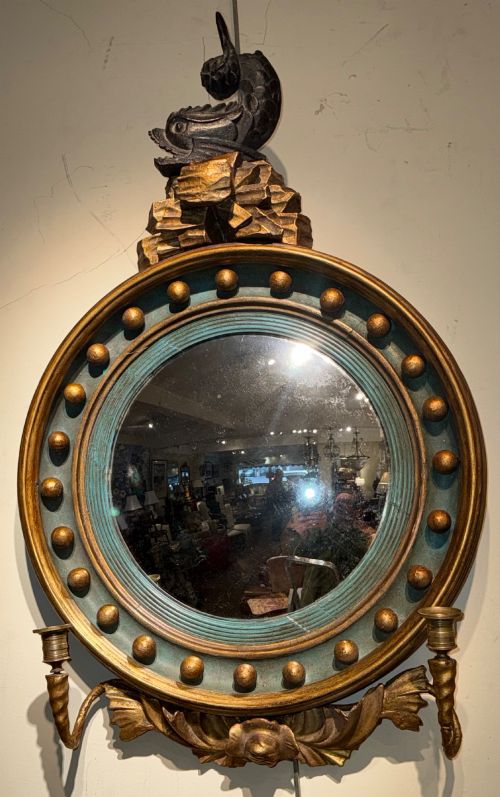
Most examples found here date from the Regency period or reflect later 19th-century and 1920s revivals. Makers of the original period often topped the round frames with carved eagles, dragons, or deer crests, accompanied by candle arms projecting from the base.
Buyers encounter single wall pieces as well as matched pairs in oval and round formats. The evidence shows styles spanning standard Regency, Grand Regency, French Chateau, and Victorian interpretations.
How they were made
Carvers shaped the wooden frames from timber before applying layers of gesso to build up high-relief decorative details. Artisans then water-gilded these surfaces with gold leaf to achieve a brilliant metallic sheen.
Makers set the curved mirror glass into deep rabbets behind beaded bezels or ebonised reeded inner rings. Girandole versions incorporated brass sconces or candle arms secured to the lower frame to multiply the ambient light.
Regency Girandole Mirror Retail Price Guide 2026
Typical asking prices for regency girandole mirror among the pieces listed under this phrase on Sellingantiques today, from the lower quarter to the upper quarter. They describe what is for sale here now, not the wider market.
Convex mirrors were historically nicknamed bank manager's eyes because their wide-angle view let shopkeepers watch customers from a desk.
What varies in quality
The crispness of the carved ornamentation determines the distinction between standard production and master craftsmanship. Deeply undercut carvings on eagle crests and scrolling foliage display superior skill compared to shallow moulded decoration.
The integrity of the original gilding and the depth of the convex glass plate shape the visual impact. Patinated water-gilt surfaces retain a warmer metallic tone than flat modern metallic paints applied during later restorations.
The Regency Girandole Mirror Glossary
- Girandole
- A wall mirror fitted with one or more candle branches attached to the frame. These arms allowed the reflected candlelight to illuminate dark corners.
- Convex glass
- A curved mirror plate that produces a wide-angle, distorted reflection of the surrounding interior. This spheroidal lens format was the defining optical feature of the type.
- Giltwood
- Timber coated with gold leaf over a prepared gesso ground. This finish provides the characteristic metallic brilliance seen across the frames.
- Ebonised wood
- Timber stained or painted black to simulate ebony. It frequently appears on the inner reeded ring of the frame to create visual contrast with the outer gilding.
- Gesso
- A plaster-like mixture applied to wood frames to create a smooth base for carving and gilding. Artisans modelled fine details directly into this compound before applying gold leaf.
Regency Girandole Mirror: Frequently Asked Questions
How do these mirrors work?
The curved glass plate gathers light from across the room and compresses it into a single panoramic sphere. This optical trick helped brighten spaces before electric lighting.
Candles placed in the sconces added further illumination, bouncing light off the gilt frame and into the interior.
Where should I hang one?
These pieces suit principal reception rooms, hallways, and dining spaces where their reflective qualities open up the wall visually. Placing them opposite a window maximises the distribution of daylight.
Ensure the wall fixings support the weight, as timber and gesso frames carry substantial mass.
How do I spot a Regency original?
Original pieces display period construction techniques, including hand-carved wooden elements beneath the gesso and older mirror plates with slight foxing. The weight and density of the timber frame also indicate age.
Revival pieces from later decades often utilise machine-turned details or modern composition materials.
What do the animal crests mean?
Eagles, dragons, and deer frequently top the frames as symbolic ornaments favoured by Regency designers. An eagle surmount often represented strength and imperial taste during the period.
These carvings also served to balance the visual weight of the round frame beneath them.