







Georgian Convex Wall Mirror
A Georgian convex wall mirror bends light across a room in a curved round glass plate that draws the eye.
Georgian Convex Wall Mirror
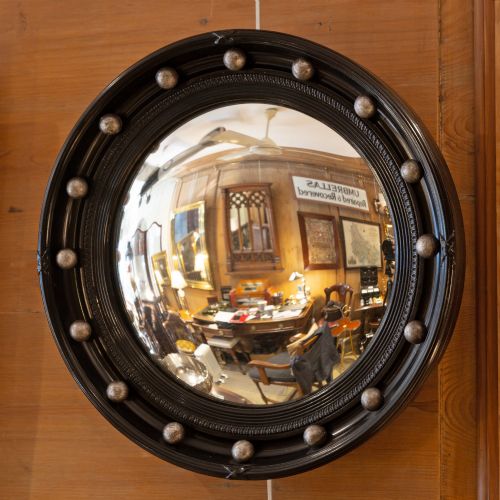
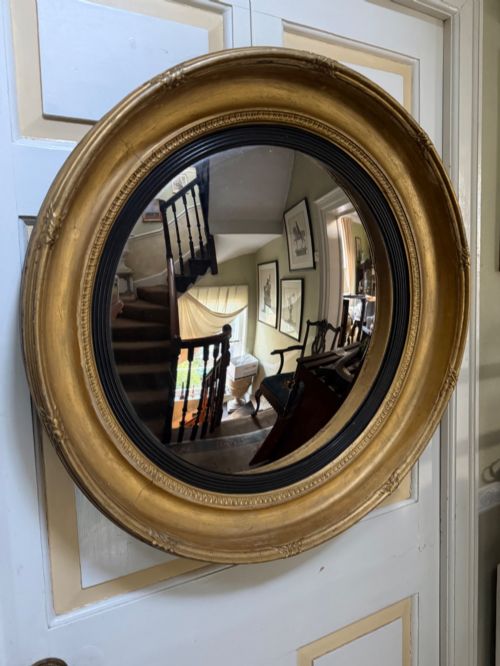
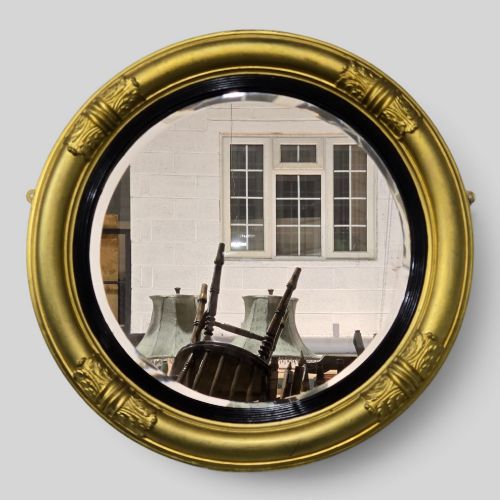
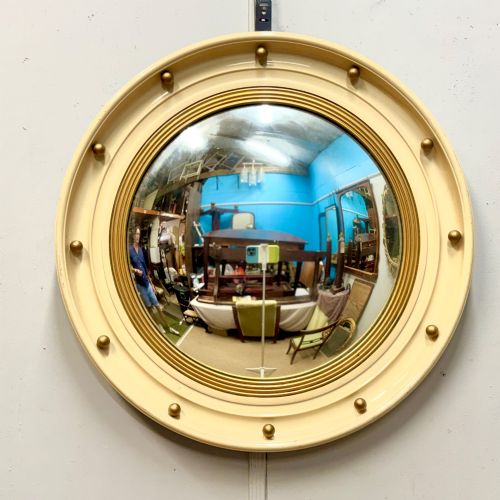
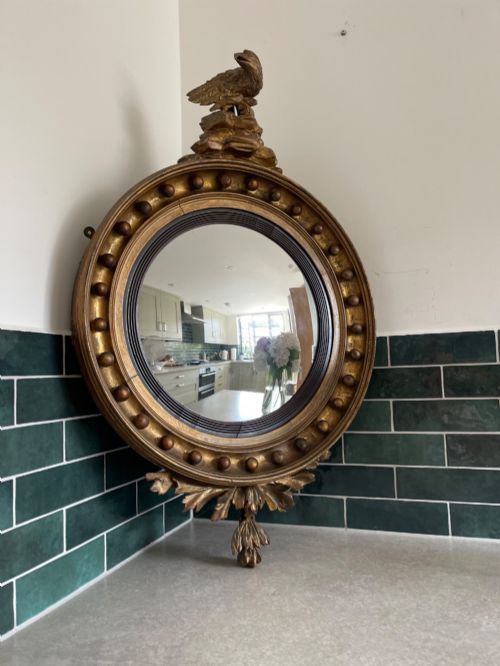
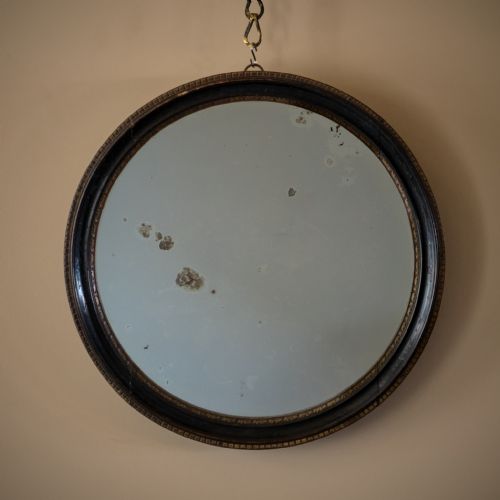
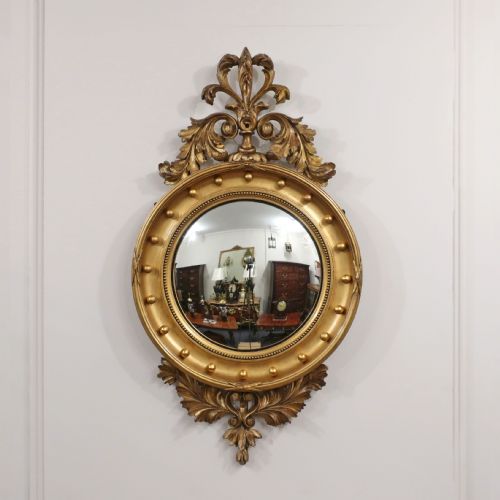
A georgian convex wall mirror is a circular round looking glass held in a deep frame, built to reflect an entire interior in miniature. Most examples you encounter belong to the Regency period and the wider nineteenth century, though earlier Georgian roots appear alongside later Victorian and twentieth-century revivals.
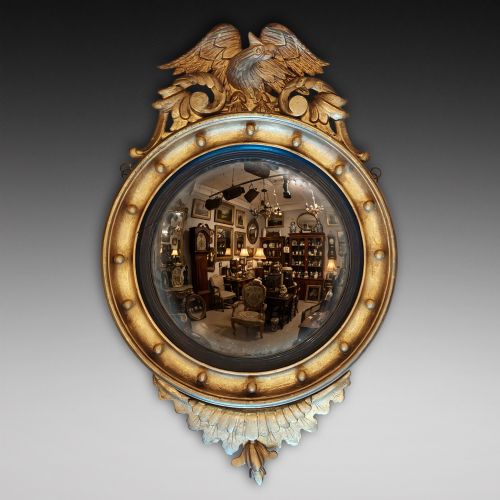
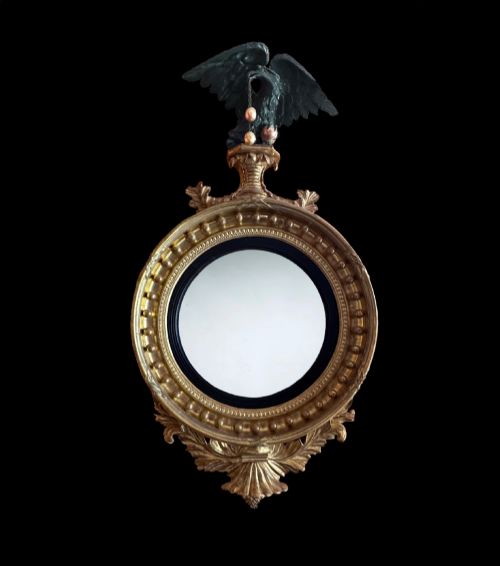
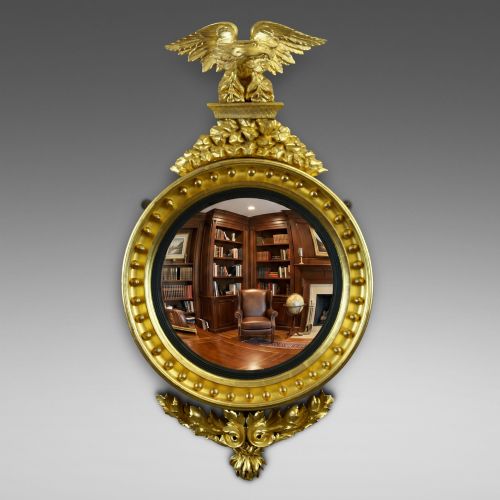
These pieces function primarily as wall mirrors and round butlers mirrors, ranging from small hall pieces to grand scale items spanning several feet in diameter. Many incorporate distinctive decorative crests, notably spread eagles perched atop the timber frame.
Materials and Construction
Makers built the circular frames of these mirrors using wood, gesso, and giltwood, applying layers of gold leaf or paint over carved timber bases. Ebonised wood slips often frame the curved glass directly, creating a dark inner ring that contrasts with the bright exterior gilding.
Brass elements sometimes appear in candle arms on girandole variants, whilst painted wood and japanned finishes provide alternatives to traditional gold leaf. The defining convex glass plate sits securely within the circular rebate, supported by the heavy wooden structure.
Georgian Convex Wall Mirror Retail Price Guide 2026
Typical asking prices for georgian convex wall mirror among the pieces listed under this phrase on Sellingantiques today, from the lower quarter to the upper quarter. They describe what is for sale here now, not the wider market.
Listings feature periods spanning from Georgian and Regency eras through the nineteenth century into 1900, 1920, and 1930.
Distinctions in Quality
The sophistication of the carved crest and the crispness of the giltwood ornamentation separate the finest examples from simpler alternatives. A well-executed spread eagle or detailed foliate carving demonstrates superior craftsmanship compared to plain or heavily restored frames.
The integrity of the original convex glass and the depth of the circular moulding dictate the visual impact of the piece. Superior items retain their original gilding and ebonised slips without excessive modern re-working.
The Georgian Convex Wall Mirror Glossary
- Convex glass
- A curved round mirror plate that bulges outward to provide a wide-angle reflection of the room. This optical property distinguishes these mirrors from standard flat looking glasses.
- Giltwood
- Timber coated with a thin layer of gold leaf over a prepared gesso base. This material gives the frames their characteristic bright metallic sheen.
- Ebonised slip
- A dark, black-painted inner moulding surrounding the glass. It creates a visual border between the reflective surface and the outer gilt frame.
- Girandole
- A wall mirror fitted with attached candle sconces or arms. These brass or wooden holders allowed candlelight to multiply across the room.
- Japanned
- A style of European decorative finish that imitates East Asian lacquerwork. It appears on selected frames as a dark painted and polished surface.
Georgian Convex Wall Mirror: Frequently Asked Questions
Where should I hang a convex mirror?
These mirrors work best opposite a window or in a hallway where their curved glass can capture and project light across the space. Because they shrink the reflection to fit a wide view, position them at eye level where people tend to pause.
Avoid placing them in cramped corridors where their circular bulk might dominate the wall. A central location in a reception room allows the frame and crest to act as a focal point.
How do I date a convex mirror?
Examine the construction of the wooden frame, the composition of the gesso, and the style of any crest, such as an eagle or girandole arms. Regency and early nineteenth-century pieces often feature specific carving styles and ebonised slips that differ from later Victorian or twentieth-century revivals.
Look closely at the mirror plate itself, noting whether the glass shows signs of age or distortion consistent with older manufacturing methods. Comparing the materials against documented periods helps narrow down the decade of production.
What is a butlers mirror?
A butlers mirror is a round convex wall mirror traditionally used to monitor activity across a large dining room or entertaining space. The curved glass provided a sweeping view of the room from a single vantage point.
Over time, these pieces transitioned from functional service areas into decorative wall furnishings found in main reception rooms. Their distinctive round shape remains closely tied to nineteenth-century domestic interiors.
How do I clean the glass and frame?
Dust the giltwood frame gently with a soft, dry brush to protect the delicate gold leaf or painted surface from damage. Avoid using commercial liquid cleaners on the gilded areas, as moisture can lift the gesso.
Clean the convex glass plate sparingly with a mild glass cleaner applied to a cloth rather than sprayed directly onto the surface. This prevents moisture from seeping behind the glass edge into the wooden rebate.