






Antique Porthole Mirror
You want an antique porthole mirror for its deep, curved glass that pulls light and space into a room.
What an antique porthole mirror is
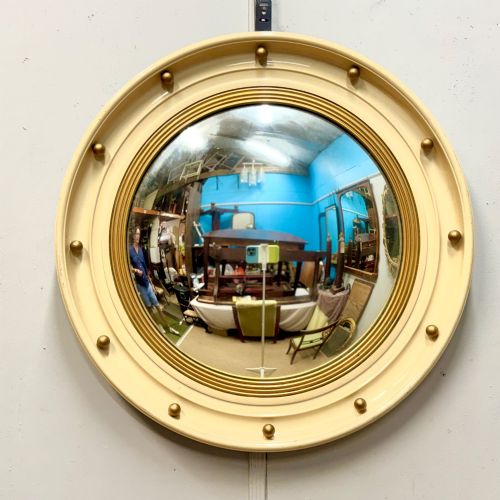
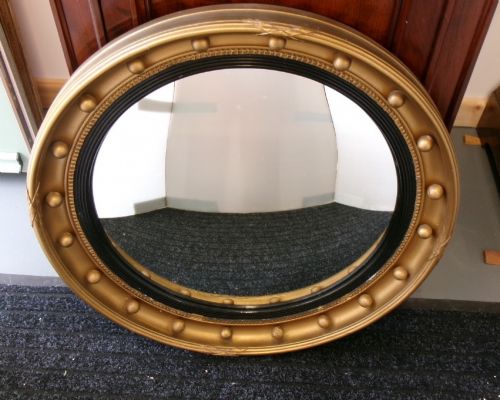
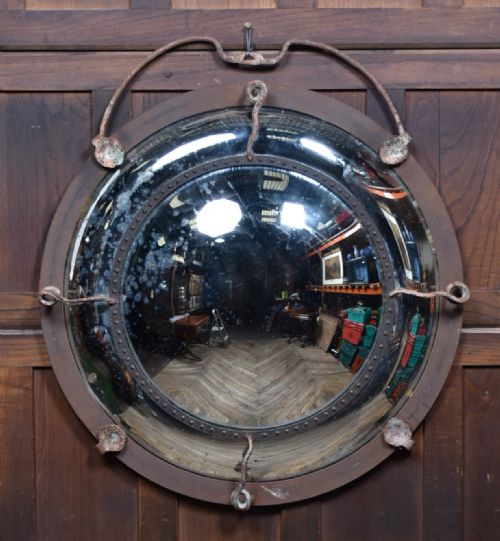
An antique porthole mirror takes the form of a round, convex wall glass, often called a convex mirror or hall mirror in nineteenth-century contexts.
The evidence shows wall mirrors predominantly from the Regency period and the wider nineteenth century, capturing a distinct architectural presence.
These pieces function primarily as wall mirrors designed for halls and lounges, reflecting distorted, panoramic views of their surroundings.
How they were made
Makers constructed these frames using wood, gesso, and giltwood, applying layers of plaster to shape the circular mouldings before gilding or painting.
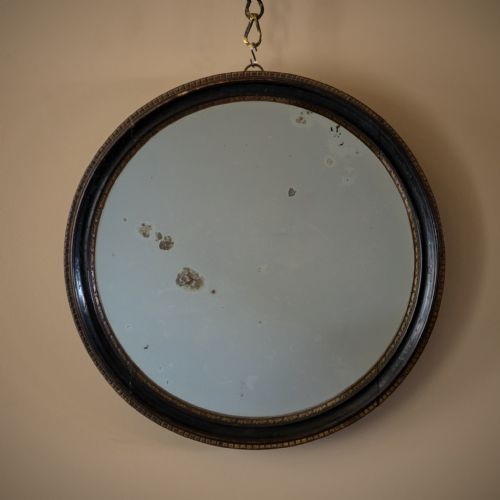
Some examples utilise ebonised wood alongside gilt details to create high-contrast frames surrounding the heavy glass.
Retail Price Guide 2026
Typical UK retail prices for porthole mirror, calculated from the Sellingantiques database of over a million retail prices indexed since 2003. This retail price guide relies exclusively on Sellingantiques data; no external sources or auction records are used, so the figures do not describe the wider market.
What varies in quality
The depth and clarity of the original convex glass separate standard examples from finer pieces, alongside the crispness of the gesso and wood carving.
Surviving gilding shows differing levels of wear and brilliance, where intact giltwood surfaces reflect greater craftsmanship than heavily restored ones.
The Antique Porthole Mirror Glossary
- Convex mirror
- A curved glass that bends outwards to reflect a wide, circular field of view. This form defines the typical porthole shape.
- Giltwood
- Wood carved and coated with a thin layer of gold leaf or gilt. It provides a bright, reflective frame surface.
- Gesso
- A plaster mixture applied to wood frames to create smooth surfaces for moulding or gilding. It allows for intricate raised detail.
- Regency
- A British design period spanning the early nineteenth century known for classical revival forms. Pieces from this era often feature bold circular frames.
Frequently Asked Questions
Where should I hang a convex mirror?
These wall mirrors suit hallways, entryways, and lounges where their wide-angle reflection can capture the most light and activity.
Position them at eye level to make the best use of the optical effect within the room.
How do I date an ebonized mirror?
Dating relies on examining the construction materials, the wood types, and the style of the gesso or gilding.
Nineteenth-century examples often combine ebonised wood with gilt accents in specific Regency or Victorian proportions.
What is a girandole mirror?
A girandole is a wall mirror that incorporates candle sconces attached to the frame to multiply the candlelight in a room.
While not all convex mirrors have branches, the Regency style frequently combined them.
How do I clean an antique glass?
Clean the glass gently with a soft cloth and a minimal amount of mild glass cleaner.
Avoid spraying liquid directly onto the edges where it might seep behind the silvering and cause damage.