
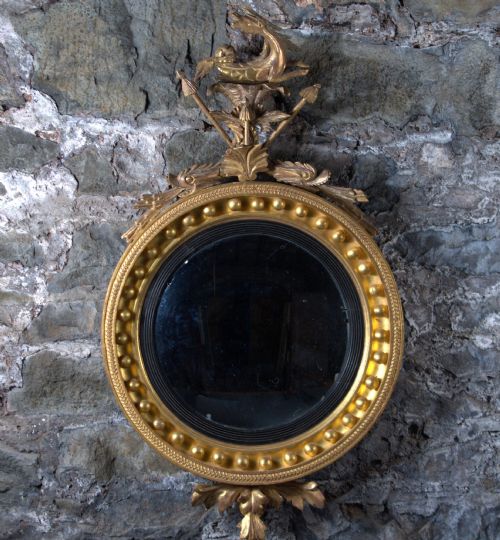


Gold Leaf Convex Mirror
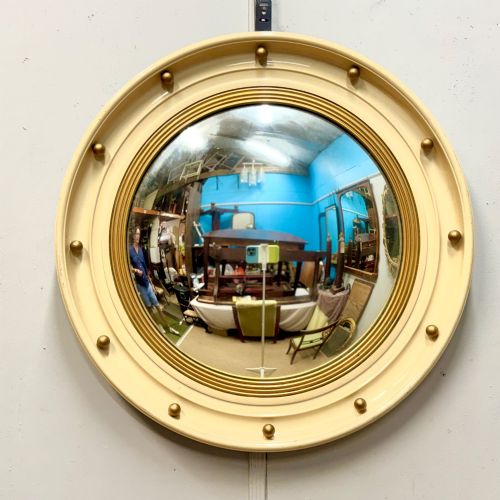
A gold leaf convex mirror draws the eye across the room with its deep curved glass and gleaming gilded frame.
Gold Leaf Convex Mirror
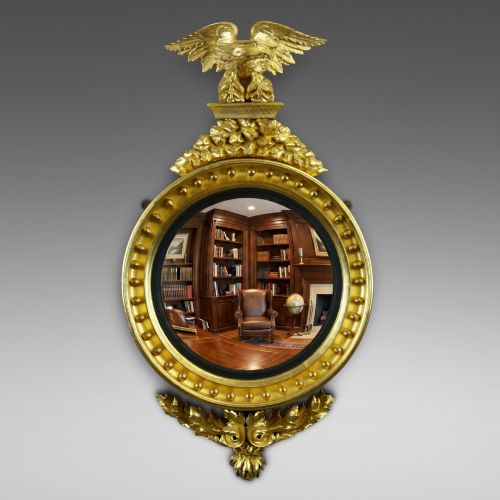
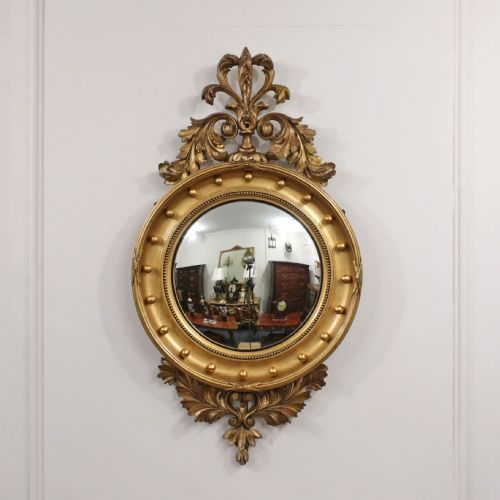
A gold leaf convex mirror turns any interior into a stage by capturing a wide, distorted reflection of the room within a circular frame. When you search for a gold leaf convex mirror, you encounter pieces dominated by the Regency period alongside later Victorian and twentieth century revivals. These circular wall hangings range from intimate boudoir sizes to grand scale statements spanning four feet in diameter.
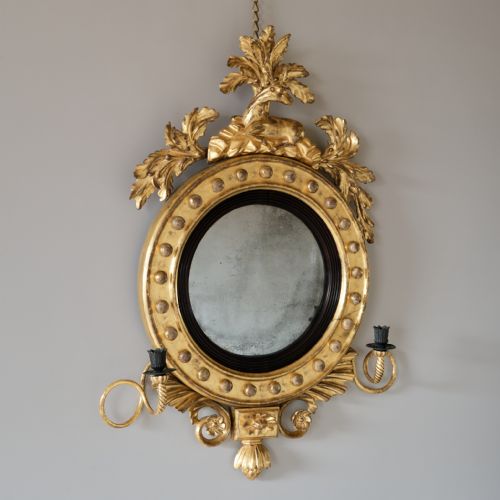
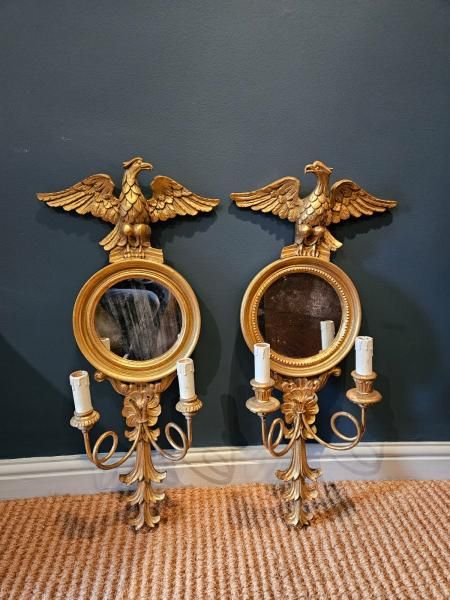
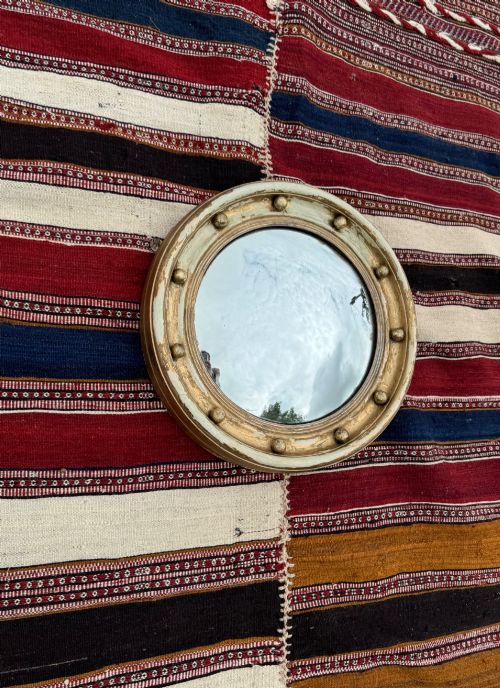
The Regency examples form the backbone of what you see here, often featuring carved giltwood frames embellished with detailed motifs. Alongside these authentic period pieces, you find nineteenth century porthole designs and French sunburst interpretations that bring similar optical drama to a wall. Wall sconces and girandole mirrors with candle arms also appear, extending the reflective theme into functional lighting.
Materials and construction methods
Makers built the heavy frames of these mirrors using timber bases built up with gesso to receive intricate carved detail. Craftsmen then applied fine gold leaf across the prepared surfaces to create a luminous metallic sheen that caught the available candlelight or daylight.
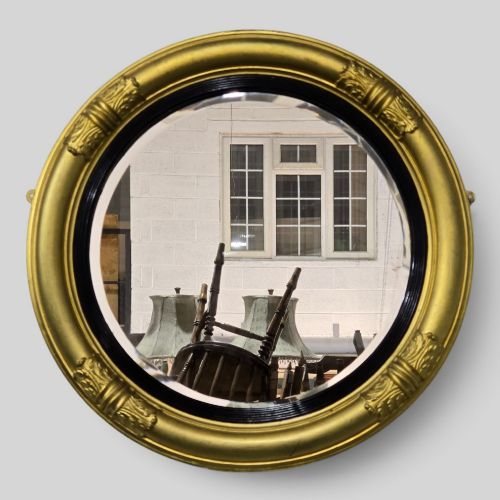
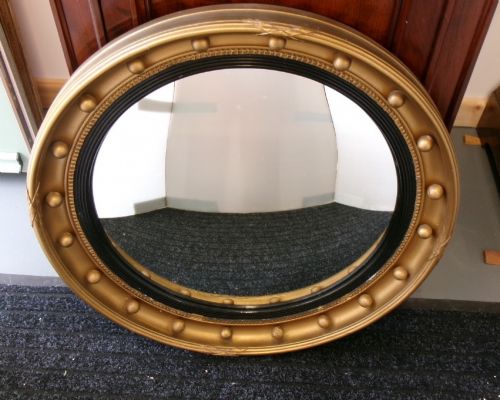
The defining feature is the blown curved glass plate, held securely within the rebated frame behind a reeded ebonised slip. Brass components occasionally appear in the hardware and candle branches of girandole and wall sconce variants.
Gold Leaf Convex Mirror Retail Price Guide 2026
Typical asking prices for gold leaf convex mirror among the pieces listed under this phrase on Sellingantiques today, from the lower quarter to the upper quarter. They describe what is for sale here now, not the wider market.
Dragon motifs occasionally clutch the frame in their jaws, glaring fiercely outward to ward off evil spirits from the parlour.
Factors that determine quality
The crispness of the carved woodwork and the depth of the gilding set the finest examples apart from standard production. Superior frames display sharp relief in their decorative elements, whereas lesser pieces show softer, worn contours in the gesso layer.
The character of the glass plate itself dictates visual success, with period distortion and silvering wear adding authenticity. Frames that combine giltwood with ebonised details demonstrate a higher level of decorative ambition.
The Gold Leaf Convex Mirror Glossary
- Convex glass
- Curved outward glass that produces a wide-angle, fish-eye reflection of the surrounding interior space. This spherical form allows a compact glass surface to capture the entirety of an opposite wall.
- Giltwood
- Timber carved and coated with a thin layer of gold leaf over a prepared gesso ground. It provides a rich, metallic finish that resists tarnishing better than base metal paints.
- Gesso
- A plaster mixture applied to wood frames to create a smooth, workable surface for carving and gilding. It holds fine detail far better than carving directly into knotty timber.
- Girandole
- A decorative wall mirror fitted with one or more candle branches projecting from the frame. The arms multiply the flickering light across the convex glass surface.
- Ebonised wood
- Timber stained or painted black to imitate expensive ebony. It creates a sharp visual contrast against bright gold leaf in Regency and nineteenth century frames.
Gold Leaf Convex Mirror: Frequently Asked Questions
How do I hang a heavy convex mirror?
These circular frames carry considerable weight due to the timber and gesso construction. Secure the fixing directly into a solid wall stud using robust hardware rated for the load.
Avoid relying solely on plasterboard anchors, as the projection of the convex form places extra pulling leverage on the wall fastening.
Why is the reflection curved?
The spherical glass plate bends light outward to encompass a panoramic view of the entire room. Eighteenth and nineteenth century homeowners used these mirrors to monitor staff and survey dining tables from a single vantage point.
This optical property also fills dark corners by gathering ambient light from multiple windows across the space.
Are these mirrors original Regency?
The selection includes genuine Regency period pieces alongside Victorian and later twentieth century revivals. Check the construction of the backboards, timber shrinkage, and the composition of the gesso to determine age.
Revival pieces from later eras often replicate the classical proportions while utilising machine-cut elements and modern backing screws.