


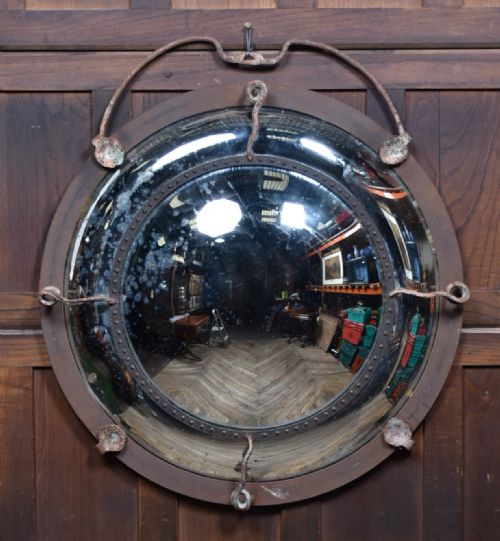
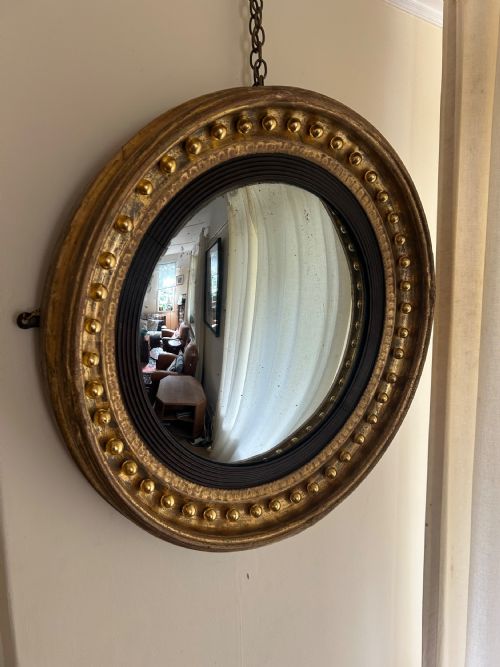


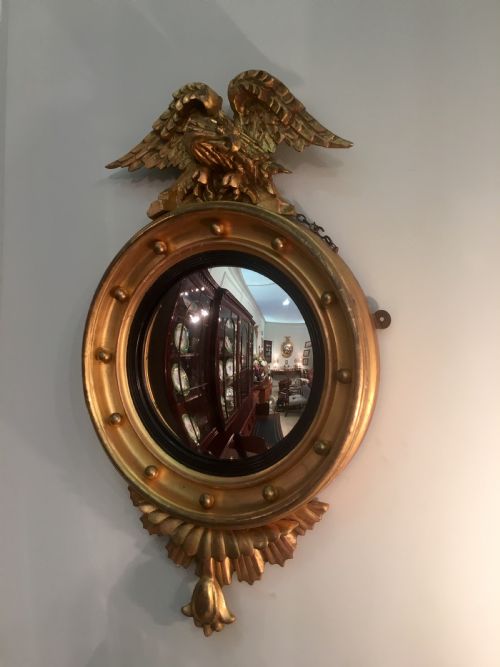
Vintage Fisheye Mirror
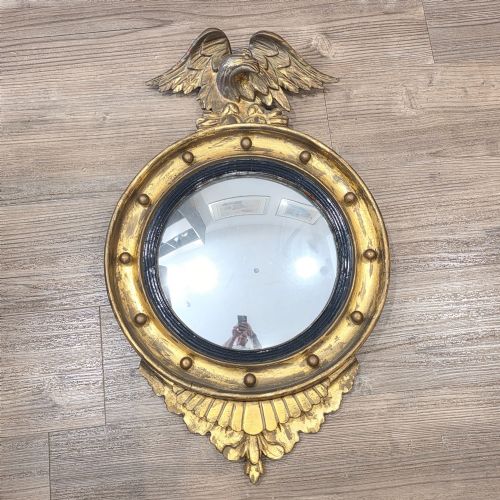
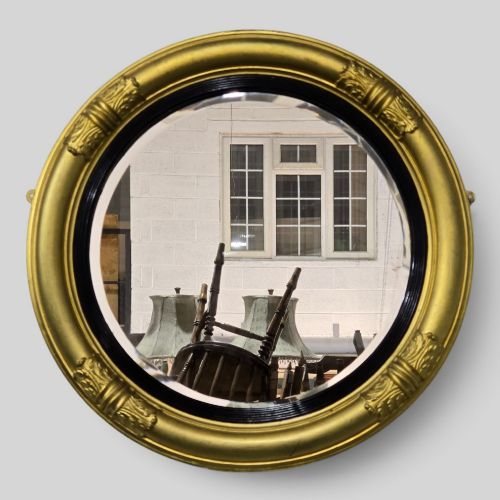
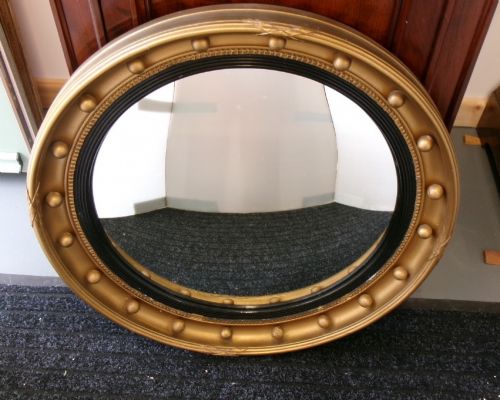
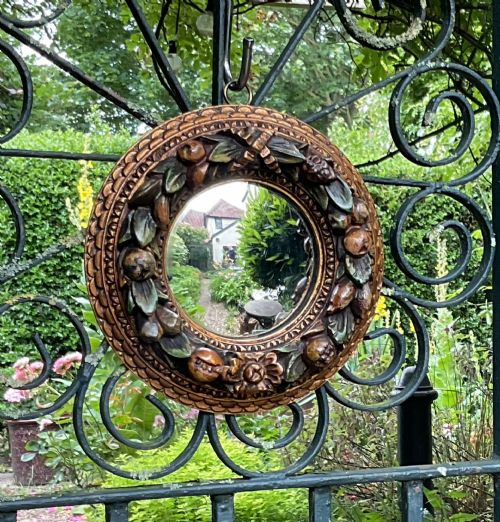
These vintage fisheye mirror examples offer distorted, wide-angle reflections that expand a room, bringing historical drama to any wall.
Vintage Fisheye Mirror
A vintage fisheye mirror is fundamentally a convex mirror that gathers light from across a room into a compact, rounded reflection. When you search for a vintage fisheye mirror, you encounter wall mirrors shaped in circular forms designed to draw the eye and alter spatial perception.
The pieces listed on this page span the Regency and Victorian periods, alongside items dated to 1880, 1890, and 1920. Styles range from formal Regency and Grand Regency to Victorian, Arts and Crafts, and Industrial, reflecting both grand drawing rooms and smaller domestic spaces.
Most examples function primarily as decorative wall mirrors, often incorporating carved wooden frames or gilded surfaces. The convex glass creates the signature wide-angle view that collectors and interior decorators seek for architectural impact.
How They Were Made
The construction of these mirrors relies on traditional joinery and surface preparation using giltwood, gesso, composition, and carved wood. Craftsmen shaped mahogany and other woods into circular frames, often applying layers of gesso to build up intricate decorative details before gilding.
The reflective surface itself consists of specialised curved glass that creates the distinct convex distortion. Artisans secured these heavy glass plates within robust wooden or composition housings to withstand wall mounting over centuries.
Materials recorded across the current inventory include glass, giltwood, ebonised wood, gesso, composition, carved wood, gilt, and mahogany.
What Varies in Quality
Quality in these mirrors rests on the crispness of the carved wood and the depth of the gilding rather than superficial surface shine. Pieces finished in genuine giltwood demonstrate superior craftsmanship compared to those relying solely on later composition mouldings.
The proportion between the convex glass plate and the surrounding frame dictates the visual balance of the piece. Superior examples feature well-preserved frames, such as those surmounted by carved eagles, where the ornamentation complements the distortion of the glass without overwhelming the composition.
The Vintage Fisheye Mirror Glossary
- Convex mirror
- A round mirror with an outward-curving surface that produces a wide-angle, circular reflection of the entire room. This optical property earned historical pieces superstitious associations.
- Giltwood
- Timber coated with a thin layer of gold leaf over a prepared base. It provides a warm, reflective metallic finish that ages with a distinctive patina.
- Gesso
- A plaster-like mixture applied to wood frames as a base for gilding or painting. It allows craftsmen to carve intricate relief decoration with sharp edges.
- Composition
- A moulded material made from whiting, resin, and glue used to form decorative ornaments on frames. It offers a cost-effective alternative to hand-carved wood.
- Ebonised wood
- Timber treated with a chemical stain or dye to imitate expensive ebony. This dark finish provides a stark contrast against gilded details.
Vintage Fisheye Mirror: Frequently Asked Questions
How do I hang a heavy convex mirror?
These mirrors require secure wall fixings screwed directly into structural studs or masonry rather than standard plasterboard anchors. Given the substantial weight of the glass and wooden frames, professional installation ensures safety.
Position the mirror at eye level where the wide-angle reflection can capture natural light from windows or open up narrow hallways.
Why are they called sorcerers mirrors?
Historically, the wide-angle view of a convex glass allowed merchants to monitor entire shops from a single vantage point. This practical utility earned them alternative names including banker's mirrors and sorcerer mirrors.
Over time, folklore attributed protective and magical qualities to their ability to reflect an entire room in miniature.
How do I clean convex mirror glass?
Use a soft, dry microfibre cloth to gently remove dust from the curved surface without applying excessive pressure. Avoid spraying liquid cleaner directly onto the glass, as moisture can seep behind the plate and damage the silvering.
Apply any necessary cleaning solution sparingly to the cloth rather than the mirror itself to protect antique frames.
What rooms suit a vintage fisheye mirror?
Compact spaces such as hallways, stairwells, and small dining rooms benefit significantly from the expansive visual depth created by the curved glass. They also serve as striking focal points above mantelpieces in larger reception rooms.
Pair them with simple surrounding decor to let the unique distortion and ornate frames stand out.