



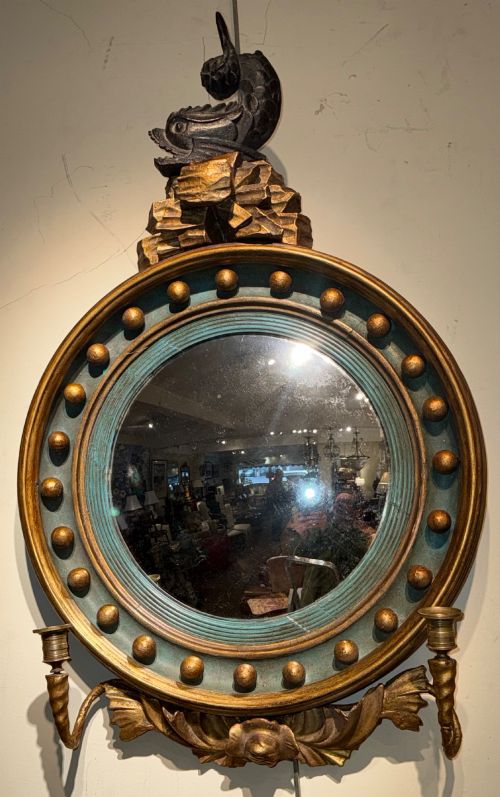


Antique Fisheye Mirror
An antique fisheye mirror bends the room into a single curved sphere, catching light from every corner to anchor a wall with singular presence.
Antique Fisheye Mirror
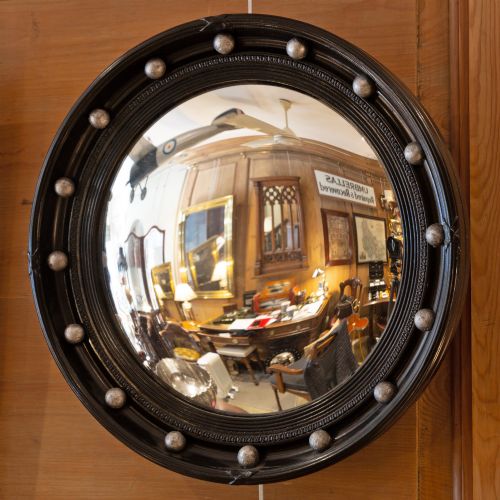
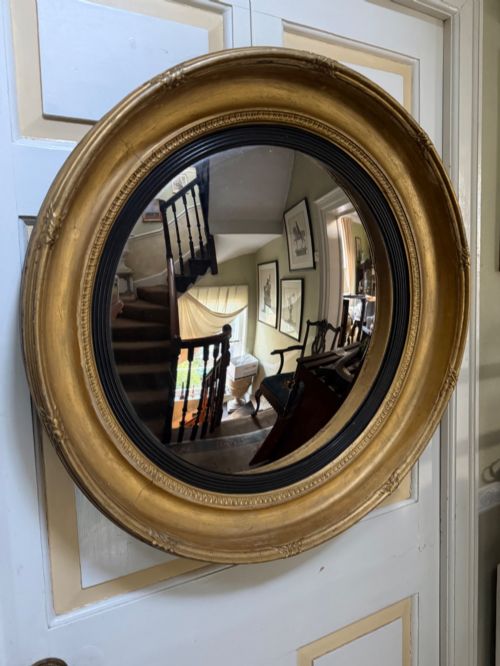
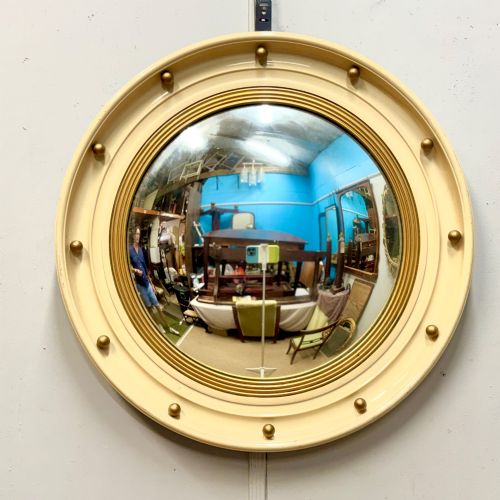
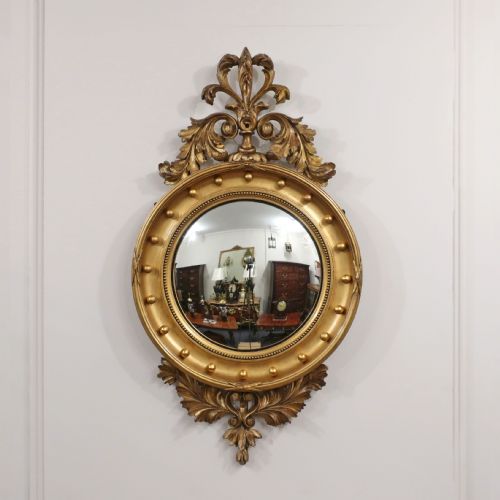
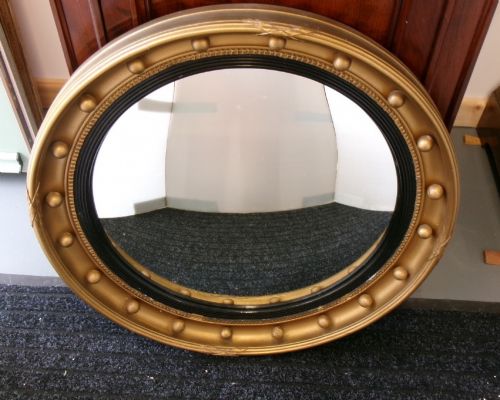
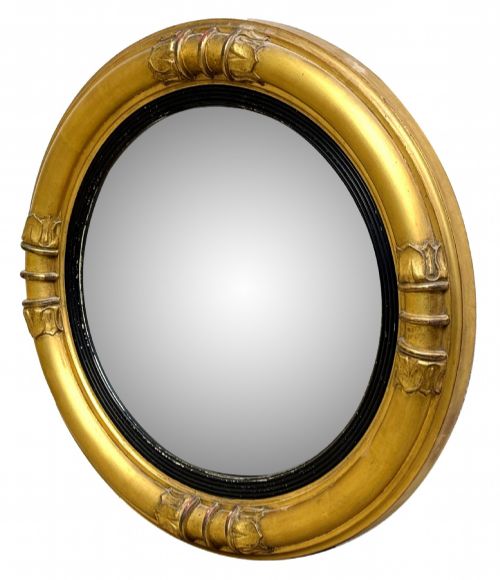
An antique fisheye mirror, frequently designated in the period as a convex wall mirror, presents a rounded glass plate that projects a panoramic reflection of the interior. When you search for this phrase, you look at circular wall hanging pieces designed to gather and distribute daylight across a parlour.
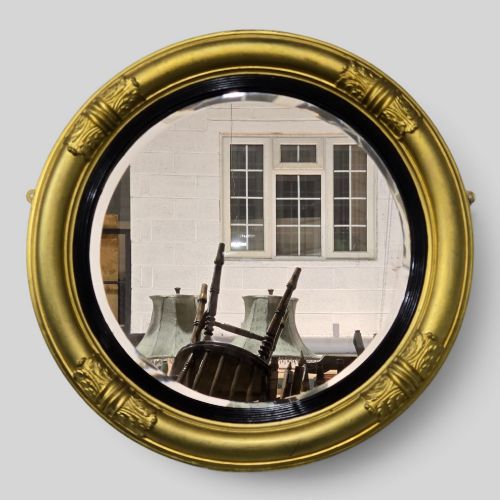
The versions you meet most often on this page date from the Regency period and the nineteenth century, framed in giltwood and often surmounted by a carved eagle or framed with ebonised details. These circular looking glasses range from small intimate pieces to large architectural statements.
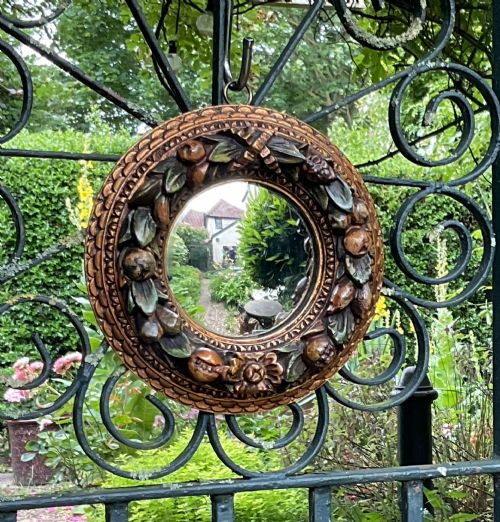
Makers of the nineteenth century also produced later revivals and Arts and Crafts interpretations, alongside occasional industrial brass and mahogany examples. Each variation retains the characteristic curved plate that distinguishes these convex looking glasses from flat wall mirrors.
How they were made
Makers formed the frames of these convex mirrors using carved wood, composition, and gesso applied over a wooden base, which provided a stable foundation for intricate ornamentation. Artisans then applied gold leaf to the prepared surface to achieve the characteristic giltwood finish seen across the majority of these pieces.
The glass plates were blown or cast to create the spherical curve necessary for the optical effect, set within a rebated frame often backed with timber. Brass components and ebonised wood details appear on specific variants, demonstrating a combination of metalwork and cabinet-making techniques.
Antique Fisheye Mirror Retail Price Guide 2026
Typical asking prices for fisheye mirror among the pieces listed under this phrase on Sellingantiques today, from the lower quarter to the upper quarter. They describe what is for sale here now, not the wider market.
Historical housekeepers valued these spherical glasses because they caught the entire room in one orb, keeping an eye on the staff.
What varies in quality
The depth of relief in the carved woodwork and the fidelity of the gilding set the standard for these looking glasses, separating straightforward joinery from exceptional craftsmanship. Sculptural elements such as eagles and dragons demonstrate the hand of a skilled carver rather than mass production.
The condition and clarity of the curved glass plate influence the visual impact of the piece, alongside the integrity of the underlying gesso and frame construction. Pieces displaying refined proportions and crisp architectural detail represent the upper tier of the range.
The Antique Fisheye Mirror Glossary
- Convex mirror
- A circular looking glass with an outward-curving plate that reflects a wide-angle view of the room. It is also known historically as a butler's mirror or sorcerer's mirror.
- Giltwood
- Timber coated with gold leaf over a prepared ground, providing a bright reflective surface for nineteenth-century frames. This finish catches natural light from surrounding windows.
- Gesso
- A plaster-like mixture applied to wooden frames as a smooth base for gilding or painting. It allows carvers to achieve sharp details before applying gold leaf.
- Ebonised wood
- Timber treated to imitate ebony, creating a dark contrast against gilt details. This technique appears on specific nineteenth-century frames.
- Composition
- A moulded mixture of whiting, resin, and glue used to create decorative frame ornaments. It provided a cost-effective alternative to hand carving during the nineteenth century.
Antique Fisheye Mirror: Frequently Asked Questions
Where should I hang a convex mirror?
These circular looking glasses suit principal reception rooms, hallways, and dining spaces where they capture light from multiple angles and reflect the entire room.
Because the curved glass diminishes the reflection, hang the piece at eye level where the panoramic view can be appreciated from seating areas or doorways.
How do I identify a Regency period mirror?
Regency examples typically feature circular giltwood frames, often incorporating reeded ebony slips, ball-bearing bezels, and carved crests such as eagles.
Examine the construction of the timber backing and the application of the gesso to confirm the nineteenth-century manufacture before acquiring a piece.
What is a butler's mirror?
A butler's mirror is a regional term for a convex wall glass, historically used in large houses to allow staff to monitor the room from a distance.
The curved plate gathers light and movement into a single compact field of vision, serving both a decorative and a practical function in period interiors.
How should I clean the curved glass?
Dust the frame and glass gently with a dry, soft cloth to prevent abrasive particles from damaging the gilt surface or the antique glass plate.
Avoid spraying liquids directly onto the mirror, as moisture can seep behind the curved plate and degrade the silvering over time.