


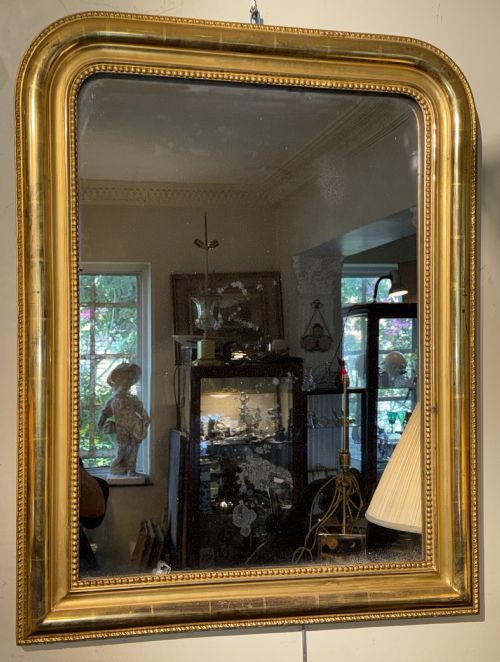

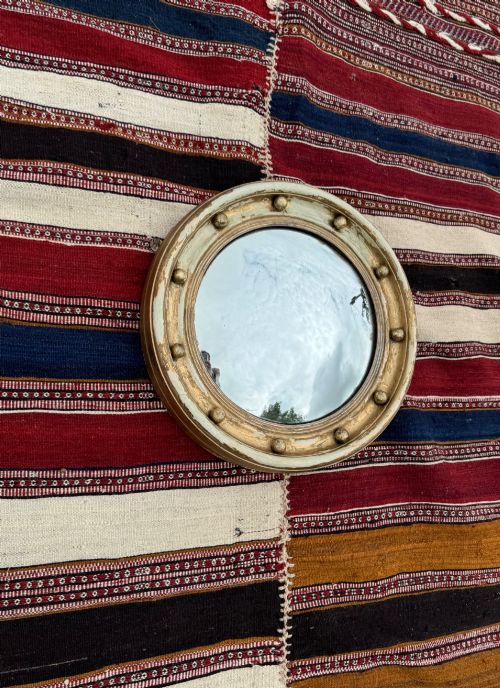


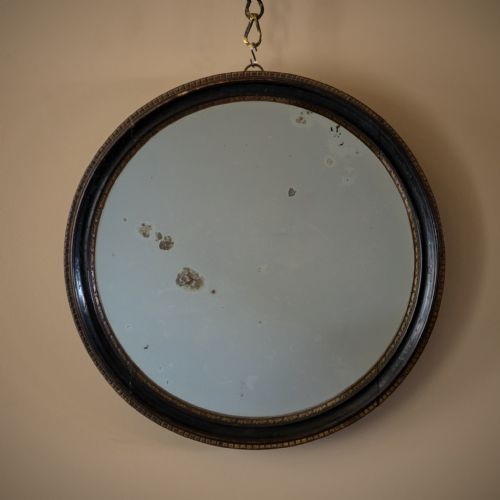
Round Giltwood Mirror
A round giltwood mirror catches the light and draws the eye across the room, offering a curved perspective that has defined interiors for centuries.
What round giltwood mirror pieces are
A round giltwood mirror brings a distinctive circular focal point to a wall, capturing light and reflecting the room in a curved glass panel. These pieces span the nineteenth century and the Regency period, along with examples from nineteen thirty.
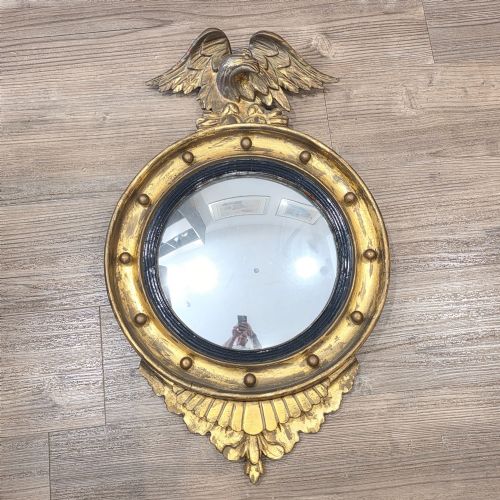
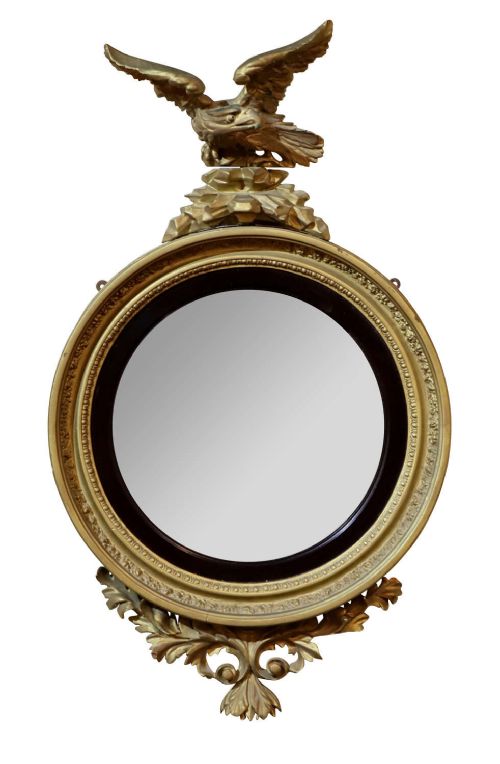
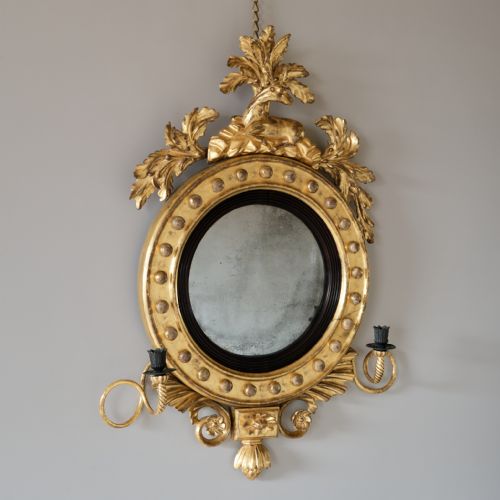
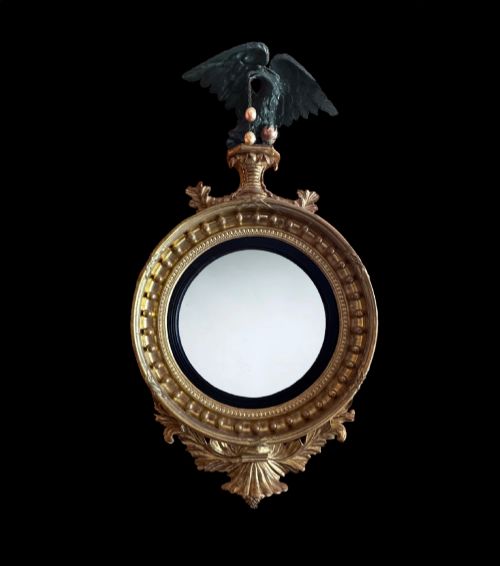
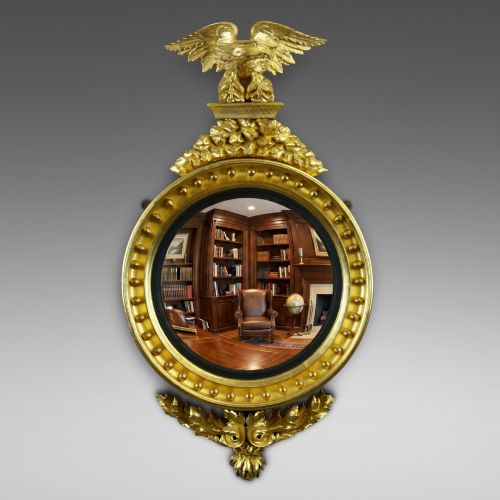
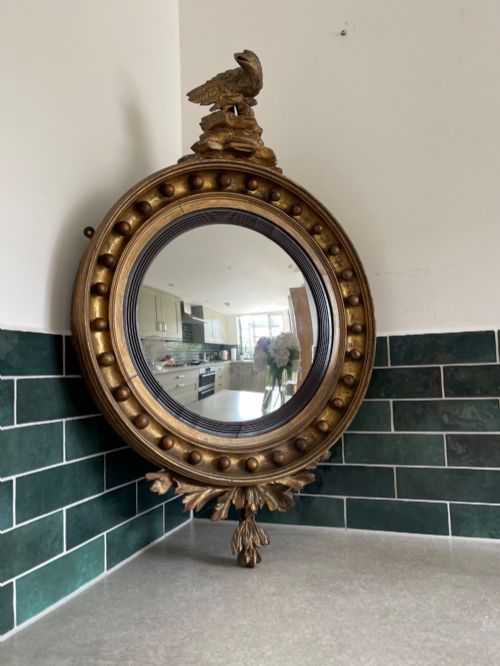
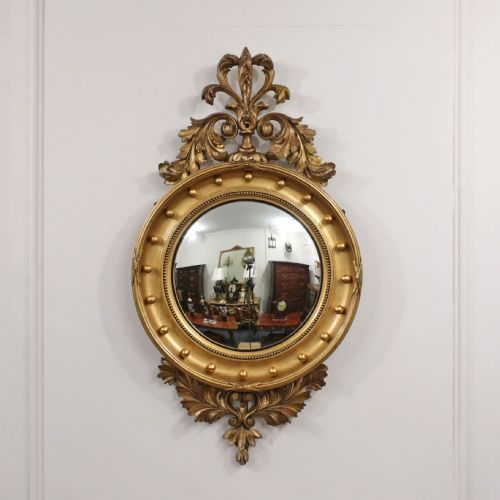
The most frequent form encountered here is the convex mirror, often featuring decorative crests such as an eagle surmount or detailed carved frames. Buyers searching for a round giltwood mirror will find both grand proportions and smaller formats suited to various interior scales.
Origins represented in this selection trace back through nineteenth-century craftsmanship and Regency styling. Each wall mirror demonstrates the enduring appeal of gilded circular frames within historic and traditional decorative schemes.
How they were made
Construction relies upon a timber base shaped into a circular frame, then built up with layers of gesso and plaster to receive intricate carved details. Artisans applied thin sheets of gold leaf to the prepared surfaces to achieve the characteristic giltwood finish.
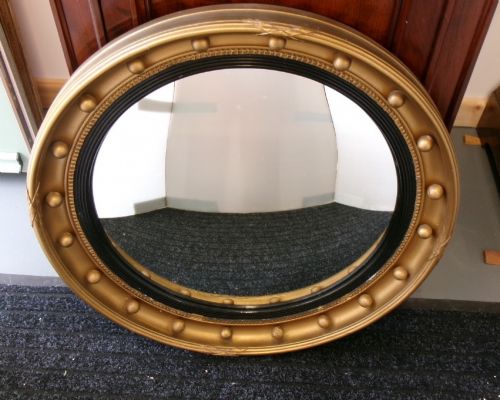
The reflective components consist of curved glass panels set securely within the timber and plaster housings. Ebonised wood elements occasionally appear alongside the giltwood to create visual contrast on the frames.
Retail Price Guide 2026
Typical UK retail prices for round giltwood mirror, calculated from the Sellingantiques database of over a million retail prices indexed since 2003. This retail price guide relies exclusively on Sellingantiques data; no external sources or auction records are used, so the figures do not describe the wider market.
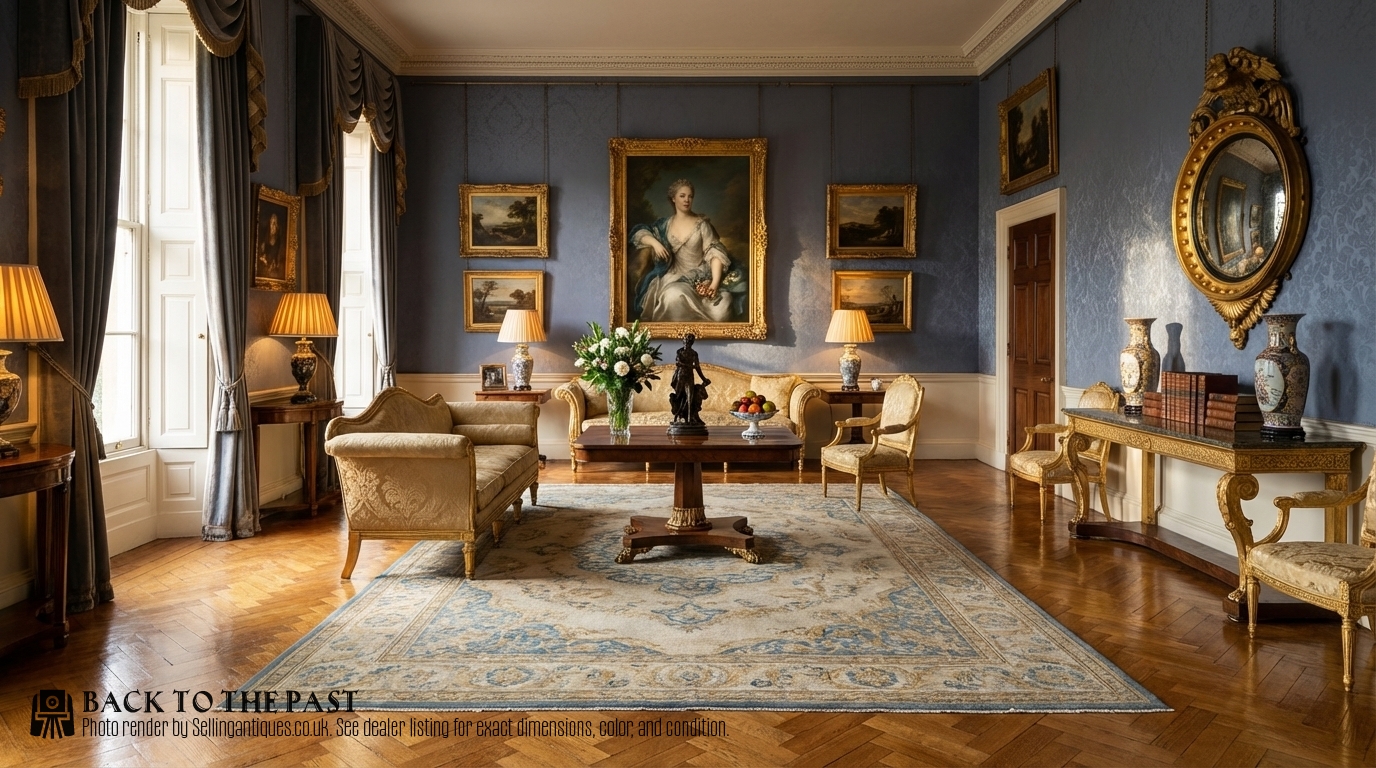
Some convex mirrors come topped with a proud eagle perched to watch over the room.
What varies in quality
The refinement of the carved ornamentation defines the upper tier of these mirrors, particularly where figures like an eagle surmount show depth and anatomical precision. Lesser examples feature simpler mouldings and less articulate surface carving.
The application and preservation of the gold leaf layer create distinct visual differences across pieces, with superior surfaces retaining a warm, layered lustre. The clarity and depth of the convex glass plate also distinguish the finer examples from standard production.
The Round Giltwood Mirror Glossary
- Giltwood
- Timber carved and surfaced with a thin layer of gold leaf. This material provides the brilliant metallic finish characteristic of these frames.
- Convex mirror
- A round glass plate curved outward to produce a wide-angle reflection of the interior. These mirrors distort the edges while capturing the entire room in miniature.
- Gesso
- A plaster mixture applied to wood frames to create a smooth, buildable surface for carving and gilding. It allows for crisp decorative details.
- Regency
- An English design period spanning the early nineteenth century defined by classical restraint and bold decorative accents. Pieces from this era often incorporate prominent architectural motifs.
Frequently Asked Questions
Where should I hang a round giltwood mirror?
These mirrors suit principal reception rooms, hallways, or above a fireplace mantel where they can anchor the wall space.
Their reflective properties help bounce natural light into darker corners of the room.
How do I clean a giltwood frame?
Dust the surface gently with a soft, dry brush to prevent damage to the delicate gold leaf layer.
Avoid using liquid cleaners or abrasive cloths that can strip the historic finish from the plaster and timber.
What is a convex mirror used for?
Historically, convex mirrors allowed servants to monitor activity across a dining room from a single vantage point.
Today, they serve primarily as decorative wall ornaments that create an illusion of depth.
How do I identify a Regency mirror?
Regency pieces often display classical motifs, bold proportions, and specific carved elements such as ball-stud frames or eagle surmounts.
The materials typically include timber frames finished in gesso, plaster, and giltwood.