




Regency Porthole Mirror
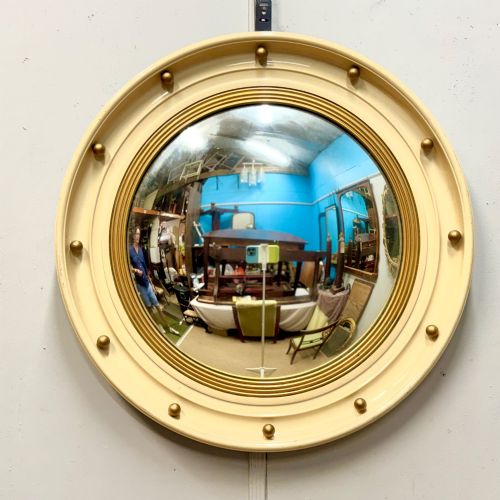
These pieces known as a regency porthole mirror bring dramatic depth and curved reflection to a room through their distinctive circular frames.
Regency Porthole Mirror
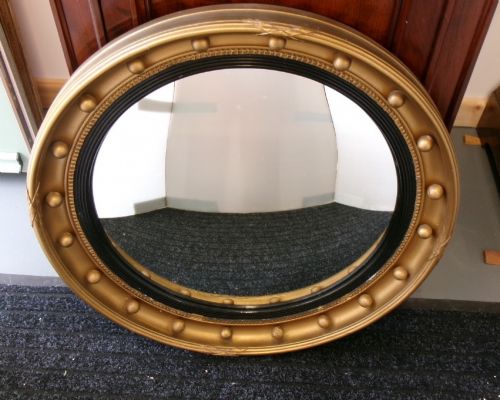
When you search for a regency porthole mirror, you are looking at round wall mirrors designed with convex glass that projects the entire room back into a single curved view. The versions you are most likely to meet on this page span the 19th Century, Victorian era, and later Regency Revival periods.
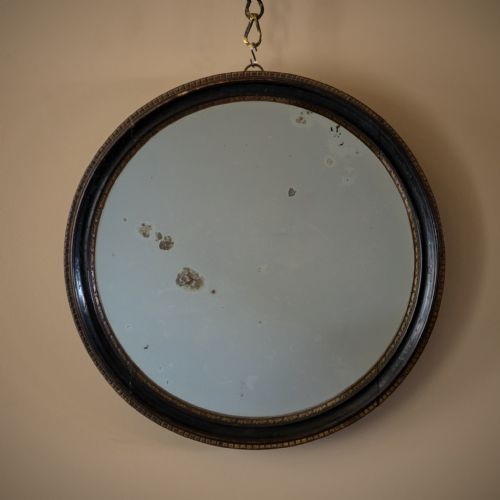
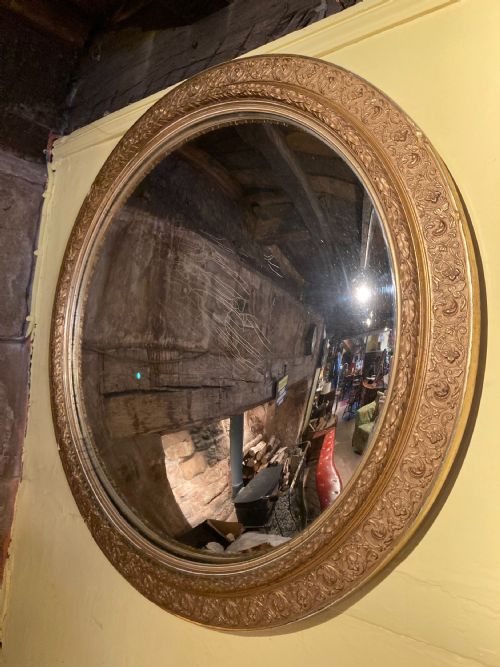
These wall mirrors appear primarily as circular frames constructed from giltwood, painted wood, and ebonised wood, often incorporating an inner ebonised slip. The forms range from simple gilded halls mirrors to grander wall mirrors featuring girandole candle arms and ornate mouldings.
Originating during the Regency era around 1820, these pieces continued to be made through the 1890s and into the 20th century as revival styles. They function principally as decorative focal points for hallways and lounges, offering both historical character and functional reflection.
How they were made
Makers constructed the circular wooden frames using timber such as mahogany and softwoods, frequently applying carved gesso to build up intricate surface ornament before finishing with gold leaf or paint. The ebonised wood variations rely on dark, polished finishes that contrast sharply against inner gilt slips.
The defining feature is the convex mirror glass itself, which was blown or cast to create a curved surface that gathers light from across the interior. Frames often incorporate brass elements or gilt metal details alongside the primary wooden structures.
Regency Porthole Mirror Retail Price Guide 2026
Typical asking prices for regency porthole mirror among the pieces listed under this phrase on Sellingantiques today, from the lower quarter to the upper quarter. They describe what is for sale here now, not the wider market.
Listings span the 19th Century, Victorian era, and 1920s, utilising materials such as giltwood, ebonised wood, brass, and mahogany.
What varies in quality
The standard of carving and the crispness of the gesso ornamentation dictate the visual presence of the frame. Finer examples display deeply defined mouldings and evenly applied gilding that retains its warmth over time.
The clarity and distortion of the convex glass itself create notable distinctions between pieces. High quality mirrors possess stable glass with minimal surface disruption, housed securely within robust wooden construction.
The Regency Porthole Mirror Glossary
- Convex glass
- Curved mirror glass that bulges outward to reflect a wide-angle, miniaturised view of the surrounding interior space. This specific glass is the defining characteristic of porthole and butler mirrors.
- Giltwood
- Timber carved and coated with gold leaf or a gold-coloured metallic finish. It provides the characteristic bright, reflective border seen on traditional convex frames.
- Ebonised slip
- A dark, blackened inner moulding placed immediately adjacent to the mirror glass. This dark border creates a visual barrier that separates the reflection from the gilded outer frame.
- Girandole
- A wall mirror fitted with attached candle sconces or arms. These arms allowed the candles to multiply the ambient light within a room.
- Gesso
- A plaster-like mixture applied to wood frames to create a smooth surface for carving and gilding. It allows for intricate relief decoration around the circular frame.
Regency Porthole Mirror: Frequently Asked Questions
Where should I hang a convex mirror?
These mirrors excel in hallways, lounges, and dining rooms where their wide-angle reflection can capture the entire space. Placing them opposite a window or light source maximises the illumination they bring into the room.
Because they project a condensed view of the interior, they work best at eye level on a clear wall where nothing obstructs the optical effect.
How do I date a porthole mirror?
Dating relies on examining the construction methods of the timber frame, the composition of the gesso, and the characteristics of the mirror glass. Earlier pieces from the Regency period typically feature hand-carved details and specific backboard constructions.
Revival pieces from the late 19th and early 20th centuries often employ different backing materials and standardised machine mouldings, helping to distinguish them from their earlier counterparts.
Why is the glass curved?
The curved glass provides a panoramic field of vision that encompasses an entire room in a single circular reflection. This optical property made them popular in historical interiors for monitoring activity across a space.
During the 19th century, this distinct distortion was prized for both its practical utility and its decorative impact on domestic walls.
How do I clean the frame?
Dusting the gilded or painted wooden frame requires a soft, dry brush to protect delicate gesso and leaf surfaces. Moisture can damage old finishes, so cleaning agents should generally be avoided on antique wood and gilt.
Glass cleaner applied sparingly to a cloth, rather than directly sprayed onto the surface, helps maintain the convex mirror plate without seeping behind the frame.