




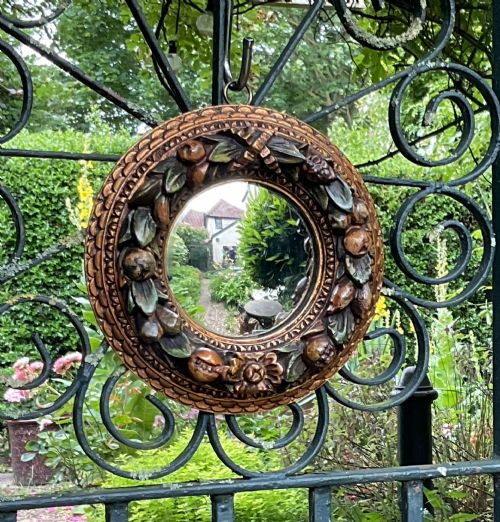
Circular Gilt Mirror
A circular gilt mirror brings depth and historic elegance to an interior, transforming light and space with its curved convex surface.
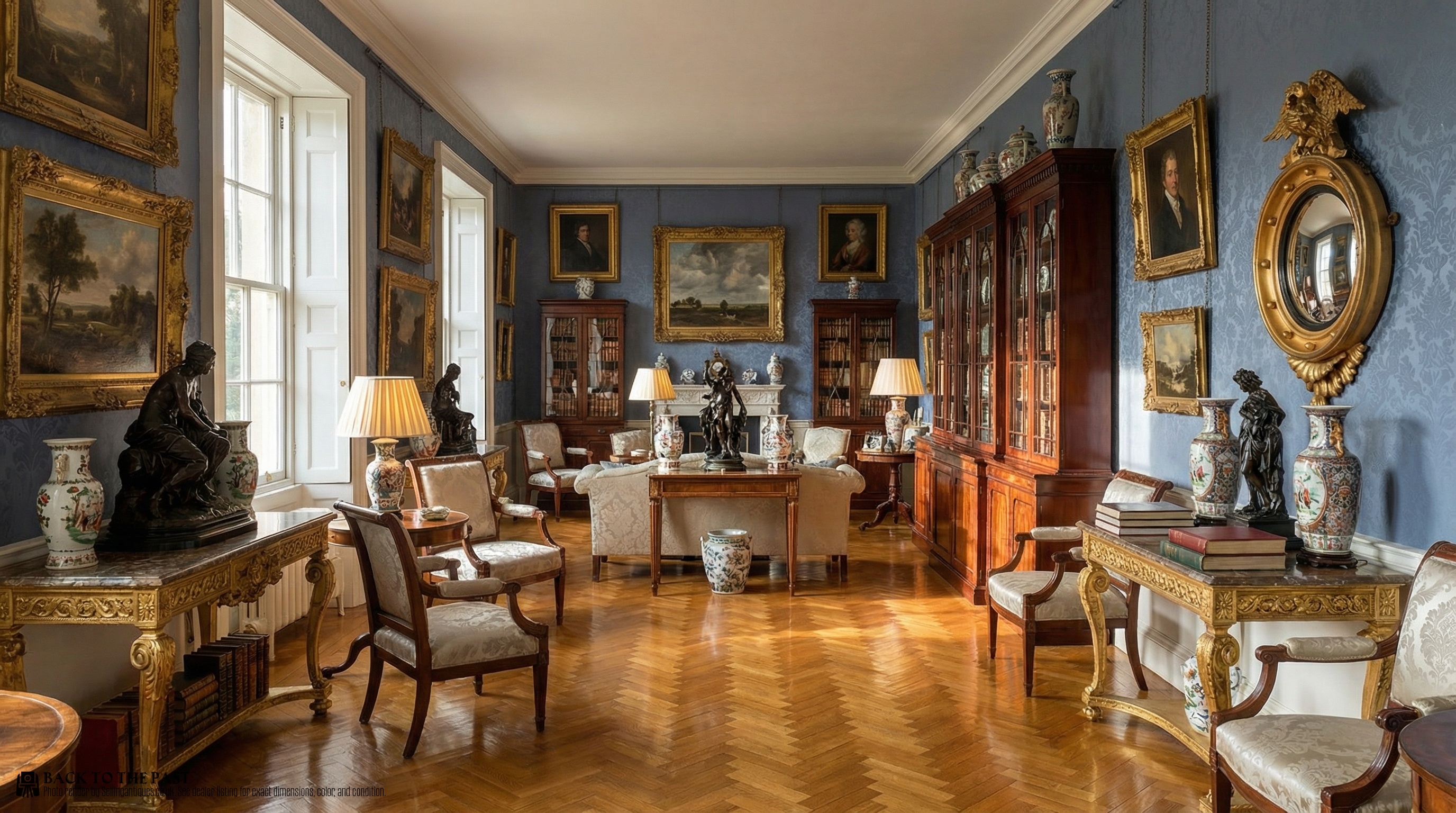
Circular Gilt Mirror
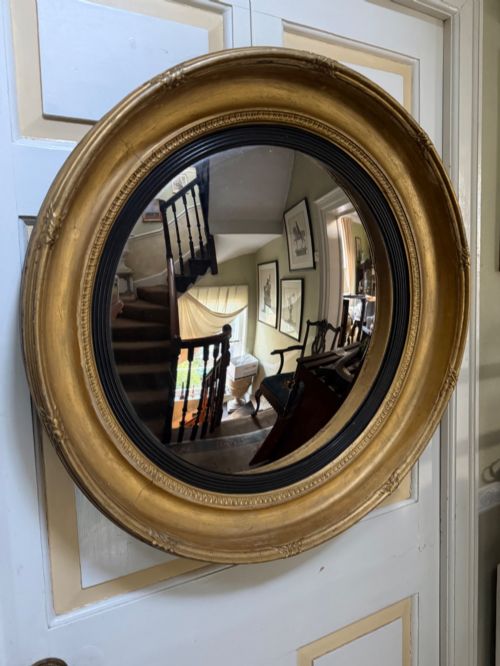
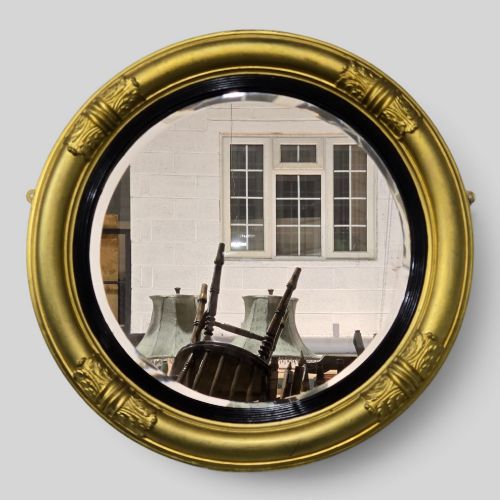
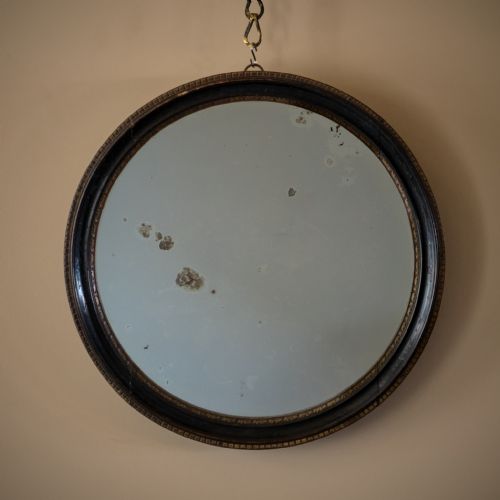
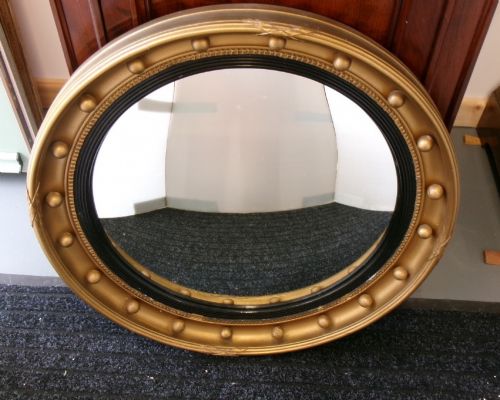
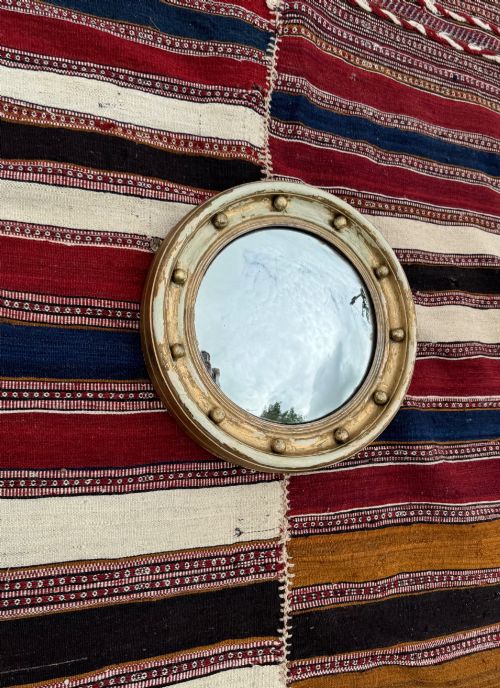
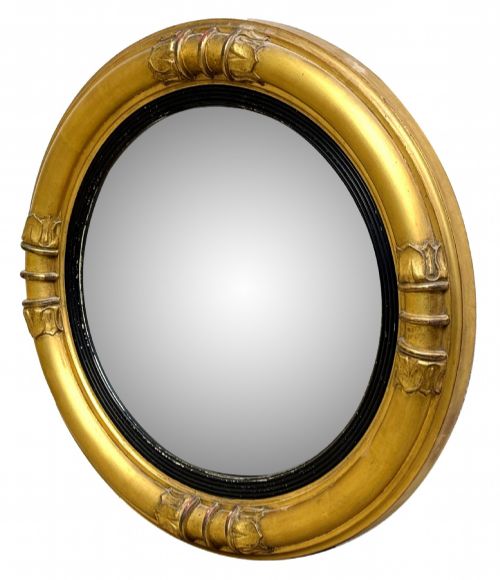
A circular gilt mirror is a wall-hanging glass plate set within a round, gilded frame, historically designed to reflect light across an entire room. When searching for a circular gilt mirror, buyers encounter a range of forms, most notably the convex butler's mirror and the deeply moulded Regency design.
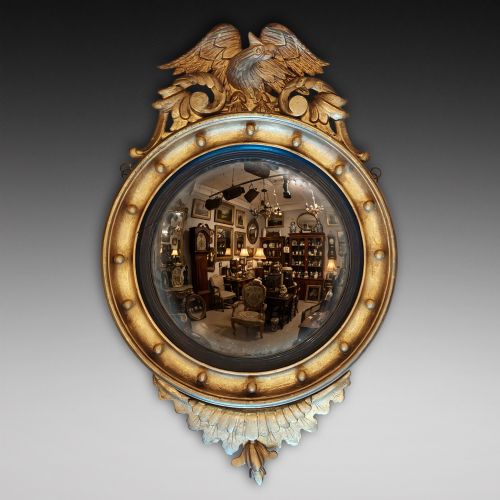
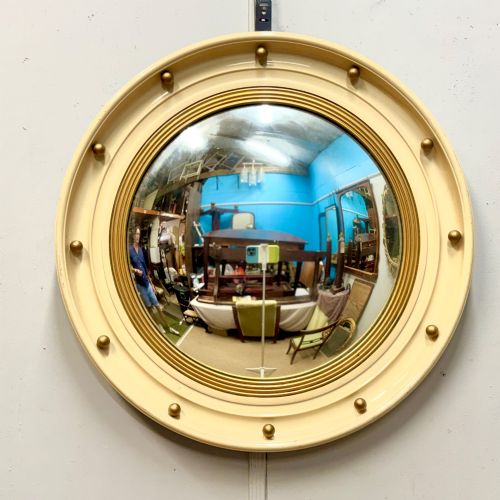
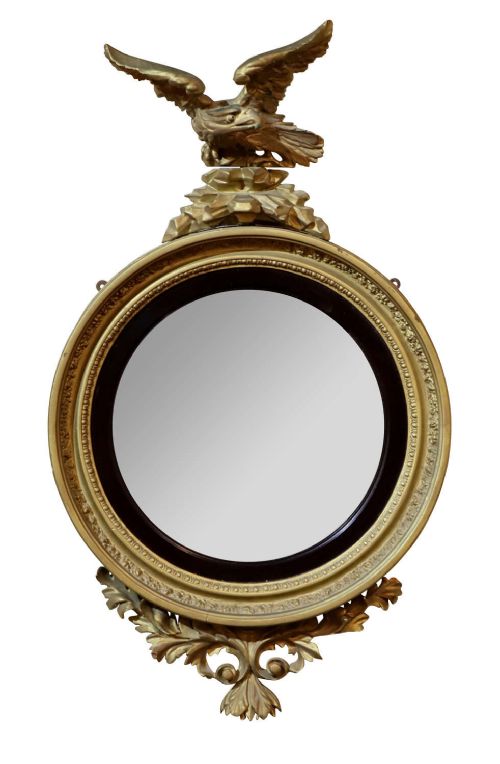
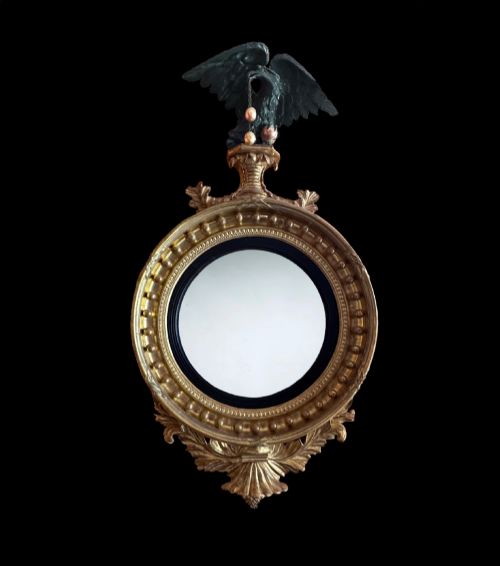
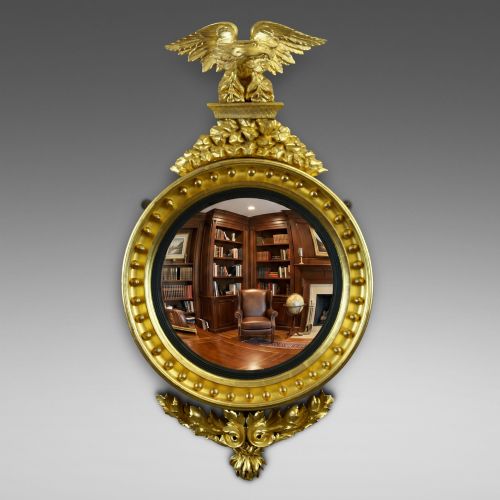
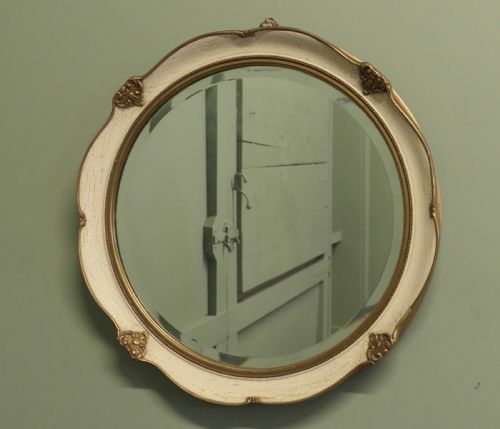
The pieces appearing on this page span the Georgian, Regency, and Victorian eras, alongside later Edwardian and Art Deco revivals. Many feature decorative crests or ornaments, such as spread eagles, dragons, or carved foliage framing the circular glass.
Originating predominantly from English and continental workshops, these mirrors vary in scale from intimate small parlour pieces to grand four-foot diameters. The convex glass plate remains the defining characteristic for the majority of examples found in this selection.
How they were made
Makers constructed the frames primarily from carved wood, gesso, and ebonised timber, applying thin layers of gold leaf or gilt paint to achieve a brilliant metallic finish. The underlying gesso was often heavily moulded to create intricate details such as reeded bezels, balls, and scrollwork.
The curved glass plates, essential for the convex mirrors, required specialised blowing and cooling techniques to maintain an even distortion across the circular surface. Craftsmen secured these plates into deep rebated frames, frequently backing them with protective wooden boards to preserve the silvering over centuries.
Circular Gilt Mirror Retail Price Guide 2026
Typical asking prices for circular gilt mirror among the pieces listed under this phrase on Sellingantiques today, from the lower quarter to the upper quarter. They describe what is for sale here now, not the wider market.
Materials recorded across the archive include giltwood, ebonised timber, gesso, brass, and traditional gold leaf.
What varies in quality
The distinction between standard and exceptional pieces rests upon the crispness of the carved details within the gesso and wood frames. Superior examples display sharply defined ornamentation, whether in the feathers of an eagle crest or the delicate leaves of a Florentine Rococo border.
The integrity of the original mercury gilding and the clarity of the convex glass plate also determine the standing of a piece. Original glass retaining its foxing and depth commands greater appreciation than later replacements, while deeply layered water gilding outlasts simple painted finishes.
Coalbrookdale
The Circular Gilt Mirror Glossary
- Convex mirror
- A round looking glass with an outward-curving surface that reflects a wide, fish-eye view of the surrounding interior. This form was traditionally utilised by butlers to survey rooms discreetly.
- Gesso
- A plaster-like mixture applied to wood frames and carved into intricate decorative motifs before gilding. It provides the smooth foundation necessary for catching and reflecting light.
- Giltwood
- Timber that has been coated with thin sheets of gold leaf or metallic powder. It forms the primary lustrous framing material for these historic wall mirrors.
- Water gilding
- A traditional technique using liquid size to adhere gold leaf to a prepared gesso surface, allowing the metal to be burnished to a high shine. This method distinguishes finer period pieces from painted alternatives.
- Bulls eye mirror
- An alternative term for a convex mirror, named after the circular glass form resembling the centre of a target. These were popular in Regency and Victorian drawing rooms.
Circular Gilt Mirror: Frequently Asked Questions
Where should I hang a convex mirror?
These mirrors work best in smaller spaces or opposite windows where the curved glass can capture and project natural light across the room. Placing them at eye level ensures the panoramic reflection functions as a focal point without overwhelming surrounding furniture.
Because they project outwards from the wall, ensure they are secured away from high-traffic walkways where the frame might be brushed against. Their historic presence complements both traditional period rooms and contemporary minimalist interiors.
How do I identify a Regency period mirror?
Regency examples typically feature bold architectural elements such as reeded ebony inner rings, ball-turned bezels, and prominent crests like spread eagles. The frames are heavy, constructed from carved wood and gesso finished in bright gold leaf.
Examining the backboards and fixings often reveals period craftsmanship, including hand-beveled wood and early iron hardware. Later revivals from the Edwardian or Art Deco periods generally show lighter construction and different surface patination.
What is a butler's mirror?
A butler's mirror is a specific type of convex wall glass historically hung in dining rooms or service areas to allow staff to monitor the room discreetly. They often incorporate simple round frames with integrated candle sconces or modest decorative borders.
Over time, these practical household objects evolved into purely decorative furnishings valued for their optical distortion and distinctive shape. They share the same curved glass properties as larger salon and pier mirrors.
How do I care for antique gilt surfaces?
Dusting the carved frame requires a very soft, dry brush to prevent disturbing the fragile gold leaf or gesso ornamentation. Avoid using any liquid cleaners, polishes, or chemical sprays, as these can permanently strip the historic gilding.
Keeping the mirror away from direct sunlight and damp environments prevents the gesso from cracking and protects the original silvering on the glass plate. Gentle handling preserves the patination accumulated over centuries of use.