



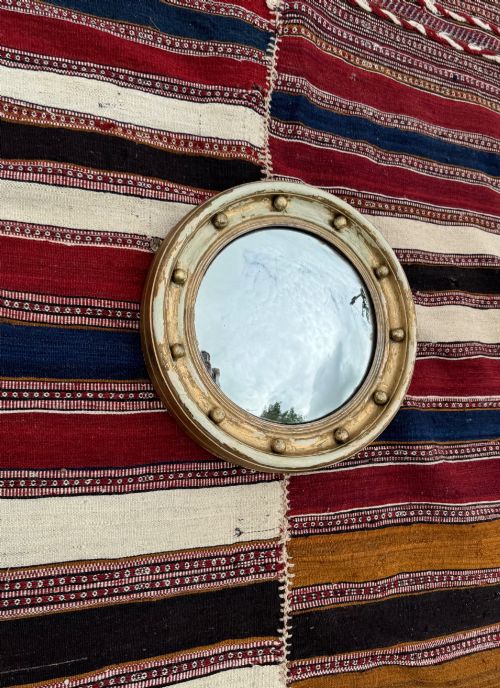

Circular Convex Mirror
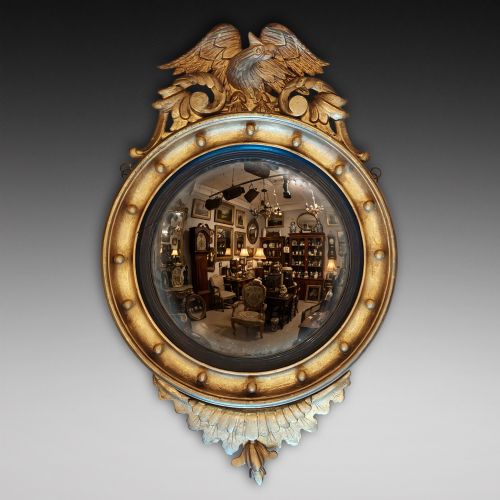
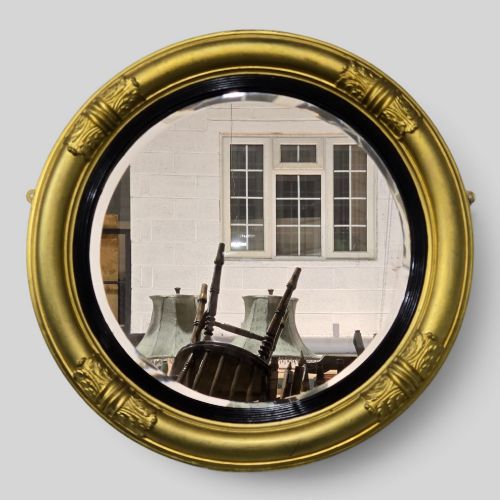
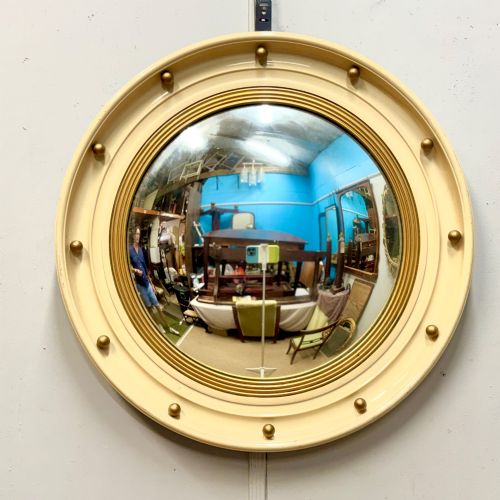
A circular convex mirror draws the eye across the room, offering a wide, curved view of its surroundings in a compact round frame.
Circular Convex Mirror
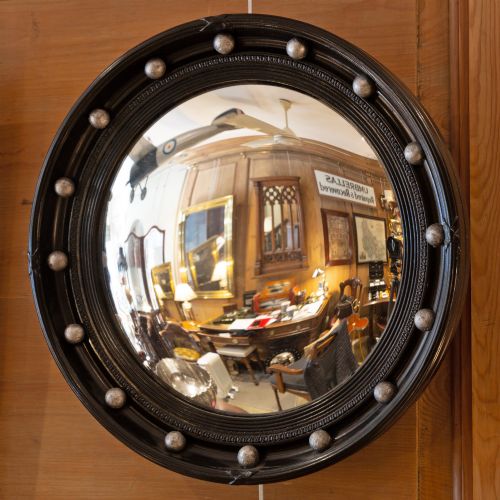
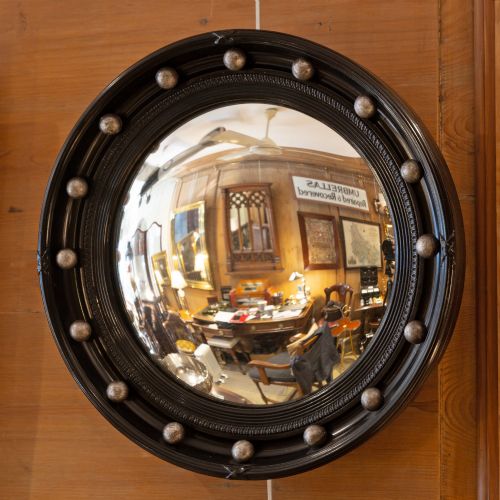
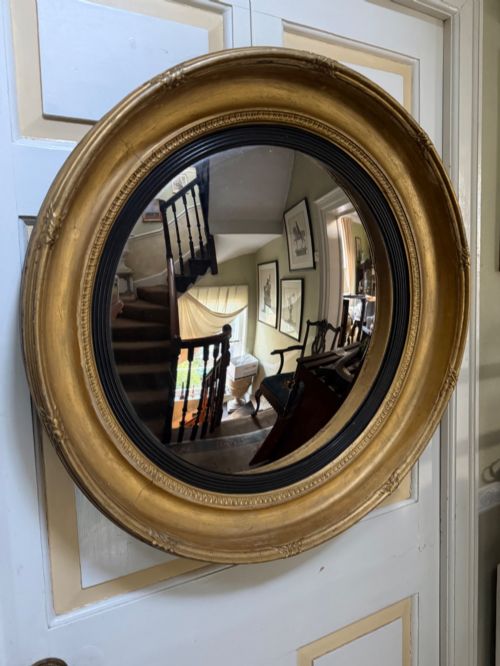
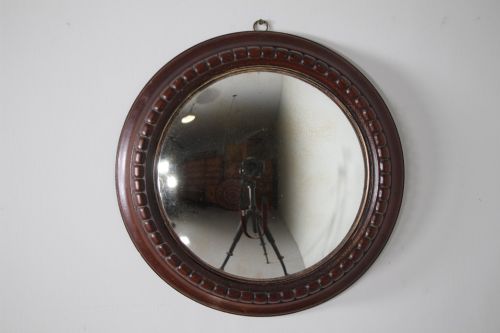
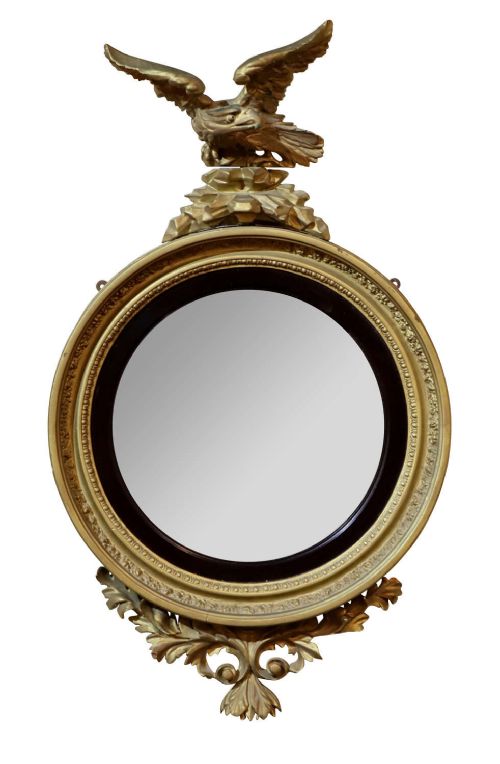
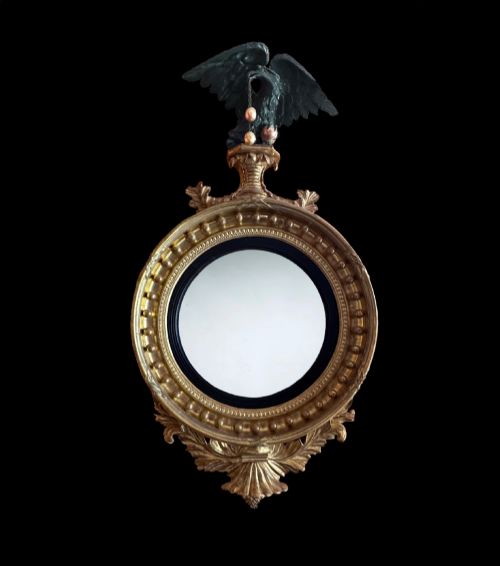
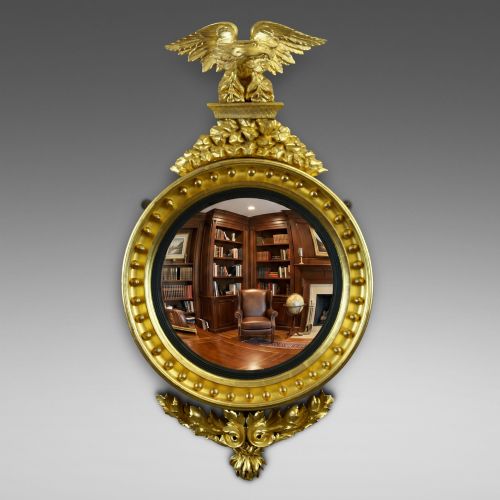
A circular convex mirror is a round wall-mounted looking glass featuring a curved surface that reflects a wide, panoramic perspective of the interior. When searching for a circular convex mirror, collectors most frequently encounter examples originating from the Regency period and the nineteenth century, often framed in giltwood.
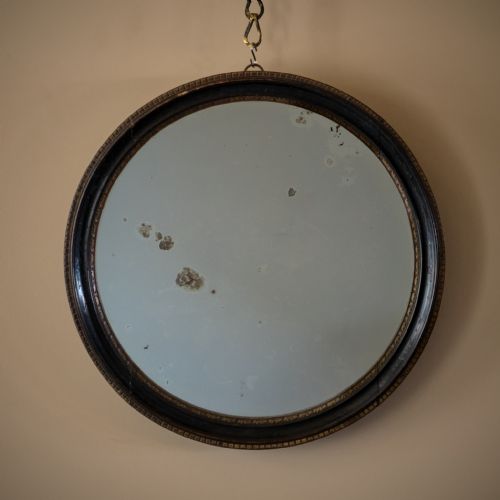
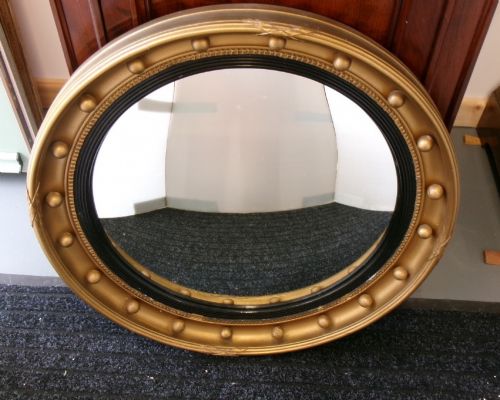
These pieces appear in various forms, from small parlour pieces to grand scale wall mirrors and smaller plateau mirrors designed for tabletops. Alongside Regency originals, the selection includes later nineteenth-century interpretations, Victorian porthole designs, and twentieth-century pieces bearing ebonised or painted frames.
Surmounts and crests frequently adorn these frames, with carved eagles, dragons, or decorative leaf motifs adding height and character to the circular glass. The design distorts the room's edges gently while illuminating the interior by capturing light from multiple angles.
Materials and Construction
Makers built the frames of a circular convex mirror using wood such as mahogany or ebonised timber, often applying gesso to create crisp, moulded surface details. Giltwood and gold leaf finishes provided a bright, reflective border that contrasted with the dark wood or painted elements.
The convex mirror glass itself was shaped to curve outward, capturing a distorted fish-eye reflection that required careful silvering and fitting into the round rabbet. Artisans incorporated carved wooden crests, including eagles and dragons, attaching them securely to the top of the circular frame.
Circular Convex Mirror Retail Price Guide 2026
Typical asking prices for circular convex mirror among the pieces listed under this phrase on Sellingantiques today, from the lower quarter to the upper quarter. They describe what is for sale here now, not the wider market.
Some nineteenth-century versions were dubbed witch's mirrors, believed by superstitious folk to ward off evil spirits while reflecting the entire room.
Quality Variations
Quality in a circular convex mirror rests largely on the crispness of the gesso moulding and the preservation of the original gilding on the frame. Finer examples display deeply carved eagle or dragon crests and well-balanced proportions that retain their structural integrity over the centuries.
The condition and clarity of the original mirror glass significantly influence the character of the piece, with minimal foxing or distortion preserving the historical authenticity. Additionally, the joinery of the circular wooden frame and the retention of original backboards distinguish superior pieces from later revivals.
Coalbrookdale
The Circular Convex Mirror Glossary
- Convex mirror
- A round looking glass with an outward-curving surface that reflects a wide-angle, panoramic view of the room. This design was historically popular for monitoring activity in large spaces.
- Giltwood
- Timber that has been coated with a thin layer of gold leaf or gold paint over a prepared gesso base. This finish provides a bright, reflective border to the looking glass.
- Gesso
- A plaster-like mixture applied to wood frames to create a smooth surface for carving and gilding. It allows intricate decorative details to be moulded around the circular frame.
- Ebonised wood
- Timber treated to imitate the dark, dense appearance of ebony. This dark finish creates a striking contrast against gilded details.
- Surmount
- A decorative ornament or crest attached to the top of a frame, most commonly taking the form of an eagle or floral foliage in these pieces.
Circular Convex Mirror: Frequently Asked Questions
Where should I hang a circular convex mirror?
These mirrors work well in hallways, dining rooms, or above mantels where they can capture light and reflect a broad view of the interior.
Because of their curved glass, they function effectively as focal points in smaller rooms by creating an illusion of depth and space.
How do I identify a Regency period mirror?
Regency pieces often feature crisp giltwood frames, frequently ornamented with carved eagle surmounts or reeded ebonised inner bezels.
Examining the construction of the backboards and the type of glass helps confirm the early nineteenth-century date of manufacture.
What is a sorcerer's mirror?
A sorcerer's mirror, also known as a witch's mirror, is an alternative name for a convex looking glass used historically to survey a room from a single vantage point.
Victorian and later makers continued this tradition, producing round convex mirrors that served both decorative and practical purposes.
How should I clean the glass and frame?
Dust the giltwood frame gently with a soft, dry brush to protect the delicate gesso and gold leaf finish from moisture and abrasion.
Clean the convex glass sparingly with a soft cloth and a mild glass cleaner, taking care not to let liquid seep behind the frame edge.