

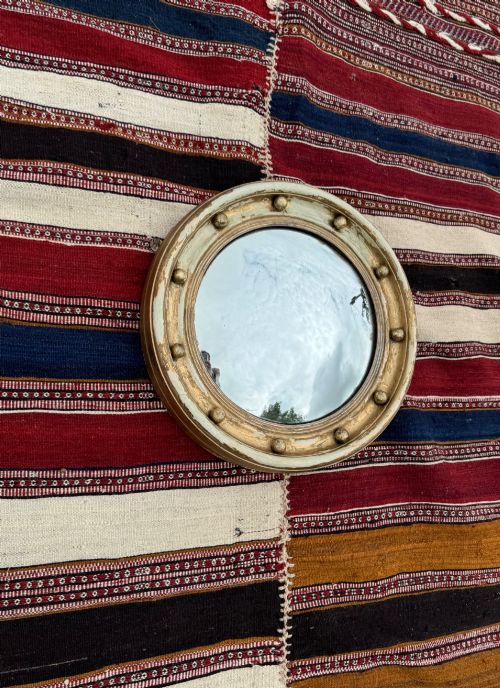

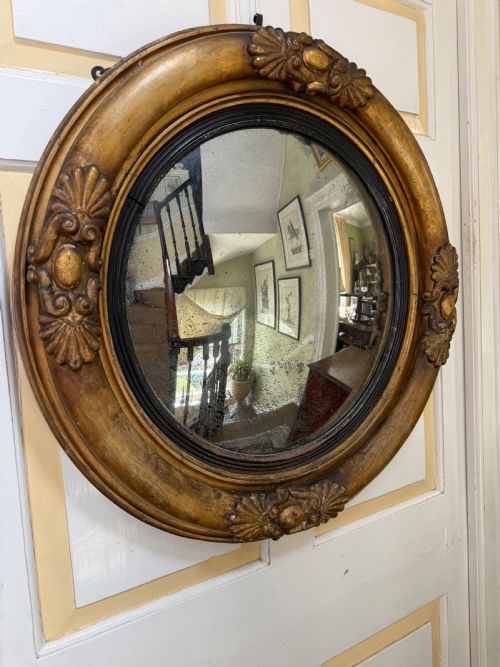


Vintage Circular Mirror
A vintage circular mirror brings depth and curved geometry to a room, drawing the eye with its distinct round frame.
Vintage Circular Mirror
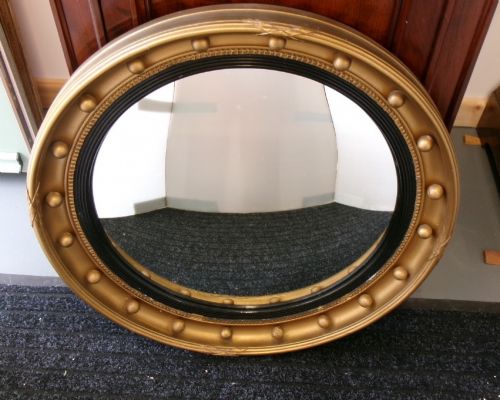
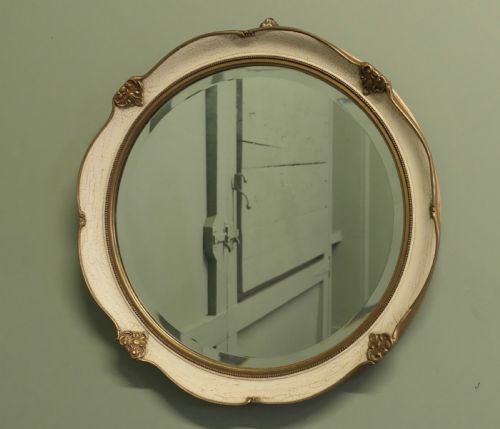
A vintage circular mirror is a round reflective piece designed for wall hanging, dressing furniture, or tabletop use. When you search for a vintage circular mirror, you encounter everything from compact vanity glasses to large architectural statement pieces.
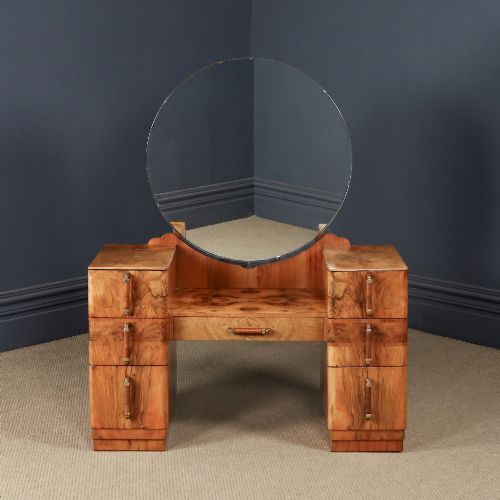
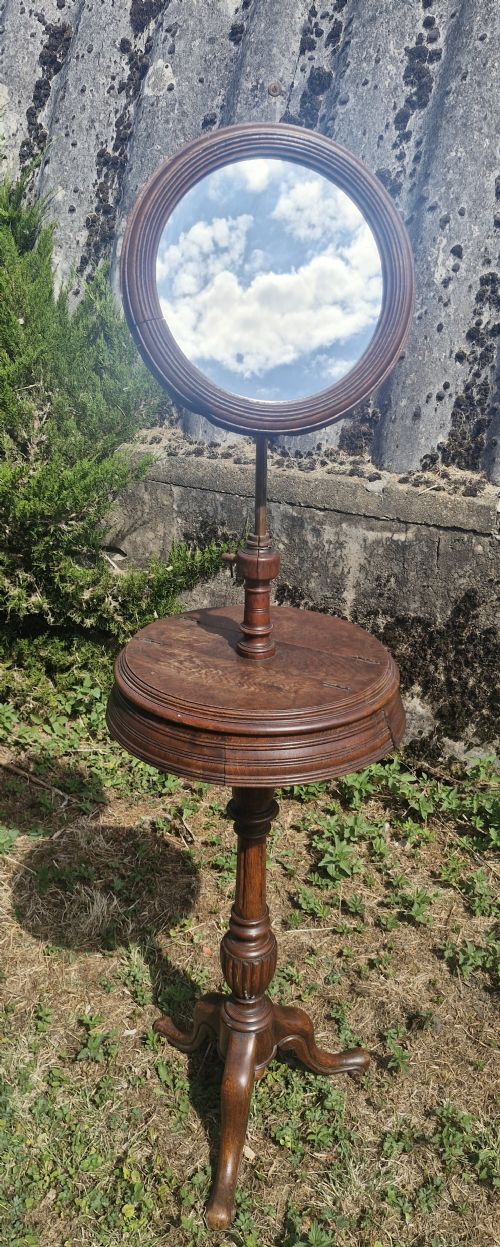
The pieces listed here span several distinct periods, including the Regency era, Victorian times, and the Art Deco period. Wall mirrors and dressing table variants appear most frequently alongside specialised forms like convex and sorcerer mirrors.
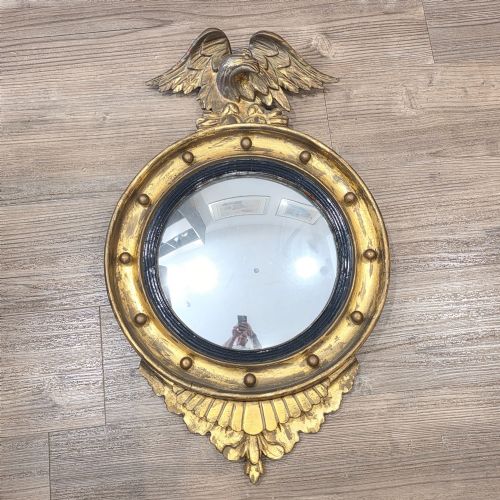
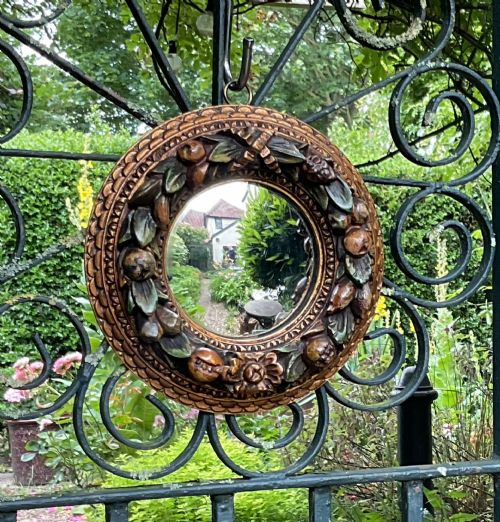
Origins vary from English workshops to French studios and Italianate designs. You will find frames shaped from simple turned wood as well as elaborately carved giltwood featuring eagles and decorative crests.
How they were made
Frames are constructed from wood, brass, cast iron, ebonised wood, and gesso over carved bases. Gilding is applied to wood surfaces to create bright reflective finishes that catch the light.
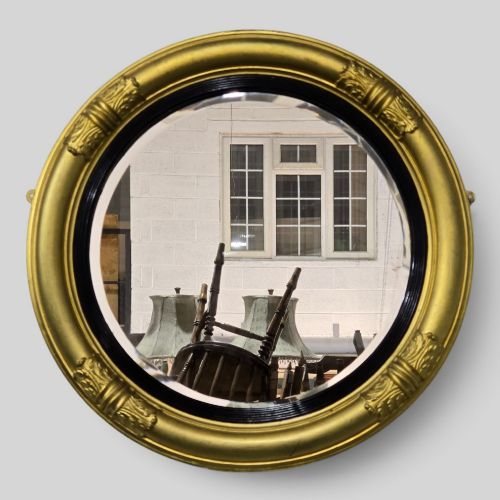
Mirror plates are set into frames using traditional joinery, with some pieces incorporating specialised convex glass that distorts reflections across a wide room angle. Etched detailing and peach-tinted glass add decorative layers to later twentieth-century examples.
Listings feature materials including giltwood, brass, chrome, alabaster, cast iron, and ebonised wood across the nineteenth and twentieth centuries.
What varies in quality
Quality rests in the crispness of the frame carving, the depth of the gilding, and the original condition of the glass plate. Hand-carved giltwood and deep moulding demonstrate superior craftsmanship compared to simpler turned wooden frames.
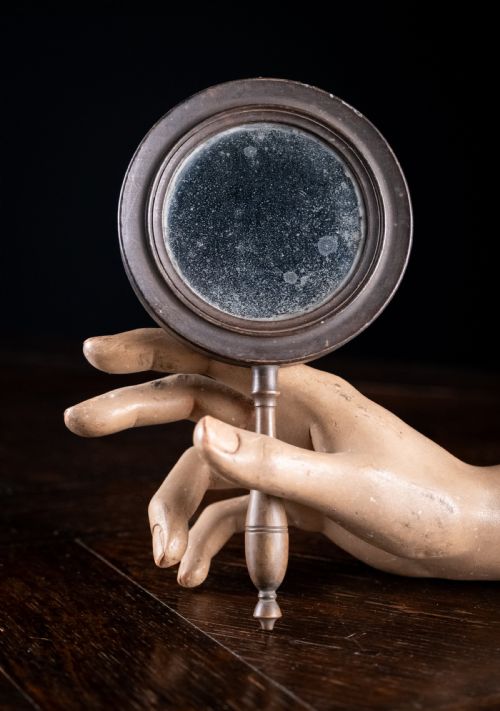
The integrity of the original mirror plate influences the character of the piece, where natural foxing and ageing add authenticity. Heavier cast metals and solid woods maintain structural stability better over time than lighter composite alternatives.
Thomas Rubergall·Coalbrookdale·Smiths Clock Company·Atsonea
The Vintage Circular Mirror Glossary
- Convex mirror
- A round mirror with an outward-curving glass plate that creates a wide-angle reflection of the entire room.
- Giltwood
- Wood that has been coated with a thin layer of gold leaf or gilt paint for a decorative metallic finish.
- Gesso
- A plaster-like mixture applied to wood frames and carved into intricate decorative motifs before gilding.
- Foxed mirror
- Glass that has developed dark spots or patches due to the degradation of the backing over time.
- Sorcerer mirror
- A convex mirror designed to capture a distorted panoramic view of an interior space.
Vintage Circular Mirror: Frequently Asked Questions
What is a sorcerer mirror used for?
A sorcerer mirror was traditionally utilised in interiors to provide a wide-angle view of guests and activity across a room.
The curved glass creates a unique miniature perspective of the surrounding space, functioning as both an optical curiosity and a decorative focal point.
How can I date an antique circular mirror?
Dating relies on examining the construction methods of the frame, the style of any carved ornament, and the characteristics of the glass plate. Regency pieces often feature giltwood frames with eagle surmounts, while 1930s examples display distinct Art Deco geometry.
Does foxing on the glass reduce value?
Foxing is a natural result of ageing in antique glass rather than a fault, and many collectors appreciate the historic patina it provides. Original plates with gentle foxing often enhance the authentic character of a period piece.