
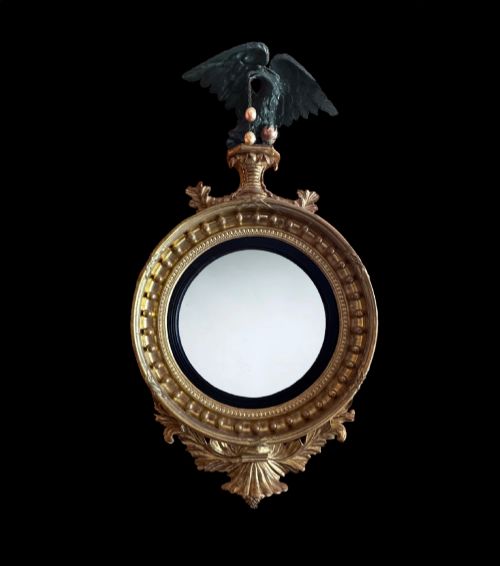

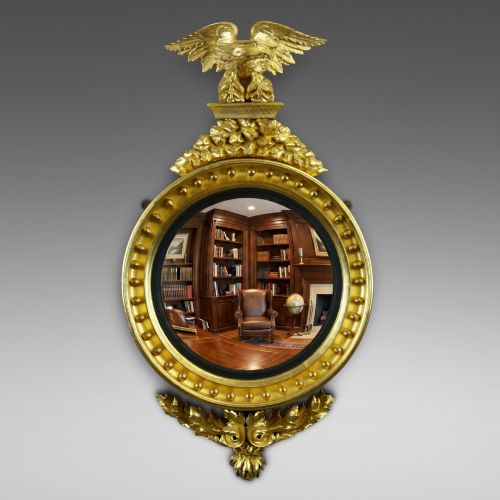
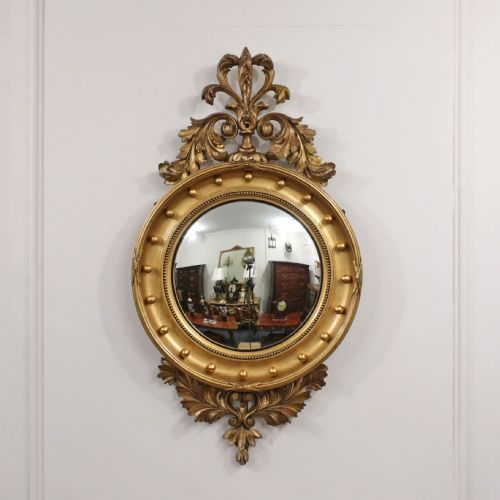
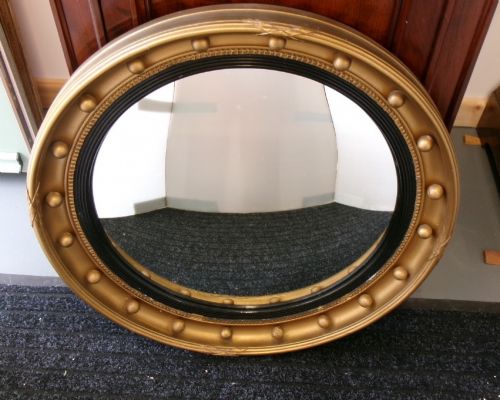


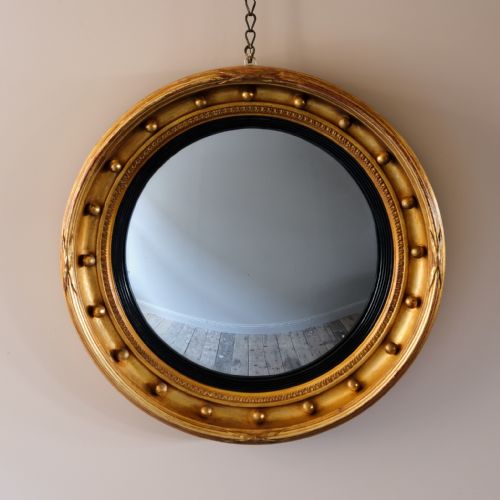


Ball Framed Mirror
A ball framed mirror brings a deep, curved reflection into a room, capturing light from all angles in a compact circular form.
Ball Framed Mirror
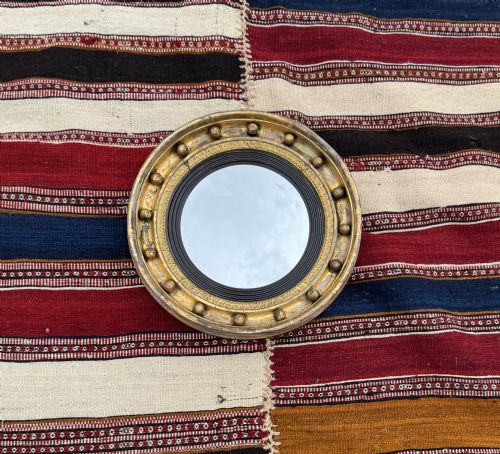
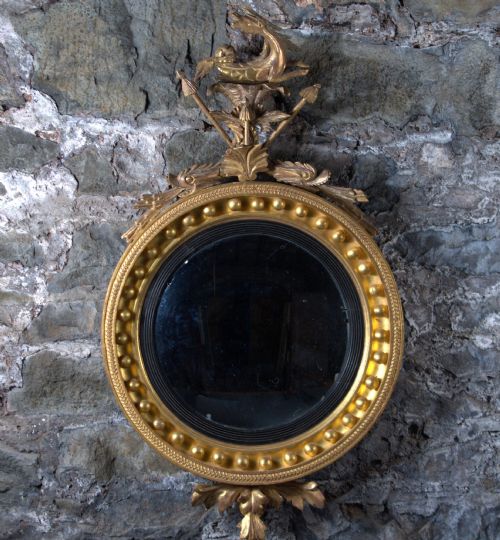
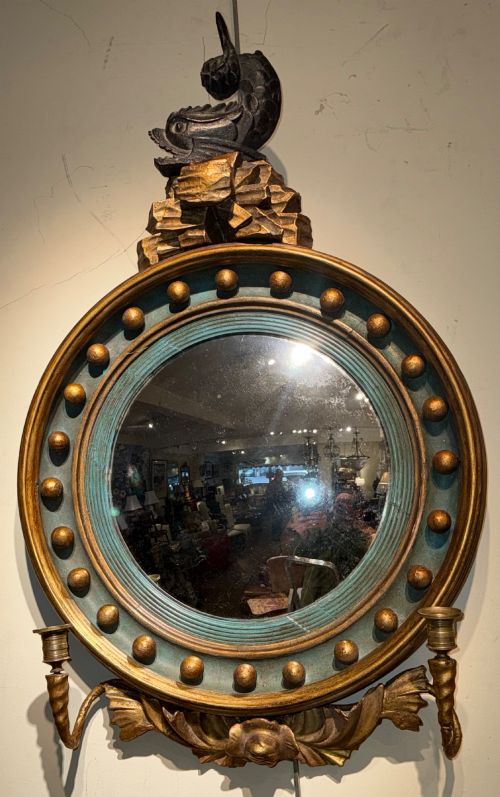
A ball framed mirror takes the form of a convex glass plate set within a circular moulding studded with spheres, creating a distinctive profile often described as a porthole or coach mirror. You will most frequently encounter Regency period and nineteenth century examples on this page, typically fashioned from giltwood with classical motifs like dragons or eagles.
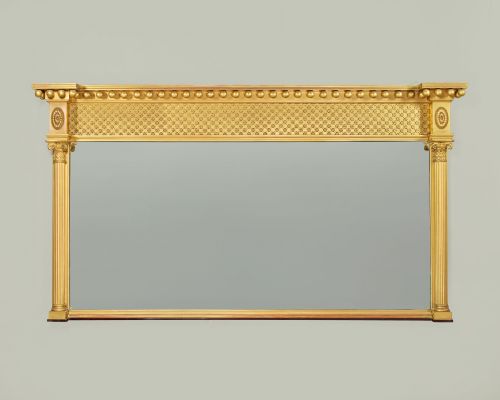
These pieces function primarily as wall mirrors and overmantel mirrors, designed to draw natural light across a space while offering a wide-angle view of the interior. The heavier designs draw from Regency Revival and Victorian aesthetics, whilst simpler circular formats appear through the Edwardian era.
Makers often incorporated verre eglomise panels into the upper or lower portions of the frame to add decorative depth above or below the central convex disc. The resulting object serves both as a functional glass and as a focal point for a wall scheme.
Materials and construction
Makers built the frames using timber carcasses overlaid with gesso and composition ornaments, which were then gilded in gold leaf or painted. The individual spheres that line the frames were often turned separately from wood or cast in composition before being applied to the circular moulding.
The glass itself is blown or cast to create a convex surface that projects forward, requiring careful silvering behind the curved plate to ensure a clear reflection. Ebonised wood and gilt metal elements also appear alongside traditional giltwood to introduce contrasting tones.
Ball Framed Mirror Retail Price Guide 2026
Typical asking prices for ball framed mirror among the pieces listed under this phrase on Sellingantiques today, from the lower quarter to the upper quarter. They describe what is for sale here now, not the wider market.
Listings feature circular wall mirrors constructed from giltwood, ebonised wood, and composition materials across the nineteenth and early twentieth centuries.
Distinctions in quality
The refinement of the carved details on the frame separates finer examples from standard production, particularly where foliage, reeding, or crests like dragons are shaped by hand rather than moulded in composition. Crisp definition in the spheres and the underlying plasterwork indicates higher craftsmanship during the manufacturing process.
The depth and clarity of the silvering on the convex glass plate also mark differences in grade, alongside the retention of original gilding surfaces rather than later overpainting. A well-preserved frame retains its structural tightness around the circular glass without looseness in the applied balls.
The Ball Framed Mirror Glossary
- Convex glass
- A curved glass plate that bulges outward towards the viewer, creating a distorted panoramic reflection of the entire room. This form was traditionally used to monitor activity across large spaces.
- Giltwood
- Timber that has been coated with a thin layer of gold leaf over a prepared gesso ground. It provides a bright metallic finish that catches interior candlelight and daylight.
- Verre eglomise
- A cold decoration technique where designs are painted and gilded on the reverse side of a glass panel. It appears on these mirrors as dark decorative sections within the frame.
- Composition
- A moulded mixture of whiting, resin, glue, and linseed oil pressed into metal dies to form decorative reliefs. Makers used this material to produce repetitive ornaments efficiently.
- Ebonised wood
- Timber treated with stains or finishes to resemble expensive ebony. This dark treatment offers a sharp contrast against gilded spheres.
Ball Framed Mirror: Frequently Asked Questions
Where should I hang a convex mirror?
These mirrors work best on a prominent wall in a hallway, drawing room, or dining space where they can capture light from windows and doors.
Because the curved glass shrinks the reflection to show a wide area, hanging them at eye level allows you to see the entire room at a glance.
How do I date an antique convex mirror?
Dating relies on examining the construction of the timber frame, the composition ornaments, and the characteristics of the mirror plate itself.
Regency and nineteenth century pieces often feature hand-carved details and heavier wooden carcasses, whereas later revivals show different moulding techniques.
Why is the glass curved outwards?
The outward curve was originally engineered to give servants a wide field of vision across large dining rooms or halls from a single vantage point.
This optical property also distributes incoming natural light more broadly into darker corners of an interior.
How do I clean the glass and frame?
Dust the frame gently with a soft, dry brush to protect fragile gesso and gilding work from moisture damage.
Use a mild glass cleaner applied to a cloth rather than directly onto the convex plate to avoid seepage behind the curved edges.