




Regency Circular Mirror
A regency circular mirror bends the room into a single curved glass plate, catching light and turning the entire interior upside down.
Regency Circular Mirror
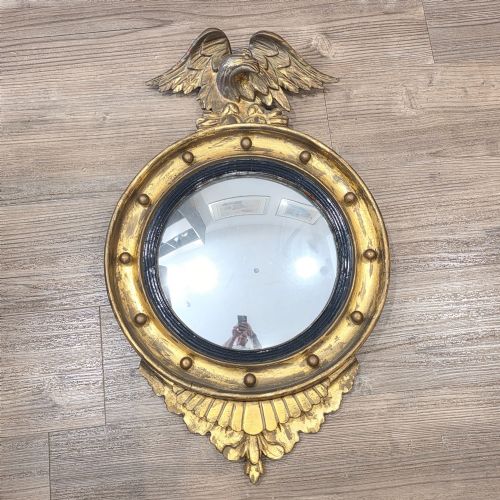
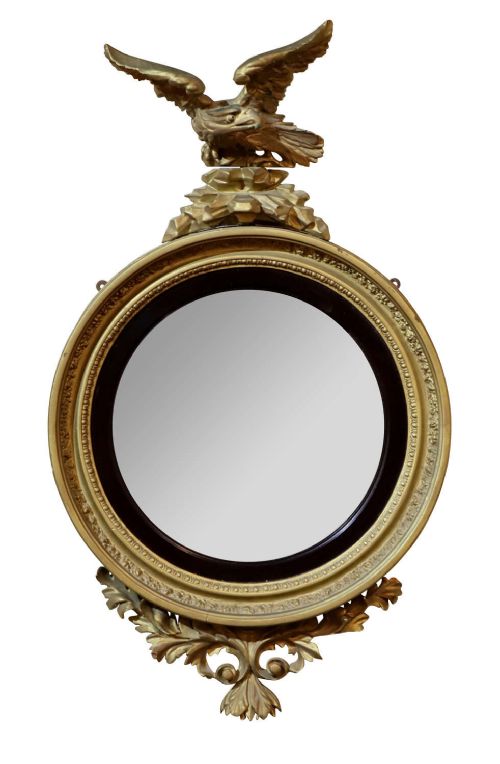
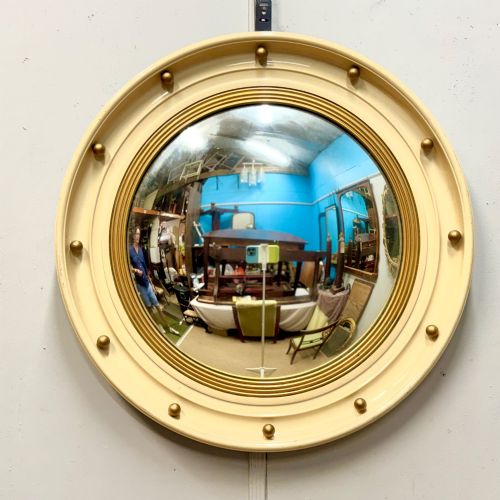
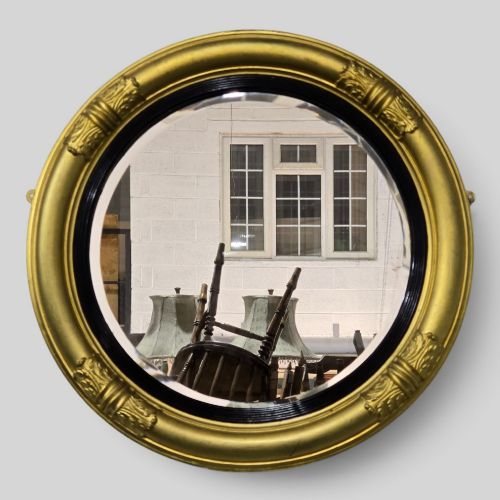
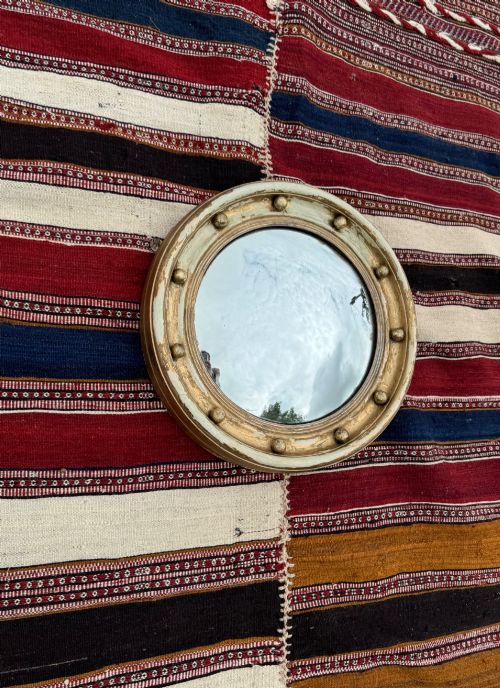
When you search for a regency circular mirror, you look at convex round looking glasses designed to hang on the wall and pull light across an interior. The form spans genuine Regency periods through to later Victorian, Edwardian, and twentieth-century revivals.
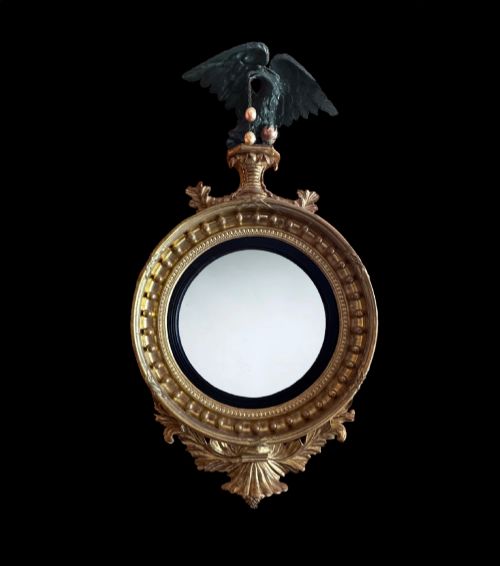
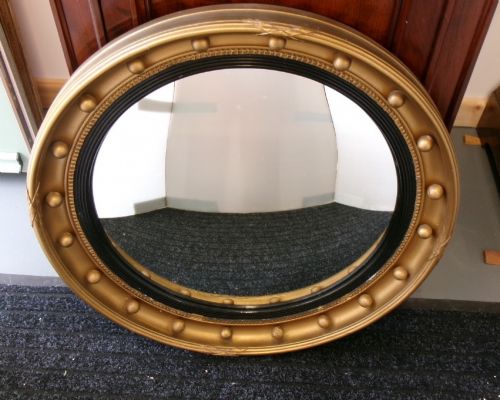
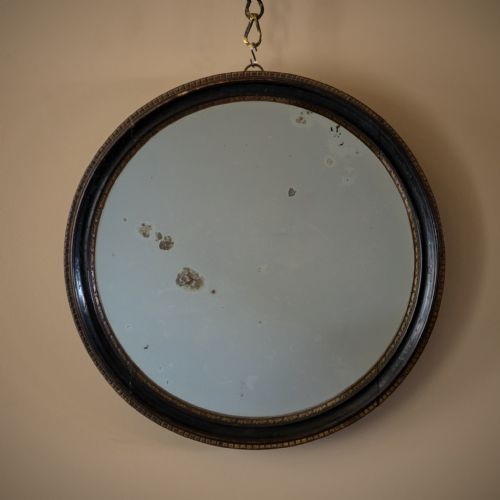
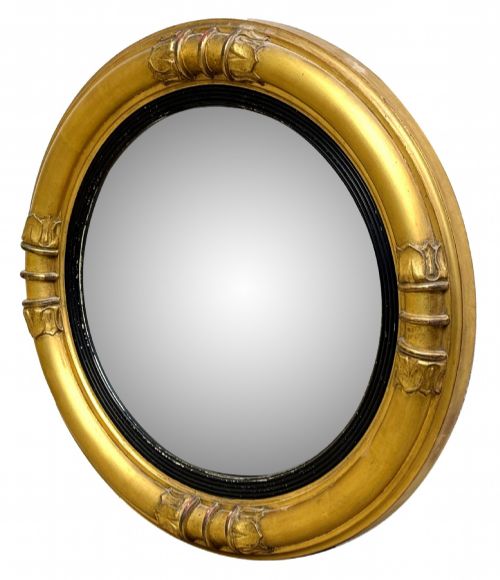
You meet wall-mounted convex plates most often on this page, framed in gilded wood, gesso, or ebonised timber. These pieces range from small boudoir roundels to grand scale frames measuring several feet across.
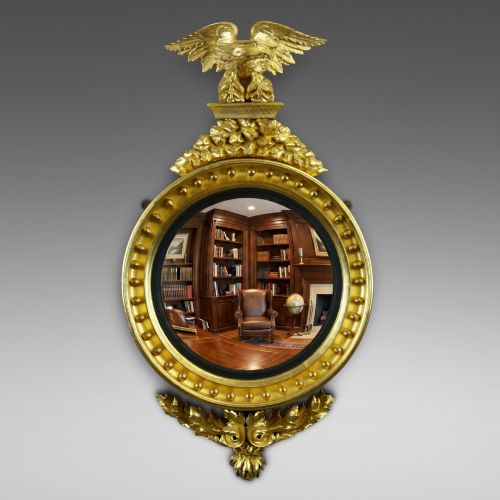
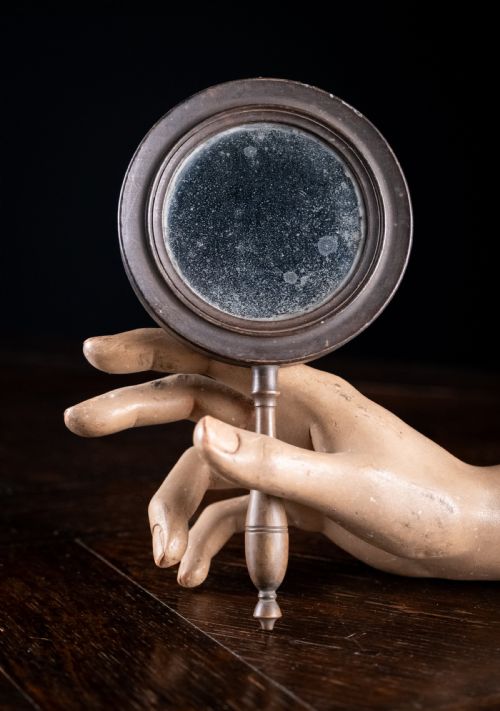
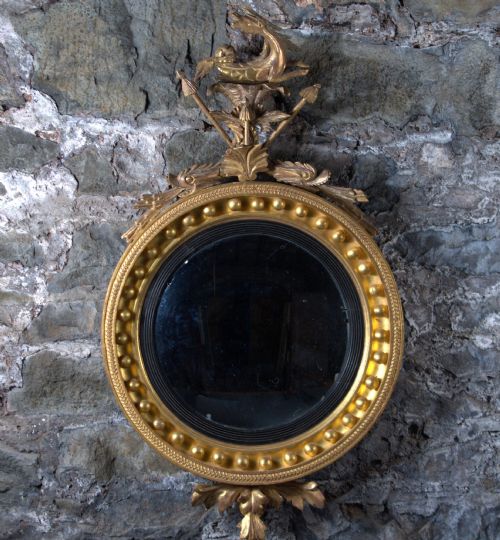
Makers occasionally added figurative crests such as spread eagles perched on top, or dragon motifs entwined in the frame. Variations include butler mirrors, porthole styles, and double-sided hand mirrors built for closer inspection.
How they were made
Joiners turned timber frames from wood and applied layers of gesso to build up carved details, which artisans then gilded with gold leaf or painted black and gold. This combination produced deep, reflective frames capable of holding heavy curved glass plates securely.
Glassmakers blew or cast curved convex plates, often called bulls-eye or sorcerer glass, which naturally distorted the reflection to gather a wide angle of the room. The curved plate sat deep within the circular wooden rebate, sometimes accompanied by reeded ebonised inner rings.
Victorian superstition held that convex sorcerer mirrors protected households by keeping watchful eyes on visitors.
What varies in quality
The crispness of the carved wood and gesso ornamentation dictates the calibre of the frame. Superior examples show sharply defined eagle crests, clean acanthus moulding, and well-preserved gilding without clumsy repairs.
The depth and clarity of the convex mirror plate also separate standard pieces from finer ones. Old glass holds a darker, deeper mercury backing with gentle distortions rather than flat, modern commercial reflection.
The Regency Circular Mirror Glossary
- Convex mirror
- A round looking glass with an outward-curving surface that reflects a wide, panoramic view of the room. These are frequently termed bulls-eye or sorcerer mirrors.
- Giltwood
- Timber coated in fine gold leaf over a prepared gesso layer. This provides the bright metallic finish seen on most period frames.
- Gesso
- A plaster mixture applied to wood frames to create a smooth surface for carving and gilding. It allows for intricate relief decoration.
- Ebonised
- Wood stained or painted black to imitate ebony. This finish often contrasts with gilt slips on Regency frames.
- Plateau mirror
- A circular mirror designed to sit flat on a table rather than hang on a wall. These frequently served as table centerpieces.
Regency Circular Mirror: Frequently Asked Questions
How do I hang a heavy circular mirror?
These frames carry substantial weight due to the thick wooden construction and heavy curved glass plates. Secure them directly into structural wall studs using sturdy brass fixings.
Avoid relying solely on plasterboard hooks, as the downward pull from the central frame requires permanent, balanced support.
Why does the glass look curved and distorted?
Period convex plates were shaped specifically to gather light from across the entire room into a single focal point. This optical distortion was an intentional design choice intended to illuminate dark corners.
Collectors prize this fish-eye effect as a defining characteristic of genuine antique circular mirrors.
Are all round convex mirrors from the Regency period?
The listings show pieces originating across the nineteenth and twentieth centuries, including Victorian, Edwardian, and Art Deco interpretations. Makers continued reproducing the classic Regency style well into the nineteen-twenties and thirties.
Examining the construction methods, wood types, and backing boards helps determine whether a piece belongs to the early nineteenth century or a later revival.