



Antique Convex Mirrors
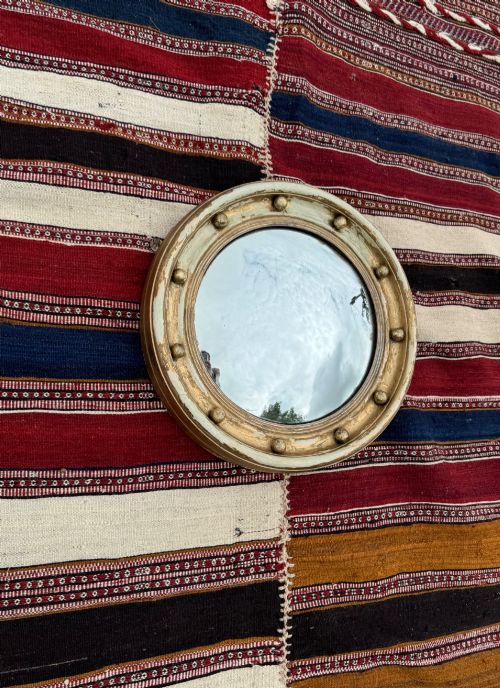
A circular wall mirror whose outward-bulging plate throws back a whole room in one small reflection, hung in halls and over chimneypieces since about 1800.
Antique Convex Mirrors
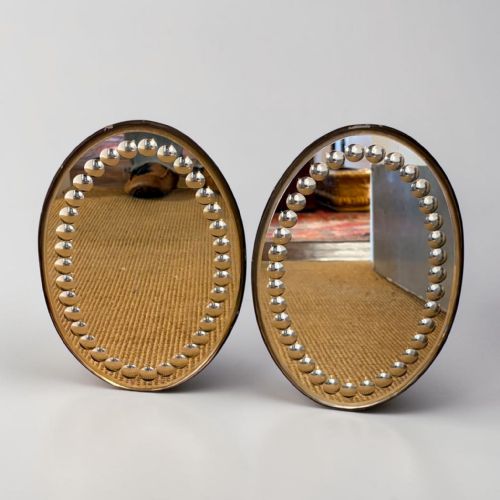
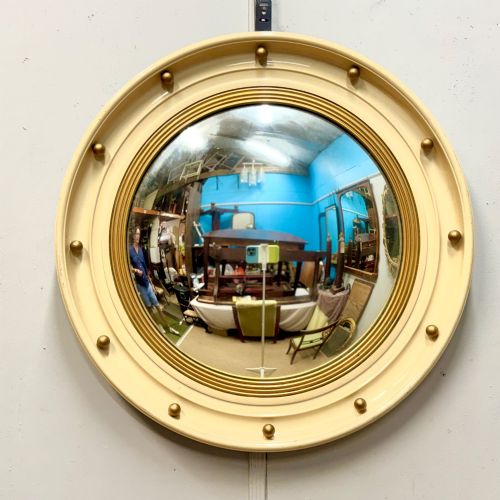
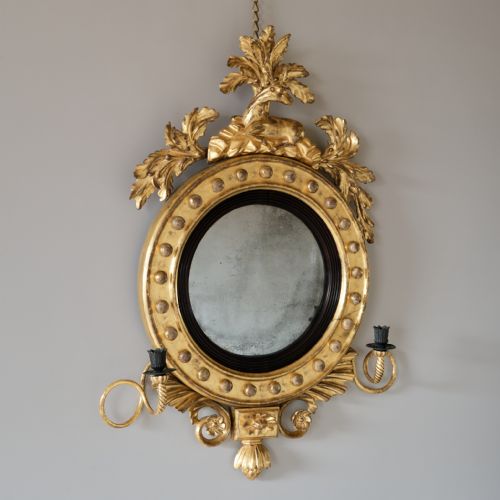
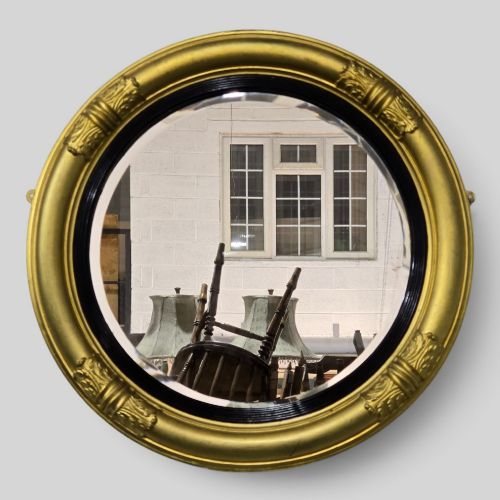
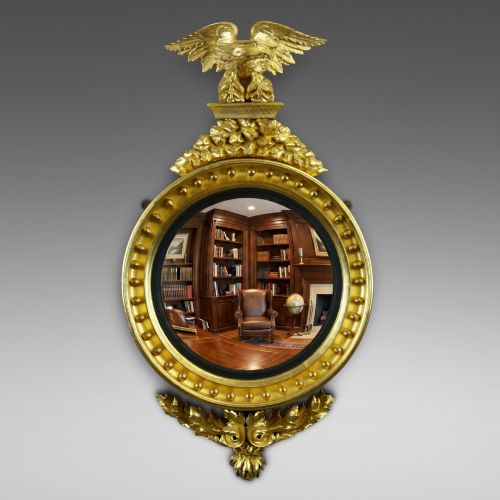
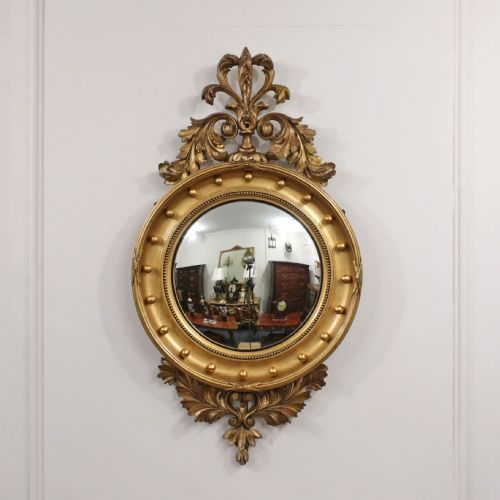
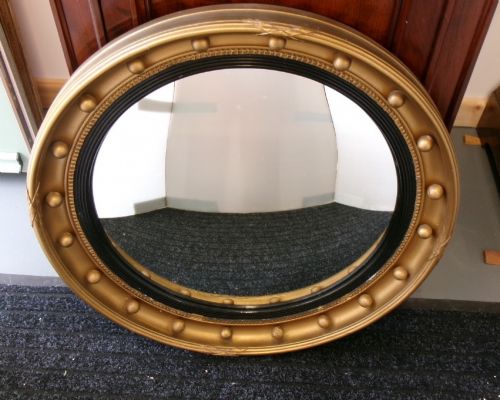
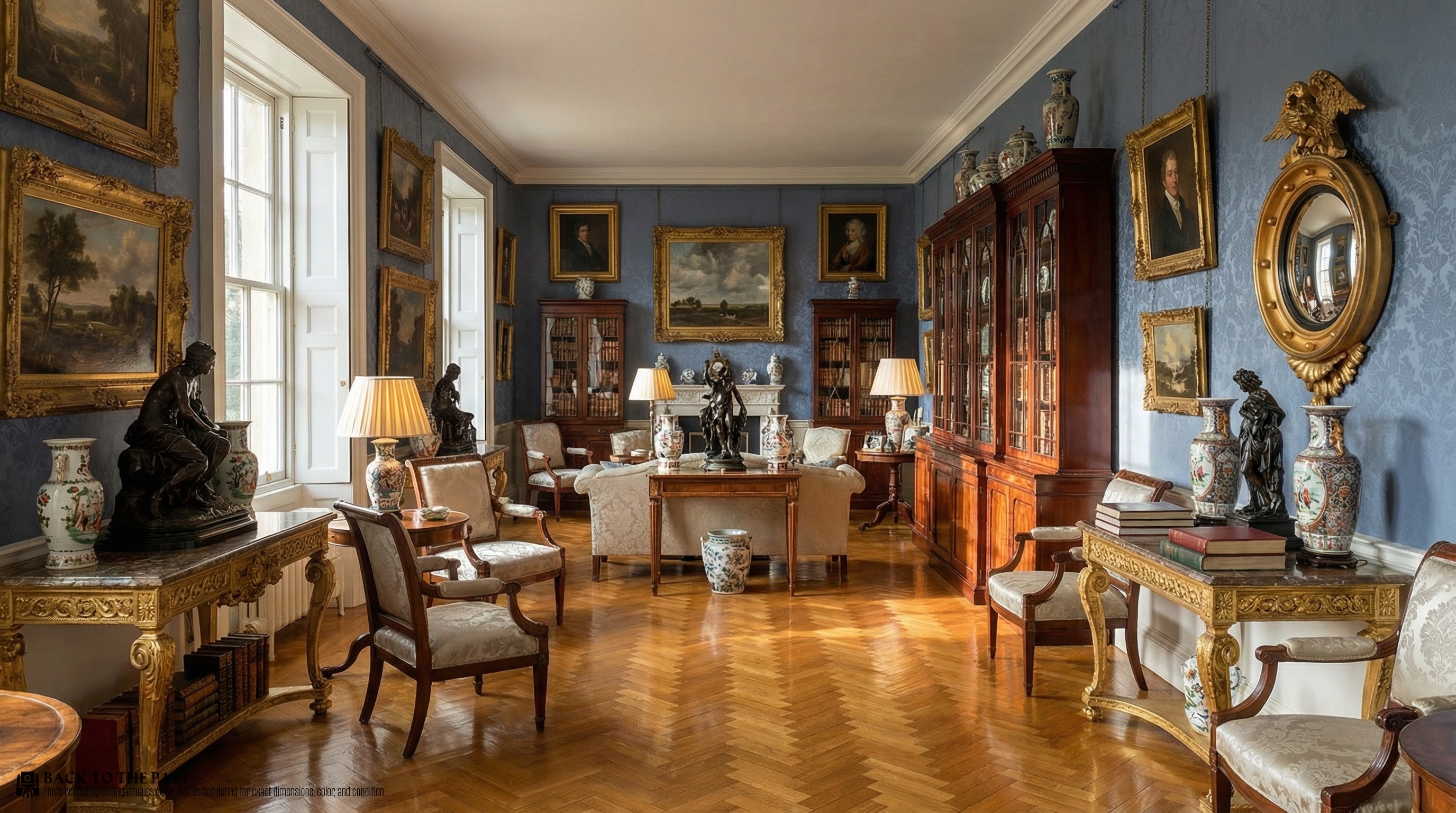
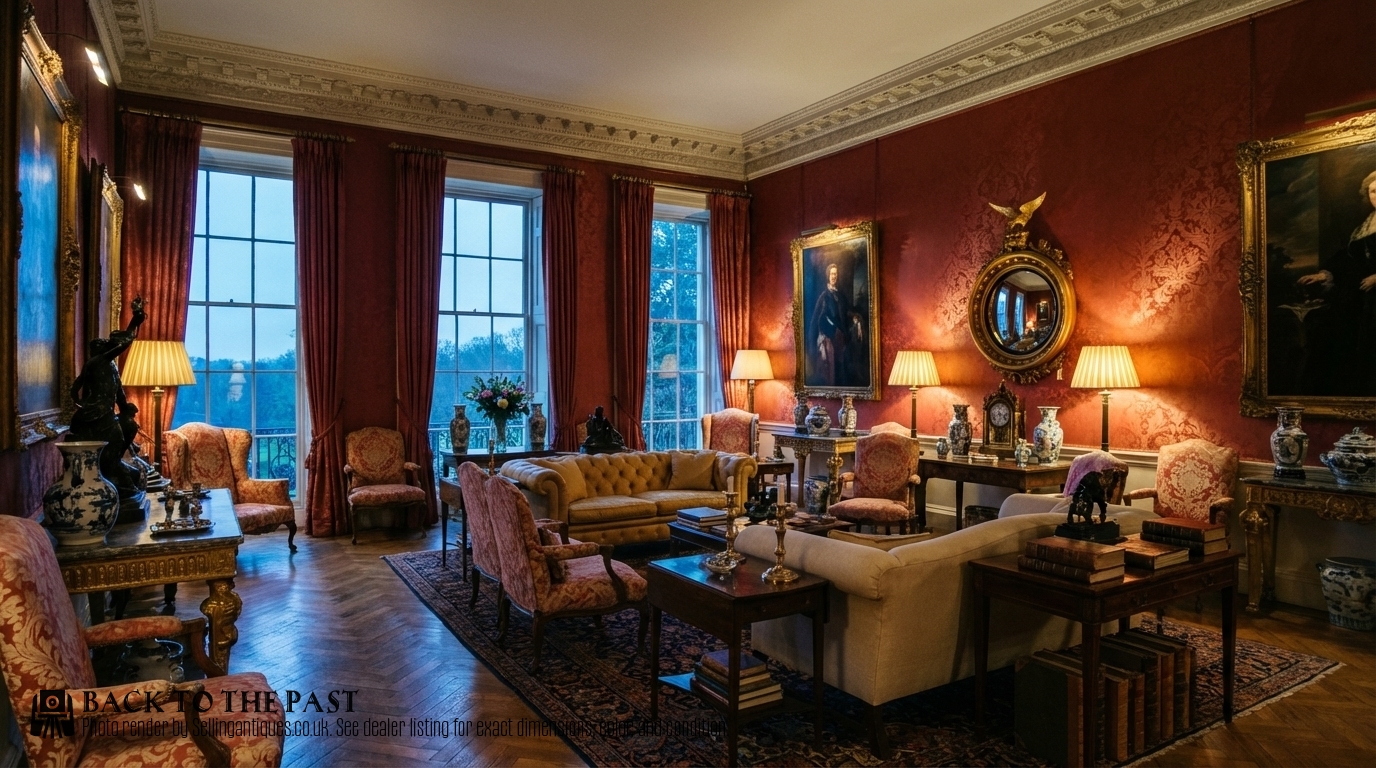
A convex mirror is a round plate, occasionally oval, that bulges outward and sits in a deep moulded frame. The bulge compresses a wide angle of the room into a small circle of glass, which is why they went up in halls and above fireplaces from the turn of the nineteenth century in Britain and Ireland. Versions fitted with candle arms doubled as light-throwers.
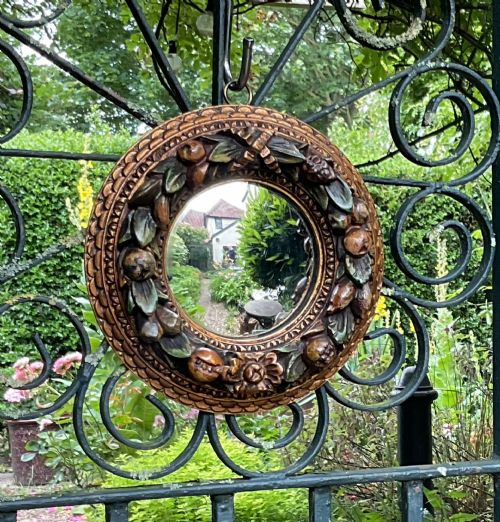
The frame is where the category varies. Gilt dominates the titles on Sellingantiques, with giltwood and 'gilt wood' behind it, and smaller runs in oak, mahogany, walnut, pine, brass, copper and pewter. Diameters run from miniatures a hand's width across to a stated 4ft and one at 69 inches. Single mirrors are the norm; pairs are unusual, at 22 titles in 556.
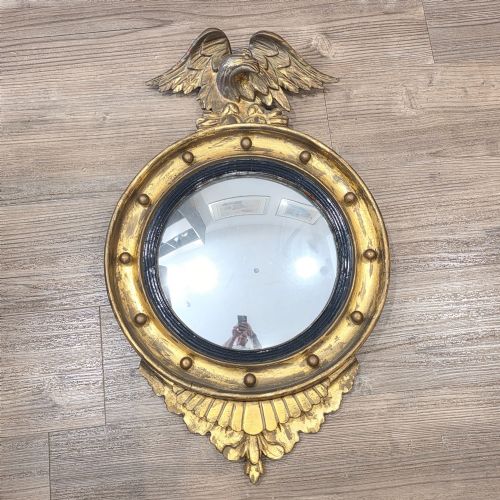
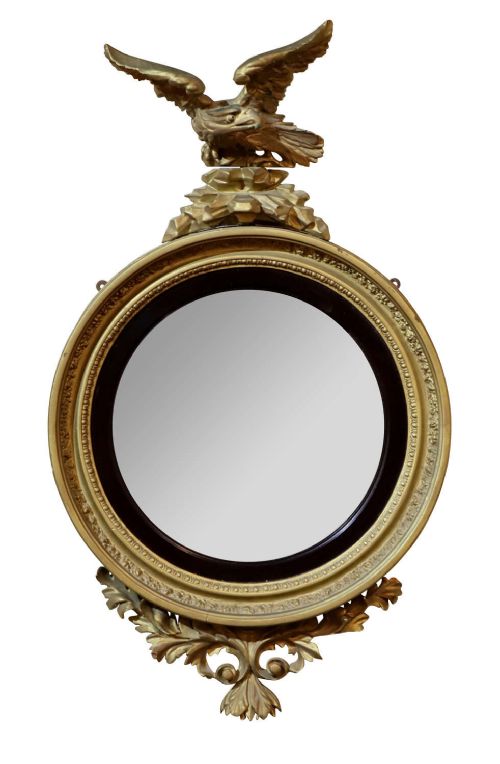
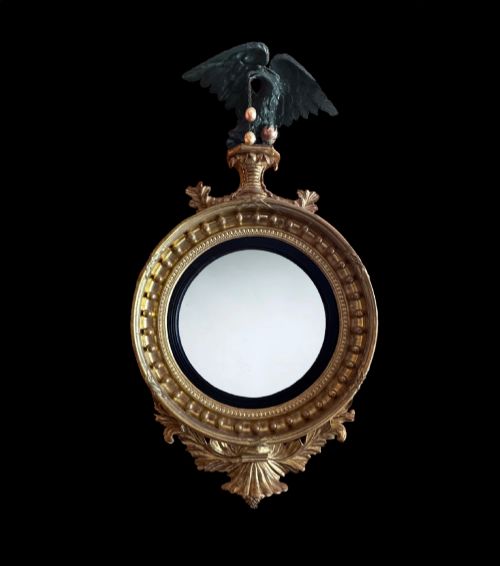
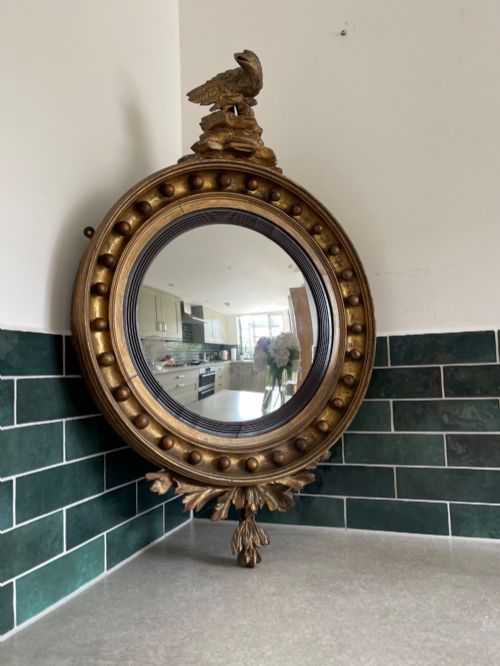
The version you're most likely to meet is a Regency or Regency-style gilded circular convex. Half the archive uses the word Regency, and it's the largest dated bucket. Roughly one in seven adds an eagle surmount. Beyond that sit the girandoles with candle arms, later timber-framed rounds clustered in the 1880s to 1930s, and the multi-plate 'sorcerer's' or 'witch's' mirrors.
Dating needs care. Regency and '19th Century' between them cover about six listings in ten and neither pins a year. Only 168 listings carry a clean year, and those run 1800 to 1930. 'Regency style' turns up on pieces dated 1880, 1900, 1910, 1920 and 1930, so the word on its own settles nothing.

What Sets Them Apart
Scale does most of the work. 'Large' appears in 83 titles, 'small' in 28, and the titles reaching highest are almost all either large or state a size outright: 4ft across, 69 inches, thirty inches. Miniature and diminutive examples sit at the other end of the range, whatever the frame is doing.
After size comes ornament and how it was made. A carved crest lifts a mirror: the eagle is the house bird, and dragon, dolphin, deer and hippocampus crests surface only among the dearer entries. Plain unornamented rounds sit low. Carved giltwood clusters above frames described as plaster gilt, gilt metal or timber gilt, where the gold is applied over something cheaper than carved wood.
Originality and multiples finish the picture. Titles that volunteer original glass, an original plate, original water gilding, an original pediment or a foxed plate belong to the upper part of the range, foxing read as evidence of old silvering rather than as a fault. Pairs are scarce, and the very top of the archive is held by a pair rather than a single mirror.
Antique Convex Mirrors Retail Price Guide 2026
Typical UK retail prices for convex mirrors, calculated from the Sellingantiques database of over a million retail prices indexed since 2003. This retail price guide relies exclusively on Sellingantiques data; no external sources or auction records are used, so the figures do not describe the wider market.
Where a clean year is given, convex mirrors on Sellingantiques run from 1800 at the earliest to 1930 at the latest.
The Antique Convex Mirrors Glossary
- Convex
- The plate bulges outward, squeezing a whole room into one small circular reflection. It's the defining feature of the form.
- Giltwood
- A carved wooden frame finished in gold leaf. Some 77 titles use the word and another 31 write it as 'gilt wood'.
- Gesso
- The chalk-and-size ground moulded over the wood to take the gilding, named in nine titles.
- Surmount, pediment or crest
- The ornament sitting above the frame, most often an eagle, occasionally a dragon, dolphin, deer or hippocampus.
- Girandole
- A convex mirror fitted with candle arms, spelt girandole, girondole and girondole across a dozen or so titles.
- Bull's-eye
- An older name for the round convex plate, still used in a few titles. Butler's mirror is a related term, for a convex hung so a servant could watch a room.
Antique Convex Mirrors: Frequently Asked Questions
Does Regency in the title mean a Regency date?
Not on its own. Half the archive uses the word, and it does duty as a style label as much as a period: 'Regency style' appears on pieces dated 1880, 1900, 1910, 1920 and 1930.
Regency is also the largest dated bucket at 175 listings, so plenty of sellers use it as a date. The word alone doesn't separate the two.
Why do so many have eagles on top?
The eagle is the crest of the category, on 44 titles, roughly one in seven. It sits above the frame as a carved surmount or pediment.
Other beasts turn up once or twice each: a dolphin, a deer, a hippocampus, a pair of dragons. Those appear among the higher-reaching entries.
How big do convex mirrors get?
The range is wide. Miniatures are described as diminutive or simply MINIATURE, a hand's width across.
At the other end, titles state 4ft diameter, 69 inches and 30 inches. Size claims are volunteered most often on the larger pieces, and 'large' appears in 83 titles against 28 for 'small'.
What is a sorcerer's or witch's mirror?
It's the trade name for the multi-plate or dark convex type. About a dozen titles use it, across sorcerers, witching mirrors, a witch's eye and a segmented Edwardian example.
They're the oddity of the category rather than a common form, under one listing in twenty.
Are frames always gilded?
Gilt dominates, on 254 of 556 titles, with giltwood and gilt wood behind it. But frames stray a good way from gold.
Oak, mahogany, timber, walnut and pine appear in runs, mostly in the 1880s to 1930s dated buckets. Pear wood, pewter, brass, copper, plaster, japanned and ebonised frames each surface once or twice.
How often do pairs come up?
Rarely. Just 22 titles in 556 are pairs, against a category of single mirrors.
When they do appear, matched and true pairs of Regency giltwood examples sit well above single equivalents, and the top of the archive is a pair.